Opening The Rift
therift
© 2026 The Rift. All Rights Reserved.
The Judiciary’s Abdication of Constitutional Duty to the Common Citizen
Access to justice, like education and healthcare, depends on money, distance, and the ability to wait, failing the common litigant.

Key Takeaways
1 of 3
Automatically generated. Read full article for complete context.
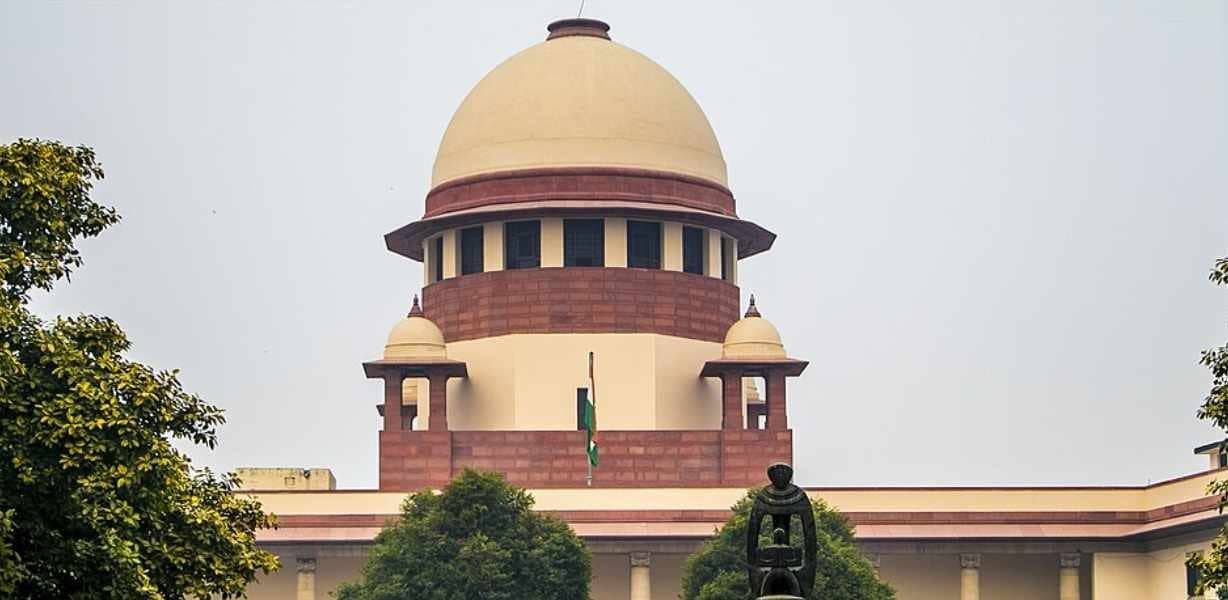
The Chief Justice of India himself acknowledges that litigants are forced to rush to the Supreme Court for urgent hearings of matters pending in High Courts, raising the question of whether access to timely justice depends on the ability to travel to the national capital.
With over 65 lakh cases pending in High Courts, nearly one lakh in the Supreme Court, and 292 vacancies in High Courts against a sanctioned strength of 1,122, the system is visibly collapsing under its own weight.
The increase in Supreme Court judges from 34 to 38 has not stemmed pendency. This is not merely an administrative failure. It is a denial of justice to those who cannot afford to wait, travel, or repeatedly pay for adjournments.
JUDICIAL SYSTEM METRICS
Key Judicial Pendency and Vacancy Data
~65 Lakhs
High Court Cases Pending
~1 Lakh
Supreme Court Cases Pending
292
High Court Vacancies
1,122
High Court Sanctioned Strength
VISUALS BY THE RIFT
The health of a society can be measured by three parameters : easy and inexpensive access to education, healthcare, and justice. In India, all three remain beyond the reach of the common man.
The CJI’s admission provides direct evidence on justice. Education and healthcare show the same structural pattern, though their data is not the subject here.
On justice, the Supreme Court has repeatedly affirmed that a speedy trial is an integral part of the fundamental right to life and liberty under Article 21.
In Hussainara Khatoon (I) v. Home Secretary, State of Bihar (1980) 1 SCC 81, the Court held that no procedure which does not ensure a reasonably quick trial can be regarded as reasonable, fair, or just, and that speedy trial is implicit in Article 21.
In Imtiyaz Ahmad v. State of U.P. (2017) 3 SCC 658, the Court took note of huge pendency and issued guidelines on clearing arrears, timely disposal, pretrial custody, and trial date certainty, and suggested the unit system for assessing required judge strength.
In All India Judges’ Association v. Union of India (2018) 17 SCC 555, the Court held that sound infrastructure is vital for a strong judicial system, that poor infrastructure impedes access to justice, and that democracy cannot afford to undermine the rule of law.
These judgments establish that delay is not a neutral administrative inconvenience; it is a constitutional violation.
Yet the common litigant still cannot obtain timely justice without traveling to Delhi, and the High Courts, despite their broad powers under Article 226, are not functioning as accessible local forums.
On legal aid, Article 39A of the Constitution mandates free legal aid to ensure that the legal system promotes justice on the basis of equal opportunity.
In Khatri (II) v. State of Bihar (1981) 1 SCC 627, the Supreme Court held that it is a constitutional obligation of the State to provide free legal aid to the needy. But legal aid on paper does not translate into accessible justice when the courts themselves are backlogged and litigants must navigate a system that rewards those with resources, time, and proximity to power.
On education and healthcare, the same logic of exclusion applies. Public schools suffer teacher vacancies, poor infrastructure, and weak learning outcomes, pushing families toward private tuition and private schools. Public hospitals face doctor and nurse shortages, long queues, and out-of-pocket costs, forcing the poor to borrow, forgo care, or travel to distant facilities.
Access in all three domains depends on money, distance, and the ability to wait.
The judicial system therefore fails on three counts. It is undercapacity, with High Court vacancies and staggering backlog. It is centralised, forcing litigants to run to the Supreme Court instead of receiving timely local justice. It is procedurally opaque, with urgent listing depending on the ability to mention, persuade, and travel.
Technology can assist, but without filling vacancies, decentralising justice, making listing transparent and predictable, enforcing adjournment discipline, expanding legal aid, and treating delay as denial, easy and inexpensive justice will remain out of reach.
The Supreme Court has spoken clearly in Hussainara Khatoon, Imtiyaz Ahmad, All India Judges’ Association, and Khatri (II).
The gap between those judgments and the lived reality of the common litigant is the measure of the judiciary’s failure.
Jai Hind
Disclaimer:The views and opinions expressed in this article are those of the author(s) and do not necessarily reflect the official policy or position of The Rift.