Opening The Rift
therift
© 2026 The Rift. All Rights Reserved.
Statewide Protest Day Against Corporate Control of Natural Resources and State Repression of People’s Movements
Thousands protested corporate exploitation and state repression, demanding respect for Gram Sabha rights and the release of activists.

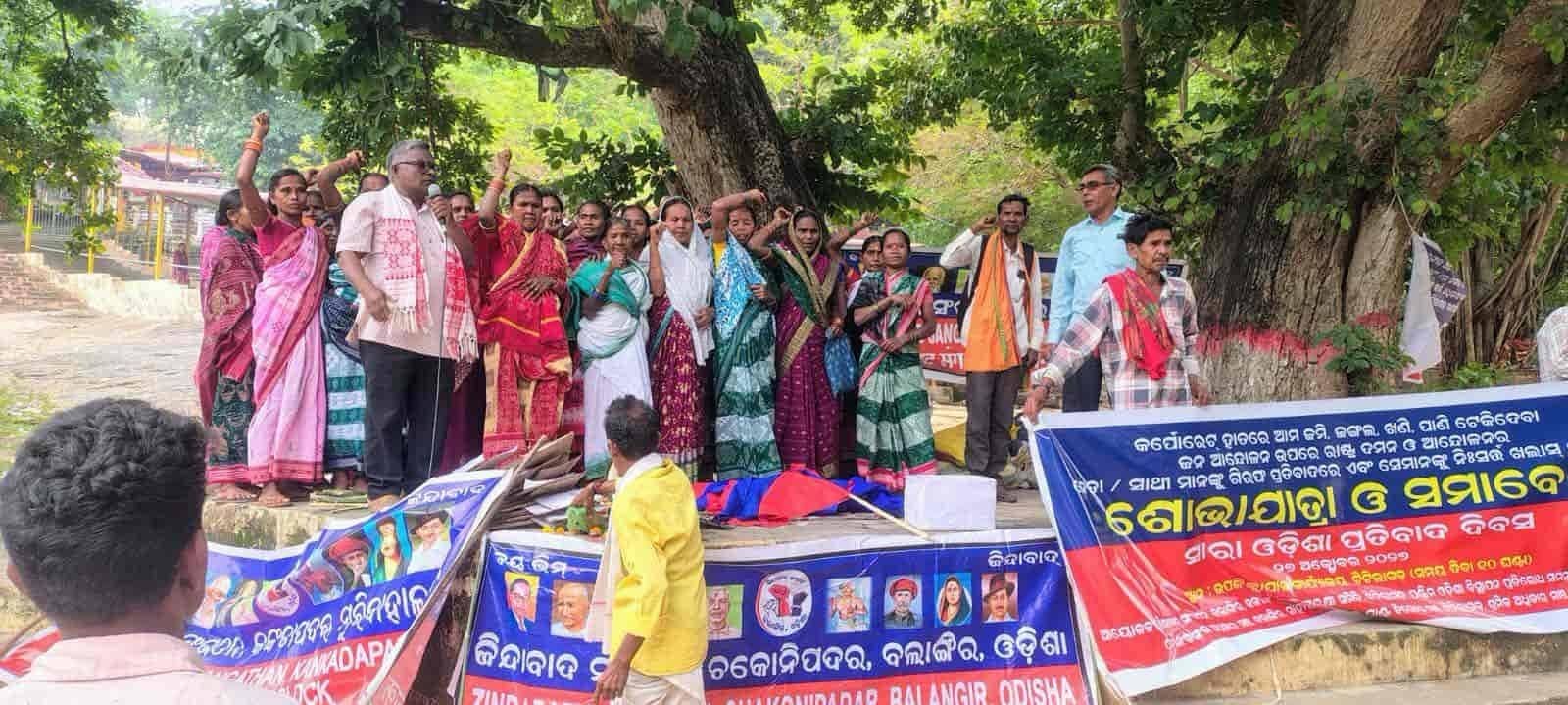
Protesters gather to demonstrate against corporate influence over natural resources and government repression of activist movements.
Key Takeaways
1 of 3
Automatically generated. Read full article for complete context.
Bhubaneswar, Odisha : A statewide Protest Day was observed across Odisha on October 27 by various people’s movements, mass organisations and civil society groups against the handing over of natural resources, including land, forests, minerals and water, to corporate interests for exploitation.
The protest was organised to oppose state repression of democratic and peaceful people’s movements fighting to protect their motherland, livelihoods, environment and natural resources. The organisations also condemned the arrest of movement leaders and activists in false cases.
On September 30, a meeting of various people’s movements and mass organisations, held at Lohia Academy in association with the National Alliance of People’s Movements (NAPM), called for the observance of October 27 as a statewide Protest Day. The Campaign for Survival and Dignity (CSD) subsequently declared its support for the initiative at its two-day convention held on October 7 and 8.
Corporate Exploitation of Odisha’s Natural Resources
The organisations said that, after the BJP-led government came to power, the way had been cleared for domestic and foreign companies and corporations to exploit Odisha’s natural resources without restraint.
They said that the constitutional rights of Gram Sabhas (village assemblies) in the state’s Scheduled Areas to make decisions concerning development projects were being violated. According to the protesters, private companies such as Vedanta, Adani, Jindal, POSCO, Dalmia, Hindalco, Tata and Birla, along with public-sector entities such as NALCO and the Odisha Mining Corporation, had been given a free hand to pursue projects in the name of development—projects the organisations described as destructive.
They warned that, in the name of a “Developed Odisha” or “Utkarsh Odisha,” the state risked being stripped of its natural wealth. They described these policies as a bulldozer-like assault on the ancestral homelands, livelihoods, natural environment and cultural identity of thousands of Adivasi (tribal), Dalit and other marginalised communities.
Repression of Democratic Movements
Government authorities and the police are intensifying their crackdown on people protesting against anti-people policies and decisions, the organisations said.
Hundreds of leaders and activists associated with various people’s movements are being arrested and imprisoned in multiple cases that the organisations describe as false. Even when activists secure relief in one case, they are implicated in other cases, they said.
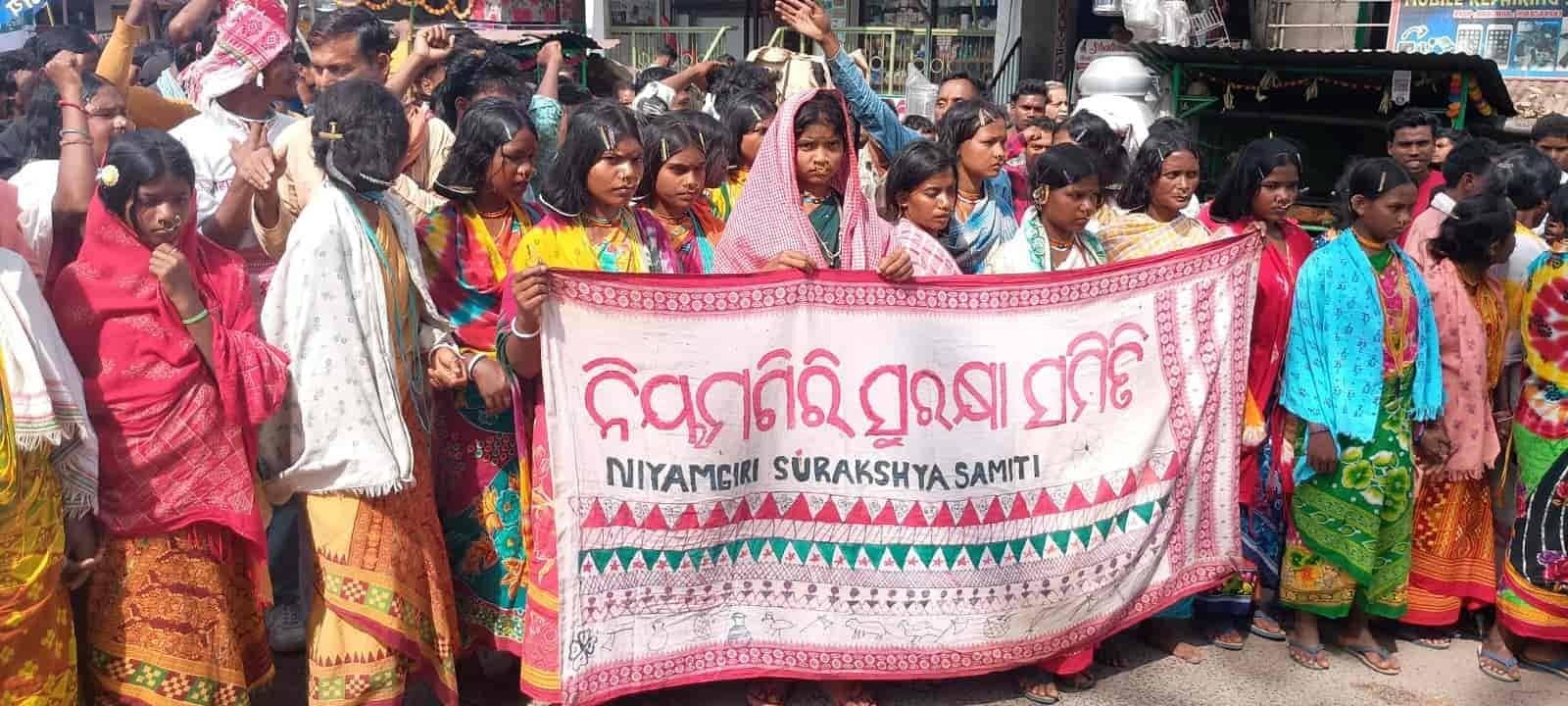
Those arrested include Lingaraj Azad, adviser to the Niyamgiri Suraksha Samiti and Maa Mati Mali Suraksha Manch; Lada Sikaka, president of the Niyamgiri Suraksha Samiti; and Hiramal Nayak and Laxman Naik, prominent leaders of the Sijimali movement.
The organisations also raised concerns over the arrest of Dr. Sequeira, a dedicated physician who has been providing healthcare services to people in remote areas of Rayagada and Kalahandi districts for many years. Warrants have also been issued against hundreds of protesters, they said.
The organisations further stated that companies, in collusion with the state government, were imposing restrictions on villagers and effectively confining them within their own villages.
The protesters said the government had opened the floodgates to unchecked corporate exploitation across Odisha—from Gandhamardan to Deomali, from Keonjhar to Sundargarh, and from the eastern and western regions to the northern and southern parts of the state.
PESA and Forest Rights Act Undermined
The organisations pointed out that, even 30 years after the enactment of the Panchayats (Extension to Scheduled Areas) Act, 1996, commonly known as PESA, the necessary rules for its implementation had yet to be framed.
They said that the Forest Rights Act, 2006, had remained largely ineffective due to its inadequate implementation over the years.
Under PESA and the Forest Rights Act, Gram Sabhas (village assemblies) have an important role in decisions concerning development projects and the protection of community rights, in accordance with the applicable legal provisions. However, the protesters said that the rights and powers of Gram Sabhas were being openly undermined to serve corporate interests.
They also criticised the 2026 amendments to the Mines and Minerals (Development and Regulation) Act, 1957 (MMDR Act), arguing that the changes would deprive Odisha of its natural resources and undermine the rights of states within India’s federal structure.
Protest Programmes Held Across Odisha
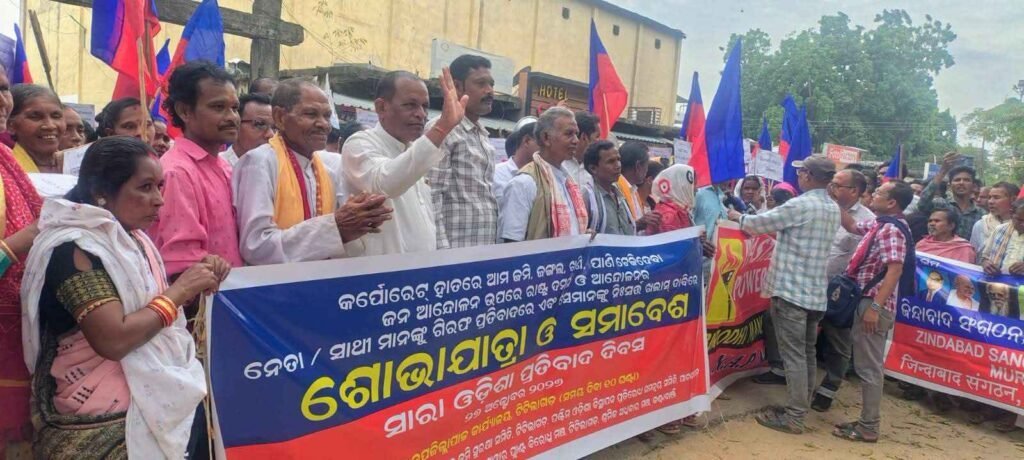
The statewide Protest Day was observed on October 27, 2026, in several parts of Odisha to oppose the government’s alleged anti-people policies and actions.
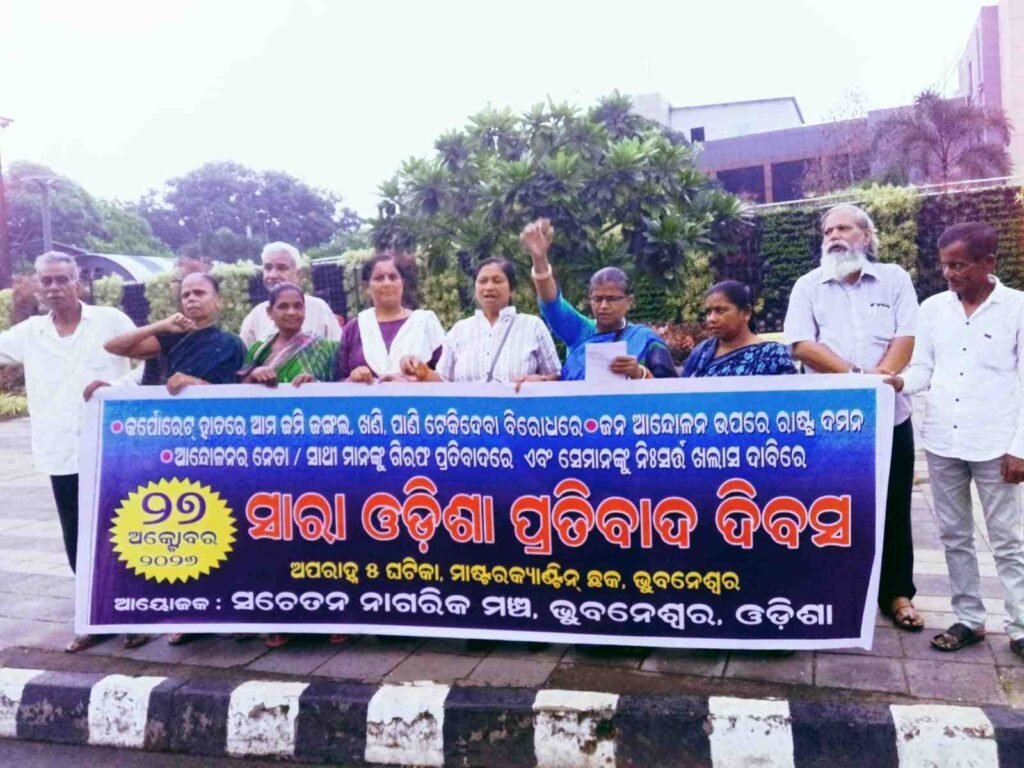
In Bhubaneswar, the Sachetan Nagarik Manch organised the programme. In Semiliguda, Koraput district,t he Mali Parbat Suraksha Samiti and Maa Nageswari Mali Donger Maha Gram Sabha participated.
In Bandhugaon, the All India Khet Mazdoor Kisan Sabha (AIKMKS) took part in the protest.
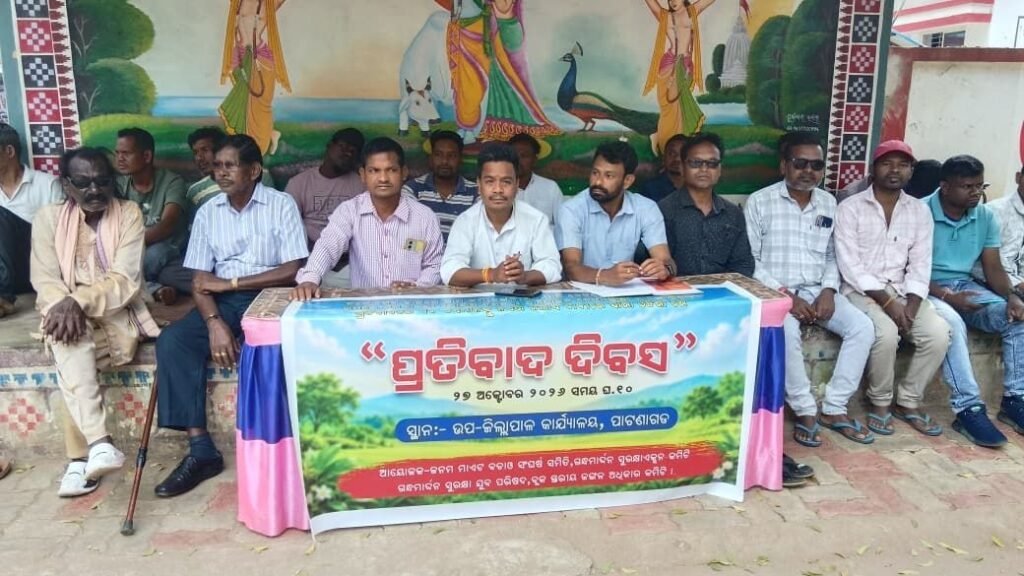
In Titilagarh and Patnagarh in Balangir district, the participating organisations included the Jindabad organisation, the Titilagarh Power Plant Opposition Movement, the Jungle Jami Suraksha Samiti, the Shramik Adhikar Manch, the Jungle Adhikar Manch, the Janam Maet Bachao Sangharsha Samiti, the Gandhamardan Suraksha Action Committee, the Gandhamardan Suraksha Yuva Parishad and the block-level Forest Rights Committee in Loisingha.
The National Alliance of People’s Movements (NAPM) also organised the Protest Day in Kashipur, Rayagada district.
However, programmes in some districts were postponed at the last moment because of the possibility of a cyclone and rainfall.
Key Demands of the Protesters
During the statewide Protest Day, the participating organisations put forward a series of demands to protect natural resources, safeguard community rights and uphold democratic freedoms.
Their principal demands were as follows:
- Respect and Safeguard Gram Sabha Rights: No project should be approved without the requisite consent of the Gram Sabha, in accordance with PESA, the Forest Rights Act and the relevant constitutional provisions governing Scheduled Areas. Any project approved on the basis of fabricated or invalid Gram Sabha consent should be cancelled immediately.
- End police repression: The government must immediately stop the arrest of activists in what the organisations describe as false cases, the deployment of police inside villages to intimidate residents, and other forms of harassment targeting democratic and peaceful people’s movements.
- Release imprisoned activists: All activists imprisoned in connection with people’s movements should be released unconditionally, and all false cases against them should be withdrawn.
- Implement the Forest Rights Act, 2006: The Forest Rights Act must be implemented fully and effectively in accordance with its provisions.
- Frame PESA rules without delay: The necessary rules for implementing the Panchayats (Extension to Scheduled Areas) Act, 1996, must be framed without further delay.
- Recognise Gram Sabha authority: The rights, responsibilities and powers of Gram Sabhas to protect, conserve and manage natural resources must be recognised and respected.
- Repeal the 2026 MMDR Act amendments: The 2026 amendments to the Mines and Minerals (Development and Regulation) Act, 1957, must be repealed.
As part of the protest, memoranda addressed to the Chief Minister and Governor of Odisha and the President of India were submitted through local tehsildars, Block Development Officers (BDOs) and Sub-Divisional Officers (SDOs) in various districts.
The people’s movements and mass organisations warned that if the government continued to ignore their legitimate demands, it would be held responsible for any public discontent that might arise in the future.
Disclaimer:The views and opinions expressed in this article are those of the author(s) and do not necessarily reflect the official policy or position of The Rift.
Corporate ExploitationForest Rights ActGram SabhaMMDR ActNatural ResourcesOdishaPeople's MovementsPESAState Repression