Opening The Rift
therift
© 2026 The Rift. All Rights Reserved.
The Algorithmic Auction: AI-Driven Monopsony and Labour Market Rules
The algorithmic auction is not a metaphor; it is the operational reality of labour markets in which AI coordinates wage-setting and virtual architecture creates inescapable lock-in.



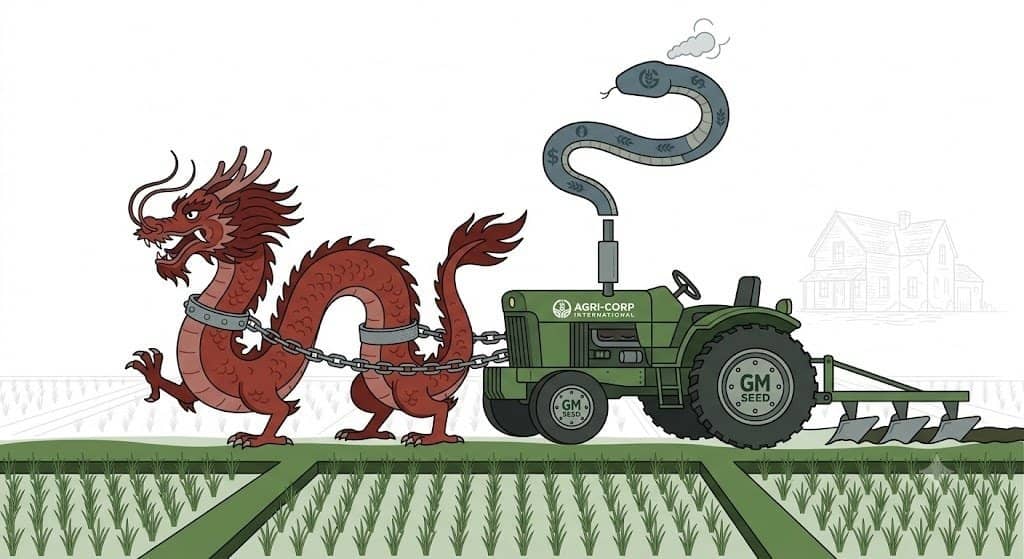
The rise of AI-driven monopsony in labour markets raises concerns about worker rights and fair competition (Representative Image)
Key Takeaways
1 of 3
Automatically generated. Read full article for complete context.
Labour MonopsonySingle Buyer MarketA market condition where there is only one buyer for a particular good or service, giving that buyer significant power over sellers., the condition in which a single buyer dominates a labour market has historically been a geographic artefact, confined to company towns or specialised regional industries. In 2026, however, its architecture has been reconstructed by algorithms. Artificial intelligence allows companies to synchronize wage setting across jurisdictions without colluding and to exploit Information asymmetries beyond the scope of traditional antitrust laws, as well as to use the threat of automation as an effective tool to suppress workers whose alternatives for switching jobs are increasingly limited.
Historically, Antitrust lawCompetition RegulationLaws designed to promote competition in markets by prohibiting monopolies, cartels, and other anti-competitive practices. viewed monopsony as a geographic fluke. Under Joan Robinson’s classical model, the ultimate monopsonist was defined by isolation. Think of an old-school “company town” where a single coal mine was the only game in town for miles. Back then, workers were stuck because of physical distance, meaning antitrust regulators rarely stepped in unless there was an outright, blatant cartel.
Academics who study competition have reacted rather conservatively: the existing approach, which is based on consumer welfare analysis, considers the labor market consequences of such conduct as externalities. This article challenges that orthodoxy across three contemporary vectors: (i) the emergence of “shadow monopsony” in proprietary virtual workspaces; (ii) the unintended monopsonistic consequences of sustainability-linked hiring consortia; and (iii) the revenue-sharing practices of creator platforms that function, in economic substance, as wage-fixing. Uniting all three is a methodological argument: the measure of monopsony harm must expand beyond wage depression to encompass the suppression of worker innovation, which this article terms the polycentric harm thesisExpanded Monopsony HarmThe article’s proposed framework arguing that monopsony harm extends beyond wage depression to encompass the suppression of worker innovation..
Three Vectors of Algorithmic Monopsony
1. Shadow Monopsony
Emergence in proprietary virtual workspaces, constituted by technical architecture and interoperability bans.
2. Green Monopsony
Unintended monopsonistic consequences of sustainability-linked hiring consortia and standardized credentials.
3. Creator Economy Monopsony
Revenue-sharing practices of creator platforms functioning as wage-fixing due to algorithmic lock-in.
VISUALS BY THE RIFT
II. SHADOW MONOPSONY IN VIRTUAL LABOUR MARKETS
A. The Architecture of Lock-in
With companies moving towards using digital twin technology and VR environments, the enclosure of labour is happening within the closed ecosystem. The role of the platform owner becomes unique in such an environment because it acts as the landlord, toolchain provider, and the only consumer of digital labour that takes place in that environment. The result is a form of monopsony that does not require geographic dominance; it is constituted by technical architecture.
Interoperability bans are the key instrument. When a platform prohibits the transfer of worker-generated assets, trained models, or reputational history across competing platforms, it destroys the worker’s accumulated human capital outside the platform’s walls. This mirrors the economic logic of company scrip—currency valid only within a single commercial system.
This lock-in isn’t just a technical glitch; it is legally enforced through what can be called an “IP enclosure matrix.” Platforms use the fine print in End-User License Agreements (“EULAsEnd-User License AgreementsLegal contracts between a software developer or publisher and the user of the software, outlining the terms of use.”) and Terms of Service (“ToSTerms of ServiceThe legal agreements between a service provider and a person who wants to use that service, setting out the rules and guidelines.”) alongside aggressive interpretations of intellectual property law to build high walls around their ecosystem. By claiming sweeping copyright over platform-specific assets and classifying system workflows as trade secrets, platforms legally block workers from migrating their own digital tools or outputs elsewhere. The economic reality of this setup is brutal: when a platform claims ownership over a worker’s behavioural data, trained sub-models, or custom virtual tools, it essentially expropriates their dynamic human capital. The worker is forced to leave their accumulated skills and digital identity behind, transferring all the long-term value they accrued to the platform.
B. Avatar and Skill Portability as a Competitive Remedy
Behavioural economics supplies a conceptual bridge here. Workers subject to high switching costs exhibit Status quo biasPreference for Current StateA cognitive bias where people prefer things to stay the same, avoiding change even when an alternative might be objectively better. even when objective conditions would favour exit. The cognitive and economic friction of platform transition produces inertia that suppresses wage negotiation. This is not a voluntary preference; it is a market distortion created by platform design.
Accordingly, competition law should consider mandating “Avatar and Skill Portability,” the technical and legal right of a worker to migrate their verified credential history, algorithmic reputation scores, and digital outputs to competing platforms. The analogy to number portability from telephony is useful: regulatory authorities realised that customer lock-in via non-portable telephone numbers represented a structural impediment; portability was prescribed as a solution to promote competition.
III. THE GREEN MONOPSONY: ESG CONSORTIA AND WAGE SUPPRESSION
A. The Buyer Club Problem
The proliferation of ESG frameworksSustainability CriteriaEnvironmental, Social, and Governance criteria used to evaluate a company’s sustainability and ethical impact, often guiding investment decisions. has coincided with another phenomenon: the creation of sustainable labour standards, which link employment with certified credentials. If several major employers in an industry all require the same certification, they become a buyer club—effectively a coordinated monopsony that operates below the radar of standard antitrust scrutiny for no-poaching and wage-fixing agreements.
This is a matter of structure, not malice. The monopsony effect emerges organically from the convergence of eligibility criteria. Yet the economic consequence is identical to an express price-fixing agreement among buyers: the pool of eligible workers is artificially constricted, their bargaining power is reduced, and wages are suppressed relative to the competitive equilibrium.
This creates a serious legal vulnerability because these ESG consortia effectively operate as information-sharing hubs that facilitate legal cartelization. When top-tier companies get together to create a standardized certified credential, they inadvertently create a completely homogenized buyer profile. Instead of competing for talent, they end up looking for the same rigid compliance boxes.
This sets a massive tension within a modern antitrust framework. Regulators, like those looking at a European Union’s Article 101(3) TFEU exemptions or US antitrust safety zones, are often quick to greenlight corporate cooperation if it is for a “sustainable public good.” But there is a blind spot here. While courts and antitrust agencies happily overlook standard-setting on the output side to help the environment, they completely ignore the devastating, downstream monopsonistic effects on the input, the labour side. By focusing entirely on the green goals, competition policy blindly tolerates an environment where workers lose their bargaining chips, effectively letting corporate buyers fix the rules of the labour market under the banner of sustainability.
B. Sustainability Standards as Barriers to Entry
From the supply side, the harm is distributionally regressive. Credentialing programs entail costs, such as course fees, exam fees, and registration fees, which form a significant burden for poorer employees and employees in developing nations with minimal certification facilities. Ethical sourcing operates as an “exclusionary device,” whereby certification benefits employees from wealthier nations who have received credentials, while poorer individuals’ earning opportunities are constrained. Competition policy has been insufficiently attentive to this dynamic because ESG cooperation is frequently exempted from antitrust scrutiny under sustainability defenses. This article argues that such exemptions should be conditioned on a demonstrable absence of monopsonistic wage effects.
IV. MONOPSONY IN THE CREATOR ECONOMY: THE SSNDR TEST
A. Platforms as Wage-Setters
The creator economy presents competition law with a category problem. Platforms such as YouTube, TikTok, and Twitch have labelled their revenue-sharing model as business dealings with independent contractors. However, there is a monopsonistic element involved, where the platform dictates the price of creative labour without any form of bargaining, and switching to another platform would be prohibitively expensive due to algorithmic capital.
B. Operationalising the SSNDR
The SSNIP testMarket Definition ToolThe ‘Small but Significant and Non-transitory Increase in Price’ test, a standard tool in antitrust analysis used to define relevant markets. is the standard instrument for defining relevant markets on the output side. Applied to the labour side of platform markets, it yields a novel analytical tool: the Small but Significant and Non-transitory Decrease in Revenue Share (“SSNDR”) test.
The SSNDR asks whether a hypothetical platform that reduced revenue-share percentages by a small but significant amount, say, five percentage points, would lose a sufficient volume of creators to make the reduction unprofitable. If the answer is no, the platform possesses monopsony power. Preliminary evidence suggests that multi-platform migration involves revenue losses of 40–70% in the transition period, reflecting the non-portability of algorithmic recommendation weight.
Creator Migration Impact
40-70%
Revenue Loss During Transition
Multi-platform migration for creators can lead to significant revenue losses due to non-portable algorithmic recommendation weight.
VISUALS BY THE RIFT
To see how this works in practice, imagine a regulatory Body like the Federal Trade Commission (FTC) or the Competition Commission of India, Government of India (CCI) bringing enforcement action against the dominant streaming platform. Under the SSNDR framework, the regulator wouldn’t look at routine consumer prices; instead, they would mathematically isolate the “Revenue Share” metric, the percentage of Ad or subscription revenue actually distributed to creators after the platform takes its cut. The regulator would then model the “Cross-elasticity of supplySupply ResponsivenessA measure of how responsive the quantity supplied of one good is to a change in the price of another good.” among these creators to see how sensitive they are to a pay cut.
V. THE POLYCENTRIC HARM THESIS AND PREDATORY WAGE-SETTING
A. Innovation Suppression as a Primary Harm
Competition analysis of labour monopsony has been predominantly wage-centric. This article proposes an expanded, polycentric framework that treats innovation suppression as an independent and potentially primary harm. Where market power concentrates the appropriation of value with the buyer, the marginal return to worker innovation approaches zero. The static wage-suppression harm is thereby compounded by a dynamic innovation loss that extends into the broader productivity trajectory of the economy.
B. The AI Replacement Threat as Predatory Wage-Setting
Firms with monopsony power can exploit information asymmetries about the timeline and scope of automation to engage in predatory wage-setting: reducing wages today because the worker’s outside options are contracting as AI substitution approaches. This is similar to predatory pricing in output markets, in which a dominant company engages in below-cost pricing to drive competitors out of business. Competition agencies need to come up with procedures to investigate this practice by recognizing any AI threats to replace human workers as an abuse of dominance.
Traditional antitrust scholars will inevitably push back here, arguing that replacing human workers with AI is just a standard capital substitution, a textbook example of economic efficiency rather than antitrust violation. But this argument misses the entire point. The legal violation isn’t the actual technological switch; it is how dominant firms use massive information asymmetry as a psychological cudgel.
VI. CONCLUSION
The algorithmic auction is not a metaphor; it is the operational reality of labour markets in which AI coordinates wage-setting, virtual architecture creates inescapable lock-in, and platform design substitutes for cartel agreements. Antitrust law requires doctrinal reconstruction on three fronts: the recognition of interoperability mandates; the integration of buyer-side market power analysis into ESG frameworks; and the adoption of the SSNDR test. The algorithmic auction is ongoing. Doctrinal reform cannot wait for the gavel to fall.
Disclaimer:The views and opinions expressed in this article are those of the author(s) and do not necessarily reflect the official policy or position of The Rift.