Opening The Rift
therift
© 2026 The Rift. All Rights Reserved.
Birthright Citizenship Affirmed: Supreme Court Delivers Decisive Constitutional Defeat to Trump’s Executive Order
The Supreme Court delivered a decisive constitutional defeat to President Trump’s attempt to redefine birthright citizenship.

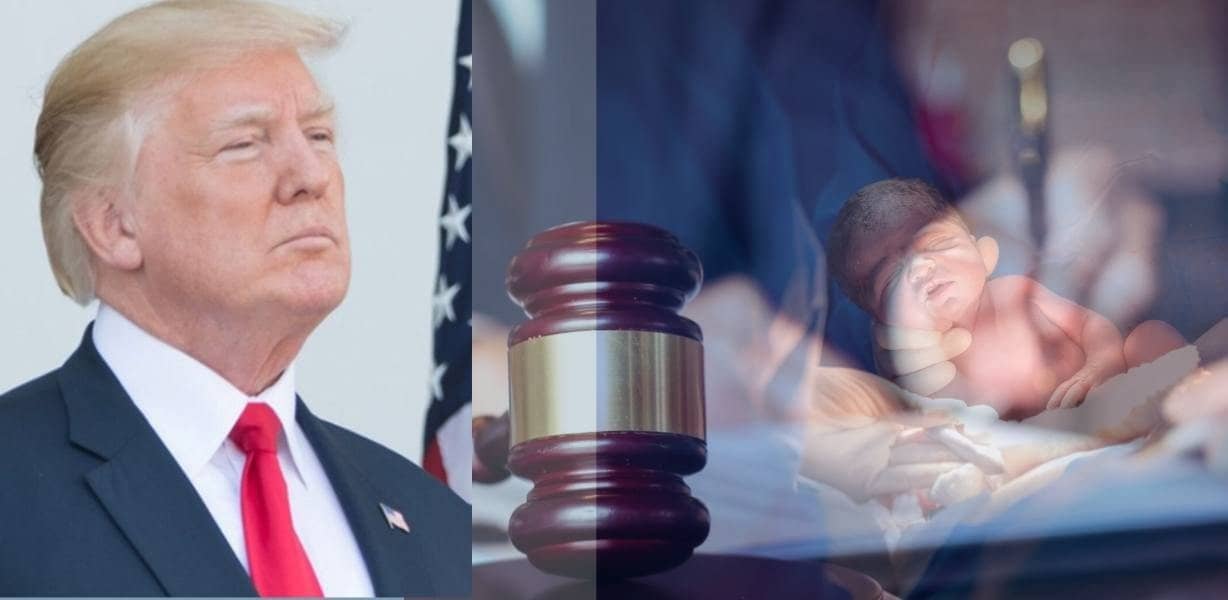
The US Supreme Court has upheld birthright citizenship, dealing a decisive constitutional blow to Trump’s executive order (Representative Image)
Key Takeaways
1 of 3
Automatically generated. Read full article for complete context.
In a 6-3 ruling in Trump v. Barbara, the Court held that children born on U.S. soil to undocumented or temporarily present parents remain citizens at birth under the Fourteenth Amendment—dealing a decisive constitutional defeat to one of the President’s signature second-term initiatives.
The Ruling
On June 30, 2026, the Supreme Court of the United States delivered its final and most consequential opinion of the 2025–26 term, affirming a New Hampshire federal district court’s injunction against Executive Order 14160, President Donald Trump’s attempt to redefine who qualifies as a citizen at birth. Chief Justice John Roberts, writing for a six-justice majority that included Justices Sotomayor, Kagan, Barrett, and Jackson, held that children born in the United States to parents who are unlawfully or only temporarily present in the country are nonetheless “subject to the jurisdiction” of the United States within the meaning of the Fourteenth Amendment14th AmendmentA post-Civil War amendment to the U.S. Constitution, ratified in 1868, that granted citizenship to all persons born or naturalized in the U.S., including former slaves, and guaranteed equal protection of the laws.‘s Citizenship ClauseCitizenship ClauseThe first sentence of the Fourteenth Amendment, stating that “All persons born or naturalized in the United States, and subject to the jurisdiction thereof, are citizens of the United States and of the State wherein they reside.”, and are therefore citizens from the moment of birth .
The Citizenship Clause, ratified in 1868, provides that all persons “born or naturalized in the United States, and subject to the jurisdiction thereof,” are citizens of the United States and of the state in which they reside. Roberts framed the outcome as a matter of historical continuity rather than innovation, tracing the constitutional guarantee back through English common law, the demands of the American colonists for the “rights of Englishmen,” and the abolitionist movement’s understanding of birthright citizenship as a natural entitlement rather than a conditional grant. The Court’s opinion frames citizenship itself as something close to a foundational civic promise, one the majority says the Fourteenth Amendment’s framers extended to every person born on American soil and that the Court was simply honoring rather than expanding.
From Executive Order to Class Action
Trump signed Executive Order 14160 on January 20, 2025, his first full day back in office, directing federal agencies to stop recognizing as citizens any child born in the U.S. to parents who were either undocumented or present on temporary visas. The order was blocked almost immediately by multiple district courts, which found it plainly incompatible.
The administration’s opening legal maneuver was procedural rather than substantive: it asked the Supreme Court to curb the practice of nationwide injunctionsNationwide InjunctionsCourt orders that block a government policy or action not just for the parties involved in a specific lawsuit, but across the entire country., arguing that individual district judges should not be able to block a federal policy for the entire country. In Trump v. CASA (June 2025), the Court agreed by a 6-3 vote, ruling that federal district courts generally cannot issue universal injunctions but it left the underlying constitutional question about birthright citizenship untouched. The same day, the ACLU responded by filing a new class-action suit, Barbara v. Trump, in the District of New Hampshire, seeking class-wide relief for every child who would lose citizenship under the order. The representative plaintiff, identified only by her first name for safety reasons, is a Honduran national. District Judge Joseph Laplante granted a preliminary injunction, concluding that the executive order likely contradicted both the constitutional text and unbroken precedent. The Trump administration appealed directly to the Supreme Court, which heard oral argument on April 1, 2026, with the President himself in attendance reportedly the first sitting president to attend Supreme Court arguments in person.
Wong Kim Ark and the “domicile” Argument
The central legal battle revolved around the 1898 precedent United States v. Wong Kim ArkUnited States v. Wong Kim Ark (1898)A landmark U.S. Supreme Court case that affirmed the principle of birthright citizenship under the Fourteenth Amendment for nearly all individuals born in the United States., in which the Court held that a man born in San Francisco to Chinese parents ineligible for naturalization was nonetheless a citizen by birth. The government did not ask the Court to overrule Wong Kim Ark outright; instead, the Solicitor General argued that the case’s repeated references to the petitioner’s parents being “domiciled” in the United States meant that lawful domicile not mere physical presence was the true constitutional threshold for birthright citizenship. Under that theory, undocumented immigrants and temporary visa holders, lacking lawful domicile, could be excluded .
The majority rejected this reading. Roberts’s opinion concluded that domicile featured in Wong Kim Ark only as an uncontested background fact of that case, not as a legal precondition, and that no evidence from the Fourteenth Amendment’s ratification debates supports treating domicile as a gatekeeping requirement for birthright citizenship. Justice Ketanji Brown Jackson, in a concurrence partly joined by Justice Sotomayor, wrote separately to push back on Justice Thomas’s characterization of the Citizenship Clause as a narrow, race-specific remedy intended only for freed slaves, arguing that this reading sits uneasily with the broader emancipatory purpose of Reconstruction-era constitutional change.
The Dissents
Three of the Court’s conservative justices dissented, though not as a unified bloc. Justice Clarence Thomas, joined by Justice Neil Gorsuch, authored a lengthy dissent reportedly running over ninety pages arguing that the Citizenship Clause and the Civil Rights Act of 1866 guaranteed citizenship only to persons both born and domiciled in the United States, and that the majority’s account of history is inaccurate. Thomas suggested the Fourteenth Amendment has been “repurposed for political projects” its Reconstruction-era authors never intended, drawing a sharp rebuke from Jackson’s concurrence.
Justice Samuel Alito, dissenting separately, called the ruling “one of the most important decisions in the history of the Court” while simultaneously insisting it was wrongly decided, warning that it extends citizenship even to children of so-called “birth tourists.” Justice Gorsuch, despite joining Thomas’s opinion in part, filed his own brief dissent raising a pointed internal objection to the domicile theory: if undocumented parents who have built permanent lives in the U.S. are not “domiciled” there, he asked, where exactly are they domiciled given that the law has long presumed every person is domiciled somewhere?
Justice Brett Kavanaugh took a different path altogether, concurring in the judgment but dissenting in part. He agreed the executive order was unlawful, but grounded his reasoning in federal statute the Immigration and Nationality Act rather than the Constitution itself, suggesting that Congress, not the President, would have the authority to narrow birthright citizenship through legislation if it chose to.
What Happens Now
The practical effect of the ruling is that the pre-2025 legal status quo remains intact: a U.S. birth certificate continues to establish citizenship regardless of parental immigration status, and federal agencies cannot impose the additional eligibility screening the executive order contemplated. The Migration Policy Institute had estimated that roughly 255,000 children born annually to non-citizen parents stood to lose automatic citizenship status had the order taken effect, with some potentially left stateless .
Key Legal Milestones: Birthright Citizenship
1868: Fourteenth Amendment’s Citizenship Clause ratified.
1898: United States v. Wong Kim Ark establishes birthright citizenship precedent.
Jan 20, 2025: Executive Order 14160 signed, challenging birthright citizenship.
June 2025: Trump v. CASA curbs nationwide injunctions; Barbara v. Trump class-action filed.
April 1, 2026: Supreme Court hears oral arguments in Trump v. Barbara.
June 30, 2026: Supreme Court rules in Trump v. Barbara, upholding birthright citizenship.
VISUALS BY THE RIFT
President Trump, reacting on Truth Social, called the outcome bad for the country but signaled he would now pursue the same goal through Congress rather than executive action—an avenue Justices Kavanaugh and Alito both suggested, in their separate opinions, remains constitutionally open. Any such legislation would itself likely face immediate constitutional challenge, given the majority’s unambiguous holding that the Fourteenth Amendment itself not merely statute guarantees birthright citizenship to children born on U.S. soil regardless of their parents’ status.
Relief for Indians
For India-linked families in the United States including the large population of H-1B visa holdersH-1B Visa HoldersIndividuals holding a non-immigrant visa that allows U.S. employers to temporarily employ foreign workers in specialty occupations., international students, and undocumented Indian nationals this ruling forecloses, at least for now, any executive attempt to condition a U.S.-born child’s citizenship on parental immigration status. It also underscores a broader point of comparative interest: unlike India’s citizenship law, which since 1987 has progressively moved away from pure jus soliJus Soli (Right of Soil)A principle of nationality law by which citizenship is determined by the place of birth, i.e., the “right of soil.” toward conditions tied to parental citizenship and, in some cases, registration under the Citizenship (Amendment) Act framework, the U.S. Fourteenth Amendment as reaffirmed here continues to anchor citizenship in birth on the territory itself, with only narrow historical exceptions such as children of accredited foreign diplomats.
Disclaimer:The views and opinions expressed in this article are those of the author(s) and do not necessarily reflect the official policy or position of The Rift.
*Birthright CitizenshipConstitutional LawExecutive OrderFourteenth AmendmentImmigration LawSupreme Court