Opening The Rift
therift
© 2026 The Rift. All Rights Reserved.
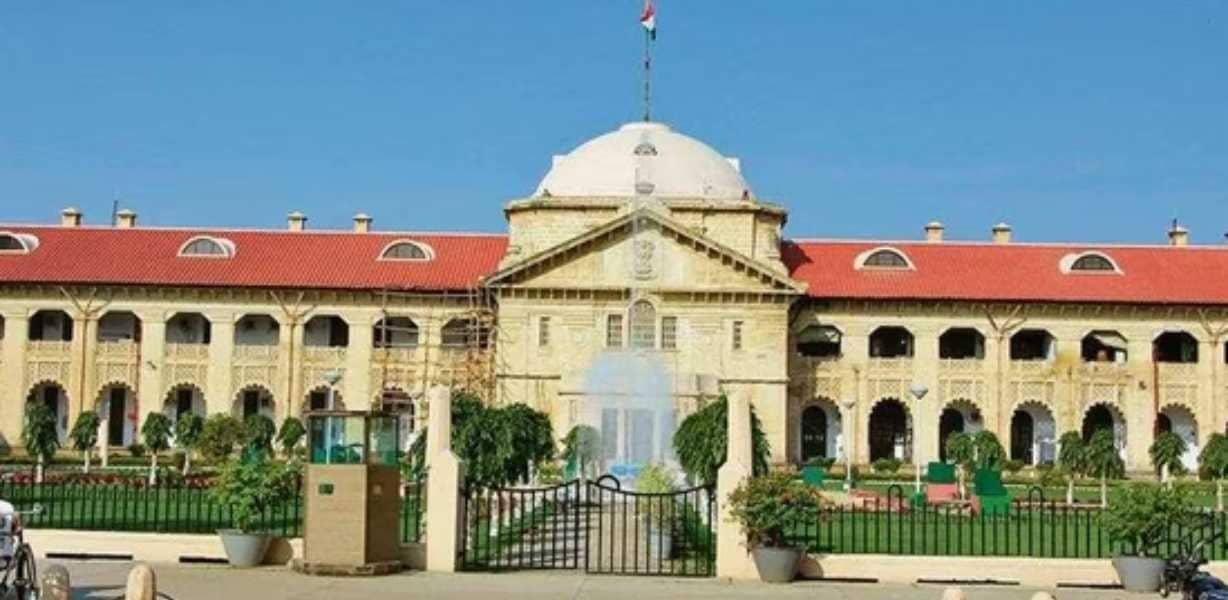
Access to Justice: A Case for Establishing a Bench of Allahabad High Court in Western Uttar Pradesh
Access to justice is a fundamental right, and for Western UP, a High Court bench is a constitutional obligation, not a regional demand.

Key Takeaways
1 of 3
Automatically generated. Read full article for complete context.
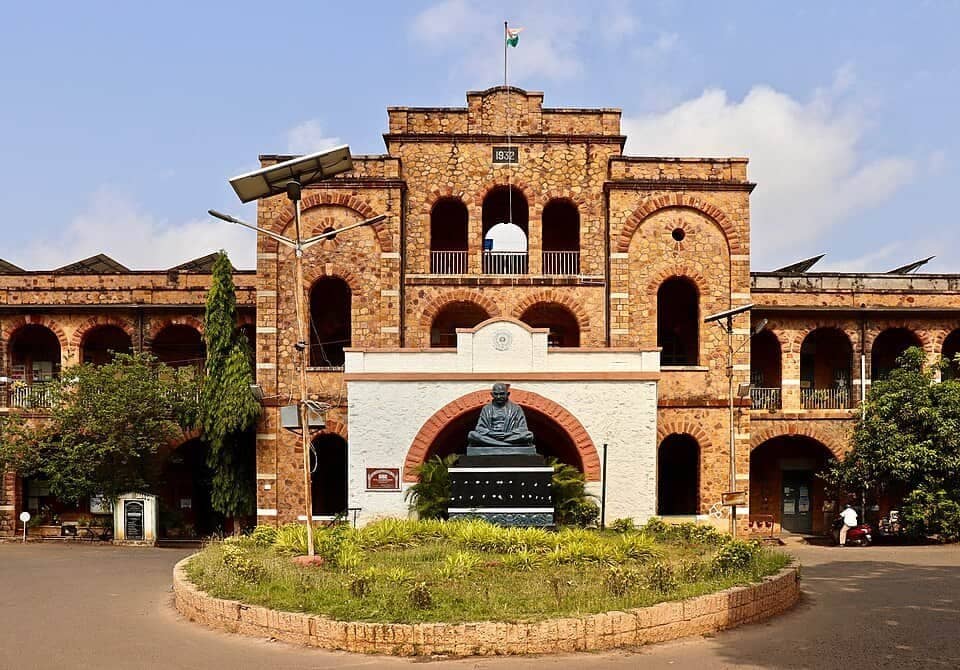
Recently, the Ministry of Law and Justice, Government of India notified The Union TerritoryDirectly Administered RegionA type of administrative division in India that is directly governed by the Central Government, unlike states which have their own elected governments. of Ladakh (Sitting of Bench of the High Court of Jammu and Kashmir and Ladakh in Ladakh) Regulation, 2026. The said notification gave effect to a Presidential promulgation in relation to the establishment of a bench of the High Court of Jammu & Kashmir and Ladakh within the Union Territory of Ladakh. A year before that, on 18th August, 2025, the Bombay High Court’s fourth bench became operational at Kolhapur. It ended a decades-long demand of litigants from six districts of Maharashtra i.e. Kolhapur, Sangli, Satara, Solapur, Ratnagiri, and Sindhudurg. Citizens of this region used to travel up to 400 km to Mumbai for every hearing.
“Since over half of Allahabad High Court’s litigations come from Western UP, whose litigants travel 600-700 km for justice, and since the Supreme Court in Anita Kushwaha (2016) held distance-accessible tribunal is a fundamental right under Part III of the ConstitutionFundamental RightsThis section of the Indian Constitution (Articles 12-35) guarantees fundamental rights to all citizens, including rights to equality, freedom, and life., the recent precedents in Kolhapur and Ladakh make a bench for Western UP a constitutional obligation, and not a regional demand.”
These developments are worth celebrating and they are also, for the legal community of Western Uttar Pradesh, a reminder of an unfulfilled promise. Advocates in this region have been demanding a permanent bench of the Allahabad High Court since 1955. It is high time to ask why decentralisation has been made possible in Ladakh and Kolhapur, but not in a region that contributes more than half the litigation before one of India’s largest High Courts.
The Scale of the Problem
Western Uttar Pradesh roughly comprises 22 districts. The region is estimated to have accounted for about 52 percent of all cases pending before the Allahabad High Court. The region comes under the jurisdiction of principal bench of Allahabad High Court that is over 600-700 km away from this part of Uttar Pradesh. What is ironic is that this region does not even come under the jurisdiction of Lucknow Bench of Allahabad High Court which around 400 km from Western Uttar Pradesh. Putting this into perspective, for a litigant from districts such as Saharanpur or Muzaffarnagar several other High Courts — Delhi, Chandigarh and the Uttarakhand High Court at Nainital — are geographically closer than their own state’s High Court.
For Western U. P., this situation must not be considered as an administrative inconvenience. Every hearing means a day or more of travel, an overnight stay, lawyers’ fees calculated on outstation appearances. For daily-wage earners and small farmers, going for hearing means a lost day of income that many families cannot absorb. For multiple hearings in a single case, the “cost” of justice for every litigant in Western UP is frequently borne disproportionately, specially for those who are poor and from downtrodden section of the society.
What the Constitution Says
Locally speaking, the demand for a bench is is often a matter of regional or political grievance. However, it is better if it is understood through the lens of Constitutional scheme. Article 21Right to Life and Personal LibertyA fundamental right in the Indian Constitution stating that no person shall be deprived of life or personal liberty except according to procedure established by law. It has been interpreted broadly to include various aspects of a dignified life, including access to justice. guarantees that, “no person shall be deprived of life or personal liberty except according to procedure established by law.” The judiciary has, on numerous occasions, held that life guaranteed under article 21 should be meaningful. Article 14Equality Before LawA fundamental right in the Indian Constitution guaranteeing equality before the law and equal protection of the laws within the territory of India, prohibiting discrimination. guarantees “equality before the law” and “equal protection of the laws.” A justice system that is realistically reachable for litigants residing near a High Court, but practically out of reach in terms of time, money, and effort for those living more than hundreds of kilometres away. It seriously raises a genuine concern. Article 39 AEqual Justice and Free Legal AidA Directive Principle of State Policy in the Indian Constitution, directing the State to secure that the operation of the legal system promotes justice on a basis of equal opportunity, and shall, in particular, provide free legal aid. directs the State to ensure that law should work in a way that promotes justice on a basis of equal opportunity. The foregoing provisions also deal with free legal aid so that opportunities for securing justice are not denied to any citizen by reason of economic or other disabilities.
What the Supreme Court Has Said
The notion of access to justice is not a policy goal. It is a fundamental right as has been affirmed directly by the top court. In Anita Kushwaha v. Pushpa Sudan, (2016) the top court opined that access to justice means not only having a tribunal or forum, but having a tribunal that is fair, reasonably accessible in terms of distance, and capable of providing timely and effective remedies. The court has accepted that long distance can be the hurdle to availing the benefits of justice. Therefore, accessibility “in terms of distance” speaks directly to the situation of Wester Uttar Pradesh. Moreover, the top court, decades earlier, in Hussainara Khatoon Case (1979), held that a speedy trial is an essential ingredient of right to life under article 21. Hence, on the basis of these rulings, it can be argued that distance from the seat of a court is not a mere administrative inconvenience, rather, it is a barrier to justice and the State is constitutionally obliged to address the same.
Kolhapur and Ladakh: Proof That It Can Be Done
The objection most often raised against new benches is administrative including cost and judicial strength. The Kolhapur bench answers this objection with evidence rather than argument. Within its first year, it absorbed around a major chunk of pending matters and gave litigants from six districts a High Court bench within reasonable reach. The Ladakh bench also shows the same principle applied at the level of a Union Territory i.e. the political will exists and the decentralisation of a High Court’s bench is entirely workable within the current framework.
Western UP does not lack the numbers to justify similar treatment and here the case is stronger. A region contributing over half the litigation of one of the country’s largest High Courts, with a dense population living across more than twenty districts, meets and exceeds the threshold that justified benches elsewhere in the country.
Why This Is Ultimately a Constitutional Question
It would be a mistake to consider the demand for a Western UP bench as a regional effort. As per the top court’s reasoning in Anita Kushwaha, geographic inaccessibility is one of the aspects of the denial of access to justice. When a High Court is practically out of reach for over half its litigants, the harm falls hardest on those the framers of the Constitution were most concerned to protect through constitutional provisions such as articles 21, 14, and 39A. The poor, rural communities, women, the elderly, and farmers are hit the hardest since it is very difficult for them to bear financial, physical burden of repeated 600–700-kilometre journeys to access justice.
The precedent now exists — twice over, in Kolhapur and in Ladakh — that decentralisation is administratively very much feasible. Moreover, the move does not require extraordinary constitutional machinery. What remains is institutional will. Justice that exists on paper but is 600-700 kilometres away is, for many litigants, no justice at all. If the Constitution’s promise of equal access to justice is to mean anything for the people of Western Uttar Pradesh, the seven-decade-old demand for a High Court bench deserves to be considered not as a regional grievance, but as the constitutional question it actually is.
Disclaimer:The views and opinions expressed in this article are those of the author(s) and do not necessarily reflect the official policy or position of The Rift.