Opening The Rift
therift
© 2026 The Rift. All Rights Reserved.
Immigration Law Weaponized: The Architecture of Exclusion and Deliberative Democracy
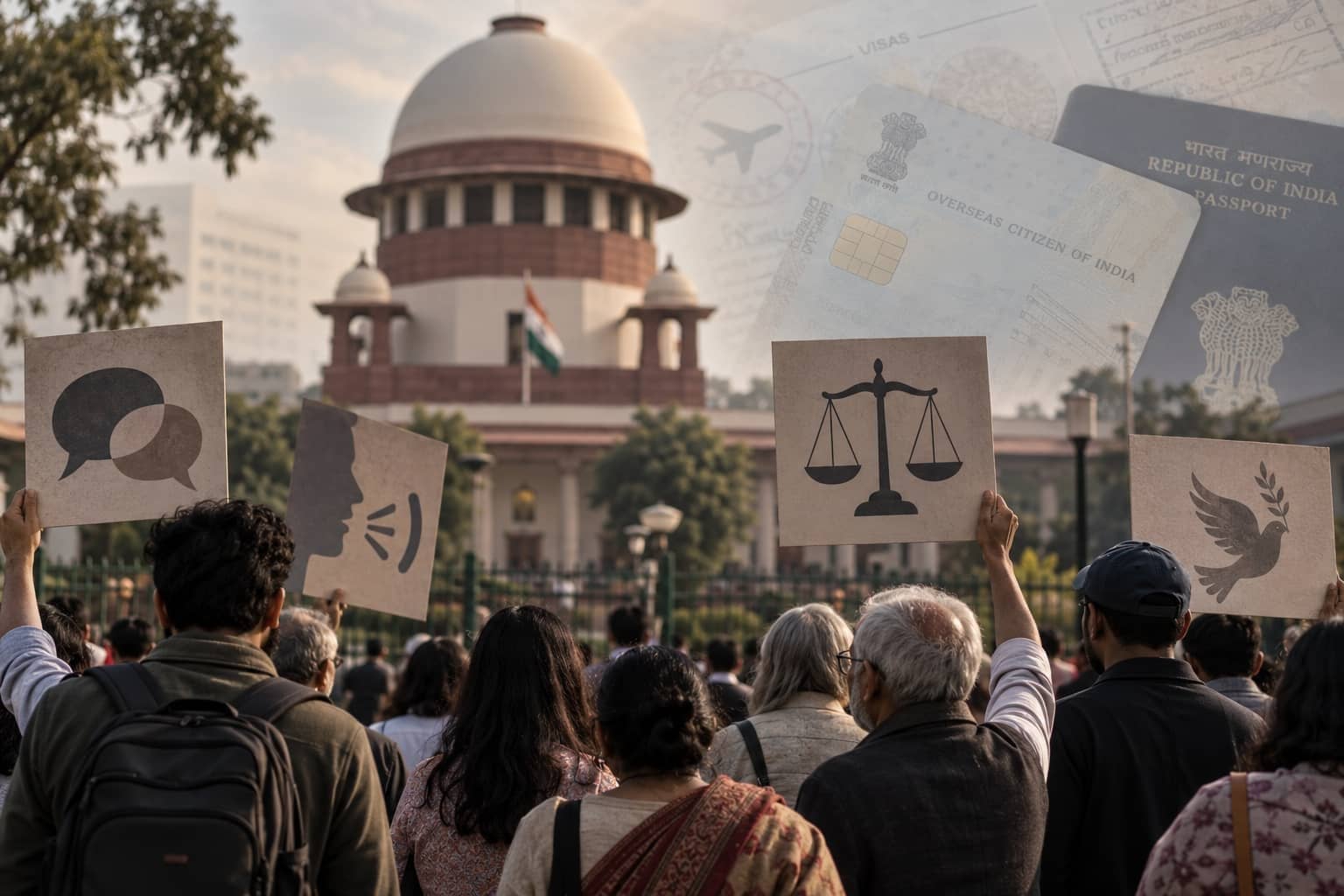
Can immigration law, supposed to regulate entry and settlement, be weaponized to discourage political dissent?

Key Takeaways
1 of 3
Automatically generated. Read full article for complete context.
The real test of a democracy is not the rights that it guarantees but how it reacts when those rights are challenged. When faced with protests against authority, mass gatherings in public space, and resistance to government institutions, the state faces a fundamental choice: to accept dissent as part of democratic life or to view it as a problem that needs to be managed.
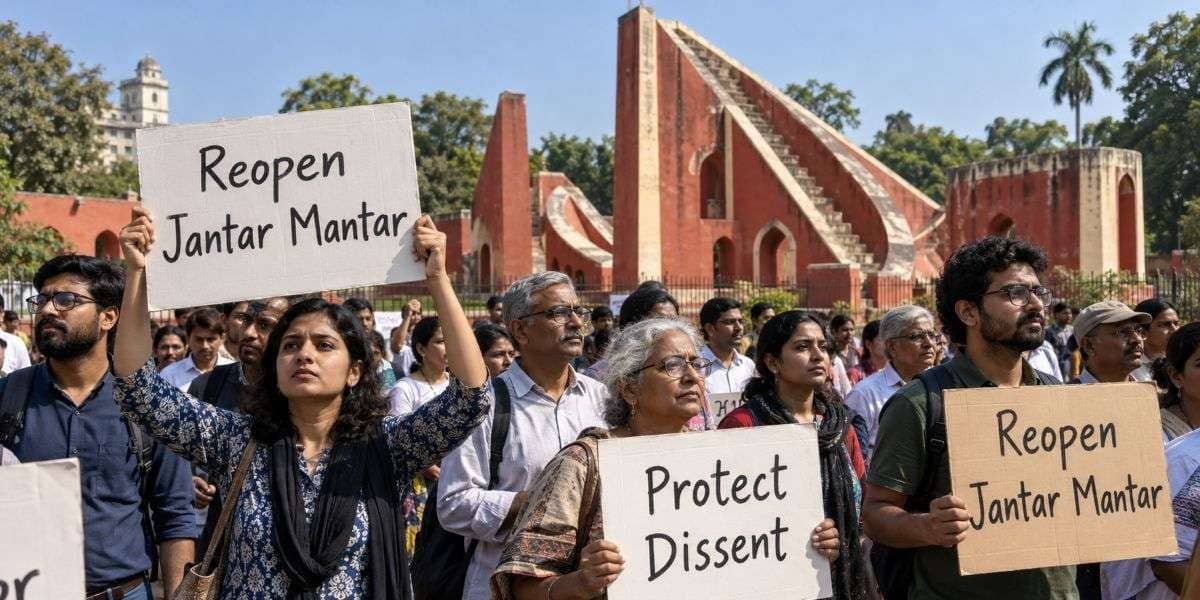
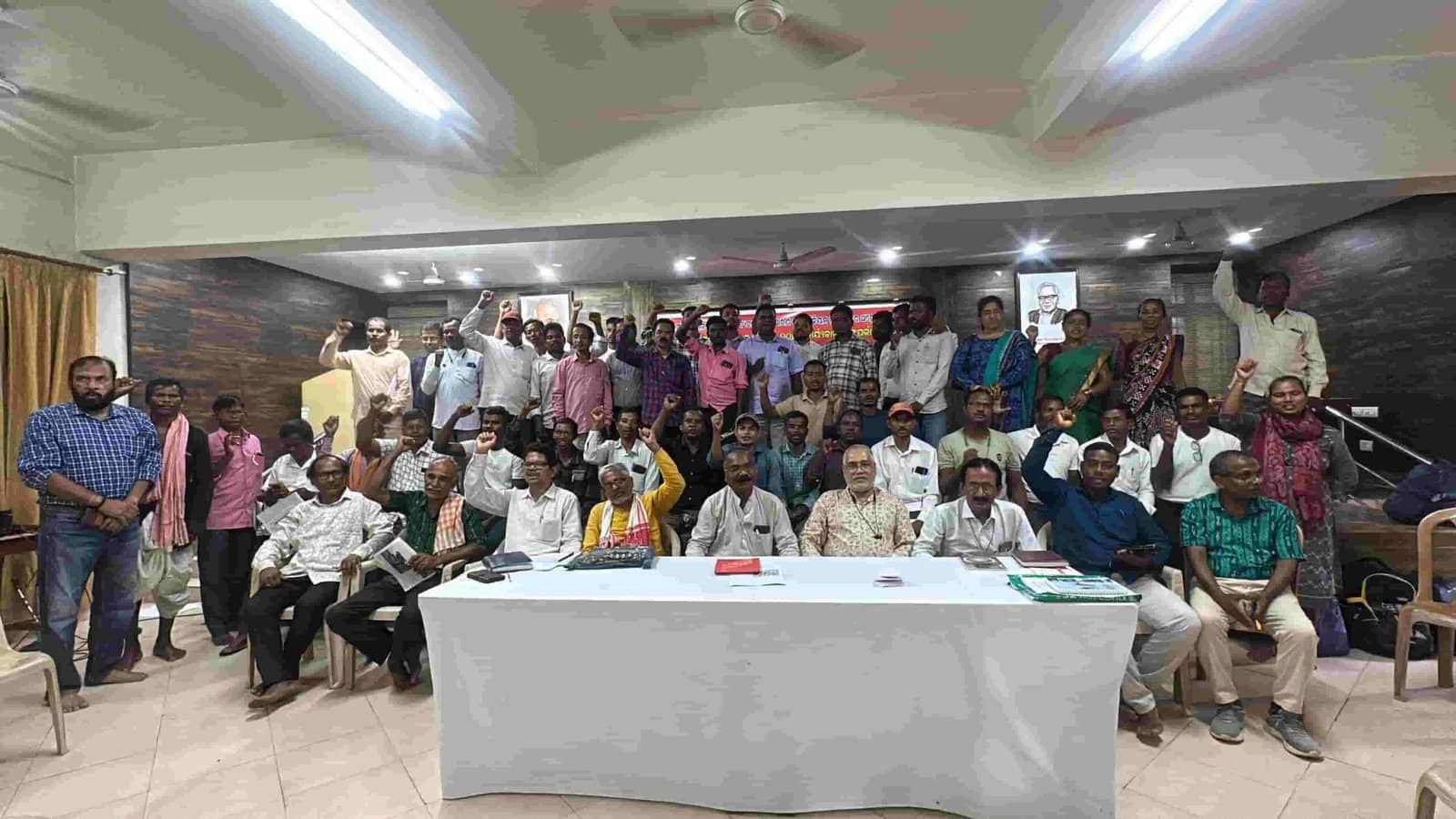
October 10, 2026 (Mumbai) – Political rhetoric and state power converged at Mumbai’s Kranti Maidan, a historic venue with deep roots in the Indian freedom struggle. The gathering was attended by some four hundred people, including members of the Cockroach Janta Party (CJP), civil society organisations like Hum Bharat Ke Log, and Left activists, protesting their alleged exclusion from the electoral rolls and raising concerns over the role of the Chief Election Commissioner. Actor Imran Khan, his partner Lekha Washington and cousin Zayn Marie Khan have been arrested by the police, NDTV reports indicate.
The situation then became administrative. Khan was served a “Leave India Notice” asking him to leave the country by October 28, following a complaint by ruling party politician Kirit Somaiya alleging a breach of visa conditions. Khan has reportedly said he will challenge the decision. The reason cited was his United States citizenship and Overseas Citizen of India (OCI) status. “It seems to be a matter of routine exercise of powers relating to immigration. Article 19 of the Constitution provides freedoms to citizens, but OCI status doesn’t guarantee Indian citizenship or the unfettered right to engage in politics. However, the existence of statutory power does not necessarily answer the question of whether its exercise can be justified in particular circumstances.
But more fundamentally, can immigration law, which is supposed to regulate entry and settlement, be weaponised to discourage political dissent? The very fact of a person being in a country means, by definition, that he or she is involved in the public affairs of its public affairs. A careful distinction is needed between proper administration and exclusionary democracy.
The exclusionary function of the law
Authoritarian tendencies do not always consist of military coups, suspension of constitutions or abolition of elections. They can also be constructed through the discretionary use of powers already conferred in law.” The problem is summed up in the phrase “autocratic legalism,” a term coined by constitutional scholar Kim Lane Scheppele to describe how ostensibly legalistic institutions can be used to remove democratic accountability.
The danger is not so much the absence of law, but rather its selective application of law for purposes inimical to democratic openness.
Indian police are empowered to regulate public protests under the applicable criminal and public order legislation. This may be justified where it is necessary to intervention is necessary to stop violence or protect public safety. However, coercion is subject to appropriate procedural safeguards and, where appropriate, judicial review.
But immigration hearings are different. The State has the right to regulate the entry, residence, and departure of aliens. These powers are necessary for immigration administration, but can be especially far-reaching when wielded against individuals involved in politically sensitive activities. There is a significant difference between investigating a genuine breach of visa conditions and using immigration enforcement in ways that could deter political participation. Issuing an immigration notice post-protest does not, by itself, indicate an ulterior motive. The Court should also be entitled to consider the decision, its factual basis, and the circumstances in which it was made, with the existence of statutory authority being no bar.
The problem with administrative exclusion is that it reduces a political grievance to a squabble over immigration status. It shifts public attention from the charges for which the demonstration was held to the issue of a participant’s right to be in the country.
Thus, the political question might vanish without ever having been truly settled. The law is still in place but there may be less room for public dissent in practice.
The Passport and the Public Sphere: What about Human?
A passport tells you someone’s nationality, but it doesn’t tell the whole story of someone’s relationship to the country they call home. You can live in a city for decades, have a professional career, contribute to the cultural life of the city, build lasting relationships and not be a citizen.
Democracy is more than just a vote. It also depends on the public debate, on the responsibility of the institutions and the possibility to interrogate the living conditions of the people. Foreigners do not possess the same legal status as citizens. But their existence in a society is not merely an administrative fact.
These freedoms are given to the citizens in Article 19. The OCI status does not remove this distinction. Long term residence does not confer political rights to Indian citizens. Recognizing these legal limits, however, does not imply the state should be blind to the dignity or legitimate interests of foreign residents.
The question is not whether all residents should have the same rights under the Constitution. Rather, the question is whether nationality serves as a ground for suspicion of peaceful civic participation or for disproportionate administrative consequences.
That tension is evident in the quote attributed to Khan, where he describes his presence at the protest in terms of his relationship with Mumbai and his concern about restrictions on public expression. One doesn’t have to be formally a citizen to feel responsible for one’s home place.
India’s OCI system recognises the ongoing link of India with persons of Indian origin who are citizens of other countries. However, OCI status is not dual citizenship and does not provide the holder with full political rights or an unqualified right to reside in India.
The problem is that these legal differences are interpreted as a complete civic silence. It may be that a particular constitutional right is not available to a foreign national, that does not mean the question of whether a particular administrative action is lawful, proportionate, or constitutionally permissible can be answered automatically.
Article 14 and Article 19 and limitations on executive power
The Indian Constitution distinguishes between rights available to all persons and freedoms available to citizens only. Article 14 guarantees equality before the law and equal protection of the laws. Article 21 protects life and personal liberty. In contrast, article 19 provides some freedom to the citizens.
That doesn’t mean aliens have no protection of the Constitution. The need for a fair and non-arbitrary procedure was recognised by the Supreme Court in Maneka Gandhi v. Union of India (1978) in matters concerning personal liberty. The Court reiterated that even a foreign national is entitled to human dignity and constitutional protection in Chairman, Railway Board v. Chandrima Das (2000).
But the judgements do not confer on aliens all the particular liberties of citizens. The constitutional issue is how far the rights of all persons limit the exercise of executive power.
In Hans Muller of Nurenburg v. Superintendent, Presidency Jail, Calcutta (1955) the Supreme Court upheld the right of the government to deport foreign nationals. States have a sovereign right to regulate immigration. However, the mere existence of an expulsion power does not mean its exercise is not subject to constitutional scrutiny.
A direction’s validity depends on the statute involved, the facts of the case, the power exercising authority, and any procedural or constitutional limitations. Where immigration is the legal basis for action, it must be analysed under the applicable legal standard. Questions of constitutional law may arise, where power is exercised arbitrarily or for an improper purpose.
The question is not whether the state can regulate aliens. The question is whether the use of that power is consistent with the constitutional guarantees applicable to the person in question.
Opposition as Foreign Interference
Nothing sparks a political debate like the idea that outsiders are stirring the pot. Politicians can avoid the content of the criticism by attacking the critic’s nationality or loyalty.
There is nothing illegitimate about suspicion of outside interference. States have a legitimate interest in the integrity of elections, in the enforcement of immigration laws and in the prevention of unlawful interference in their internal affairs. The problem is that these problems are raised too often without sufficient evidence or simply to silence criticism, just because one of the actors is a foreigner.
An ideal protest concerning electoral rolls should lead to scrutiny of the accuracy of voter registration, the procedures for inclusion and deletion, and the accountability of the institutions concerned. “Any allegation of unlawful conduct has to be considered in light of the relevant law and the facts.
Simply being of a different nationality does not render a protest foreign-directed or illegitimate.
“When a complaint is turned into recognition of a passport, the particular institution is in danger of falling out of the public eye.” This is not about electoral accountability, this is about immigration status and national allegiance.
Even these developments could be scary. The administrative implications for foreign nationals, OCI card holders and members of internationally connected families may be seen as excessive and may deter them from engaging in peaceful civic activities.
In the reported incident it is not known if such an effect occurred . But it is a possibility to be reckoned with wherever the exercise of discretionary state power intersects with political expression. Sovereignty is a prerequisite for good governance, but it can never substitute for reasoned decisions and accountability.
The value of discomfit: satire and resistance
Political satire often employs humour as a tool to unearth uncomfortable truths. It challenges the immunity of public institutions to ridicule through irony and exaggeration and parody.
Incident is taking another turn with alleged involvement of Cockroach Janta Party besides. The account said the group’s name was a deliberate, provocative expression of frustration with a host of issues, including examination paper leaks, youth unemployment and the neglect of the younger generation.
It’s politics may be likeable or unlikeable but political expression is not always in the conventional forms. This can be through strange slogans, funny names or protests made to get public attention.
Such expression should be allowed by law in a healthy democracy. The point of protecting political discourse is not that all the speakers will be reasonable or polite or right. It’s about giving ideas a chance to be challenged, discussed, and the unpleasantness itself not resulting in suppression.
All things, including satire, can go too far in terms of legality. But its provocation is not necessarily an assault on public order.
Things to ask are was there a breach of the legal condition after participating in the political or satirical gathering , was the evidence enough to support the finding , did the proper procedures happen and was the action proportionate .
These questions are more productive than either reflex rejection of the state or the assumption that statutory authority solves the problem.
The City and the Sense of Belonging
Law and democracy are not the same thing, but they are closely linked. Law provides authority, defines rights and resolves disputes. Such institutions are a precondition of democracy. Democracy also requires that there be an open public sphere in which institutions can be questioned and decisions challenged.
There are good reasons for the law of immigration. States have to control entry and stay. They have to impose conditions of legality. And they have to protect their institutions from real threats. The constitution says we are free citizens. Foreigners have no rights to freedom. Permanent residence does not equal citizenship.
But the standards do not protect immigration enforcement from public scrutiny.
What you do if you go to a politically sensitive meeting and then get an immigration notice is not conclude that the state has made a mistake. Nor is it to conclude that the action is justified because you have appealed to a statutory provision. The decision shall be made after taking into account facts, legal authority, procedures and reasons.
But the larger question is that of belonging in a constitutional democracy. A passport can tell you someone’s nationality, and thus the extent of some legal rights, but it doesn’t tell the whole story of their relationship to a city and its people and institutions.
The danger is not immigration law itself, but the danger that the legitimate aims of immigration law might be construed broadly or enforced selectively in ways that make it risky to participate in civic life. Here the public square is physically open, but in practice, it is increasingly unavailable.
The strength of a constitutional democracy, then, is not in doing away with disagreement but in limiting disagreement within the bounds of the law. The problem is to make sure that the tools which are developed to protect the state do not become instruments for the slow erosion of the democratic life of its cities.
Disclaimer:The views and opinions expressed in this article are those of the author(s) and do not necessarily reflect the official policy or position of The Rift.
*Constitutional LawExecutive PowerImmigration LawIndian DemocracyJudicial ReviewOCIPolitical Dissent