Opening The Rift
therift
© 2026 The Rift. All Rights Reserved.
The Crown Prince and the Bully’s Royal Reversal
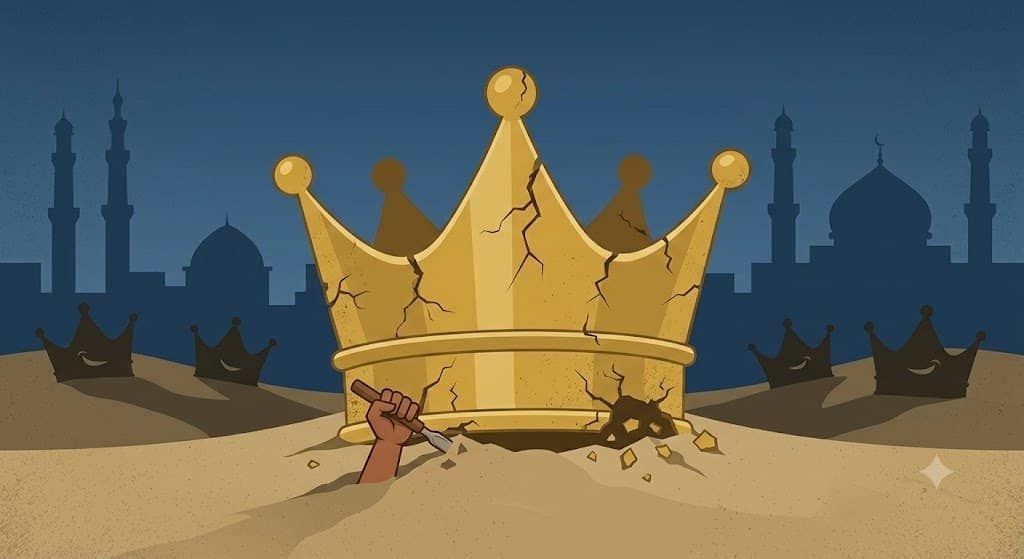
Humiliation, unlike monarchy, has no respect for rank.

Key Takeaways
1 of 3
Automatically generated. Read full article for complete context.
There are few spectacles more satisfying to ruling elites than watching the man who spent years intimidating everyone else discover that intimidation is not a hereditary privilege.
Mohammed bin SalmanCrown Prince of Saudi ArabiaOften referred to as MBS, he is the de facto ruler of Saudi Arabia and holds the positions of Prime Minister and Chairman of the Council for Economic and Development Affairs. built his regional reputation on precisely that illusion. He was the prince who could imprison princes, blockade neighbors, summon prime ministers, browbeat allies, terrify businessmen, wage a ruinous war and still be celebrated in Western capitals as the great modernizer of Arabia. Power did not merely shield him; it seemed to suspend the ordinary laws of consequence.Now Yemen is presenting the invoice.
Ansar AllahHouthi MovementA Zaidi Shia Islamist political and military organization that emerged in Yemen in the 1990s. They are the dominant force in the ongoing Yemeni Civil War. has turned a war RiyadhCapital of Saudi ArabiaThe largest city and capital of Saudi Arabia, serving as the primary financial, administrative, and cultural hub of the kingdom. once expected to conclude through overwhelming force into a brutal lesson in strategic reversal. The movement Saudi Arabia entered Yemen to crush in 2015 is now capable of threatening Saudi infrastructure, menacing vital maritime routes and forcing Riyadh to seek outside help against an enemy it once treated as a nuisance to be bombed into submission.History has a habit of returning power to those who once suffered under it. In the Middle East, political humiliation is rarely forgotten — and almost never forgiven.
That is why Saudi vulnerability is likely to inspire more than nervousness in regional palaces. It may also produce something approaching grim satisfaction. Not because neighboring rulers have suddenly fallen in love with Ansar Allah, and certainly not because Gulf monarchies have discovered revolutionary sympathies. Their pleasure would be colder and more political: the enjoyment of watching the region’s most overbearing royal disciplinarian collide with the limits of coercion.
The memories are not difficult to retrieve.
In 2017, Saudi Arabia and its partners blockaded Qatar, apparently expecting Doha to bend. It did not. The campaign fractured the Gulf Cooperation CouncilRegional Intergovernmental UnionA political and economic alliance of six Middle Eastern countries: Bahrain, Kuwait, Oman, Qatar, Saudi Arabia, and the United Arab Emirates. and ended without the capitulation Riyadh had sought.
That same year, Lebanese Prime Minister Saad Hariri announced his resignation while in Riyadh in circumstances so bizarre that the episode became an international scandal. The spectacle suggested a Saudi leadership that did not merely seek influence over neighboring states; it increasingly behaved as though their political classes were junior employees awaiting instruction.
Inside the kingdom, the message was even blunter.
Then came Jamal Khashoggi.
His murder inside the Saudi consulate in Istanbul did not simply stain Riyadh’s international reputation. It advertised a startling confidence that Saudi power could cross borders, violate another state’s sovereignty and still expect the world to move on. Turkey was not merely embarrassed; it was treated as scenery.
Pakistan had already encountered the same temperament. When its parliament refused to join the Saudi-led Yemen war in 2015, relations with Riyadh cooled sharply. The lesson for weaker allies was obvious: friendship increasingly meant compliance with Riyadh’s demands.
None of this means regional governments desire an Ansar Allah triumph.
MBS spent years projecting sovereign audacity: Saudi Arabia would no longer be lectured, pressured or humiliated. Yet Riyadh now faces an adversary it once expected to pulverize while looking outward for assistance.
The lesson is that power used arrogantly leaves behind a long memory.
States smile at summits. Princes exchange embraces. Diplomats praise eternal brotherhood. And everyone remembers who tried to bend whom.
So the public statements will remain solemn. Ministers will invoke stability. Palaces will speak of de-escalation.
But behind sufficiently thick doors, there may be smiles.
Not because Yemen’s tragedy is funny.
Because humiliation, unlike monarchy, has no respect for rank.
Disclaimer:The views and opinions expressed in this article are those of the author(s) and do not necessarily reflect the official policy or position of The Rift.