Opening The Rift
therift
© 2026 The Rift. All Rights Reserved.
WHY SHOULD ANYBODY ENJOY IMMUNITY FROM LEGAL PROCESS
The idea of immunity from legal proceedings is antithetical to the spirit of democracy and hence must be dispensed with.



Key Takeaways
1 of 3
Automatically generated. Read full article for complete context.
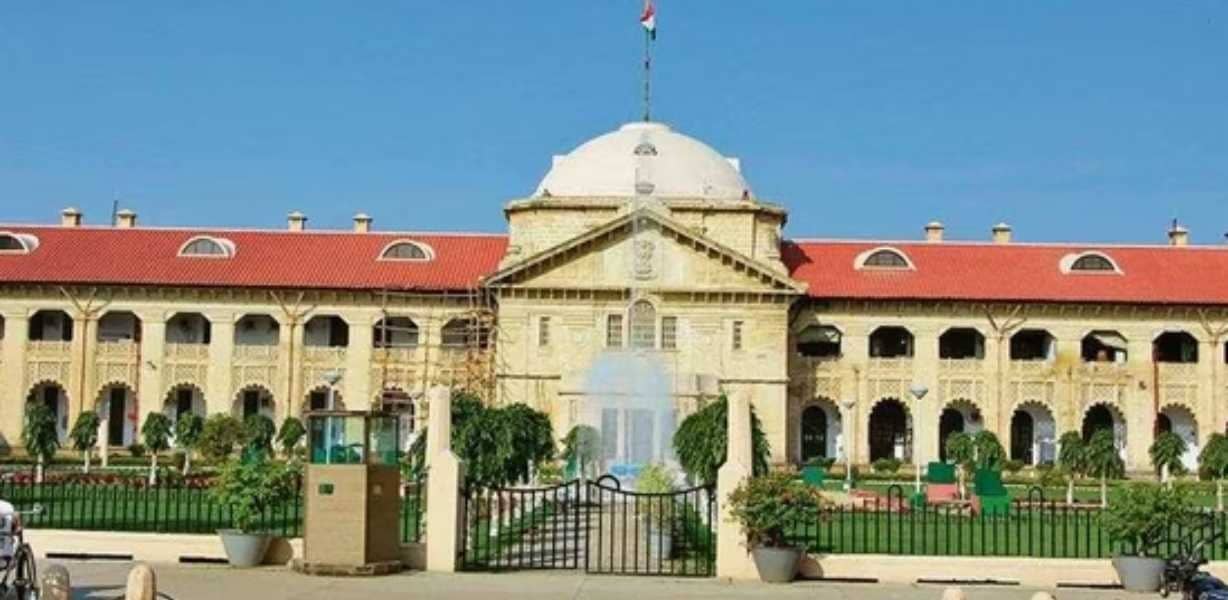
The Allahabad High Court’s bench comprising Justices Siddharth and Vinai K. Dwivedi has ruled that ‘politicians bear a special duty to their constituents, and that failure to secure a stay of conviction may lead to loss of an opportunity to contest an election.’ It also stated, ‘Keeping in view the right to livelihood of a common man, which is not less important than the right to contest an election by a politician, the conviction and sentence of the appellant deserve to be stayed…’ The convict Nandlal Rai has been sentenced to life imprisonment for the murder of Pramod Kumar Nigam, an activist who worked for the rights of street vendors, in Sigra area of Varanasi in 2017. In his petition for bail and a stay on his conviction, Nandlal Rai had stated that he wished to contest the upcoming Uttar Pradesh Assembly election either as a ruling party candidate or an independent. He was fortunate to get relief from the Court, as did his co-convict Sheshnath Sharma.
Section 8 of the Representation of People Act, 1951, bars people from contesting elections who have committed certain offenses. Furthermore, Section 8(3) provides that a person convicted of any offense and sentenced to imprisonment for not less than two years shall be disqualified from contesting an election from the date of such conviction and shall continue to be disqualified for a further period of six years from his release. A number of people in the country, for example Lalu Prasad Yadav, J. Jayalalitha, Azam Khan, Dr. Sunilam (two times MLA from Madhya Pradesh), etc., have not been able to contest any election since their conviction. Dr. Sunilam also appealed against his conviction but he was not as lucky as Nandlal Rai who got a relief. Interestingly, to disqualify Rahul Gandhi under the same provision, a Surat trial court (later affirmed by the Sessions and Gujarat HC) had imposed a maximum sentence of two years in a criminal defamation case. Later, the Supreme Court stayed the conviction order while noting that no reason was provided by the trial court in imposing the maximum sentence upon Gandhi.
In Azam Khan’s matter, the criminal justice system appears to be exploited by the U.P. government to continuously keep him incarcerated. While it is not uncommon for governments to file another case as soon as an accused gets bail to ensure continued detention, doing so repeatedly, as in Azam Khan’s case, is exceptional.
Then there are people who have been elected but continue to be in jail under serious charges. For example, Abdul Rashid Sheikh also known as Engineer Rashid, who won the Parliamentary election from Baramulla constituency in J&K, defeating none other than Omar Abdullah in 2024, continues as an undertrial in Tihar Jail under charges of criminal conspiracy, waging war against the state, and working with terrorist organizations. The Unlawful Activities (Prevention) Act has been invoked against him. Pro-Khalistan activist Amritpal Singh won the Parliamentary election in 2024 from Khadoor Sahab in Punjab but continues to be in jail on criminal charges for storming the Ajnala police station in 2023. He was initially arrested under the National Security Act and is languishing in Dibrugarh Jail, far away from Punjab.
When Engineer Rashid sought to attend the budget session of Parliament in 2025, the High Court of Delhi ordered custody parole and reportedly asked him to pay Rs. 8.74 lakhs for six days to cover the cost of escort and vehicle required to visit Parliament, of which he was asked to deposit half the amount, Rs. 4 lakhs, in advance.
The question that arises is: if the Allahabad High Court believes that in Nandlal Rai’s case, he bears a special duty towards his constituents or that the right to contest an election is as important as the right to livelihood, why doesn’t the same argument apply to other cases where politicians have been convicted or are in jail? And why should the argument be restricted to only politicians? What about a common citizen’s right to livelihood, especially for those who have been convicted or are languishing in jail as undertrial prisoners? It appears from the court’s argument that the right to livelihood should be enough of a justification for a convict to successfully appeal for a stay on their conviction and sentence. This creates a stark dichotomy at two levels: first, by creating a distinction between politicians and common citizens; and second, by analyzing the differential (or deferential) treatment of politicians belonging to the BJP or its allies. It would not be unjustified to posit that the court’s approach is questionable vis-à-vis the equality principle enshrined under Article 14 of the Constitution of India.
Further, the The President of India and Governors of States enjoy absolute Constitutional immunity from criminal prosecution while they continue in office. Current and former Supreme Court and High Court Judges are protected from civil and criminal proceedings for acts committed in the discharge of their official duties; however, this protection does not cover corruption. The Chief Election Commissioner, presently at the center of a storm because of allegations of voter list manipulations, and Election Commissioners have been granted lifelong immunity through an amendment in the Act related to their appointment, conditions of service, and term of office in 2023, from any civil or criminal proceedings for acts, things, or words spoken in the course of discharging their official duties.
It was a matter of widespread speculation whether Dhushyant K. Gautam, who is allegedly involved in the Ankita Bhandari murder case, was made Governor of Sikkim to shield him from legal action. Similarly, when the Supreme Court ordered the CBI to pursue the criminal conspiracy case in the matter of the Babri Masjid demolition, it observed that Kalyan Singh enjoyed immunity from the process because of his position as Governor of Rajasthan. He was later acquitted.
From the Allahabad High Court judgment, it appears as if politicians are also expecting a kind of immunity from legal proceedings that the President, Governors, Higher Judiciary Judges, CEC, and ECs enjoy. However, Article 14 provides for equality before the law. Hence, the idea of immunity from legal proceedings is antithetical to the spirit of democracy and must therefore be dispensed with. Every person should be treated equally, in its true sense, before the law.
It must be mentioned that the Allahabad High Court relied upon a Supreme Court judgment in the matter of Afzal Ansari, wherein it had noted that a conviction can be suspended where failure to stay a conviction would lead to injustice or irreversible consequences. Additionally, the facts and circumstances of the matter would also be relevant in such consideration. Notably, in Ansari’s matter, he was booked under the “Gangster Act” of Uttar Pradesh in relation to an old FIR in which he was later acquitted. Therefore, the reason for relief in Ansari’s matter was the facts of the case and not simply the argument of a representative of a constituency; indeed, that was a consideration, but it came after the instant facts of the case.
Hence, the reasoning put forth by the Allahabad HC is erroneous and requires necessary consideration by the Supreme Court.
Disclaimer:The views and opinions expressed in this article are those of the author(s) and do not necessarily reflect the official policy or position of The Rift.
*Constitutional LawArticle 14Indian JudiciaryJudicial ReviewPolitical ImmunityRepresentation of People Act