Opening The Rift
therift
© 2026 The Rift. All Rights Reserved.
Chor Police: When Oversharing Becomes a Free Tutorial on What Not To Do Next
Successful cases stop being isolated wins and start resembling open-source case studies for evasion.

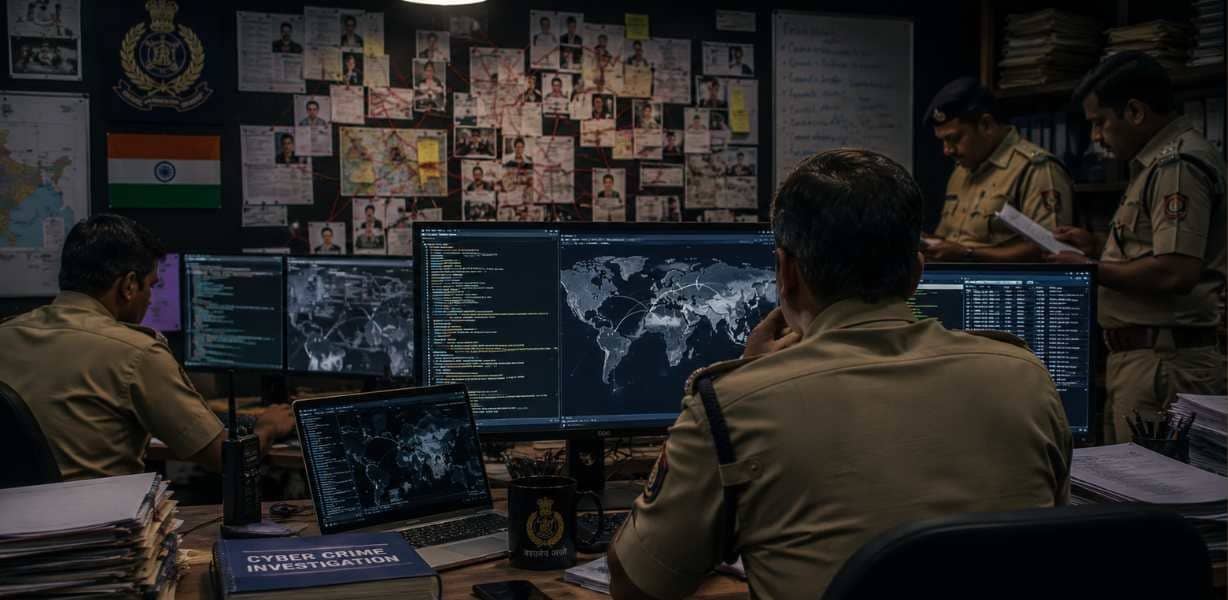
Image | Representative Only
Key Takeaways
1 of 3
Automatically generated. Read full article for complete context.
The Hyderabad Police have earned a solid reputation as one of India’s sharpest, most tech-forward law enforcement outfits. They chase suspects across state borders, stitch together digital trails from phones and payments, piece together hours of grainy surveillance footage, and work hand-in-glove with agencies elsewhere. For ordinary citizens watching this unfold, the pride feels real. In an era where criminals are increasingly slick with technology : running scams from laptops or coordinating hits via encrypted apps : having cops who can keep up is both comforting and essential.
Yet beneath the congratulatory and viral success stories lies an uneasy question that rarely gets aired: at what point does all this openness start eating away at the very effectiveness it’s meant to showcase?
Policing in a democracy like ours demands public communication. People expect to hear that investigations are being handled properly, without shortcuts or corner-cutting. Accountability isn’t a luxury : it’s a cornerstone. When the public sees competent work, trust grows. They sleep a little easier knowing the system can actually catch the bad guys and make things right.
But transparency and spilling every operational detail are two very different things.
The Open-Source Playbook
Walk into almost any police briefing in India these days, especially in places like Hyderabad or other big metros, and you’ll hear remarkably granular breakdowns of how a suspect was finally nabbed. It’s not just “we used technical means.” It’s specifics: the fugitive who foolishly powered up an old SIM for two minutes, the guy who thought swapping phones would throw everyone off but forgot about tower pings, the driver who cruised through toll plazas without realizing FastagFASTagAn electronic toll collection system in India operated by the NHAI using RFID technology. data logs everything, or the reconnaissance crew caught on CCTV casing a target weeks before the crime. These details make for compelling headlines and reassuring soundbites. They humanize the police work. They show the public that the force is on the ball.
They also come with a hidden cost.
Every solved case is packed with lessons. The uncomfortable truth is that the students aren’t always the ones we hope are paying attention. When officers publicly detail how a brief phone activation cracked a case wide open, they’re not just closing the book. They are flagging a vulnerability for the next clever operator. The same goes for toll records, location metadata, UPIUnified Payments Interface (UPI)An instant real-time payment system developed by National Payments Corporation of India. transactions, or the way investigators correlate device IDs with movement patterns. What sounds like a victory lap becomes a free tutorial on what not to do next time.
What sounds like a victory lap becomes a free tutorial on what not to do next time.
Nowhere is this more evident than in stories involving CCTV. Time and again, police highlight footage of suspects doing dry runs : scouting escape routes, checking camera angles, timing security patrols : only to get identified later. On the surface, it’s great policing: it proves that preparation doesn’t guarantee success and that surveillance works. But think about the flip side. Future plotters watching the news get an instant education. “Wear a mask or hoodie next time. Keep your head down. Change your gait. Approach from the blind spot.” One high-profile case after another has essentially broadcast that pre-attack reconnaissance is now a traceable, chargeable step, and that sloppy execution during it is what gets you caught. The infrastructure built to deter crime starts losing its teeth because the people it’s aimed at have already adapted.
The infrastructure built to deter crime starts losing its teeth because the people it’s aimed at have already adapted.
The immediate audience is the tax-paying public, hungry for reassurance. The most diligent listeners, though, often sit in the shadows of the criminal underworld.
Most street-level offenders aren’t criminal masterminds. Many get pinched because they act impulsively, get sloppy under pressure, or simply don’t grasp the reach of modern tools. A quick phone call to coordinate a burglary, leaving a vehicle in a monitored zone, or using the same digital wallet for both legit and shady dealings… these are the mistakes that keep clearing houses busy. But every polished press conference hands out an unintended syllabus. It spells out the exact behaviors that raise red flags and the slip-ups that lead to handcuffs.
Over time, this chips away at the amateur edge that investigators often rely on. Criminal sophistication creeps upward. The small-time housebreaker who used to pocket his personal phone learns to ditch it entirely or switch to burner devices bought with cash. The cyber-fraud operator starts routing transactions through mules and VPNs after hearing how location data sealed someone else’s fate. An absconding politician or businessman realizes that toll plazas and Fastag aren’t just for collecting fees : they’re a Hansel & Gretel breadcrumb trail across states. Even swapping SIM cards, once seen as a basic evasion tactic, gets exposed as insufficient when investigators explain how they linked IMEI numbersIMEI NumberInternational Mobile Equipment Identity, a unique 15-digit number used to identify a mobile phone., app logins, and travel patterns anyway.
Uncertainty as a Weapon
This isn’t hypothetical. Look at the widely reported case of a fugitive office-bearer from an Association. Media coverage laid out in detail how investigators pieced together his movements across multiple states using mobile surveillance, vehicle trackers, Fastag data, and toll records. The work was impressive, involved, coordinated, patient, and effective. But broadcasting the full playbook raises the same nagging doubt : did every technical nugget really need to reach the public the moment the cuffs went on? Similar patterns pop up in drug busts, where police describe how they monitored specific apps or call records, or in kidnapping cases where digital footprints from seemingly innocuous actions sealed the deal.
Compare that approach to how things often play out elsewhere. In the UK, Canada, or much of the United States, announcements tend to be more measured. Officers will confirm an arrest, outline the broad charges, and maybe mention “technical evidence”. No more.
They steer clear of the step-by-step manual, at least while cases are fresh or patterns remain active. The logic is pragmatic : uncertainty is a weapon. When a criminal doesn’t know exactly which thread unraveled his plan : Was it the phone? The camera? A tip from an associate? Financial records? — the crook has to second-guess everything. Every move carries risk. That fog of war keeps the advantage with law enforcement.
Oversharing collapses that fog. It lets the next generation refine tactics, test countermeasures, and evolve faster than agencies can adapt their public posture. Successful cases stop being isolated wins and start resembling open-source case studies for evasion.
The Calibration Problem
Defenders of detailed briefings have a fair point, and it’s one worth wrestling with honestly. In India’s constitutional setup, police power can’t operate in a black box. Scrutiny prevents abuse, reassures a skeptical citizenry, and demystifies the process so people understand the system is working on their behalf. A slide toward excessive secrecy could breed corruption, inefficiency, or worse, echoing some of the darkest chapters in our policing history where lack of oversight allowed excesses to fester. Public trust, once lost, is brutally hard to rebuild, especially in a diverse, media-saturated democracy where rumors spread like wildfire.
No one serious is arguing for a total blackout. The real issue is calibration.
Accountability doesn’t require turning every presser into a masterclass on investigative tradecraft. The public deserves to know only that an arrest followed proper procedure, that evidence was gathered lawfully, and that rights were respected. Oversight comes from courts, internal affairs, legislative committees, defense lawyers, and responsible journalism, not from live-streaming the precise digital breadcrumbs that led to a collar. Those technical details belong in case files, court records, and internal training sessions, not front-page recaps.
A more thoughtful strategy would shift the spotlight to outcomes and broader messages. Celebrate inter-agency cooperation. Highlight the certainty that crime doesn’t pay in the long run. Reassure people that Hyderabad or any other force is investing seriously in capabilities that match the evolving threat landscape. Stress that investigators are closing gaps and bringing resolution. All of this can happen without gifting tomorrow’s offenders a cheat sheet on yesterday’s blind spots.
The ultimate aim of police communication should be deterrence through demonstrated competence, not inadvertent instruction. When the thrill of a big bust leads to exhaustive play-by-plays, we risk a perverse cycle: cops build sophisticated traps with hard-earned resources and public money, only to explain in painstaking detail exactly how those traps function. The mouse gets caught, the cat congratulates itself on camera, and the next mouse learns to avoid the cheese entirely.
This tension isn’t unique to India, but our context amplifies it. Rapid urbanization, exploding digital adoption from UPI transactions to ubiquitous CCTV grids and a vibrant, competitive news ecosystem create perfect conditions for over-disclosure. Hyderabad’s own push toward “smart policing,” with tools like facial recognition, GIS crime mapping, and integrated databases, is admirable in many ways. It shows proactive adaptation. Yet the same openness that builds civic pride can blunt the edge of those very tools.
The Human Element
Consider the human element too. Police officers work under immense pressure which can be political, public, and professional, or all of them. A high-profile arrest generates headlines, boosts morale, and justifies budgets. Reporters chase exclusives and quotes. In that ecosystem, restraint can feel like self-sabotage, but long-term effectiveness demands it. Intelligence agencies have long understood this principle : some capabilities retain their power precisely because their full scope remains opaque. The same logic applies to policing, especially as crimes grow more transnational and tech-dependent.
Ultimately, striking the right balance isn’t about muzzling the force or hiding success. It’s about professional discipline in storytelling. Share enough to maintain trust and legitimacy. Hold back enough to preserve the operational upper hand. In a world where information travels instantly and criminals learn as quickly as anyone else, that discipline might be one of the most important tools in the kit.
Because in the end, the goal isn’t just catching today’s offender with yesterday’s methods. It is staying one thoughtful step ahead of tomorrow’s Simon Templars and Professor Moriartys …or their real-life avatars.
The POLICE are not the Publicly Operated Library In Criminal Education.
Jai Hind
Disclaimer:The views and opinions expressed in this article are those of the author(s) and do not necessarily reflect the official policy or position of The Rift.