Opening The Rift
therift
© 2026 The Rift. All Rights Reserved.
Liberty Cannot Arrive Posthumously: Babubhai Prajapati, the Carceral State and the Constitutional Duty of Courts
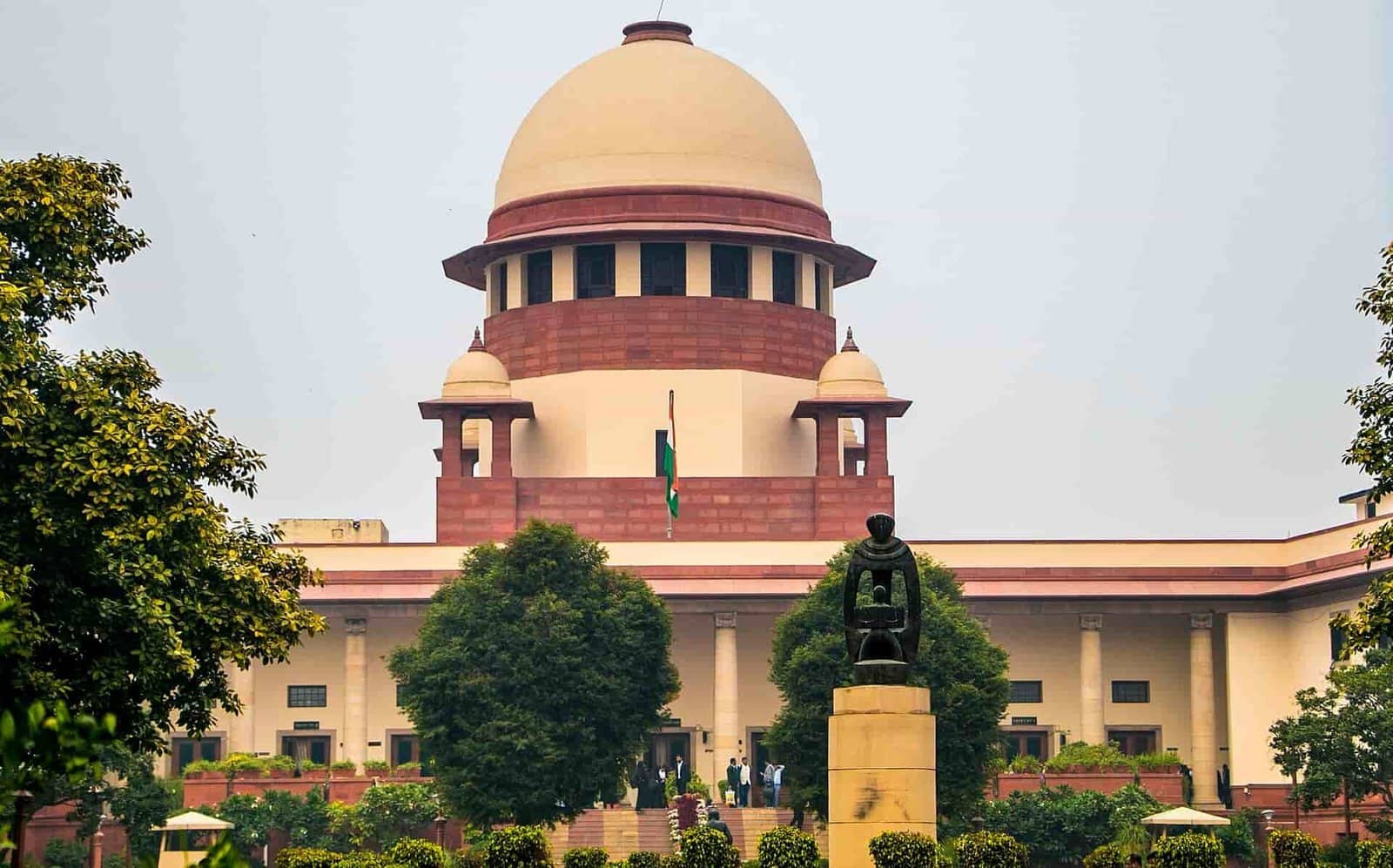
When criminal process itself becomes punishment, can courts remain passive merely because the State invokes crime, terrorism, conversion, public order or national security?


Babubhai Prajapati, a symbol of resistance against the carceral state, highlighting the constitutional duty of courts
Key Takeaways
1 of 3
Automatically generated. Read full article for complete context.
The tragedy of a ₹20 corruption prosecution that consumed three decades raises a larger constitutional question: when criminal process itself becomes punishment, can courts remain passive merely because the State invokes crime, terrorism, conversion, public order or national security?
There is something almost unbearably poignant about the last reported words of Babubhai Prajapati.
After living for nearly three decades under the shadow of a corruption prosecution arising from an allegation that he had accepted ₹20, the former Gujarat police constable was acquitted by the Gujarat High Court on 4 February 2026. According to his lawyer, Prajapati expressed relief that the stigma attached to him had finally disappeared. The following day, he died.
The sequence has the quality of Greek tragedy. The State accused him in 1996. A Charge-sheetLegal DocumentIn Indian law, a formal document filed by the police detailing the charges against an accused person after completing their investigation. followed in 1997. Charges were framed only in 2002. The trial began in 2003. He was convicted in 2004 and sentenced to four years’ imprisonment and a fine of ₹3,000. His criminal appeal then remained pending in the Gujarat High Court for approximately twenty-two years before the conviction was ultimately reversed because the prosecution evidence did not establish guilt beyond reasonable doubt.
Babubhai Prajapati’s Three-Decade Ordeal
1996
Accused of ₹20 Corruption
1997
Charge-sheet Filed
2002
Charges Framed
2003
Trial Began
2004
Convicted (4 yrs imprisonment)
2004-2026
Appeal Pending (22 Years)
Feb 4, 2026
Acquitted by High Court
Feb 5, 2026
Died
VISUALS BY THE RIFT
One factual correction is important. Some reports, including headlines, have described Prajapati as having “spent 30 years in jail”. The available detailed accounts do not establish thirty continuous years of incarceration. They state that his prosecution lasted approximately thirty years, while the sentence imposed in 2004 was four years’ imprisonment. The constitutional scandal is grave enough without the exaggeration: a man’s reputation, career, service benefits and peace of mind remained hostage to a criminal proceeding for three decades, with his appeal alone awaiting determination for twenty-two years.
That distinction actually makes the case more jurisprudentially significant. The Constitution protects not merely freedom from the prison cell. It protects a person’s life, dignity, reputation, livelihood and the right to have criminal accusations determined within a reasonable time.
Prajapati’s story therefore deserves to be understood not as an eccentric anecdote about a ₹20 bribe, but as a warning about something more fundamental: the capacity of criminal process to become punishment before guilt has been finally established.
The Constitutional Irony : Acquittal Without Restoration
An appellate acquittal ordinarily signifies vindication. In a case decided twenty-two years after the appeal was filed, however, the language of victory becomes inadequate.
What exactly was restored to Prajapati on 4 February 2026?
- His legal innocence was restored. His lost years were not.
- His reputation was judicially restored. The decades during which the conviction stood were not.
- His possible entitlement to service benefits could perhaps have been recalculated. His career could not be rerun.
- And when death followed the next day, even the ordinary consolations of acquittal became largely symbolic.
The case exposes a distinction insufficiently appreciated in Indian criminal jurisprudence: there is a difference between correcting an injustice and preventing one.
An appellate court may eventually reverse an erroneous conviction. But if it does so after twenty-two years, the legal system has corrected the record without necessarily repairing the life upon which that record operated.
This is precisely why speedy justice is not an administrative aspiration. It is a constitutional right.
The Supreme Court has repeatedly located that right within Article 21. In a 2018 judgment reviewing the jurisprudence beginning with Maneka Gandhi and Hussainara Khatoon, the Court reiterated that the guarantee encompasses speedy investigation, trial, appeal, revision and retrial. More importantly, it warned that inordinate delay may itself become presumptive evidence of prejudice, particularly where an accused is incarcerated, lest “prosecution … become persecution.”
That formulation deserves renewed attention.
For there comes a point at which the constitutional question is no longer merely whether the State was entitled to prosecute. The question becomes whether the manner in which the prosecution has been allowed to continue has itself become an unconstitutional deprivation of liberty.
From Prajapati to the Larger Carceral Question
Prajapati’s prosecution concerned corruption. The allegation was extraordinarily modest in monetary terms, although corruption by a public servant is of course a legitimate subject of prosecution.
The contemporary constitutional problem becomes still more acute when one moves from ordinary penal statutes to exceptional criminal legislation: the Unlawful Activities (Prevention) Act, preventive-detention regimes, anti-conversion legislation and other statutory schemes containing stringent arrest or bail consequences.
The offences alleged in terrorism cases are incomparably more serious than the ₹20 allegation against Prajapati. No responsible constitutional analysis should equate them.
But precisely because the allegations are more serious, judicial vigilance must become greater, not smaller.
A grave accusation cannot function as a substitute for proof.
Nor can the political vocabulary surrounding an accusation determine the content of Article 21.
“National security”, “terrorism”, “anti-national activity”, “illegal conversion”, “organised crime” and “public order” describe legitimate governmental concerns. They cannot become incantations upon the utterance of which ordinary constitutional scrutiny disappears.
The distinction between the seriousness of an allegation and the strength of the evidence supporting it is foundational to criminal adjudication.
When courts confuse the two, accusation itself begins to acquire the juridical force of conviction.
Gujarat : The Akshardham Warning
Gujarat itself provides a particularly sobering example.
In Adambhai Sulemanbhai Ajmeri v. State of Gujarat, arising from the 2002 Akshardham terrorist attack, six accused who had been convicted under POTAPrevention of Terrorism ActA controversial anti-terrorism law enacted in India in 2002 and repealed in 2004, known for its stringent provisions regarding arrest and bail. were ultimately acquitted by the Supreme Court in 2014. Some had been sentenced to death; others faced life or lengthy imprisonment. The Supreme Court found the prosecution case unsustainable and sharply criticised deficiencies in the investigation and the invocation of POTA.
The importance of that decision extends beyond the individuals concerned.
A terrorism prosecution generates enormous institutional pressure. The crime is horrific. The public understandably demands answers. Investigators are expected to produce perpetrators. Governments have powerful incentives to demonstrate control.
But constitutional adjudication begins precisely where such pressures become strongest.
The judicial question cannot be: “A terrible crime occurred; therefore somebody must remain imprisoned.”
It must remain: “Has the State proved that this particular individual committed it, through legally admissible and reliable evidence?”
The distinction is elementary. Yet the history of wrongful terrorism prosecutions demonstrates how consequential its erosion can become.
Rajasthan : When Even a Death Sentence Does Not End the Evidentiary Question.
Rajasthan supplies another disturbing illustration.
In the Jaipur serial-blast litigation, four Muslim accused who had been convicted and sentenced to death were acquitted by the Rajasthan High Court in 2023. The High Court’s conclusions generated serious criticism of the investigation and evidentiary foundation upon which the prosecution had proceeded.
One need not infer communal motivation from every failed prosecution. That would itself substitute assumption for evidence.
But neither should constitutional analysis move to the opposite extreme and refuse to examine patterns merely because individual cases can be explained separately.
When members of a minority community repeatedly experience arrest under exceptional statutes, prolonged incarceration, exceptionally slow trials and eventual acquittal, courts must be willing to ask whether ostensibly neutral criminal procedure is producing structurally unequal consequences.
The question is not whether every police officer or prosecutor harbours prejudice.
The constitutional question is whether State power, considered institutionally, is operating in a manner compatible with Articles 14, 21, 22 and 25.
That inquiry is legitimate even without establishing subjective communal animus.
Uttar Pradesh and the Expansion of Preventive Criminalisation
The problem takes another form in Uttar Pradesh.
Its prohibition-of-unlawful-conversion legislation has brought the criminal law into intimate questions of religious conversion and interfaith relationships. Litigation surrounding the legislation demonstrates how easily questions involving individual choice, religious identity and intimate association can migrate into police stations and bail courts.
Again, the proposition should be carefully framed. The State unquestionably possesses legislative competence to prohibit conversion accomplished through force, fraud or coercion. Protecting citizens from coercion is itself a legitimate governmental function.
But there is a profound constitutional difference between prosecuting coercive conversion and creating an enforcement environment in which voluntary interfaith association becomes presumptively suspicious.
Article 25 protects freedom of conscience. Article 21 protects decisional autonomy and dignity. Article 14 prohibits arbitrary State action.
Where criminal legislation touches these domains, courts cannot confine themselves to asking whether the FIR mechanically reproduces statutory language. They must examine whether the factual allegations actually disclose the prohibited conduct.
Otherwise, arrest itself becomes the sanction.
The Minority Dimension Cannot Be Judicially Invisible
The communal dimension requires particular care because constitutional criticism must itself remain evidentially disciplined.
It would be unsound to claim that every prosecution of a Muslim or Christian accused in Gujarat, Rajasthan or Uttar Pradesh represents religious persecution. Criminal liability remains individual.
But it would be equally unsound to insist that religion becomes constitutionally irrelevant whenever criminal procedure begins.
Historical prison data have repeatedly raised questions concerning disproportionate representation of Muslims among undertrial prisonersLegal StatusIndividuals who are awaiting trial or whose trial is ongoing, and who are held in judicial custody, often for extended periods..
Earlier NCRBNational Crime Records BureauAn Indian government agency responsible for collecting and analyzing crime data, including statistics on prisoners and undertrials across the country.\-derived analysis, for example, showed that Muslims constituted approximately 27% of undertrials in Uttar Pradesh despite representing approximately 19% of the State’s population. Importantly, their proportion among convicted prisoners was substantially lower and approximately aligned with population share.
Such statistics do not prove discrimination in any individual prosecution.
But they do identify a phenomenon deserving constitutional attention: disproportion may occur most strongly at the stage before guilt is finally determined.
That is precisely the stage at which bail jurisprudence operates.
The constitutional danger therefore lies not only in wrongful conviction. It lies in wrongful or disproportionate pre-conviction incarceration.
An accused acquitted after ten years has not received ten years of imprisonment as a judicial sentence. Yet as a matter of lived reality, ten years have nevertheless been taken from him.
The Constitution cannot be indifferent to the distinction merely because the imprisonment bears the procedural label “undertrial custody”.
The Supreme Court Has Already Supplied the Constitutional Answer
Indian constitutional law does not lack doctrine. What it frequently lacks is consistent implementation.
In Union of India v. K.A. Najeeb, (2021) 3 SCC 713, the Supreme Court made clear that statutory restrictions upon bail under special legislation cannot completely extinguish the constitutional jurisdiction of courts where prolonged incarceration and an unlikely early conclusion of trial produce a violation of Article 21.
The Court subsequently reiterated the principle. In a 2021 judgment, it stated that undertrials cannot be detained indefinitely and that once it becomes apparent that a timely trial is impossible and substantial incarceration has already occurred, courts would ordinarily be obliged to consider release. It expressly declared that deprivation of personal liberty without speedy trial is inconsistent with Article 21.
The principle has survived subsequent UAPAUnlawful Activities (Prevention) ActIndia’s primary anti-terrorism law, known for its stringent bail provisions and broad definitions of ‘unlawful activities’, making it difficult for accused persons to secure release. jurisprudence.
In Sheikh Javed Iqbal v. State of Uttar Pradesh, the Supreme Court granted bail after approximately nine years of incarceration where the trial had progressed at what the Court described as a snail’s pace. The Court made clear that statutory restrictions cannot defeat constitutional liberty where Article 21 itself has been infringed.
The doctrine has become still more significant recently. In July 2026, the Supreme Court granted bail to two UAPA accused who had spent nearly twelve years in custody while their trial remained unfinished, treating such prolonged incarceration as implicating Article 21.
The constitutional proposition should therefore no longer be controversial:
The more slowly the State prosecutes, the weaker its moral and constitutional claim to imprison an unconvicted person indefinitely.
A government cannot simultaneously say : we are unable to finish your trial for ten years; and we are nevertheless constitutionally entitled to imprison you throughout those ten years.
Article 21 exists precisely to prevent that proposition from becoming normal.
Bail Courts Are Constitutional Courts
One of the most damaging habits in Indian criminal procedure is the treatment of bail as a subordinate procedural question.
It is not.
Every bail hearing involving prolonged incarceration is an Article 21 hearing.
A judge deciding bail is determining whether the coercive power of the Republic may continue physically confining a citizen who remains presumptively innocent.
That decision should therefore examine more than the penal sections reproduced in the FIR.
Courts should ask : How long has the accused been incarcerated? How many witnesses remain? How much of the delay is attributable to the accused? How much is attributable to the prosecution? Is the prosecution evidence substantially documentary? Is continued custody actually necessary to prevent interference with evidence? What is the accused’s criminal history? Is the statutory offence being invoked on facts that genuinely satisfy its ingredients?
And, most importantly, is there any realistic prospect of trial concluding within a constitutionally acceptable period?
These questions become especially important where special statutes reverse the ordinary gravitational pull towards liberty.
Courts Must Look Behind the Label
Judicial review fails when courts review the name of the offence instead of the substance of the allegation.
A UAPA section appearing in an FIR cannot relieve the court of examining whether the factual ingredients of terrorism are actually disclosed.
An allegation of unlawful religious conversion cannot relieve the court of asking whether force, fraud, coercion or prohibited inducement is actually alleged and supported.
A public-order justification cannot automatically validate preventive detention.
The Supreme Court’s demolition judgment of November 2024 provides an instructive constitutional analogy. In condemning punitive demolitions undertaken merely because a person had been accused of an offence, the Court stated that the executive cannot assume the judicial function of determining guilt and imposing punishment. Punishing an accused through executive demolition without due process, the Court held, violates the rule of law.
The same constitutional logic must illuminate incarceration.
The executive cannot be permitted to achieve through prolonged pre-trial imprisonment what it could constitutionally achieve only through conviction and sentence after trial.
Otherwise the distinction between accusation and punishment collapses.
“Procedure Established by Law” Cannot Mean Procedure Without an End
After Maneka Gandhi v. Union of IndiaLandmark Judgment (1978)A pivotal Supreme Court of India judgment that significantly expanded the interpretation of ‘personal liberty’ under Article 21, establishing that ‘procedure established by law’ must be just, fair, and reasonable., (1978) 1 SCC 248, Article 21 cannot be satisfied merely by pointing to statutory procedure. The procedure depriving a person of liberty must itself be just, fair and reasonable.
A criminal process that lasts indefinitely therefore raises an Article 21 problem independently of its eventual outcome.
This has an important implication.
An acquittal after twenty years should not automatically be celebrated as evidence that “the system worked”.
Sometimes it demonstrates precisely the opposite.
The system worked only if one looks exclusively at the final page of the judgment.
Constitutional justice requires examining the preceding twenty years.
The State Must Bear the Consequences of Its Own Delay
Indian bail jurisprudence should now move toward a stronger constitutional presumption.
Where an accused has undergone a substantial portion of the maximum possible sentence as an undertrial, release should ordinarily follow unless demonstrable and exceptional circumstances justify continued custody.
Where trial cannot reasonably conclude within the foreseeable future, statutory bail restrictions should yield to Article 21.
Where delay is principally attributable to the prosecution or institutional incapacity, the State should not be permitted to derive an advantage from its own inability to provide a speedy trial.
And where an accused is ultimately acquitted after extraordinary incarceration attributable to demonstrable investigative or prosecutorial failure, Indian law needs a more coherent compensatory jurisprudence.
A constitutional right without an effective remedy risks becoming rhetorical.
Judicial Independence Includes Independence From the Political Narrative of Crime
There is another dimension that courts must confront.
Criminal prosecutions do not occur in a political vacuum.
Governments campaign on law and order. Police forces hold press conferences. Expressions such as “terror module”, “love jihad”, “anti-national”, “conversion racket” and “organised conspiracy” can enter public discourse long before evidence is tested in court.
The judiciary must remain institutionally resistant to this vocabulary.
The courtroom is the one place in a constitutional democracy where political description must surrender to legal proof.
A judge does not decide whether an accused belongs to a socially feared category.
The judge asks whether the prosecution has established legally defined ingredients through admissible evidence.
This distinction becomes particularly important for religious minorities because majoritarian political narratives can alter the social meaning of an accusation long before adjudication begins.
The judicial obligation is therefore not to favour minorities.
It is considerably more fundamental:
to refuse to allow minority status, political rhetoric or the gravity of a statutory label to dilute the evidentiary and constitutional standards applicable to every citizen.
That is not minority protection in some exceptional sense.
That is equality before law.
From “Bail Is the Rule” to an Enforceable Constitutional Discipline
The phrase “bail is the rule and jail the exception” has been repeated so frequently that there is a danger of its becoming ceremonial.
It must instead operate as an adjudicatory discipline.
If an accused has spent eight years awaiting trial, it should not be enough for the State to say that the charge is grave.
Gravity explains why prosecution is necessary.
It does not explain why trial has not concluded.
Nor does it answer why detention must continue.
These are separate constitutional questions.
The State bears responsibility for investigating efficiently, prosecuting diligently and providing sufficient judicial infrastructure. Institutional congestion cannot indefinitely be financed from the liberty of the accused.
Prajapati’s ₹20 and the Value of a Human Life
There is an obvious temptation to dwell upon the grotesque numerical contrast in Prajapati’s case: ₹20 on one side; thirty years of litigation on the other.
But the deeper lesson does not depend upon the amount.
Had the allegation concerned ₹20 lakh rather than ₹20, a twenty-two-year appellate delay would still demand explanation.
The constitutional wrong lies not in an arithmetic disproportion between the alleged bribe and the duration of litigation. It lies in allowing the State’s accusation to remain unresolved for a period capable of consuming the meaningful remainder of a human life.
Prajapati reportedly left his lawyer’s office satisfied that the stain upon his name had finally disappeared.
The next day he was dead.
There could hardly be a more painful demonstration of the difference between justice delivered and justice delivered in time.
The Judiciary as the Constitutional Circuit-Breaker
The lesson extending from Prajapati to prolonged incarceration under UAPA, anti-conversion laws, preventive-detention statutes and other exceptional penal regimes is therefore not that these laws can never legitimately be invoked.
It is that their invocation cannot suspend the Constitution.
The executive investigates.
The prosecution accuses.
The legislature defines offences.
But it is the judiciary that decides whether coercive State power has crossed the constitutional boundary.
That institutional separation becomes most important when governments adopt muscular law-enforcement policies enjoying substantial political support. Courts are not required to endorse or oppose such policies politically. Their function is narrower and more powerful: to insist that every exercise of coercive power remains bounded by Articles 14 and 21.
Where evidence is weak, courts must say so.
Where special legislation has been mechanically invoked, courts must identify it.
Where prosecution delay has transformed detention into punishment, courts must order release.
Where the executive attempts punishment before conviction, courts must stop it.
Where a member of a religious minority is subjected to State power, courts must neither presume persecution nor pretend that the possibility of discriminatory enforcement is constitutionally invisible.
And where liberty is disappearing through the slow accumulation of adjournments, courts must remember that time itself is an instrument of State coercion.
Babubhai Prajapati was ultimately acquitted.
In the narrow vocabulary of appellate law, justice prevailed.
In the larger vocabulary of constitutionalism, the question is far more troubling: what does acquittal mean when justice returns a man’s name to him only after time has taken almost everything else?
The Constitution promises something better than posthumous vindication.
Article 21 does not merely guarantee that an innocent person may eventually be declared innocent. It requires that the machinery of criminal justice operate fairly, reasonably and with sufficient expedition that liberty remains a meaningful human possession rather than a judicial declaration delivered when there is scarcely any life left in which to enjoy it.
That is the constitutional significance of Prajapati’s tragedy.
And that is why, particularly when exceptional criminal laws are deployed against minorities or other politically vulnerable groups, the judiciary cannot merely supervise the criminal process from a distance.
It must remain its constitutional circuit-breaker.
Because when the process itself becomes the punishment, acquittal is no longer enough.
Jai Hind
Disclaimer:The views and opinions expressed in this article are those of the author(s) and do not necessarily reflect the official policy or position of The Rift.
*Constitutional LawArticle 21Bail ReformCarceral StateCriminal JusticeHuman RightsIndian JudiciarySpeedy Trial