Opening The Rift
therift
© 2026 The Rift. All Rights Reserved.
The Conscience of the Bench : Resignation, Restraint, ex post facto Truth
The sharpest dialectic of common law constitutionalism: the tension between the pragmatic guardian and the radical moralist.

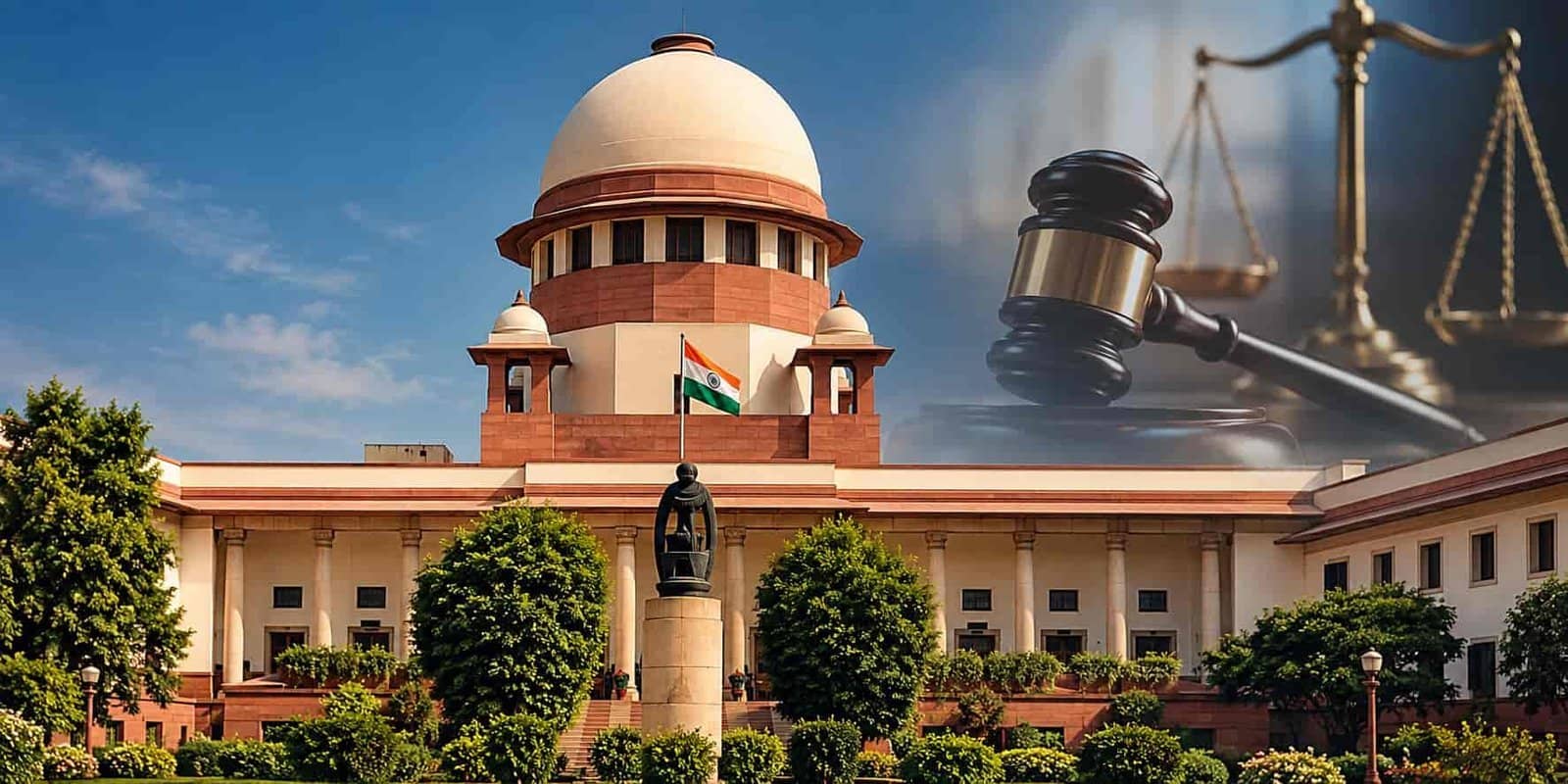
Key Takeaways
1 of 3
Automatically generated. Read full article for complete context.
When a judge of the highest constitutional court steps into retirement only to speak of executive overreach, backdoor vetting in judicial appointments, or administrative interference with court rosters, the legal fraternity is struck by an enduring moral perplexity.
Why must these accounts arrive only ex post facto, bound between the quiet covers of a memoir or broadcast across retrospective television interviews?
A judge takes a solemn oath under the Third Schedule of the Constitution of India to perform the duties of office “without fear or favour, affection or ill-will” and to “uphold the Constitution and the laws”. Why, then, does a judge troubled in conscience continue to occupy the bench rather than sound the alarm in real time, before serious damage is done?
To examine this question is to confront the sharpest dialectic of common law constitutionalism : the tension between the pragmatic guardian who holds the line from within, and the radical moralist who demands institutional disruption before the rot becomes terminal.
Jurisprudential Architecture of Silence
In India, judicial restraint is not merely traditional etiquette. It is a norm the Supreme Court has declared for itself and woven into its constitutional philosophy.
The Restatement of Values of Judicial Life (1997). Adopted by the Full Court of the Supreme Court on 7 May 1997, this code sets out the standards expected of judges. Clause 8 provides that a judge shall not enter into public debate or express views in public on political matters, or on matters that are pending or likely to arise for judicial determination. Clause 9 states the foundational rule that a judge is expected to let judgments speak for themselves, and bars judges from giving interviews to the media.
The in-house doctrine (C. Ravichandran Iyer v. Justice A.M. Bhattacharjee, 1995). The case arose from Bar resolutions calling on a sitting Chief Justice of a High Court to resign. The Supreme Court held that such public pressure on a judge was impermissible, and that complaints of judicial misconduct falling short of impeachment must be dealt with through an internal, in-house procedure led by the Chief Justice. The reasoning reflects a settled conviction that institutional integrity cannot survive public brawls or trial by media. Under standard judicial discipline, public denunciation by a sitting judge is regarded as institutional self-immolation.
The Chief Justice as Master of the Roster. In Campaign for Judicial Accountability and Reforms v. Union of India (2017), a five-judge bench, and in Asok Pande v. Supreme Court of India (2018), a three-judge bench, the Supreme Court affirmed that the Chief Justice of India alone constitutes benches and allocates matters. A puisne judge who objects to bench assignments or administrative decisions has no vehicle within judicial orders to override the Chief Justice’s administrative discretion.
Strategic Logic of Remaining : Defence of the Holding Action
One school of thought defends the judge who stays until retirement on grounds of structural necessity. It poses a direct rebuttal: why should an honest judge resign at all?
Such a judge did no wrong, nor did he remain passive. By refusing to yield to pressure while declining to make explosive public declarations, he avoids the trap of the brave but ineffective martyr. Above all, the nation does not lose a good judge earlier than retirement demands.
Holding the breach : A senior judge of the Supreme Court sits on constitutional benches and on benches hearing civil liberties matters every working day, and the most senior among them also serve on the Collegium. If an honest judge resigns in protest, he evacuates the trench. The chair may pass to an appointee far more accommodating to executive interests.
Internal resistance as active containment : Remaining on the bench provides immediate, real-world resistance. In high-stakes matters touching personal liberty, a judge who would decline any suggested compromise and insist on hearing the matter in open court would act as a breakwater against quiet acquiescence.
The transience of individual protest : Experience across common law jurisdictions suggests that when a single judge steps down, the institutional shock is short-lived. A judge’s authority is bound to the office; once that tie is severed, the leverage tends to dissipate. The resigned judge is easily dismissed by the political establishment as disgruntled, while the machinery of state moves forward without pause.
Counter-Imperative : Probity Over Discipline
Against this pragmatic posture stands a far more demanding constitutional argument : that codes of judicial restraint must not become a cloistered shield for systemic decay.
On this view, where pressure on the judiciary and manipulation of its administration take hold, the core constitutional issue is not personal virtue. It is the survival of the democratic order itself.
Discipline yielding to institutional health : For this school, preserving a decorous silence while executive overreach unfolds is not prudence; it may amount to complicity by omission. A judge’s ultimate allegiance is to the Constitution, not to an institution’s internal code of conduct. Its adherents argue that when the independence of the judiciary and the social fabric of the republic are under threat, a judge ought to set the conventions of restraint aside.
Sacrificing procedural restraint for judicial probity, they contend, forces a real-time course correction before structural damage becomes irreversible. Waiting until retirement allows the danger to entrench itself, damaging the institution to the point of no return.
The duty to resign if ethics forbid speaking out. If a judge concludes that the oath or the code of conduct forbids public disclosure while in office, this school holds that the honourable course left is resignation.
Resignation lifts the institutional restraint. It lets the public know in real time, rather than leaving citizens to read historical post-mortems years later.
By stepping down publicly, the judge lends moral authority to the concern and gives civil society and the Bar the momentum needed to confront political encroachment directly.
Shadow of the January 2018 Precedent
Those weighing these two paths must reckon with India’s seminal experiment in real-time disclosure : the press conference of 12 January 2018 held by four senior sitting judges of the Supreme Court, Justices J. Chelameswar, Ranjan Gogoi, Madan B. Lokur and Kurian Joseph.
The four judges stepped outside conventional institutional channels to warn the nation that the independence of the Supreme Court, and with it democracy, was in peril. Their principal concern was the manner in which matters were allocated to benches.
The aftermath revealed the double-edged nature of public intervention.
- The limits of reform. Beyond the publication of a subject-wise roster in the weeks that followed, the protest did not alter the Chief Justice’s power as master of the roster.
- The institution absorbed the shock, opinion within the Bar divided, and institutional inertia blunted the protest. Later that year, one of the four judges himself became Chief Justice of India.
- The contours of the dilemma?
- To the pragmatist, 2018 showed that public exposure without a structural lever accomplishes little and bruises the institution.
- To the constitutional moralist, 2018 fell short precisely because the judges did not carry their conviction to its logical conclusion.
- They sounded the alarm but returned to their courtrooms, leaving the establishment free to wait out the news cycle.
- Had they resigned and carried the cause into public life, the moralist argues, its effect on judicial governance might have been far more lasting.
Comparative Jurisprudence : Boundaries of Judicial Restraint
The dilemma between public disclosure and stoic restraint spans the common law world.
| Jurisdiction and standard | Principle of restraint | Room for conscience |
| United Kingdom (Kilmuir Rules, 1955; now the Guide to Judicial Conduct) | The Kilmuir Rules kept judges out of broadcast media and public controversy until their relaxation in 1987. Judges still avoid public dispute on policy and administration to keep the judiciary out of political combat. | No recognised route exists for a judge to campaign from the bench. In the author’s reading, a judge who cannot reconcile conscience with office is left with resignation. |
| United States (Code of Conduct for United States Judges, Canon 3A(6)) | A judge should not make public comment on the merits of a pending or impending matter, to preserve perceived neutrality. | Outside impeachment or recusal, sitting judges rarely air internal administrative friction in public; disagreement is voiced through published dissents. |
| International (Bangalore Principles of Judicial Conduct, 2002) | Value 4 (Propriety): a judge shall avoid impropriety and the appearance of impropriety, exercising restraint to preserve the dignity of office and public confidence. | Public confidence is the judiciary’s only currency, so any public display of factionalism risks eroding the court’s moral authority. |
In the United States, Justice Felix Frankfurter long insisted that judicial authority depends on public confidence that the bench stands apart from political combat. Alexander Bickel, the foremost advocate of prudential restraint, accepted that a court may be cautious about when it decides, but he insisted that whatever it does decide must rest on principle. Institutional self-preservation, on that reasoning, can never justify abandoning the court’s essential constitutional function.
Two Views of Constitutional Duty
Ultimately, the choice between remaining until superannuation and resigning in protest reflects two fundamentally different philosophies of judicial duty.
The first views the judge as an institutional bulwark. In this view, walking away is an act of self-indulgent martyrdom. The judge stays, contends behind closed doors, writes fearless judgments, and shields individual citizens from arbitrary state power every working day. Staying ensures that a good judge is not lost before retirement demands, leaving the public record to be completed by memoirs and later accounts once the robes are set aside.
The second views the judge as a constitutional sentinel. In this view, holding an internal line while systemic decay spreads unchecked is a losing battle of attrition. For this school, fidelity to the oath demands breaking the veneer of judicial harmony, either by speaking from the bench or by resigning to awaken the public conscience.
Between the quiet resilience that keeps the court running and the disruptive sacrifice that seeks to save it, modern constitutionalism continues to search for its true compass.
Citizens dismayed at the state of public life continue to wait for direction, and the best of it is expected from judicial minds.
And since the best judicial minds argue before justices of the Supreme Court, we citizens take it that the Supreme Court’s wisdom itself will be the source of corrective measures… and that those will ultimately prove to the world that our judicial system and its office bearers are in fact not only well qualified to steer the nation’s adjudicatory mechanism in the right direction, but also that their steps will be seen as being munsifaana.
Justice, we know, will not only be done, it will be seen to have been done.
Jai Hind
Disclaimer:The views and opinions expressed in this article are those of the author(s) and do not necessarily reflect the official policy or position of The Rift.