Opening The Rift
therift
© 2026 The Rift. All Rights Reserved.
Responsibility of the Robe: Preserving Constitutional Justice Amidst Erosion of Trust
The measure of constitutional success is not merely the number of judgments delivered. It is whether citizens continue to believe that the Constitution remains the most effective instrument through which justice may be obtained.


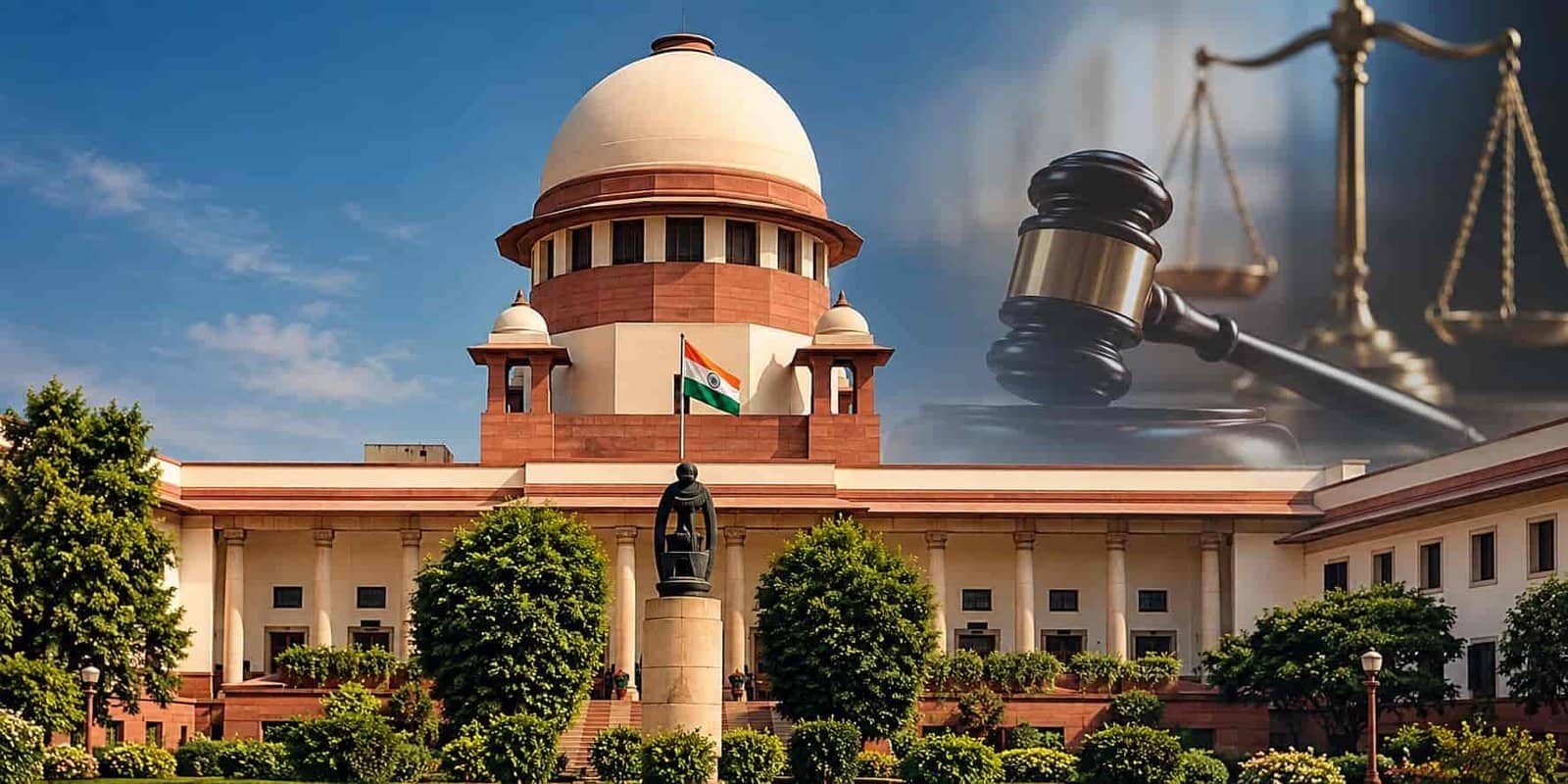
(Representative Image)
Key Takeaways
1 of 3
Automatically generated. Read full article for complete context.
A decade and a half ago a case of a judge on his morning walk being run down by a vehicle suspected to be the handiwork of the mining mafia made news. Every now and then, one reads of an attack on, or the murder of, an advocate. Recently a judgement delivered in a case of mob lynching has raised troubling questions.
Every constitutional democracy rests upon an elementary proposition: citizens relinquish the private exercise of force because they trust public institutions to administer justice according to law. The modern State claims a monopoly over legitimate coercion only because constitutional institutions promise an impartial, accessible, and effective system for resolving disputes. Courts therefore perform a function extending well beyond adjudication. They preserve the moral and legal legitimacy upon which democratic governance depends.
The Indian Constitution reflects this understanding through an integrated structure of fundamental rights, separation of powersGovernmental StructureA doctrine dividing the governmental powers into distinct branches (legislative, executive, and judicial) to prevent the concentration of power and provide checks and balances., judicial reviewLegal PrincipleThe power of courts to determine whether a law, action, or decision violates a country’s constitution, and to strike it down if it does., equality before law, and the rule of law. These constitutional commitments require more than formal compliance with legal procedure. They require institutions capable of responding effectively when constitutional values are threatened by communal violence, organized intimidation, or systematic attacks upon judicial independence.
Public confidence in the judiciary is therefore not an incidental virtue but an essential constitutional resource. Unlike the executive, courts possess neither electoral legitimacy nor coercive power. Their authority derives principally from public acceptance that judicial decisions represent the final and impartial application of constitutional principle. Whenever that confidence weakens, constitutional governance itself becomes vulnerable.
Contemporary constitutional debate has increasingly focused upon judicial delay, mounting arrears, and procedural complexity. These concerns are generally discussed as questions of judicial administration. However, there is a broader proposition. Persistent institutional delay, selective constitutional intervention, and the perceived reluctance to exercise available constitutional authority in matters affecting the integrity of the rule of law together produce consequences extending far beyond case management. They reshape public perceptions regarding whether constitutional institutions remain capable of protecting citizens equally and effectively.
Particular attention must therefore be directed toward cases involving communal polarization, inflammatory public discourse, intimidation of judicial officers, and violence directed against vulnerable communities. These situations test not merely the correctness of individual judicial decisions but the institutional capacity of constitutional courts to preserve democratic order under conditions of sustained social conflict.
What can be called the concept of institutional abandonment has arisen, and would best describe circumstances in which constitutional institutions remain formally functional while progressively losing their practical capacity to reassure citizens that justice will be delivered effectively, impartially, and within a meaningful time.
Institutional abandonment differs from constitutional breakdown. It represents a gradual erosion of legitimacy arising from cumulative inaction rather than sudden collapse.
The consequences of such erosion are profound. Citizens deprived of confidence in legal institutions may increasingly regard litigation as symbolic rather than effective. Social groups may seek political influence in place of legal remedies. Victims may perceive constitutional guarantees as aspirational rather than enforceable.
In its most dangerous manifestation, the abandonment of institutional confidence creates conditions in which private retaliation begins to appear more effective than public justice. The constitutional order is endangered not because vigilantismUnlawful ActionThe act of a private citizen or group taking law enforcement into their own hands without legal authority, often in response to perceived failures of the official justice system. becomes legally acceptable, but because legal institutions cease to appear practically reliable, and self-help seems the only available resource.
Therefore the durability of constitutional democracy depends as much upon institutional responsiveness as upon constitutional text. Judicial legitimacy is sustained not only by principled judgments but also by visible institutional willingness to defend the rule of law when it faces its greatest tests. Where constitutional courts consistently demonstrate that law prevails over intimidation, democratic confidence is strengthened. Where institutional silence becomes recurrent in the face of sustained constitutional challenge, that confidence inevitably diminishes.
The measure of constitutional success is not merely the number of judgments delivered. It is whether citizens continue to believe that the Constitution remains the most effective instrument through which justice may be obtained. Constitutional neutrality is not the same as constitutional passivity. Judicial restraint cannot justify institutional silence where the administration of justice itself is threatened. One institution, the Supreme Court Bar Association, is reported to have condemned the threat to the judge who passed the judgement in the lynching case. That is a heartening feature.
The Constitution of India guarantees freedom of speech and expression under Article 19(1)(a), recognising that democratic governance depends upon the uninhibited exchange of ideas, criticism of government, and robust public debate. Yet the Constitution has never regarded free expression as an absolute liberty divorced from constitutional responsibility. Article 19(2) expressly authorises reasonable restrictions in the interests of, inter alia, the sovereignty and integrity of India, the security of the State, public order, decency, morality, and the prevention of offences. Constitutional freedom therefore exists within a framework designed to preserve both liberty and the equal constitutional status of every citizen.
The constitutional challenge lies in identifying the point at which protected political advocacy ceases to be an exercise of democratic freedom and becomes an instrument for undermining the constitutional order itself. Democracies must tolerate disagreement, criticism, unpopular opinions, and even deeply offensive speech. They cannot, however, remain indifferent where expression is deliberately employed to promote hostility against identifiable communities, encourage discrimination, or create conditions conducive to violence. The distinction is neither ideological nor political; it is constitutional.
The Supreme Court has consistently recognised that free speech occupies a preferred position within the constitutional framework. Equally, it has affirmed that speech intentionally calculated to threaten public order or undermine constitutional values may attract legitimate regulatory intervention. The constitutional inquiry is therefore not whether speech is agreeable or disagreeable, but whether its nature, context, intent, and likely consequences place it beyond the protection ordinarily afforded to democratic discourse.
This distinction assumes particular importance in relation to broadcast media. Unlike private conversation, televised broadcasts and digital media possess extraordinary capacity to shape public perception, construct social narratives, and influence collective behaviour. Their impact is amplified by repetition, visual imagery, emotive presentation, and algorithmic dissemination. Consequently, broadcasters exercise not merely the freedom to communicate but also the constitutional responsibility to avoid becoming vehicles for systematic incitement or organised social hostility.
The constitutional obligation imposed upon the media does not require ideological neutrality. Democratic journalism is necessarily argumentative, investigative, and often sharply critical. It may expose governmental failures, question judicial decisions, challenge prevailing orthodoxies, or advocate unpopular political positions. None of these functions threatens constitutional democracy. Indeed, they strengthen it.
The constitutional difficulty arises where journalism ceases to inform public discourse and instead seeks to construct identifiable communities as permanent objects of suspicion, hostility, or exclusion.
Within this framework, controversy surrounding certain television broadcasts, including programmes aired by Sudarshan News and hosted by Suresh Chavhanke, illustrates broader constitutional questions concerning media responsibility. Public criticism of some broadcasts has centered on allegations that they portrayed members of the Muslim community through recurring narratives of demographic threat, institutional infiltration, or organised conspiracy. The widely publicised “UPSC Jihad” broadcasts became the subject of judicial proceedings after concerns were raised that the programmes attributed disloyalty and subversive intent to Muslim candidates entering the civil services without credible evidentiary foundation.
The constitutional significance of these proceedings lies not in the political identity of the broadcaster but in the legal principles engaged. Judicial scrutiny focused upon whether freedom of expression protects broadcasts that allegedly stigmatise entire communities through unsupported generalisations capable of intensifying communal distrust. The issue therefore transcended editorial preference; it engaged the constitutional relationship between expressive liberty and the State’s obligation to preserve equality, fraternity, and public order.
Equally significant is the distinction between criticism and legal adjudication. Public commentators, legal scholars, civil society organisations, and political actors may characterise particular broadcasts as inflammatory, communal, or ethically irresponsible. Constitutional adjudication, however, requires courts to apply objective legal standards rather than rhetorical labels. The legitimacy of judicial intervention depends upon demonstrable legal reasoning, careful examination of context, and adherence to constitutional principles rather than ideological agreement or disagreement with the content of expression.
This distinction protects both free speech and constitutional governance. It ensures that courts neither become censors of unpopular opinion nor passive observers where constitutional rights of vulnerable communities are endangered.
The constitutional role of the judiciary, therefore, is not to supervise political discourse but to preserve the legal conditions within which democratic discourse remains possible.
The tension between expressive liberty and constitutional equality ultimately reflects a deeper constitutional commitment. The Constitution does not merely protect the liberty of speakers; it also protects the equal dignity and citizenship of those who are spoken about. Speech that systematically dehumanises, demonises, or excludes identifiable communities raises constitutional concerns because it undermines the fraternity envisioned by the Preamble and the equal protection guaranteed by Articles 14, 15, and 21. Constitutional democracy cannot flourish where entire communities are repeatedly represented as enemies within the nation itself.
The problem extends beyond individual broadcasts. Repeated dissemination of narratives portraying minorities as existential threats gradually alters the constitutional environment in which institutions operate. Public officials may experience increased pressure, investigative agencies may become susceptible to majoritarian expectations, witnesses may fear participation in judicial proceedings, and trial judges deciding communally sensitive cases may confront organised campaigns of intimidation. Hate speech thus produces consequences extending far beyond immediate audience reaction; it can progressively weaken the institutional conditions necessary for impartial administration of justice.
Accordingly, the constitutional response to inflammatory broadcast speech should not be understood as a conflict between censorship and liberty. Rather, it represents an effort to reconcile two constitutional imperatives of equal importance: the preservation of democratic freedom of expression and the protection of the constitutional order from systematic campaigns that erode equality, fraternity, and the rule of law. A constitutional democracy capable of protecting only one of these values ultimately secures neither.
It is within this broader constitutional setting that the question of judicial responsibility assumes decisive importance. Where communal polarisation intensifies through organised public discourse, constitutional courts are required not merely to decide isolated disputes but to preserve the integrity of the constitutional framework itself. Whether they consistently discharge that responsibility forms the central inquiry of the succeeding chapters.
The Constitutional Duty : Defend Rule of Law
The legitimacy of constitutional adjudication depends upon considerably more than the correctness of judicial outcomes. Courts derive authority from the public perception that constitutional rights will be protected impartially, fearlessly, and within a timeframe that preserves their practical value. Justice delivered after constitutional injury has become irreversible may satisfy procedural requirements while failing constitutional expectations.
Delay, inconsistency, and institutional silence are therefore not merely administrative deficiencies; they may become constitutional defects when they undermine the effective enjoyment of fundamental rights.
A condition in which constitutional institutions remain formally functional yet progressively fail to perform the protective role assigned to them by the Constitution, institutional abandonment, does not imply institutional collapse, bad faith, or deliberate dereliction. Rather, it denotes a cumulative erosion of constitutional confidence produced by persistent inaction, selective intervention, or the inability to respond effectively when the rule of law itself is subjected to sustained pressure.
Unlike executive authorities, constitutional courts possess neither financial resources nor coercive machinery. Their authority is institutional rather than physical. It depends upon the confidence of litigants, subordinate courts, public authorities, and society at large that judicial determinations will be respected because they represent the authoritative application of constitutional principle. Every failure to protect that institutional confidence therefore diminishes not merely the reputation of individual courts but the constitutional architecture itself.
This distinction becomes particularly significant where trial judges adjudicate cases involving communal violence, organised criminality, political influence, or majoritarian mobilisation. Such judges occupy the constitutional front line. Their courts constitute the first forum where constitutional guarantees are translated into enforceable legal rights. If trial judges cannot discharge their functions free from intimidation, organised pressure, or fear of personal consequences, constitutional rights become contingent upon social power rather than legal principle.
Judicial independence is frequently discussed as though it concerns only the constitutional courts. Such an understanding is incomplete. The independence guaranteed by the Constitution extends to every judicial officer entrusted with deciding disputes according to law. The credibility of the Supreme Court and the High Courts ultimately depends upon the confidence with which subordinate judges can decide cases involving influential individuals, politically sensitive controversies, or communal violence without apprehension that institutional protection will be unavailable when most required.
This constitutional responsibility extends beyond adjudication of appeals. Constitutional courts possess extensive supervisory powers designed not merely to correct legal error but to preserve the institutional integrity of the administration of justice. Those powers include constitutional jurisdiction, supervisory jurisdiction, contempt jurisdictionJudicial PowerThe power of a court to punish individuals for acts that obstruct or interfere with the administration of justice, or show disrespect for the court’s authority., and administrative authority over the subordinate judiciary. Their cumulative purpose is to ensure that courts remain institutions governed exclusively by law rather than by intimidation or external influence.
Accordingly, threats directed against judicial officers cannot be understood as ordinary criminal conduct affecting isolated individuals. They constitute direct assaults upon the constitutional system itself.
Every attempt to intimidate a judge seeks simultaneously to influence future adjudication, discourage judicial independence, undermine public confidence, and communicate that organised pressure may achieve what legal argument cannot. The constitutional injury therefore extends far beyond the personal security of the individual judicial officer.
When constitutional courts respond promptly and unequivocally to such threats, they reaffirm the supremacy of law over intimidation. Conversely, prolonged institutional silence or delayed intervention risks conveying an unintended but dangerous impression that attacks upon judicial independence do not demand immediate constitutional concern. Even where such an impression is inaccurate, its constitutional consequences may nevertheless be profound because institutional legitimacy depends as much upon public perception as upon institutional intention.
This phenomenon illustrates the distinction between procedural functionality and constitutional effectiveness. Courts may continue disposing of thousands of cases annually while simultaneously losing public confidence in their willingness to intervene decisively when constitutional fundamentals are challenged. Quantitative performance therefore cannot substitute for qualitative constitutional leadership.
The problem becomes particularly acute in matters involving communal violence and hate-driven offences. Such litigation rarely concerns individual criminal liability alone. These proceedings test the capacity of constitutional institutions to reassure vulnerable communities that legal rights will prevail over collective intimidation. Delays, inconsistent responses, or visible reluctance to confront organised pressure may inadvertently strengthen the perception that constitutional protection varies according to the political or social context of particular cases.
The consequences extend beyond immediate litigants. Witnesses may become reluctant to testify. Investigating agencies may fear public backlash. Prosecutors may proceed cautiously where constitutional firmness is required. Most significantly, subordinate judges may perceive that institutional support cannot be assumed if their judicial duties provoke organised hostility. These secondary effects gradually erode the practical administration of justice despite the continued formal operation of legal institutions.
Institutional abandonment therefore differs fundamentally from ordinary judicial backlog. Case accumulation reflects limitations of infrastructure, judicial vacancies, procedural complexity, and increasing litigation. Institutional abandonment, by contrast, concerns the constitutional allocation of institutional attention. It arises where matters directly affecting the integrity of constitutional governance—including attacks upon judicial independence, systematic communal intimidation, or persistent assaults upon the rule of law—fail to receive the urgency their constitutional significance demands.
This distinction is particularly important because constitutional courts necessarily possess limited institutional capacity. No judiciary can intervene immediately in every controversy. Constitutional criticism should therefore focus not upon the impossibility of universal intervention but upon identifiable patterns of institutional prioritisation. Where constitutional urgency appears inconsistent across categories of cases, legitimate questions arise regarding the principles governing institutional attention. Such questions should be examined objectively, recognising both the complexity of judicial administration and the constitutional expectation that the most fundamental threats to the rule of law receive timely and effective institutional response.
The constitutional cost of institutional abandonment is cumulative rather than immediate. Public confidence rarely disappears because of a single controversial judgment or isolated delay. It erodes gradually as citizens observe recurring disparities between constitutional promise and institutional experience. Rights remain formally guaranteed, yet increasingly uncertain in practical enforcement. Judicial independence remains constitutionally proclaimed, yet appears vulnerable to organised pressure. Equality before law continues to exist doctrinally, while confidence in its uniform application progressively weakens.
The ultimate danger is not criticism of the judiciary. Constitutional courts have always been, and must remain, subject to principled public scrutiny. The greater danger lies in the gradual normalisation of institutional scepticism. Once citizens begin to regard constitutional litigation as incapable of providing meaningful protection in the most consequential cases, the judiciary risks losing not merely public approval but constitutional authority itself.
The preservation of judicial legitimacy therefore requires more than doctrinal excellence. It demands visible institutional willingness to defend the rule of law precisely when doing so is difficult. Constitutional democracy measures its courts not by their performance during periods of institutional comfort but by their fidelity to constitutional principle during moments of constitutional stress. It is in such moments that the distinction between judicial restraint and institutional abandonment becomes most consequential.
The next inquiry naturally follows: if institutional abandonment weakens confidence in lawful justice, what replaces it? The answer is neither constitutional nor democratic. It is the gradual emergence of private justice, retaliatory violence, and vigilantism as perceived alternatives to institutions that no longer appear capable of vindicating the rule of law.
Duty to Protect Judges and Advocates in Vitiated Atmospheres
Judicial independence is commonly discussed in relation to constitutional courts. Public discourse frequently concentrates upon the appointment, tenure, and institutional autonomy of the Supreme Court and the High Courts, treating the subordinate judiciary principally as an administrative extension of the higher judicial system. Such an understanding is constitutionally incomplete. The administration of justice begins not in constitutional courts but in trial courts, where evidence is recorded, witnesses are examined, facts are determined, and constitutional rights first assume practical meaning. The constitutional promise of equal justice therefore depends fundamentally upon the independence, security, and institutional confidence of trial judges.
The Constitution of India does not regard judicial independence as a privilege conferred upon judges. It is a structural guarantee afforded to citizens. An independent judiciary exists not to protect judicial office but to ensure that every litigant receives adjudication free from political influence, communal pressure, economic coercion, or public intimidation. Judicial independence is therefore an indispensable component of the rule of law, inseparable from Articles 14 and 21 of the Constitution and reinforced by the constitutional separation of powers.
International legal standards reinforce this constitutional understanding. The United Nations Basic Principles on the Independence of the Judiciary recognise that judges must be able to discharge their functions without improper influence, inducement, pressure, threats, or interference, whether direct or indirect, from any quarter or for any reason. These principles impose corresponding obligations upon States to secure conditions in which judicial officers may decide cases solely according to law.
Similarly, the Bangalore Principles of Judicial Conduct identify independence as the indispensable precondition for every other judicial virtue. Impartiality, integrity, equality, competence, diligence, and accountability cannot exist where judges must constantly evaluate the personal consequences of legally correct decisions. The ethical obligations imposed upon judges therefore presume reciprocal institutional obligations owed by constitutional authorities.
These international principles are not foreign additions to Indian constitutional law. They reflect values already embedded within the constitutional structure and repeatedly acknowledged by Indian courts. The Supreme Court has consistently recognised judicial independence as forming part of the Constitution’s basic structure. Yet the practical implications of that doctrine extend beyond institutional autonomy in matters of judicial appointments. They require effective institutional protection whenever judicial officers become targets of intimidation arising directly from the faithful discharge of judicial duties.
The distinction between appellate independence and trial independence deserves particular attention. Constitutional controversies ultimately reach the Supreme Court only after years of litigation. Trial judges, by contrast, confront immediate pressures. They preside over communal violence prosecutions, organised crime trials, political corruption cases, terrorism prosecutions, offences involving influential economic interests, and disputes capable of generating intense public mobilisation. Their constitutional vulnerability is therefore immediate rather than theoretical.
Whenever organised groups seek to intimidate judges through demonstrations, threats, vilification campaigns, social media harassment, or indirect pressure upon their families, the objective extends far beyond influencing a single proceeding. Such conduct attempts to communicate that adverse judicial decisions will attract personal consequences extending beyond the courtroom. The resulting constitutional injury affects not merely the individual judge but every future litigant whose case depends upon fearless adjudication.
Institutional responses to such intimidation therefore possess constitutional significance independent of the underlying litigation. Prompt intervention reassures the judiciary that constitutional institutions will defend judicial independence whenever necessary. Equally important, it communicates to society that disagreement with judicial decisions must remain confined to lawful legal processes rather than coercive public pressure.
The opposite response carries substantial constitutional risk. Where intimidation appears to attract inadequate institutional attention, trial judges may reasonably perceive that institutional support cannot be assumed in matters generating organised hostility. Such perceptions need not influence actual judicial reasoning to produce constitutional harm. Judicial independence depends as much upon institutional confidence as upon individual courage. A constitutional system should never require personal heroism as a substitute for institutional protection.
Comparative constitutional practice illustrates this principle with considerable clarity. Democracies committed to the rule of law recognise that attacks upon judges threaten the administration of justice itself rather than merely individual office holders. Protective mechanisms therefore extend beyond ordinary criminal investigation to include institutional statements, enhanced security, disciplinary consequences for interference with judicial proceedings, and where appropriate, the exercise of contempt jurisdiction to preserve public confidence in judicial authority.
The Indian constitutional framework already contains substantial legal mechanisms capable of achieving these objectives. Constitutional courts possess supervisory jurisdiction over the subordinate judiciary, extensive contempt powers, and broad authority to protect the administration of justice.
The issue is therefore less one of constitutional capacity than of constitutional deployment. Existing powers are fully capable of responding to organised attempts at judicial intimidation where circumstances justify intervention.
This observation should not be misunderstood as suggesting that every criticism of a judicial decision requires constitutional sanction. Open criticism of judgments constitutes an essential feature of democratic accountability. Lawyers, academics, journalists, litigants, and citizens remain free to question legal reasoning, expose judicial error, advocate appellate review, and debate constitutional doctrine. The constitutional boundary is crossed only when criticism becomes intimidation, when disagreement becomes coercion, or when lawful dissent transforms into attempts to influence adjudication through fear rather than argument.
That distinction preserves both judicial independence and democratic freedom. Judges must remain accountable to law rather than immune from criticism. Equally, criticism must remain directed toward legal reasoning rather than personal intimidation. Constitutional democracy requires both propositions simultaneously.
The protection of judges assumes particular importance in cases involving communal violence and hate-driven offences. Such proceedings frequently generate intense public emotion, organised political mobilisation, and competing narratives extending well beyond the legal issues before the court. Trial judges deciding these matters perform a constitutional function essential to democratic stability. Their judgments affirm that criminal liability depends upon evidence and law rather than communal identity or political influence. Failure to protect judges discharging this responsibility risks communicating that constitutional adjudication itself is negotiable.
The constitutional consequences extend beyond individual prosecutions. Witnesses observing institutional reluctance to protect judges may hesitate to testify. Prosecutors may become increasingly cautious. Investigating agencies may fear that successful prosecutions will generate institutional controversy rather than institutional support. Gradually, the practical administration of justice becomes distorted despite the continued formal existence of constitutional guarantees.
Ultimately, judicial independence should not be measured by the absence of executive interference alone. It should also be measured by the confidence with which every judicial officer can discharge constitutional responsibilities without apprehension that fidelity to law will invite abandonment by the institutions entrusted with preserving judicial authority. Constitutional democracy demands nothing less.
If the State claims the exclusive authority to administer justice through independent courts, it necessarily assumes the reciprocal constitutional obligation to ensure that those courts, and particularly those judges who stand at the front line of constitutional adjudication, are never left to confront organised intimidation alone. Judicial independence is not fully secured when judges are free to decide cases. It is secured only when they know that the Constitution will stand behind them after they have done so.
Bachmeier Paradigm : Vigilantism
Every constitutional democracy is founded upon a fundamental renunciation. Individuals surrender the private right to exact retribution because the State assumes exclusive responsibility for the administration of justice. Criminal law is therefore not merely an instrument of punishment; it is the constitutional mechanism through which society replaces vengeance with adjudication, passion with evidence, and retaliation with due process. The legitimacy of this arrangement depends upon a reciprocal constitutional obligation: the State must provide justice that is impartial, accessible, and sufficiently timely to retain public confidence.
Vigilantism represents the breakdown of this constitutional compact. It emerges whenever individuals conclude that lawful institutions are either unwilling or incapable of providing meaningful justice. The vigilant does not merely violate criminal law; the vigilant implicitly rejects the institutional legitimacy of the State itself. For that reason, acts of private retaliation should be understood not only as criminal offences but also as constitutional indicators revealing diminished confidence in public institutions.
The widely discussed case of Marianne Bachmeier illustrates this phenomenon with unusual clarity. In 1981, during the criminal trial of the man accused of abducting and murdering her young daughter, Bachmeier entered the courtroom and shot the accused dead : an unmistakable criminal act, but one that raises a question. Can violence acquire moral legitimacy?
The incident became a symbol of the emotional distance that may develop between legal procedure and a victim’s expectation of justice. Constitutional legitimacy depends not only upon institutional performance but also upon the public belief that lawful institutions remain capable of delivering justice worthy of public confidence.
The Bachmeier incident demonstrates the point at which private grief, frustration, and public perception converge to produce conduct fundamentally inconsistent with the rule of law. The lesson is not that vigilantism becomes understandable in legal terms. Rather, it is that constitutional institutions should regard such events as warnings requiring careful institutional reflection.
Modern constitutional democracies encounter this phenomenon in diverse forms. Victims occasionally seek retaliation outside the legal process. Communities sometimes endorse extrajudicial punishment where criminal investigations are perceived as ineffective. Public celebrations of “instant justice” following police encounters periodically reflect similar institutional anxieties. Although these phenomena differ significantly in legal character, they share a common constitutional characteristic: each reflects diminished confidence that ordinary legal processes deliver effective and timely justice.
The constitutional danger extends beyond isolated incidents. Once citizens begin evaluating lawful adjudication against extrajudicial alternatives, the normative authority of the legal system begins to erode. Criminal courts no longer represent the exclusive forum for justice but merely one option among competing mechanisms of social response. Such a transformation fundamentally contradicts constitutional democracy, whose legitimacy depends upon universal acceptance that disputes and crimes will be resolved through law rather than private power.
Judicial delay occupies a central position within this constitutional analysis. Delay should not be understood merely as administrative inconvenience. Rights postponed beyond meaningful effectiveness frequently cease to operate as practical guarantees. Criminal trials extending over many years, repeated adjournments, prolonged uncertainty for victims and accused persons alike, and inconsistent enforcement of judicial directions collectively weaken public confidence in institutional effectiveness. Justice delayed affects not only individual litigants but also the constitutional credibility of the legal system itself.
Yet, Constitutional institutions operate under substantial constraints, including increasing litigation, limited judicial resources, procedural safeguards, and the complexity of modern adjudication. Nevertheless, constitutional analysis requires recognition that persistent delay carries systemic consequences extending beyond administrative efficiency.
Particular concern arises where communal violence, hate-driven offences, or politically sensitive prosecutions remain unresolved for prolonged periods. Such cases frequently possess symbolic significance extending far beyond individual criminal liability. They communicate whether constitutional guarantees operate equally irrespective of communal identity, political influence, or public pressure. Delayed resolution in such matters may unintentionally reinforce perceptions that constitutional protections are uncertain precisely where they are most urgently required.
Where citizens repeatedly observe institutional delay, inconsistent urgency, inadequate protection for judicial officers, or perceived reluctance to address organised intimidation, confidence in constitutional institutions will progressively diminish. The resulting constitutional injury can be measured in the falling public expectations of effectiveness of lawful justice.
Due process remains indispensable because justice obtained through arbitrary violence destroys the legal order even where it punishes genuine wrongdoing. At the same time, procedural safeguards lose practical legitimacy if institutions become incapable of delivering timely and effective adjudication.
The rule of law survives only while citizens continue believing that constitutional institutions provide a more legitimate, more reliable, and ultimately more just alternative than private retaliation. Every successful prosecution conducted fairly, every fearless judicial decision, every witness protected from intimidation, and every timely appellate intervention reinforces that constitutional belief.
Bachmeier demonstrates that private violence often emerges not from rejection of justice but from rejection of institutional confidence. Constitutional courts must preserve the public conviction that lawful institutions remain capable of delivering justice sufficiently effective such that private retaliation never appears to constitute a plausible alternative.
When citizens abandon the courtroom for retaliation, the fracture has already occurred. The violence is merely its visible consequence. The real failure is erosion of confidence that courtrooms are capable of delivering justice.
Constitutional democracy is endangered when increasing numbers of citizens come to believe that vigilantism is more certain, more effective, or more meaningful than the justice promised by the Constitution.
Organised intimidation directed against judges, prosecutors, witnesses, or investigating agencies inevitably communicates a broader social message. Other communities, victims of communal violence, vulnerable minorities, and even individuals unconnected with the original litigation may begin to question whether constitutional institutions will protect them with equal determination when confronted by organised hostility. Constitutional confidence is cumulative, as is doubt.
If repeated threats to judicial officers, or sustained attempts to influence the administration of justice through fear and public pressure, are not met with prompt and unequivocal institutional responses, the resulting perception of abandonment may gradually spread beyond the affected case. What started with claims of ignoring an adverse court verdict in Babri is raising its head every now and then. What is not nipped in the bud grows in strength. Citizens increasingly conclude that the practical availability of justice depends less upon constitutional guarantees than upon social influence, political strength, or numerical dominance. Such a perception strikes at the heart of the rule of law.
Some individuals or groups may come to regard lawful adjudication as ineffective and begin to perceive private retaliation, collective self-protection, or other forms of extra-legal self-help as the only remaining means of securing justice. Such conclusions reflect a loss of faith in democratic institutions themselves. The constitutional objective, therefore, is not merely to punish vigilantism after it occurs. It is to preserve public confidence so completely that vigilantism never acquires even the appearance of being a conceivable alternative.
Constitutional courts bear an institutional obligation to preserve public confidence that the Constitution remains capable of protecting every individual equally, fearlessly, and effectively. That obligation is discharged through visible institutional conduct demonstrating that constitutional guarantees are practically enforceable and are in fact enforced.
The Constitution does not merely promise the existence of courts; it promises the existence of courts capable of securing justice. Articles 14, 21, 32, 136, 141, 142, 226 and 227 collectively establish an institutional architecture designed to ensure that constitutional rights are not merely declared but effectively protected. The legitimacy of that architecture depends upon public confidence that constitutional remedies remain meaningful when fundamental rights face their greatest tests.
The need for reassurance becomes most acute during periods of social conflict. Episodes involving communal violence, organised hate campaigns, attacks upon judges, intimidation of witnesses, threats against prosecutors, or coordinated efforts to undermine judicial authority generate consequences extending beyond the immediate litigation. They create uncertainty regarding whether constitutional institutions retain both the capacity and the willingness to enforce the rule of law without regard to political influence or majoritarian pressure. It is precisely in these circumstances that constitutional courts perform their most important democratic function.
Constitutional courts have to respond effectively where the integrity of the administration of justice itself is endangered. The obligation arises not from political controversy but from institutional necessity.
Organised intimidation directed against judges, systematic interference with criminal trials, persistent attempts to influence judicial outcomes through fear, or sustained campaigns seeking to delegitimise lawful adjudication threaten not individual proceedings but the conditions necessary for impartial justice.
Judicial responses in one case influence public expectations in many others. Citizens rarely evaluate courts solely through personal litigation. Rather, confidence develops through observation of how institutions respond to cases carrying wider constitutional significance. Every prompt defence of judicial independence reassures countless citizens who may never themselves enter a courtroom. Equally, every visible institutional hesitation may generate apprehension among communities that constitutional protection will diminish precisely when they become politically unpopular or socially vulnerable.
A decisive judicial response to organised intimidation reassures every subordinate judge, every witness contemplating testimony, every investigating officer conducting an impartial investigation, every prosecutor discharging constitutional duties, and every citizen who depends upon the courts for protection against unlawful power. Conversely, institutional silence may unintentionally communicate that constitutional guarantees become uncertain whenever legal adjudication collides with organised pressure.
The robe worn on the Bench carries this responsibility.
Jai Hind
Disclaimer:The views and opinions expressed in this article are those of the author(s) and do not necessarily reflect the official policy or position of The Rift.
*Judicial IndependenceConstitutional LawIndian JudiciaryInstitutional AbandonmentMedia ResponsibilityRule of LawVigilantism