Opening The Rift
therift
© 2026 The Rift. All Rights Reserved.
Fundamental Rights in Private Hands: Rethinking Article 12 in a Platform Economy
If fundamental rights are to mean anything in the age of platforms, Article 12 in the Constitution of India cannot remain imprisoned in the mid-century imagination of power.



Key Takeaways
1 of 3
Automatically generated. Read full article for complete context.
Imagine losing your job, your audience, and your access to the marketplace in a single afternoon; not because a court passed an order, not because Parliament enacted a law, but because the platform decided, or worse, because an algorithm did. That is the platform’s constitutional crisis. Private individual intermediaries now govern speech, work, and economic participation with an intensity once associated with the public authorities, yet Indian constitutional doctrine struggles to name them as sites of rights violations. If fundamental rights are to mean anything in the age of platforms, Article 12Article 12A constitutional provision defining “the State” against which fundamental rights can be enforced. in the Constitution of India cannot remain imprisoned in the mid-century imagination of power.
Architecture of Private Power
The classic constitutional model is vertical. The state wields coercive power; the citizen invokes rights as a shield; that model still matters, but it no longer captures the full structure of domination. Platforms now regulate who gets heard, who gets work, and who gets seen. A journalist whose account is suspended by a major social media platform may remain formally free to speak, but practically speech is another matter. Speech without reach is not the same as speech with public visibility. A gig worker removed from a ride-hailing or delivery platform may remain formally free to work, but the loss of platform access can wipe out the only viable source of daily income.
This is not a rhetorical inflation. The platform increasingly functions as an infrastructure gatekeeper. Search engines influence discoverability. E-commerce marketplaces decide which sellers remain commercially visible. An app-based work allocation system distributes livelihood through ratings, initiatives, and algorithmic priority. When these systems act without transparency or meaningful appeal, they do not merely make business decisions; they govern the condition of modern participation.
Article 12 and The Old Grammar of Statehood
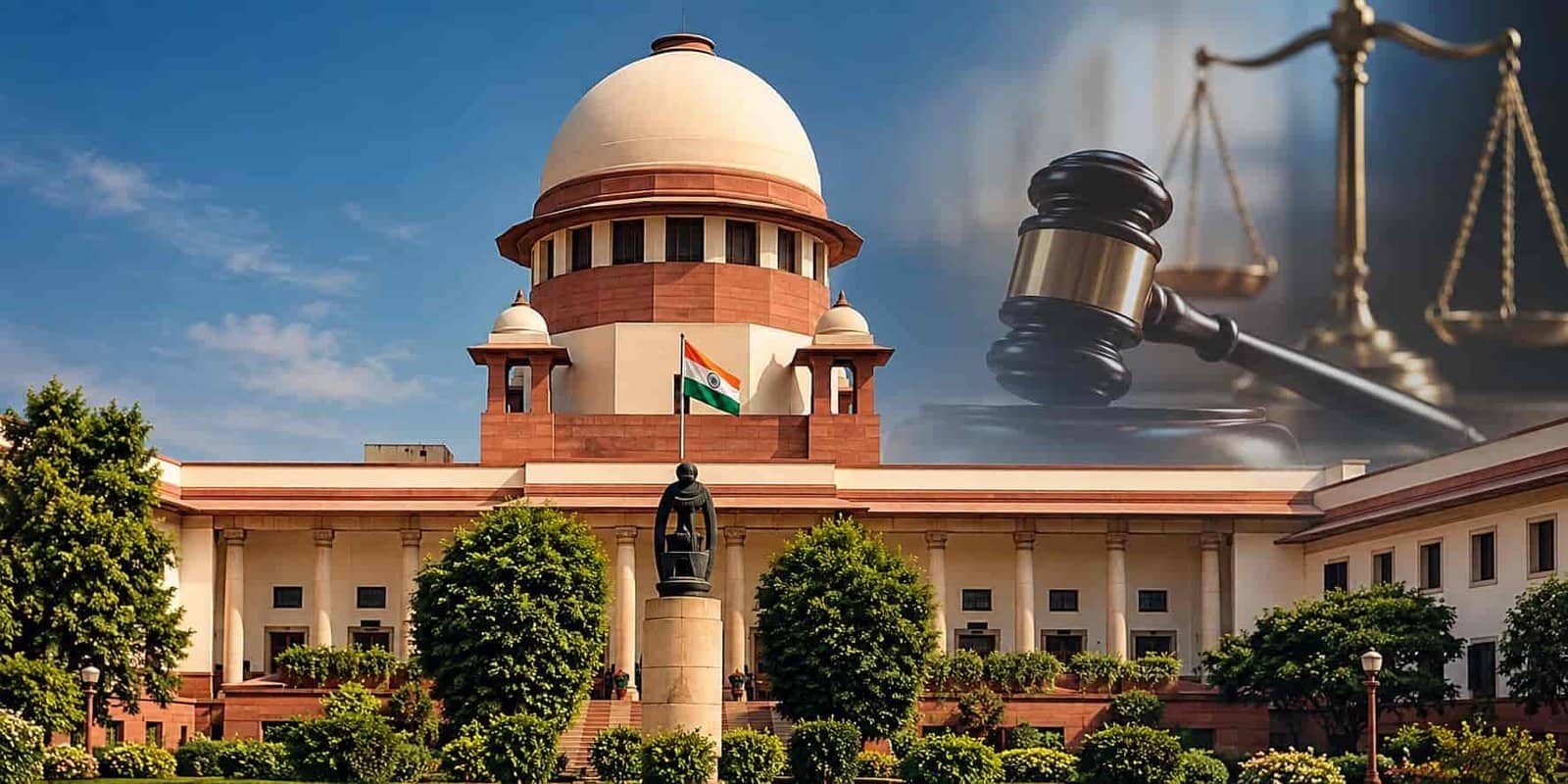
Article 12 of the Indian Constitution defines “the State” for Part III by naming the Government, Parliament, State Legislature, Local Authorities, and “other authorities.” The constitutional battle has always centered on that last phrase. How far can other authorities stretch before the distinction between public and private collapses? The Hon’ble Supreme Court’s Article 12 jurisprudence did not answer those questions once and for all. It evolved through a series of cases that remain indispensable to any serious discussion of constitutional accountability beyond formal government departments.
In Ajay Hasia Etc vs Khalid Mujib Sehravardi & Ors. Etc (1980), the Hon’ble Court refused to let legal form obscure constitutional substance. A society registered under ordinary law could still qualify as a “State” if it was functionally an instrumentalityInstrumentality TestA legal test to determine whether a seemingly private body is effectively an agency of the government based on deep administrative and financial control. or agency of government. The judgment emphasized factors such as financial dependency, depth of control, public importance of functions, and the reality of institutional supervision. The message was clear: the Constitution should not be defeated by clever organizational design. If the state operates through another body, that body cannot evade constitutional norms merely by wearing a private-law mask.
The reasoning is built on the earlier line of authority associated with Ramana Dayaram Shetty (1979), but Ajay Hasia gave the doctrine a sharper doctrinal shape. It shifted the inquiry from form to function, from incorporation papers to the real distribution of power. This remains the most fertile strand within Article 12 jurisprudence for thinking about platform power today.
Pradeep Kumar Vishwas Case
However, the doctrine did not keep expanding in a straight line. In Pradeep Kumar Biswas vs Indian Institute of Chemical Biology (2002), the Hon’ble Supreme Court refined the instrumentality test and stressed the need for deep and processive state control. The issue was not whether an institution served a public purpose in some general sense. Many private entities do. The question was whether the body was so financially, functionally, and administratively dominated by the government that it could fairly be treated as a State under Article 12. That move introduced a stricter threshold. Public importance alone would not suffice.
This matters because the platform economy exposes the limits of a debt control-based approach. Big tech firms and major digital marketplaces are not ordinarily state-funded, state-owned, or administratively controlled by the government. Their power comes from network effects, market concentration, data extraction, and infrastructure dependency. In other words, they may escape Pradeep Kumar Biswas’ scrutiny, precisely because their domination is in private rather than governmental. That is a doctrinal blind spot.
Article 12 still knows how to identify delegated state power. It remains less competitive, comfortably identifying privately accumulated quasi-sovereign power.
Zee Telefilms and the Constitutional Dead End
The problem becomes even clearer in Zee Telefilms Ltd. & Anr vs Union of India & Ors (2005), where the Hon’ble Apex Court held that the Board of Control for Cricket in India (“BCCI”) was not a “State” under Article 12 despite its enormous influence over Indian cricket. The decision is crucial because it reveals the judiciary’s reluctance to constitutionalize bodies that wield public significance without satisfying the conventional markers of governmental control. BCCI could shape careers, regulate access, and dominate a field of immense public importance. Yet constitutional review under Article 12 did not follow.
That logic has disturbing implications for platforms. If an entity can exercise decisive power over a domain central to public life and remain outside Article 12 because it lacks sufficient governmental control, then constitutional doctrine has allowed form to triumph over lived power. Zee Telefilms is not just a sports-law case. It is a warning. It shows how constitutional law can acknowledge massive social authority and still decline to discipline it because the author looks too private on paper.
The Horizontal Trap
One possible response is to bypass Article 12 altogether and rely on horizontal applicationHorizontal ApplicationThe legal principle that fundamental rights can be enforced directly against private individuals or corporations, not just the state. of rights. That is why Kaushal Kishor vs The State Of Uttar Pradesh Govt. Of U.P. (2023) generated so much interest. The majority held that rights under Articles 19 and Article 21 can operate against a person other than the state. At first glance, this seems to solve the platform problem. If private actors can violate free speech and dignity, then users, workers, and sellers can challenge the platform’s decision directly.
But this route creates a different danger. A fully horizontal constitutional order risks collapsing the distinction between public law and private law. Not every denial of service, account suspension, or contractual termination should become a writ petition, a small discussion forum, or a private club, and a global platform does not raise the same constitutional stakes. The law needs discrimination in the best sense of the world: it must distinguish between ordinary private power and infrastructural private power. Without that distinction, horizontality becomes blunt as an instrument.
A Functional Reading of Article 12
The better answer is not to constitutionalize every private dispute. It is to reinterpret Article 12 functionally. Indian doctrine already contains the seeds of that move in Ajay Hasia. The task now is to detach the inquiry from formal state control to speech, work, or market access, where constitutional discipline becomes necessary. The question should not only be: Does the government control this body? It should also be: Does this body control and serve as an essential gateway through which citizens exercise basic freedoms?
Workable tests should rest on at least three factors.
- Infrastructural gatekeeping: Does the platform control a critical channel for expression, commerce, or employment?
- Power asymmetry and Lock-in: Do users or workers have any real bargaining power? Or is exit largely illusory because of market concentration and network dependency?
- Public Affectation: Does the platform decision systematically save civic participation, livelihood, or access to information at scale?
Where these conditions are met, the platform should be treated as an authority for that specific function, not for every aspect of its corporate existence, that preserves private autonomy at this margin while constitutionalizing the exercise of quasi- public power.
Why Real Examples Matter?
The doctrinal claim becomes sharper when tied to actual forms of urban gig workers, who have repeatedly complained of account suspension and deactivation triggered by optic rating, fraud flags, or consumer complaints. They cannot effectively be interested in such systems.
The worker is judged, punished, and excluded by an automated management, unstructured with minimal procedural safeguards that resemble governance, not merely contract enforcement.
The same is true of content moderation and marketplace delisting. A social media suspension can practically prevent journalists from accessing public discourse. A seller removed from a dominant e-commerce marketplace can lose traffic, revenue, and customers. Overnight, these are not tribal service interpretations. These are decisions that restructure operations, position in public and economic life. Once platform dependency becomes this deep, the old claim that the user can simply go elsewhere begins to sound fictional.
Civilizing Governance
Recognizing functional public power does not mean destroying that form of governance; it means civilizing it. At a minimum, a dominant platform that passes a functional Article 12 test owes a duty of procedural fairness, reasoned decision-making, and non-discrimination. This results in no permanent de-platforming without notice, no unexplained delisting, no livelihood-ending account suspension, no suspension without a human review channel, and no algorithm system that reproduces structural bias while hiding behind trade secrecy.
This is not alien to Indian legal development. The Digital Personal Data Protection Act, 2023, already recognizes grievance redressal as a part of digital governance. Though that does not solve the Article 12 portion, it shows that Indian law has already accepted the premise that the detailed system requires accountability structures. The next step is to connect that regularity in the state to the constitutional principle.
From User to Citizen
The central normative shift is simple. The platform subject is not merely a consumer. The person who locks onto work, sell, organize, report, or speak, enters a detail space as a citizen. If constitutional law keeps treating platforms harms as nothing more than private contractual disputes, it will lack the very nature of contemporary power. Rights do not become irrelevant because corruption has been privatized. They become more urgent.
Article 12 was never meant to be abused in peace. It was bent to ensure the constitutional guarantee could reach institutions that exercise public power.
The challenge of the platform economy is not that it has made the Constitution absolute, but it has made old legal categories inadequate. The real question is whether the Indian Constitutional law is willing to learn from its own best insights in Ajay Hasia’s, confronts the limit exposed by the Pradeep Kumar Vishwas and ZEE Telefilms and built a doctrine capable of recognizing the new sovereigns of digital life.
Disclaimer:The views and opinions expressed in this article are those of the author(s) and do not necessarily reflect the official policy or position of The Rift.