Opening The Rift
therift
© 2026 The Rift. All Rights Reserved.
If Your Passport Doesn’t Prove You’re Indian, What Does?
A citizenship paradox has opened up, in which a person’s status can be put in genuine doubt despite holding every government-issued document available to an ordinary citizen, simply because none of those documents is the one the law ultimately recognises.

Key Takeaways
1 of 3
Automatically generated. Read full article for complete context.
A clarification that raised more questions than it answered:
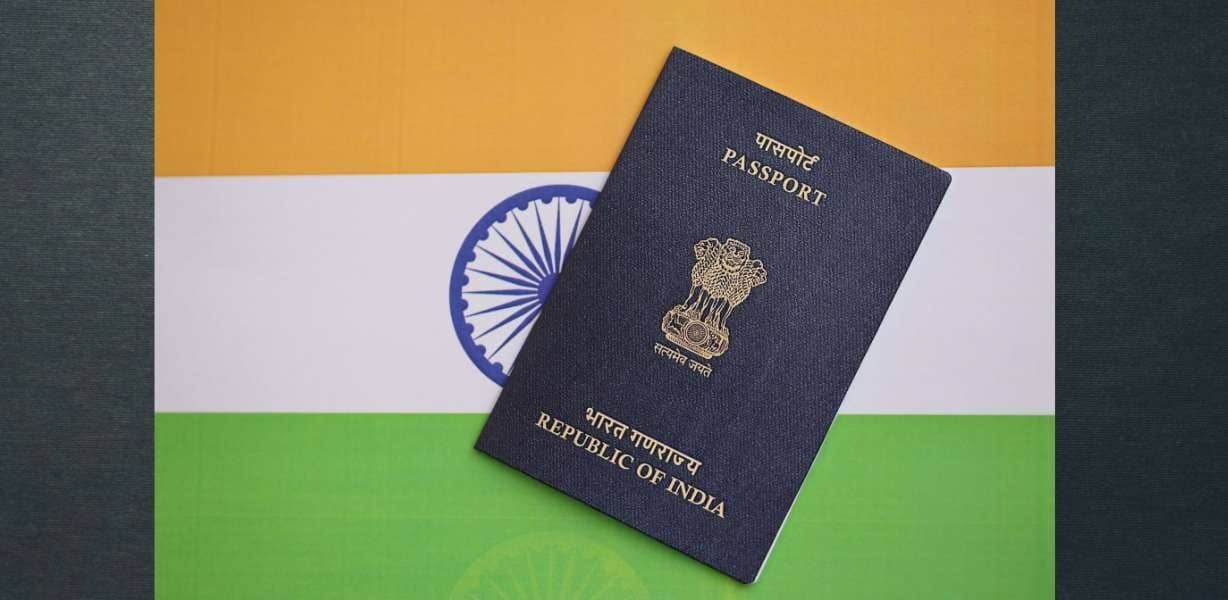
This week, the Ministry of External Affairs told the country something that startled a great many ordinary, fully documented Indians: an Indian passport is not proof of citizenship. It is, the Ministry said, a travel document issued only to Indian nationals after due diligence, and useful for proving your nationality when you cross a border, but not, in law, the conclusive root document that settles the question of who is and is not a citizen of India.
The reaction was immediate and largely incredulous. Public figures and ordinary citizens alike asked the obvious follow-up question on social media: if a passport (which the government itself issues only after verifying identity through Aadhaar, PAN, and other records) is not proof of citizenship, and Aadhaar and the Voter ID card are not proof either, then what, precisely, is?
Why the Ministry is, in a narrow legal sense, correct:
Uncomfortable as the clarification feels, it is not new law. It restates a position courts have taken for years: a passport is a downstream document. It is issued on the strength of other records, and a court examining a genuine citizenship dispute does not treat it as a freestanding root document, because doing so would let an administrative due-diligence check substitute for the actual legal test laid down in the Citizenship Act, 1955Citizenship Act, 1955The primary Indian law regulating who may acquire or determine citizenship, and under what conditions.. The Bombay High Court has held precisely this: that questions of citizenship must be decided strictly under the Citizenship Act framework, not by waving an identity document at the court.
The same logic applies to Aadhaar and the Voter ID. The Supreme Court has been clear that Aadhaar is proof of identity and residence, nothing more, and Parliament’s own Aadhaar Act says as much. The Voter ID exists to regulate electoral participation, not nationality. The PAN card is a tax-administration number. None of these instruments were designed, at the moment of their creation, to answer the question “is this person an Indian citizen”; they were designed to answer narrower questions about identity, residence, or eligibility to vote or pay tax, and courts have refused to stretch them beyond that original purpose.
So what is left? According to the legal position the Ministry was restating, actual proof of citizenship depends on which route a person acquired it through under the Citizenship Act, 1955. A person born in India between 26 January 1950 and 1 July 1987 is a citizen by birth regardless of their parents’ nationality, and their birth certificate is the primary proof. For those who acquired citizenship later (by birth with at least one Indian parent, by descent, by registration, or by naturalisation, including Persons of Indian Origin or foreign spouses who naturalise), the Ministry of Home Affairs can issue a formal Certificate of Indian Citizenship through its Indian Citizenship Online portal, and that certificate, not the passport built on top of it, is the document that actually settles the question.
Why this clarification landed now:
The timing is not an accident. It arrives in the middle of the country’s most consequential citizenship-adjacent exercise in years: the Election Commission’s Special Intensive Revision (SIR)Special Intensive Revision (SIR)An exercise by the Election Commission to update and purge electoral rolls by cross-referencing legacy data. of electoral rolls, rolled out in phases since late 2025 across Bihar, West Bengal, and a growing list of other states, and now extending to sixteen more states and three union territories. The SIR exercise asks voters whose names are not already on the 2002–2003 “legacy rolls” to establish ancestral linkage to those older records, and the Election Commission has argued before the Supreme Court that Aadhaar and Voter ID cards cannot, by themselves, be treated as conclusive proof of citizenship for this purpose. The MEA’s statement on passports fits the same pattern: a government-wide position that none of the documents most Indians actually carry in their wallets can finally answer the citizenship question, only the specific, narrower set of statutory proofs can.
The scale of the SIR exercise makes this more than an academic point. Reported figures suggest that the SIR has already led to roughly 91 lakh deletions from the electoral rolls in West Bengal and around 2.04 crore in Uttar Pradesh, with earlier rounds in Bihar removing close to 65 lakh names from draft lists. The Supreme Court, in upholding the SIR’s constitutionality in May 2026, was careful to draw a line that the Ministry’s passport clarification echoes: deletion from a voter list does not, by itself, mean a person has lost citizenship, because only a legally competent authority (not the Election Commission, and evidently not the possession of a passport either) can make that determination. The Court held that the SIR process remains open to challenge wherever a deletion is wrongful, but it firmly declined to treat exclusion from one register as proof of foreignness, just as it has declined to treat inclusion in another as proof of citizenship.
The gap between law and lived reality:
Here is where the legal correctness of the Ministry’s position runs into a harder problem. The Citizenship Act’s “proper” proofs (birth certificates from the 1950s through 1980s, parental documentation, registration or naturalisation certificates) exist in clean form mainly for people whose families have always had access to record-keeping institutions: hospitals that issue birth certificates, panchayats that maintain them, families that have not lost paperwork to displacement, flood, fire, or simple administrative neglect over seventy-five years. For a large number of Indians (particularly in rural areas, among the poor, and among those who have been internally displaced), the “primary legal proof” the government points to either never existed in formal form or has long since been lost.
This is precisely the predicament now visible in the Assam citizenship cases working their way through the Supreme Court, where women holding pre-1971 electoral rolls, NRC legacy data, and local certificates have still been declared foreigners over discrepancies in spelling or family detail. It is also the live concern raised by commentators tracking the SIR: that a citizenship paradox has opened up, in which a person’s status can be put in genuine doubt despite holding every government-issued document available to an ordinary citizen, simply because none of those documents is the one the law ultimately recognises.
What follows from this, practically:
For now, the practical advice that flows from the Ministry’s clarification is straightforward, if not entirely reassuring. A passport remains perfectly sufficient for international travel and for the vast majority of everyday purposes for which Indians use it. It is only in a genuine citizenship dispute (before a Foreigners TribunalForeigners TribunalQuasi-judicial bodies in India established to determine whether a person staying illegally is a foreigner or not., in SIR-linked proceedings, or in any court asked to rule on someone’s nationality) that the distinction the Ministry has drawn becomes operative, and where it does, the only document that will actually carry weight is a birth certificate falling within the correct statutory window, or a Certificate of Indian Citizenship issued by the Ministry of Home Affairs.
The deeper question the Ministry’s statement leaves unanswered is an institutional one: if none of the identity documents the Indian state itself issues in bulk (passport, Aadhaar, Voter ID, PAN) are treated as adequate proof of the most basic fact a state is meant to vouch for about a person, the burden of producing “real” proof falls back entirely on individuals, in a country where record-keeping has historically been uneven and where, as the SIR and the Assam tribunal cases both show, that burden falls heaviest on people least equipped to discharge it.
Disclaimer:The views and opinions expressed in this article are those of the author(s) and do not necessarily reflect the official policy or position of The Rift.