Opening The Rift
therift
© 2026 The Rift. All Rights Reserved.
Indian Citizenship, Constitutional Identity, and Proof : Examining the “Passport Clarification”
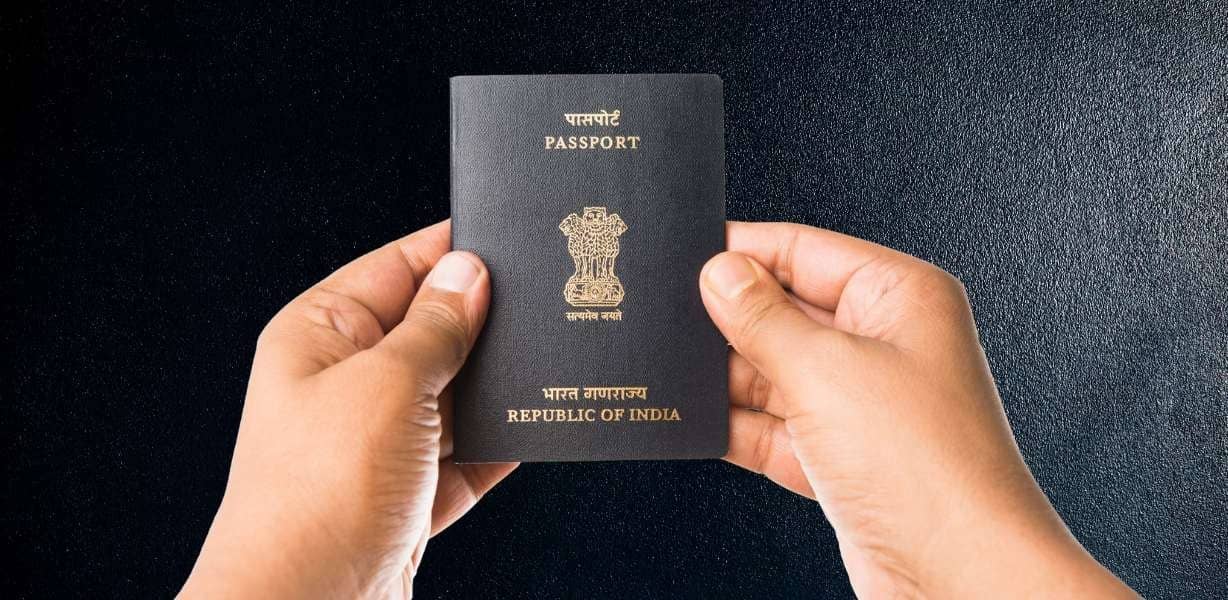
If a passport issued by the sovereign Republic after extensive governmental verification is not conclusive proof of citizenship, what document is?

Key Takeaways
1 of 3
Automatically generated. Read full article for complete context.
The clarification reportedly issued by the Ministry of External Affairs that an Indian passport is primarily a travel document and not conclusive proof of Indian citizenship has generated considerable public debate. Although legally accurate in a narrow technical sense, the clarification raises broader constitutional questions. If a passport issued by the sovereign Republic after extensive governmental verification is not conclusive proof of citizenship, what document is? More fundamentally, does Indian constitutional law contemplate that citizenship should depend upon the possession of any single document?
The issue assumes greater significance against the backdrop of discussions surrounding the National Register of Citizens (NRC), electoral roll verification exercises, and increasing administrative emphasis on documentary proof of citizenship. The constitutional scheme, however, reveals a fundamentally different philosophy. Indian citizenship is conceived primarily as a legal status arising from constitutional and statutory provisions rather than from possession of any particular document.
By examining Articles 4 to 11 of the Constitution, the Citizenship Act, 1955, relevant constitutional jurisprudence, and principles of administrative law, we can analyse whether documentary proof should become the determinant of citizenship in a constitutional democracy.
The Constitution devotes Articles 5 to 11 to citizenship.
Article 4
“Laws made under Articles 2 and 3 to provide for the amendment of the First Schedule and the Fourth Schedule and supplemental, incidental and consequential matters may contain such provisions for the amendment of the First Schedule and the Fourth Schedule as may be necessary to give effect to the provisions of the law and no such law shall be deemed to be an amendment of this Constitution for the purposes of Article 368.”
While Article 4 primarily concerns territorial reorganisation, it underscores the dynamic nature of the Union’s territorial composition, a matter closely connected historically with questions of citizenship arising from partition, migration, and integration of territories.
Article 11
“Nothing in the foregoing provisions of this Part shall derogate from the power of Parliament to make any provision with respect to the acquisition and termination of citizenship and all other matters relating to citizenship.”
Article 11 is the constitutional foundation of the Citizenship Act, 1955. It confers plenary legislative authority upon Parliament to regulate acquisition, termination, deprivation, registration and naturalisation of citizenship after the commencement of the Constitution.
The Constitution deliberately refrained from establishing citizenship through documentation. Instead, Articles 5 to 11 determine citizenship by objective legal criteria:
- domicile;
- birth;
- migration;
- residence;
- descent;
- legislation.
The framers were acutely conscious that independent India inherited millions of displaced persons, refugees, migrants, and populations lacking formal documentation. Consequently, constitutional citizenship was linked to legal relationships with the Republic rather than bureaucratic records.
This distinction remains central today. A passport, voter identity card, Aadhaar card, Permanent Account Number (PAN), driving licence or ration card is evidence generated by governmental administration. Citizenship, however, is a legal status recognised by constitutional and statutory law.
Pursuant to Article 11, Parliament enacted the Citizenship Act, 1955. The Act recognises acquisition of citizenship through:
- birth;
- descent;
- registration;
- naturalisation;
- incorporation of territory.
Equally important, the Act prescribes circumstances for renunciation, termination and deprivation.
Significantly, the Act nowhere declares any particular document to be the exclusive or conclusive proof of citizenship. Instead, citizenship depends upon satisfaction of statutory conditions.
The Act contemplates adjudication of citizenship wherever disputed, demonstrating that documentary evidence merely assists fact-finding rather than creating citizenship itself.
The Ministry’s clarification appears legally defensible if the expression “conclusive proof” is understood in its technical evidentiary sense.
Under the Indian Evidence Act, evidence may be:
- conclusive;
- presumptive;
- rebuttable.
A passport is undoubtedly strong governmental evidence that its holder has been recognised as an Indian national for purposes of international travel. However, no statute declares it to constitute “conclusive proof” immune from challenge.
This distinction is not unusual. A registered sale deed is strong evidence of title but may be challenged for fraud. Similarly, birth certificates, caste certificates, domicile certificates and educational certificates remain subject to judicial scrutiny.
Accordingly, the absence of conclusive evidentiary status does not diminish the passport’s high evidentiary value.
Nevertheless, the clarification creates practical concerns because citizens ordinarily expect documents issued by the sovereign after official verification to enjoy substantial evidentiary reliability.
Administrative Law and “Legitimate Expectation” become of significance as constitutional governance rests upon predictability and fairness. When the State verifies an individual’s identity through police verification, documentary scrutiny, and official records before issuing a passport, citizens develop a legitimate expectation that such governmental certification will ordinarily be accepted across governmental agencies.
If one department of the Union issues a passport while another refuses to treat it as adequate evidence of citizenship, the resulting inconsistency undermines administrative certainty.
Administrative law requires coherent governmental action. A citizen cannot reasonably be expected to satisfy different and undefined evidentiary standards before different authorities concerning the same legal status.
The debate acquires constitutional significance when documentary requirements become exclusionary.
India has historically witnessed large-scale internal migration; displacement; natural disasters; poor civil registration; illiteracy; inconsistent record maintenance.
Many elderly citizens possess no birth certificates. Women frequently lack educational records after marriage. Rural populations often possess fragmented documentary histories.
If citizenship becomes practically dependent upon production of historical documentation extending over decades, genuine citizens may face exclusion owing to administrative deficiencies rather than legal ineligibility.
Such outcomes offend Articles 14 and 21. The Supreme Court has consistently recognised that administrative procedures affecting civil status must satisfy standards of fairness, reasonableness and non-arbitrariness.
Electoral rolls historically operate upon statutory eligibility under the Representation of the People Act. Although enrolment ordinarily presupposes citizenship, deletion from an electoral roll does not automatically extinguish citizenship. Likewise, inclusion in the electoral roll does not create citizenship where none exists.
The distinction between electoral qualification and constitutional citizenship must therefore remain carefully preserved. Where large-scale revision exercises result in erroneous exclusions owing to documentary deficiencies, such exclusions require strong procedural safeguards, appellate remedies and evidentiary flexibility. The rule of law demands nothing less.
The constitutional validity of any future nationwide citizenship register would depend less upon its objective than upon its implementation.
Every sovereign State possesses legitimate authority to identify its citizens. However, constitutional democracies require that such identification satisfy:
- equality before law;
- due process;
- procedural fairness;
- non-discrimination;
- proportionality;
- accessibility.
A documentary regime that disproportionately disadvantages economically weaker sections, internally displaced persons, tribal populations, women, or elderly citizens (or any other segment) invites constitutional scrutiny under Arts. 14 and 21.
Citizenship administration cannot become an instrument of arbitrary exclusion.
Many democracies distinguish between citizenship itself and evidence of citizenship. The United Kingdom recognises citizenship independently of passports. The United States similarly treats passports as evidence issued pursuant to executive determination but not as creating citizenship. Most jurisdictions permit citizenship to be established through multiple forms of evidence depending upon circumstances.
India’s constitutional framework appears consistent with this comparative approach. The difficulty therefore lies not in recognising that passports are not legally conclusive, but in failing simultaneously to establish a coherent evidentiary framework that ordinary citizens can realistically satisfy.
Perhaps the most compelling constitutional observation lies in the opening words of the Constitution. The Preamble declares:
“We, the People of India…” It does not say:
“We, the documented citizens of India…”
The Constitution derives legitimacy from the people themselves.
Citizenship is therefore a constitutional relationship between the individual and the Republic. Documentation exists to evidence that relationship. It cannot become its substitute. Where governmental documentation is incomplete, inconsistent or historically unavailable, constitutional governance requires that evidentiary standards remain flexible enough to prevent genuine citizens from becoming victims of administrative incapacity.
The Ministry’s clarification that a passport is not conclusive proof of citizenship is legally understandable from an evidentiary standpoint. Yet constitutional governance demands more than technical legal correctness. It requires certainty, fairness, consistency and accessibility. Neither the Constitution nor the Citizenship Act designates any single document as the definitive proof of citizenship. Citizenship arises from constitutional and statutory conditions; documents merely evidence that status. If the State considers documentary verification necessary for contemporary governance, constitutional principles require that it establish transparent, uniform and inclusive procedures that enable every genuine citizen to establish citizenship without unreasonable hardship. The burden of constitutional democracy ultimately rests upon the State rather than the individual. It is the obligation of the Republic to identify and recognise its citizens via a fair, rational and accessible mechanism. Administrative uncertainty cannot be permitted to dilute constitutional belonging. The Constitution begins not with governmental power but with the sovereign declaration, “We, the People of India.” That foundational principle must continue to guide every legislative and administrative measure concerning citizenship.
Jai Hind
Disclaimer:The views and opinions expressed in this article are those of the author(s) and do not necessarily reflect the official policy or position of The Rift.