Opening The Rift
therift
© 2026 The Rift. All Rights Reserved.
Iran’s Demands for Peace are just and Realistic? A Question of Justice, Sovereignty and Double Standards
Peace built upon humiliation, economic strangulation and the denial of national sovereignty is unlikely to endure.

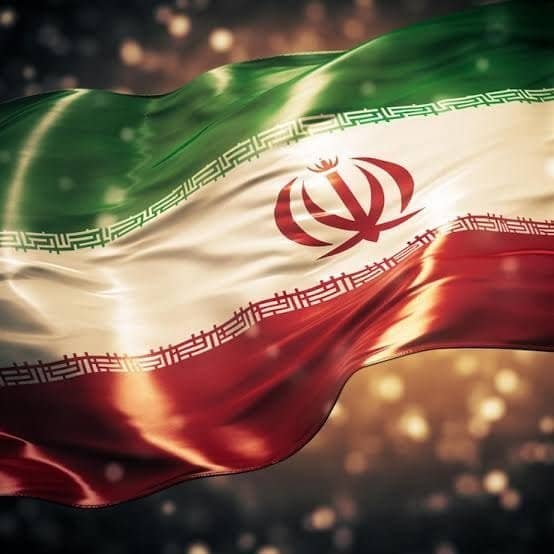
Key Takeaways
1 of 3
Automatically generated. Read full article for complete context.
The demands put forward by Iran for ending its conflict with the United States deserve serious consideration. They should not be dismissed as unreasonable merely because they originate from a country that is in confrontation with a major world power. The international community must examine these demands against the principles of international law, national sovereignty, Territorial integrity and the right of independent nations to determine their own political and economic futures.
A closer examination suggests that most of Iran’s demands are legitimate subjects for negotiation. Some may require compromise, clarification or reciprocal assurances, but the fundamental principles underlying them are neither extraordinary nor unreasonable. They concern sovereignty, national security, economic independence, freedom from military aggression and the right to participate in international affairs without being subjected to coercion by more powerful states. These are principles that should apply equally to every country, irrespective of its political system, military strength or relationship with Washington.
The more important question, therefore, is not whether Iran should be granted everything it seeks, but whether the international community is prepared to recognise that a sustainable peace cannot be constructed by imposing the will of one powerful country upon another.
KEY PRINCIPLES FOR NEGOTIATION
Iran’s Seven Demands for a Sustainable Peace Agreement
Demand 1
End to Hostilities
Comprehensive ceasefire across the region.
Demand 2
Release of Frozen Assets
Economic normalisation as part of reconciliation.
Demand 3
End Trade Restrictions
Access to international commerce for sovereign function.
Demand 4
Respect Sovereignty
Non-interference in internal political affairs.
Demand 5
Nuclear Question
Reciprocal security assurances and peaceful rights.
Demand 6
Strait of Hormuz
Shared international responsibility for navigation.
Demand 7
International Law
Consistent application without double standards.
VISUALS BY THE RIFT
1. An End to Hostilities: Peace Must Be Comprehensive
Iran’s demand for an end to military attacks and hostilities across the region is perhaps the most immediate and fundamental requirement for any meaningful peace agreement. A ceasefire that addresses only one theatre of conflict while military operations, threats and attacks continue elsewhere cannot be considered a durable settlement. The interconnected nature of the present regional confrontation makes it essential that any cessation of hostilities address the wider geography of the conflict, including the security concerns of neighbouring countries and the involvement of regional actors.
A genuine ceasefire must be accompanied by clear commitments from all parties to refrain from further military action, respect territorial boundaries and avoid using neighbouring territories as platforms for attacks. It must also establish credible mechanisms for monitoring compliance and addressing violations. Without such arrangements, a ceasefire risks becoming little more than a temporary pause during which opposing sides regroup and prepare for another confrontation.
The United States must recognise that military attacks cannot be justified indefinitely through the language of deterrence, just as Iran must recognise that its own regional actions cannot be exempted from scrutiny. If peace is the declared objective, the cessation of hostilities must be mutual, comprehensive and verifiable. Anything less would simply postpone another escalation.
2. Release of Frozen Iranian Assets: Economic Pressure Cannot Become Permanent Punishment
Iran’s demand for the release of its frozen financial assets is also a legitimate issue for negotiation. Economic sanctionsEconomic SanctionsCommercial and financial penalties applied by one or more countries against a targeted self-governing state, group, or individual. have been a central instrument of American pressure on Iran for decades, affecting its ability to conduct international trade, access financial markets and manage its national economy. The freezing of Iranian assets has further restricted the country’s economic options and contributed to the wider climate of confrontation.
If these funds rightfully belong to Iran, their continued restriction must be examined within the context of a negotiated settlement. Their release could be phased and linked to verifiable commitments by Iran on nuclear safeguards, regional security and other outstanding questions. Such an arrangement would offer both sides a practical route towards rebuilding confidence.
The larger problem with the extensive use of economic sanctions is that they frequently impose consequences far beyond the political leadership they are intended to influence. Ordinary citizens bear the burden through rising prices, restricted access to goods, economic uncertainty and the weakening of essential public services. Economic pressure may bring governments to the negotiating table, but prolonged economic strangulation can also deepen hostility, reinforce nationalist sentiment and make political compromise more difficult.
Sanctions should not become an instrument of indefinite collective punishment. A credible peace process must recognise that economic normalisation is an essential component of reconciliation, not a concession that can be indefinitely withheld after an agreement has been reached.
3. An End to Restrictions on Iranian Ports and Maritime Trade
Iran’s objection to restrictions on its ports and maritime trade deserves serious consideration because access to international commerce is fundamental to the economic functioning of any sovereign country. A nation cannot reasonably be expected to accept a peace agreement while its principal economic arteries remain subject to continuing military pressure or restrictions that undermine its ability to trade with the rest of the world.
There is an important distinction, however, between the right of Iran to conduct legitimate international trade and the obligation of all countries to respect freedom of navigation. Maritime commerce cannot become hostage to the military or political calculations of any one state. The security of commercial vessels, the continuity of international shipping and the protection of established maritime routes are interests shared by the entire international community.
Any settlement should therefore address restrictions on Iranian maritime trade while simultaneously establishing guarantees against interference with international shipping. Iran must be assured that its ports and commercial vessels will not be subjected to arbitrary military restrictions, while other countries must have confidence that their ships can navigate international waters without intimidation or obstruction.
The principle should be reciprocal: neither American military power nor Iranian strategic geography should be used to hold international commerce hostage.
4. Respect for Iran’s Sovereignty and Political Independence
Perhaps the most fundamental of Iran’s demands is that the United States should respect its sovereignty and refrain from interfering in its internal political affairs. This is not an extraordinary demand made by an isolated country. It is one of the foundational principles of the modern international order, recognised in the United Nations Charter and central to the concept of sovereign equality among nations.
The United States would hardly accept another country dictating how its government should function, who should govern it, what political system it should adopt or how its domestic affairs should be conducted. The same principle must apply to Iran. A country’s political system and leadership cannot legitimately be determined through external military pressure or coercive attempts at regime change.
This does not mean that Iran’s government should be exempt from international criticism, particularly concerning human rights, democratic freedoms, political dissent and the treatment of its own citizens. Governments must remain accountable for their actions towards their people. However, international criticism, diplomatic engagement and human rights advocacy are fundamentally different from military intervention, the deliberate destabilisation of a government or the imposition of political outcomes through force.
There is a troubling contradiction when powerful countries invoke democracy and human rights to justify intervention while disregarding the sovereignty and political independence of the very countries they claim to be helping. Respect for sovereignty cannot be conditional upon whether a government is politically acceptable to Washington. If national independence is a universal principle, it must be upheld even when dealing with governments whose policies the United States strongly opposes.
5. The Nuclear Question: Security Assurances Must Be Reciprocal
Iran’s nuclear programme remains one of the most complicated and sensitive aspects of the negotiations. The international community has a legitimate interest in ensuring that nuclear technology is not diverted towards the development of nuclear weapons. Equally, Iran has a legitimate right, under the Nuclear Non-Proliferation TreatyNuclear Non-Proliferation Treaty (NPT)An international treaty whose objective is to prevent the spread of nuclear weapons and weapons technology, to promote cooperation in the peaceful uses of nuclear energy, and to further the goal of achieving nuclear disarmament. and subject to its obligations and safeguards, to pursue peaceful nuclear technology.
The challenge is to reconcile these two considerations through a verifiable international agreement rather than through threats and military confrontation. Iran should be prepared to accept rigorous inspections, transparency and meaningful restrictions on activities that could contribute to the development of nuclear weapons. Such measures must be sufficiently comprehensive to provide the international community with credible assurances about the peaceful nature of its nuclear programme.
In return, the United States and other participating countries should recognise Iran’s rights under the non-proliferation framework and commit themselves to the progressive removal of nuclear-related sanctions in accordance with verified compliance. An agreement must not become a mechanism through which Iran is permanently denied the peaceful application of nuclear science and technology.
There is also a larger question of consistency in the international nuclear order. The global debate cannot be confined to Iran while the nuclear capabilities of other countries, including those outside the Nuclear Non-Proliferation Treaty, remain largely untouched. Israel’s undeclared nuclear arsenal, in particular, raises questions about the selective application of international non-proliferation concerns in West Asia. A regional approach to nuclear security would be far more credible if it addressed the security concerns and nuclear capabilities of all relevant states.
This is not an argument for allowing nuclear proliferation. It is an argument for applying non-proliferation principles consistently. A sustainable agreement must provide credible safeguards, respect legitimate peaceful nuclear rights and move towards a wider regional framework for nuclear restraint.
6. The Strait of HormuzStrait of HormuzA narrow, strategically important waterway connecting the Persian Gulf to the Gulf of Oman and the Arabian Sea, crucial for global oil shipments.: A Shared International Responsibility
Iran’s position regarding the Strait of Hormuz requires particular attention because of its enormous strategic and economic significance. The Strait is one of the world’s most important maritime passages, connecting the Persian Gulf with the Gulf of Oman and the wider international shipping network. A substantial proportion of the world’s internationally traded petroleum passes through this narrow waterway, making its security a matter of global economic importance.
Iran has legitimate security interests in the region, particularly given its geographical position and the presence of foreign military forces in its neighbourhood. It cannot be expected to ignore threats to its own security while other powers maintain a substantial military presence around it. Nevertheless, its geographical proximity to the Strait does not give it an unrestricted right to control international maritime traffic or impose conditions on commercial shipping that undermine freedom of navigation.
The United States, equally, cannot treat the Strait as an area in which its military superiority automatically grants it the right to dictate arrangements. The security of this waterway must not become an extension of the strategic rivalry between Washington and Tehran.
A durable arrangement should establish internationally recognised guarantees for freedom of navigation, the safety of commercial vessels and the prevention of military escalation. Iran’s security concerns must be addressed alongside the interests of other Gulf countries and the wider international community. This is an area where international law, multilateral diplomacy and mutual guarantees should take precedence over unilateral demands.
7. The Larger Question: International Law and the Politics of Double Standards
Beyond the specific demands lies a much larger question that the international community cannot continue to avoid: why is the sovereignty of one country treated as more important than that of another? Why should military superiority confer political privileges that weaker nations are denied? And why are international principles invoked selectively, depending on the identity of the country accused of violating them?
The United States has repeatedly demanded that Iran respect international law, refrain from threatening regional stability and comply with international obligations. These expectations are not inherently unreasonable. However, Washington must also demonstrate its own commitment to the same principles. Military superiority cannot confer a special entitlement to attack another country, dictate its political future or determine the terms under which it participates in the international economic system.
The question of double standards becomes particularly significant when the international community considers the broader history of American military interventions, sanctions and political pressure. The sovereignty of countries in the Global South has frequently been treated as negotiable when it conflicts with the strategic and economic interests of powerful nations. Such an approach has weakened confidence in the international system and reinforced the perception that international law operates differently for the powerful and the vulnerable.
However, consistency also requires Iran to acknowledge that its own regional policies and military actions are subject to international scrutiny. Its relationships with armed groups, its regional security policies and its conduct towards neighbouring countries cannot be placed beyond examination simply because it is resisting American pressure.
International law cannot be a weapon wielded selectively against political adversaries. Nor can sovereignty become an unconditional justification for the actions of any government. The credibility of the international system depends on the willingness of all states, powerful and otherwise, to accept the same standards of accountability.
What Would Constitute a Fair Peace Agreement?
A balanced settlement would have to recognise that neither side can secure a lasting peace by demanding the unconditional capitulation of the other. The United States would need to accept that Iran has legitimate sovereignty and security interests, while Iran would have to provide verifiable assurances concerning its nuclear programme, maritime conduct and regional security policies.
A comprehensive agreement should therefore include an end to military hostilities throughout the region, mutual commitments against further attacks, and internationally credible mechanisms for monitoring compliance. It should provide for the negotiated release of legitimate frozen Iranian assets, the removal of restrictions that prevent lawful Iranian trade and respect for Iran’s political independence.
On the nuclear question, Iran should accept internationally monitored safeguards and transparent verification arrangements, while the United States and other parties should recognise Iran’s right to peaceful nuclear development under the applicable international framework. The agreement must also guarantee freedom of navigation through the Strait of Hormuz and establish a mechanism for resolving maritime disputes without resorting to military confrontation.
Equally important would be a commitment by all parties not to destabilise one another through military intervention, covert operations or attempts to impose political outcomes. Such a framework would require concessions from both sides, but that is precisely what diplomacy is expected to achieve. Negotiations are not exercises in demonstrating who has greater military strength. They are attempts to find a settlement that allows competing interests to coexist without the destruction and instability that war inevitably produces.
Conclusion: Peace Should Not Mean Surrender
The central question is not whether Iran should receive everything it demands. No country can reasonably expect to enter international negotiations and emerge without making concessions. The more important question is whether Iran’s demands are sufficiently legitimate to deserve serious and fair consideration, and whether the United States is prepared to negotiate on the basis of equality rather than military superiority.
My assessment is that most of Iran’s demands address legitimate concerns relating to sovereignty, security, economic independence and protection from military aggression. These are not privileges that powerful countries grant to weaker ones. They are fundamental principles of international relations that should apply equally to every sovereign nation.
At the same time, Iran must recognise that sovereignty carries responsibilities. It must respect international shipping, provide credible assurances about its nuclear programme and take seriously the legitimate security concerns of its neighbours. Its resistance to American intervention cannot become a justification for ignoring the rights and security of other countries in the region.
The United States, for its part, must abandon the assumption that its military and economic superiority entitles it to dictate the terms of peace. A country cannot claim to defend the international order while reserving for itself the right to determine which nations enjoy sovereignty, which governments are acceptable and which countries must submit to its strategic preferences.
There is also a wider lesson for the international community. Peace built upon humiliation, economic strangulation and the denial of national sovereignty is unlikely to endure. A settlement that merely compels Iran to surrender its negotiating position, without addressing the underlying causes of confrontation, would create the conditions for another crisis rather than resolve the present one.
The people of Iran have the right to live without the constant threat of military aggression and economic devastation. The American people, too, have little to gain from another prolonged and expensive war in West Asia. The people of the wider region, already exhausted by decades of conflict, displacement and instability, deserve an international order that places human security above geopolitical calculations.
Ultimately, peace must be measured not by the extent to which one country has defeated another, but by whether it creates conditions in which nations can coexist with dignity, security and mutual respect. The world needs fewer wars, fewer exercises in military intimidation and a renewed commitment to diplomacy grounded in international law.
Peace cannot mean unconditional surrender by the weaker party, nor can it mean that the stronger party is exempt from the obligations of international law. A just settlement must be founded on reciprocity, accountability, mutual respect and verifiable commitments. That is the difference between an agreement imposed by power and a peace achieved through justice.
Disclaimer:The views and opinions expressed in this article are those of the author(s) and do not necessarily reflect the official policy or position of The Rift.
*International RelationsDouble StandardsIranNuclear Non-ProliferationPeace NegotiationsSanctionsSovereigntyStrait of HormuzUnited States