Opening The Rift
therift
© 2026 The Rift. All Rights Reserved.
Mass Protest in Bhubaneswar Against Mining-Linked State Repression
Protesters in Bhubaneswar decry state repression favoring mining companies, demanding the release of leaders and constitutional rights for Gram Sabhas in resource-rich Odisha. They Demanded for Unconditional Release of People’s Movement Leaders, Protection of Gram Sabha and Community Rights
Key Takeaways
1 of 3
Automatically generated. Read full article for complete context.
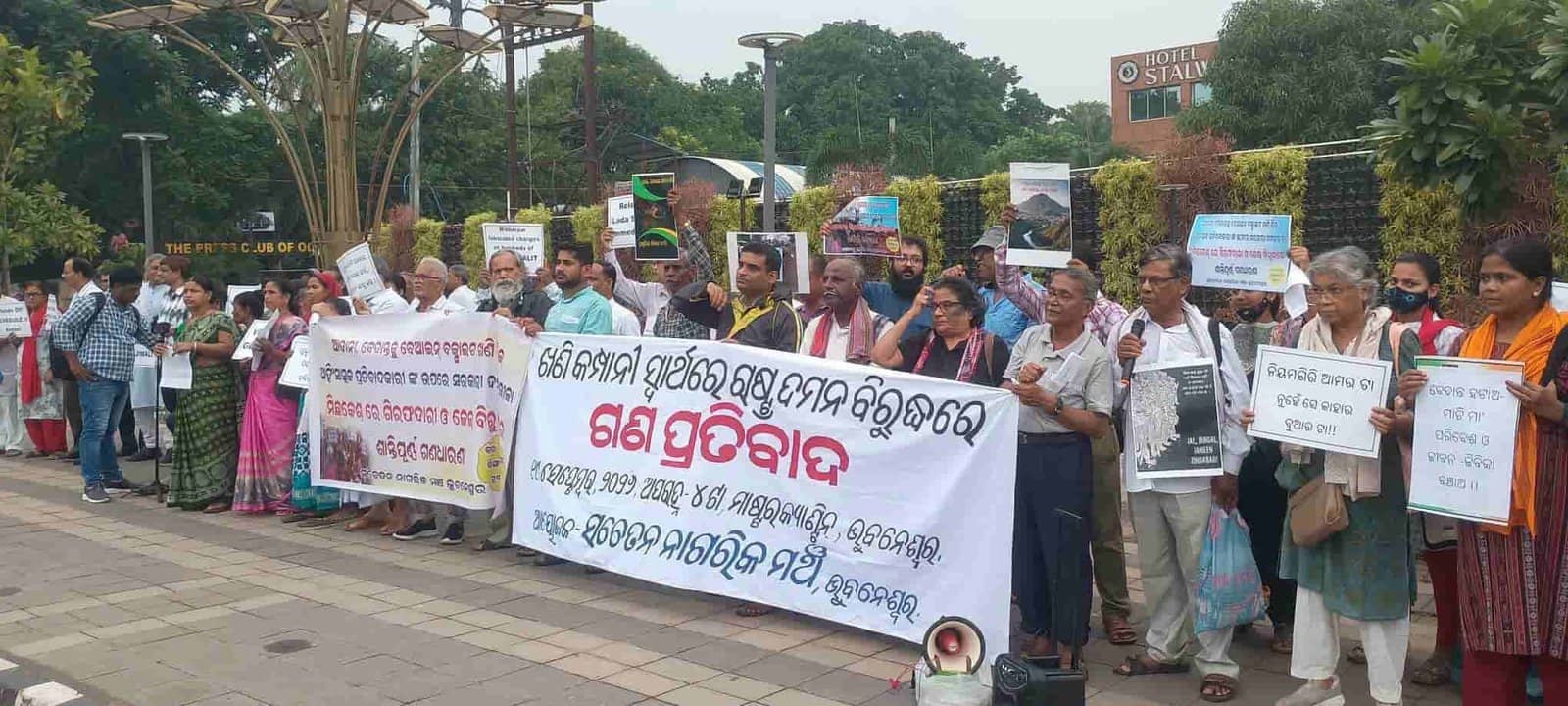
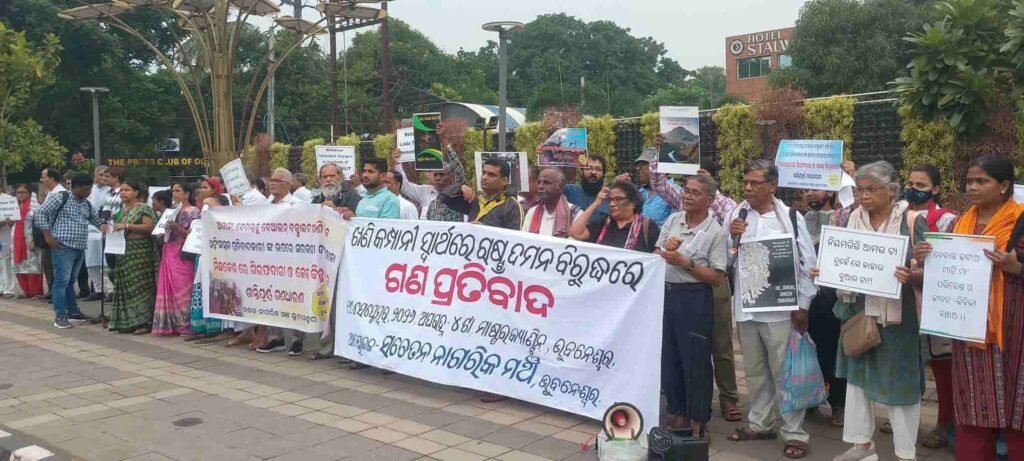
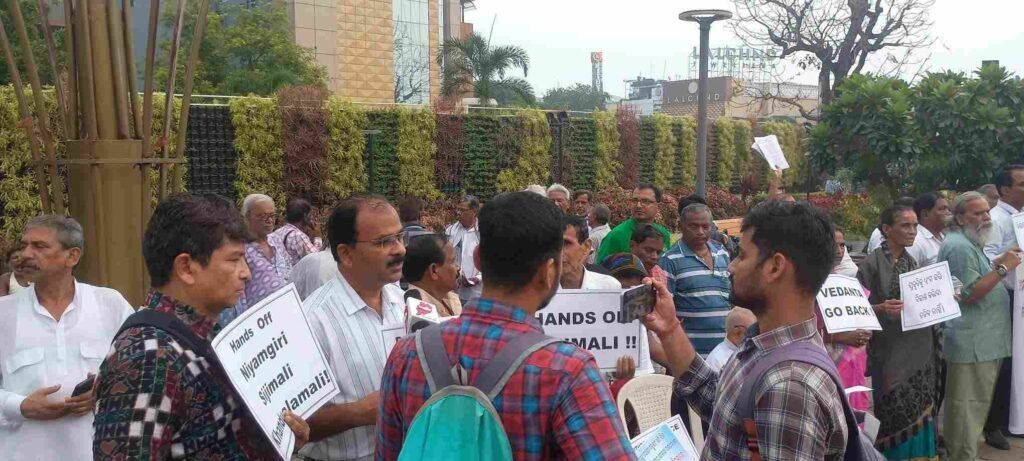
Bhubaneswar, Odisha: On September 19, 2026, a mass protest was held in Bhubaneswar against what organisers described as state repression in favour of mining companies. Protesters also raised concerns over the exploitation of Odisha’s water, land, forests and mineral resources.
The protest, organised at the call of the –Sachetana Nagarik Manch, brought together political leaders, environmentalists, human-rights activists, journalists, lawyers, social workers and representatives of various people’s organisations.
Demand for Release of Movement Leaders
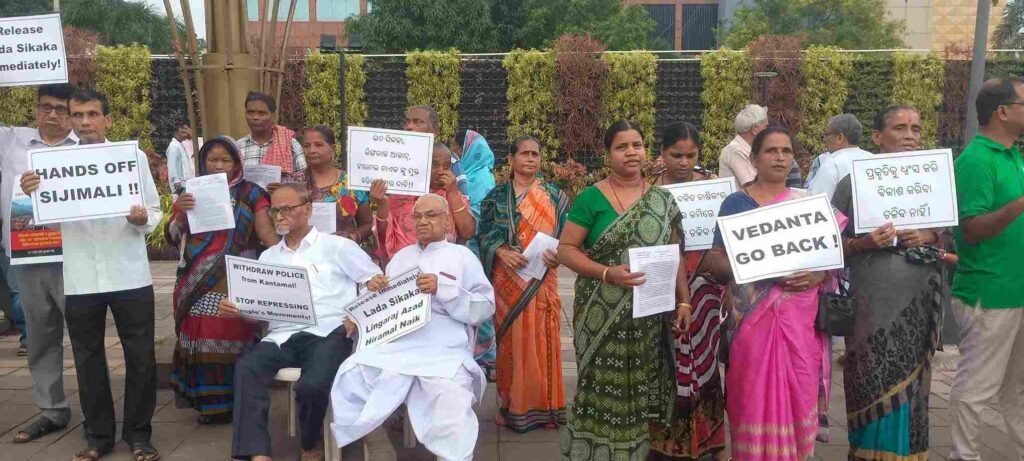
One of the major demands raised at the protest was the immediate and unconditional release of Lad Sikaka, president of the Niyamgiri Suraksha Samiti; Lingaraj Azad, national president of the Samajwadi Jan Parishad; and Hiramal Nayak, leader of the Maa Mati Mali Suraksha Manch.
The protesters alleged that people involved in movements to protect land, forests, water and other natural resources were being targeted through arrests and criminal cases. They described the alleged action as repression of democratic people’s movements.
Focus on Gram Sabha Rights
The protesters demanded recognition of the constitutional rights of Gram Sabhas in Fifth Schedule areas, particularly in matters concerning land, forests and mineral resources.
They also opposed what they described as a restrictive interpretation of Gram Sabha powers by the Union Ministry of Tribal Affairs. The protesters said local communities should have a meaningful role in decisions affecting their land, livelihoods and natural resources.
Opposition to MMDR Amendment
The gathering also expressed opposition to the reported 2026 amendment to the Mines and Minerals (Development and Regulation) Act.
According to the protesters, the amendment could have implications for the state’s taxation rights and control over mineral-bearing areas. They further alleged that provisions facilitating the export of minerals could encourage greater extraction of Odisha’s mineral resources.
The protesters demanded withdrawal of the amendment and called for greater protection of the rights of mineral-rich communities.
NHPC Communication Raises Concern
The protesters also raised concerns over a communication involving the Union Ministry of Tribal Affairs and the National Hydroelectric Power Corporation (NHPC).
They alleged that the communication sought to limit the authority of Gram Sabhas in matters concerning the transfer of land and forests. The protesters argued that any weakening of Gram Sabha powers could affect the rights of tribal and forest-dependent communities.
‘Not Just an Environmental Issue’
Speakers at the demonstration said the ongoing struggles over land, forests and water should not be viewed merely as environmental campaigns.
According to the organisers, the issues are closely connected with the livelihoods of thousands of people, the rights of tribal communities dependent on natural resources and the interests of future generations.
They said protection of natural resources and community rights required wider public participation and democratic mobilisation.
Appeal to Opposition Parties
The organisers appealed to opposition parties in Odisha to raise their voice against what they described as unconstitutional and anti-tribal policies concerning the rights of Gram Sabhas and local communities.
They also called for a broader people’s movement to oppose policies that, according to them, could facilitate large-scale exploitation of the state’s natural resources.
Activists, Journalists and Political Leaders Attend
Several prominent political and social figures, activists, journalists, environmentalists, human-rights campaigners and representatives of various civil society organisations participated in the demonstration.
Those present included senior journalist Rabi Das; senior Congress leader Niranjan Patnaik; noted environmentalist Prafulla Samantara; human-rights activist Bishwapriya Kanungo; researcher Anil Dhir; environmental activist and member of the Organisation for Protection of Democratic Rights, Srimant Mohanty; writer Ranjana Padhi; Narendra Mohanty of the Anti-False-Cases Campaign; Professor Birendra Nayak; Debi Pusti; poet Lenin Kumar; human-rights activist Pramodini Pradhan; Baghambhar Patnaik; Rakesh Kanungo; trade-union leader Mahendra Parida; Pradipta Nayak; senior journalist Sudhir Pattnaik; Rajesh Mahapatra; political leaders Bhajaman Behera, Bansidhar Parida and Siddharth Routray; columnist Rangacharan Pradhan; transgender leader Meghana Sahu; Deb Prasad Ray of the Lohia Academy; members of the Basti Suraksha Manch, along with Narayan Lenka; documentary filmmaker Debaranjan; Dandapani Mohanty of the Jan Adhikar Manch; social activist Siddharth Kar; Kisan Patnaik; Sharat Pal; Sasmita Jena; Malay Tripathy; Akanksha; advocate Gyan Ranjan; Bijay Panda; Subhasis; Rashmi Ranjan Jena; Khirod Rout; Pratima Das; Sharmistha Nath; spokesperson for the people’s movement Prashant Paikaray; tribal leader Chamburu Soren; people’s movement leader Batakrishna Swain; Surendra Tapsu; Rumita Kundu; Debi Prasanna Rath; Mohan Naidu; Bichitra Biswal; Gourachandra Tripathy of the Dandakaranya Suraksha Manch; Laxmi Reddy; Soni Nayak; Shubhashree Pradhan, Swagatika; and RTI activist Prakash Kumar Samant Singhar.
More than a hundred activists, representatives of various organisations and concerned citizens also participated in the demonstration.

Disclaimer:The views and opinions expressed in this article are those of the author(s) and do not necessarily reflect the official policy or position of The Rift.