Opening The Rift
therift
© 2026 The Rift. All Rights Reserved.
SC reprimands Bengal CM in interfering ED raid but glosses over the structural problems
The judiciary is attempting to enforce procedural purity in an environment where the federal ruling party is aggressively using executive power to warp the playing field.

Key Takeaways
1 of 3
Automatically generated. Read full article for complete context.
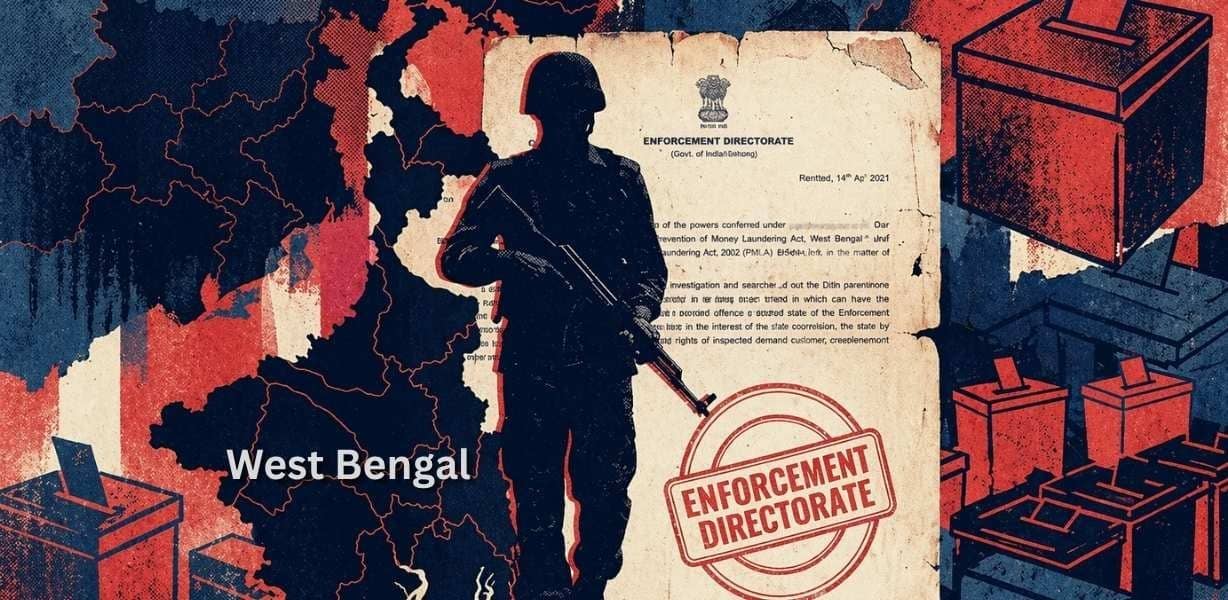
As voters queue across 152 constituencies for the first phase of the West Bengal assembly elections, they are walking into what resembles a militarized zone. The Election Commission of India has deployed an unprecedented 2.4 lakh paramilitary personnel to ostensibly secure the state. It is a staggering show of force, marking the highest-ever deployment of central troops for a single state election. Yet, the true battle for political control is not happening at the polling booths. It is taking place in the corridors of the Enforcement Directorate and the courtrooms of the Supreme Court, where the boundaries between law enforcement and electoral sabotage have entirely collapsed.
Just twenty-four hours before polling began, a Supreme Court bench comprising Justices P.K. Mishra and N.V. Anjaria issued a blistering public reprimand. They directed their ire at Chief Minister Mamata Banerjee for her alleged interference in an Enforcement Directorate raid on the political consultancy firm I-PAC. The court warned that a sitting chief minister actively disrupting a central investigation places democracy in jeopardy. On paper, the judiciary is defending institutional integrity. In practice, the ruling isolates a single instance of political obstruction while remaining completely blind to the systemic weaponization of the state apparatus including the mass deletion of voters designed to paralyze the opposition.
The Timing
The sequence of events leading up to Phase 1 reveals a calculated strategy. The Enforcement Directorate did not target an obscure bureaucratic office, it raided the Kolkata premises of I-PAC, the primary political consultancy of the Trinamool Congress’s electoral strategy. The investigation nominally centers on an alleged coal pilferage scam, yet its execution is perfectly synchronized with the electoral calendar.
Following escalating pressure, the federal agency arrested I-PAC co-founder Vinesh Chandel on April 13. When law enforcement executes aggressive raids on the nerve center of a political campaign just weeks before an election, it stops being a criminal investigation. It becomes an administrative decapitation of a political opponent.
The Supreme Court’s focus on the Chief Minister’s physical intervention misses the structural reality. The court correctly asserts that disrupting an agency violates the law. However, it fails to ask whether deploying federal financial investigators to dismantle a rival’s campaign machinery aligns with the principles of a free and fair election. The judiciary is attempting to enforce procedural purity in an environment where the federal ruling party is aggressively using executive power to warp the playing field. Moreover, in its zeal to address political obstruction, the court remains conspicuously silent on a far more devastating disenfranchisement. It is the deletion of millions of voters effectively barred from exercising their franchise due to vague logical discrepancies. By failing to urgently address this mass administrative erasure, the court invites the critical question of whether its own inaction actively contributes to the very democratic jeopardy it claims to prevent.
A Militarized Mandate
This administrative strangulation extends far beyond the ED raids. The Election Commission’s decision to deploy over 2,400 companies of the Central Armed Police Forces (CAPF) is unprecedented. The ruling federal government frames this as a necessary measure against Bengal’s undeniable history of poll violence. However, the sheer scale of the deployment creates a highly intimidating socio-psychological impact on the electorate.
The sheer presence of 2.4 lakh paramilitary personnel transforms the civic act of voting into a high-security clearance. While intended to prevent violence, it inherently alters the atmosphere of the election, converting schools and community centers into fortified bunkers. This hyper-militarization of the democratic process normalizes the idea that elections are inherently dangerous, thereby justifying ever-increasing federal intervention in state affairs. Heavily armed federal troops patrolling rural constituencies project an overwhelming image of federal authority, subtly reinforcing the message that the state government is fundamentally incapable of maintaining order.
Simultaneously, reports of mass voter targeted deletions continue to surface across multiple districts. Thousands of citizens, disproportionately from minority and marginalized communities, find their names arbitrarily removed from the registry. This administrative erasure mirrors the systemic disenfranchisement tactics seen in recent state contests, where the burden of proving citizenship and voting eligibility is constantly shifted onto the most vulnerable. When combined with the sudden paralysis of the opposition’s political consultancy, these moves do not look like administrative precautions. They look like a coordinated effort to suppress turnout and dismantle campaign infrastructure before a single ballot is cast.
The Level Playing Field
The legal reprimand against the state government creates a highly convenient media narrative on polling day. It paints the regional opposition as lawless and obstructionist, precisely as federal troops march through their constituencies.
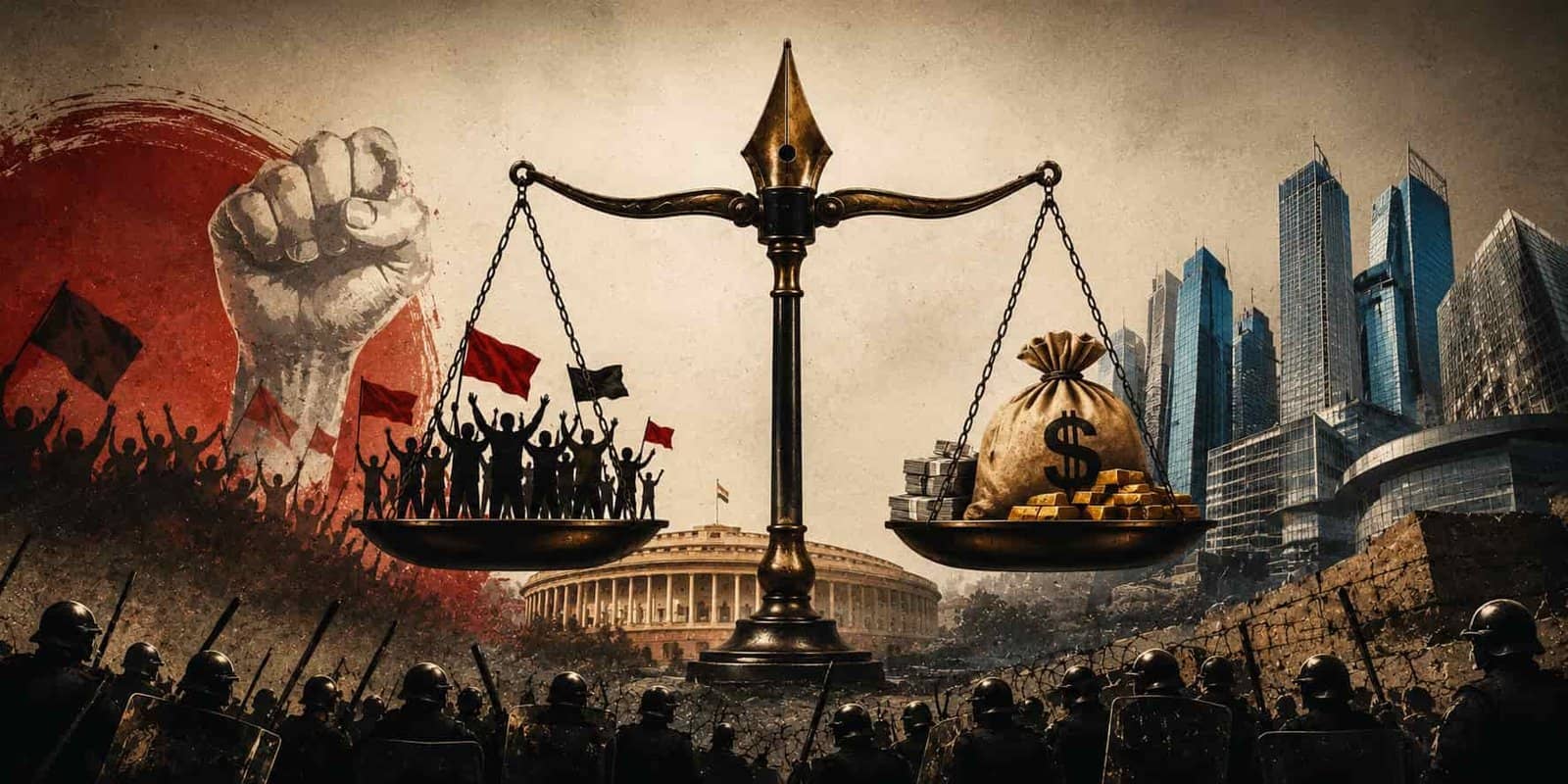
Elections are supposed to be decided by the electorate, not by the strategic deployment of the Enforcement Directorate. When state agencies have the unbridled power to raid, arrest, and freeze the operations of political strategists during a campaign, the actual voting process becomes a secondary formality. The Supreme Court may believe it is protecting the rule of law by censuring the Chief Minister. But by refusing to check the federal government’s blatant use of investigative agencies as an electoral weapon, the court is tacitly allowing the democratic process itself to be hollowed out. In the fairness of justice and level playing electoral field, the action could have taken place after the election.
The question is no longer who will win Bengal, but whether a genuinely free election can exist under the shadow of the state.
Disclaimer:The views and opinions expressed in this article are those of the author(s) and do not necessarily reflect the official policy or position of The Rift.