Opening The Rift
therift
© 2026 The Rift. All Rights Reserved.
Final SIR List deleted over 20 million voters in Uttar Pradesh: Five things to know
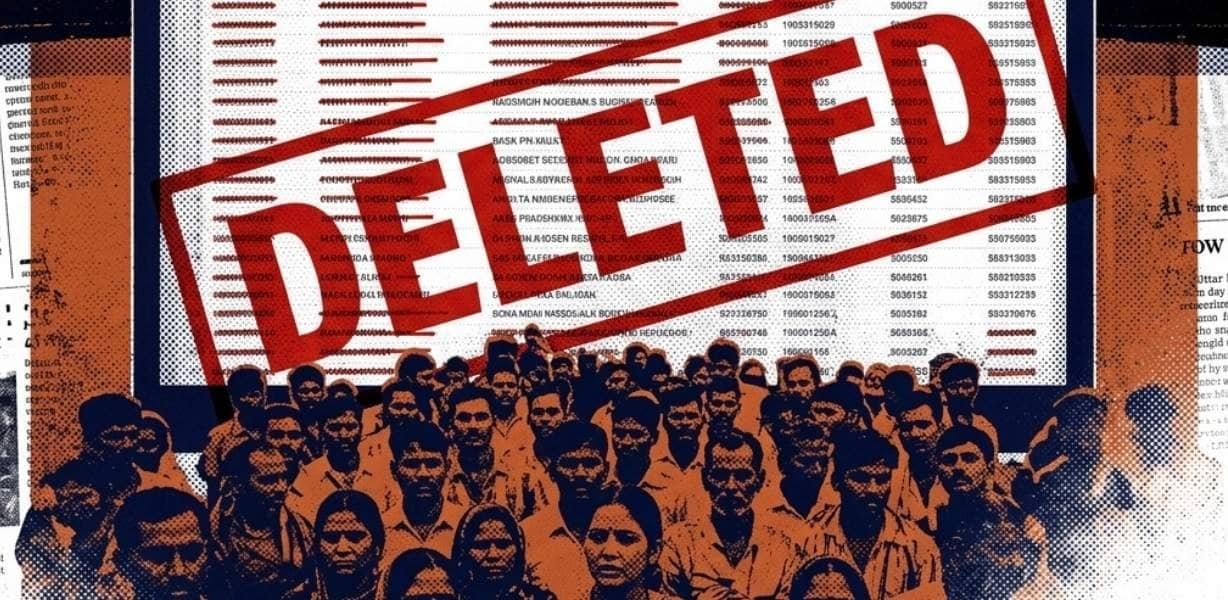
Over 166 days of administrative maneuvering, Uttar Pradesh’s electoral roll was pruned by a staggering 13.2%. What began as a high-stakes technological cleanup has evolved into a central flashpoint for Indian democracy.

Key Takeaways
1 of 3
Automatically generated. Read full article for complete context.
A State Growing in People, but Shrinking in Voters?
Uttar Pradesh is India’s demographic behemoth, yet the conclusion of the Special Intensive Revision (SIR) 2026 presents a startling paradox as the population climbs, the voter list is undergoing a massive contraction. Over 166 days of administrative maneuvering and four unprecedented extensions, the state’s electoral roll has been pruned by a staggering 13.2%. What began as a high-stakes technological cleanup has evolved into a central flashpoint for Indian democracy. Is this the surgical removal of ghost voters, or a systemic failure that has left millions of eligible citizens in an administrative vacuum? As the state moves toward the 2027 elections, the answer lies in the data behind the largest electoral purge in modern Indian history.
1. 2.04 Crore Net Deletion
The sheer volume of names removed from the Uttar Pradesh rolls is without precedent. Before the SIR exercise commenced in October 2025, the state boasted 15.44 crore voters. By the publication of the final list in April 2026, that figure had plummeted to 13.39 crore. This represents a net deletion of 2.04 crore names (20.4 million).
The process was a volatile two-stage contraction. In the initial draft stage published in January, a massive 2.89 crore names were excised. While a subsequent drive for claims and objections saw 8.4 million (84.28 lakh) names added back, the final phase still saw a terminal cull of 815,000 voters. Investigative data reveals the specific nature of these final deletions: 350,000 voters were removed for failing to reply to notices, 328,000 were marked as permanently shifted or absent, 79,076 were identified as duplicates, 55,865 were deceased, and 2,269 were flagged as non-citizens or under-age.
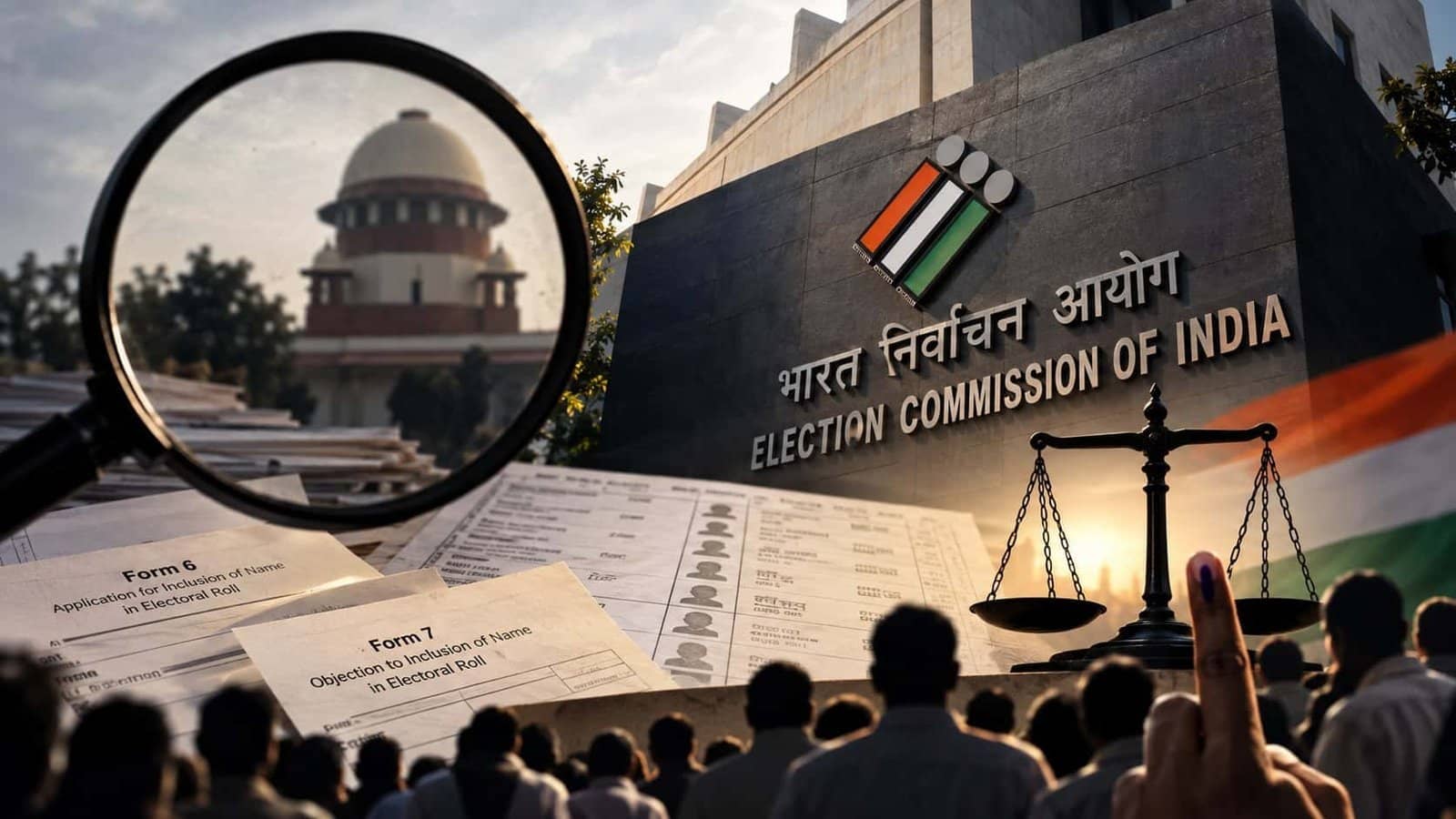
“In the entire Special Intensive Revision, no deletion has been done without following the prescribed due process. No removal from the voter list has taken place without proper procedure. If any name present in the draft electoral roll published on January 6, 2026 is not in the final electoral roll, it has either been removed after submission of Form 7 or after a notice and hearing process, based on the decision of the ERO,” defended Chief Electoral Officer Navdeep Rinwa.
2. The Urban Exodus
The SIR purge was geographically lopsided, hitting urban centers with clinical intensity. In fast-growing hubs characterized by high mobility, the contraction was nearly three times the state average. In specific assembly segments like Lucknow Cantt. and Allahabad North, the electorate was slashed by as much as 34.2% and 34%, respectively.
The top five districts with the highest net deletions illustrate this urban-centric purge:
- Lucknow: 22.89% reduction (914,185 voters removed)
- Ghaziabad: 20.24% reduction (574,478 voters removed)
- Kanpur Nagar: 19.20% reduction (687,201 voters removed)
- Gautam Buddha Nagar: 19.33% reduction (360,591 voters removed)
- Meerut: 18.75% reduction (506,183 voters removed)
In sharp contrast, rural districts like Lalitpur and Hamirpur saw significantly lower contraction rates of just 6.7% and 6.9%. This disparity raises critical questions about whether the software’s shifted voter algorithms were tuned too aggressively for the fluid migration patterns of Uttar Pradesh’s major cities.
3. The Algorithmic Ghost
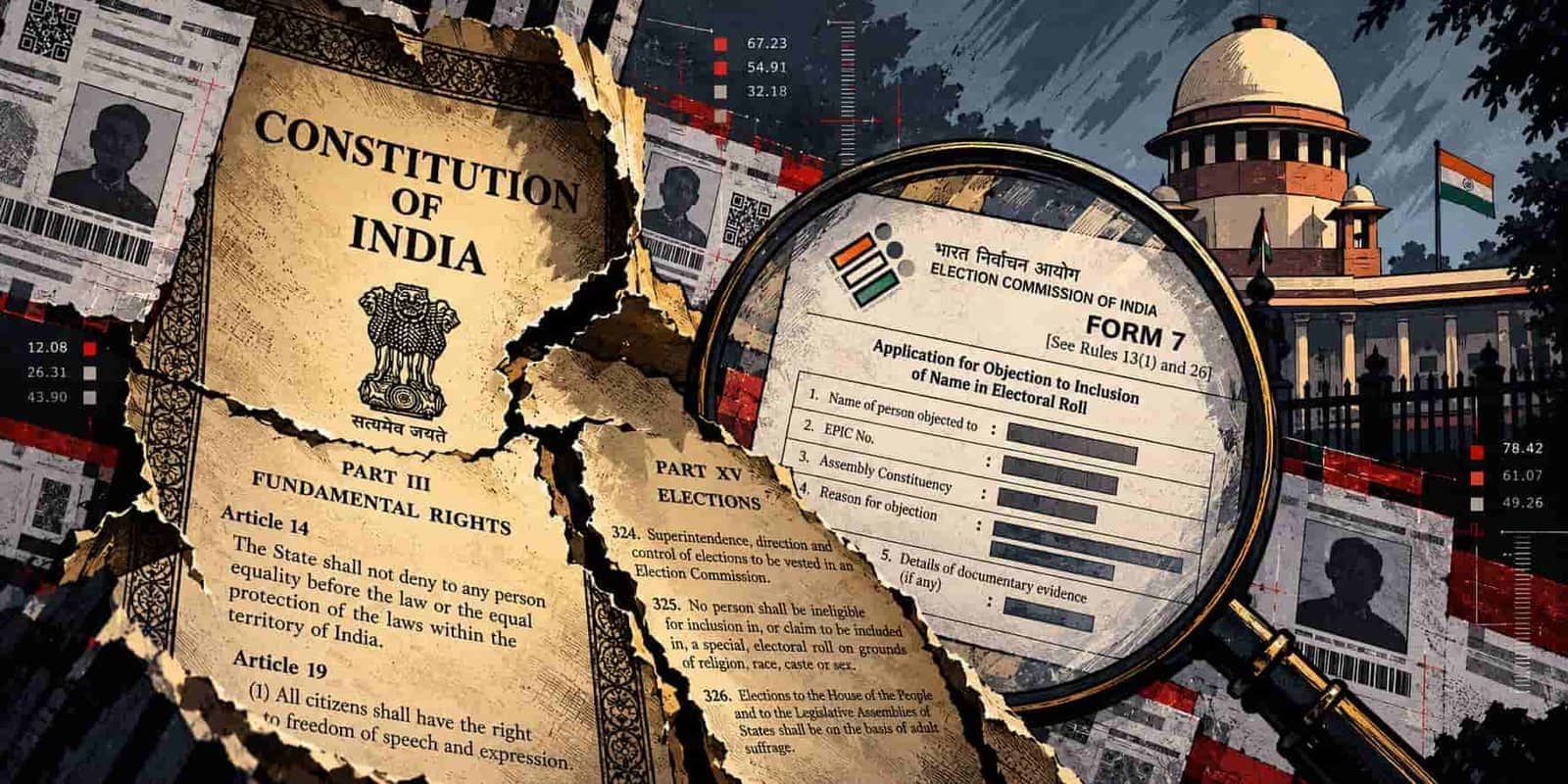
The most troubling revelation involves the Election Commission of India’s (ECI) technological flip-flop. On November 24, 2025, the ECI informed the Supreme Court that its de-duplication software was defective and produced variable results. Yet, just eight days later, the commission reactivated this very software to identify Demographically Similar Entries (DSE).
This algorithmic reactivation created two massive categories of suspect voters:
- The “Unmapped” Millions: Exactly 1.04 crore (10.4 million) voters were flagged because they could not be digitally linked back to the 2002–2004 baseline rolls.
- Logical Discrepancies: Algorithms flagged 2.22 crore cases where data appeared illogical—such as an age gap between parent and child of less than 18 years. While 3.25 crore notices were generated, only 1.15 crore hearings had been completed by late February, indicating a massive administrative backlog resolved in a final, frantic rush.
Compounding this was a total vacuum of institutional governance. Investigation by The Reporters’ Collective found that the software was deployed without written protocols or Standard Operating Procedures (SOPs). By bypassing the formal notice protocols of Rule 21-A of the Registration of Electors Rules, 1960, the ECI left the franchise of millions to the common sense and logic of 1.77 lakh Booth Level Officers (BLOs) working at the eleventh hour.
4. Women Faced Disproportionate Deletions
Demographically, the revision has skewed the state’s gender balance. At the draft stage, the cleanup hit women with significantly more force: 15.5 million women were deleted compared to 13.4 million men. This caused the gender ratio to crater from a pre-SIR high of 877 to a draft-stage low of 824.
While remedial additions helped the ratio recover to 834 in the final roll, this remains the lowest gender ratio among all Phase II states. Unlike states like Tamil Nadu or Kerala, which reported higher female elector shares and stronger ratios, Uttar Pradesh’s revision suggests that women—who often lack documentation or face different migration hurdles—were more vulnerable to being flagged as “unverifiable” by automated checks.
5. The Political War of Words
The administrative scale of the exercise was undeniably vast, utilizing 1.77 lakh BLOs and establishing 15,030 new polling stations to accommodate a strict 1,200-voter cap. However, the political fallout has been equally massive. Even within the ruling party, concern surfaced early, with Chief Minister Yogi Adityanath expressing worry that many deleted voters were traditional BJP supporters.
Opposition leaders, meanwhile, have framed the exercise as a targeted assault on the democratic process.
“Going by the voter list that has come out now, one can assume that when the BJP starts losing on issues, it fights elections by hiding behind institutions,” alleged Samajwadi Party chief Akhilesh Yadav.
UP Congress chief Ajay Rai echoed this sentiment, calling the one-month window provided for a state of 150 million voters “unreasonable” and a “betrayal of democracy.”
A More Accurate Future or a Heated 2027?
The 13.39 crore voters remaining on the roll now form the bedrock of the 2027 Uttar Pradesh elections. While the Election Commission maintains that SIR 2026 has successfully purged “ghosts” and duplicates, the methodology defined by “defective” software, a lack of written SOPs, and the bypass of established legal protocols leaves a shadow over the list’s integrity.
As we move forward, the state must confront a difficult question: In the pursuit of a clean electoral roll, have we prioritized algorithmic efficiency over the fundamental right to vote? The true test will come in 2027, when we see if the millions who vanished were indeed ghosts, or simply citizens lost in the machine.