Opening The Rift
therift
© 2026 The Rift. All Rights Reserved.
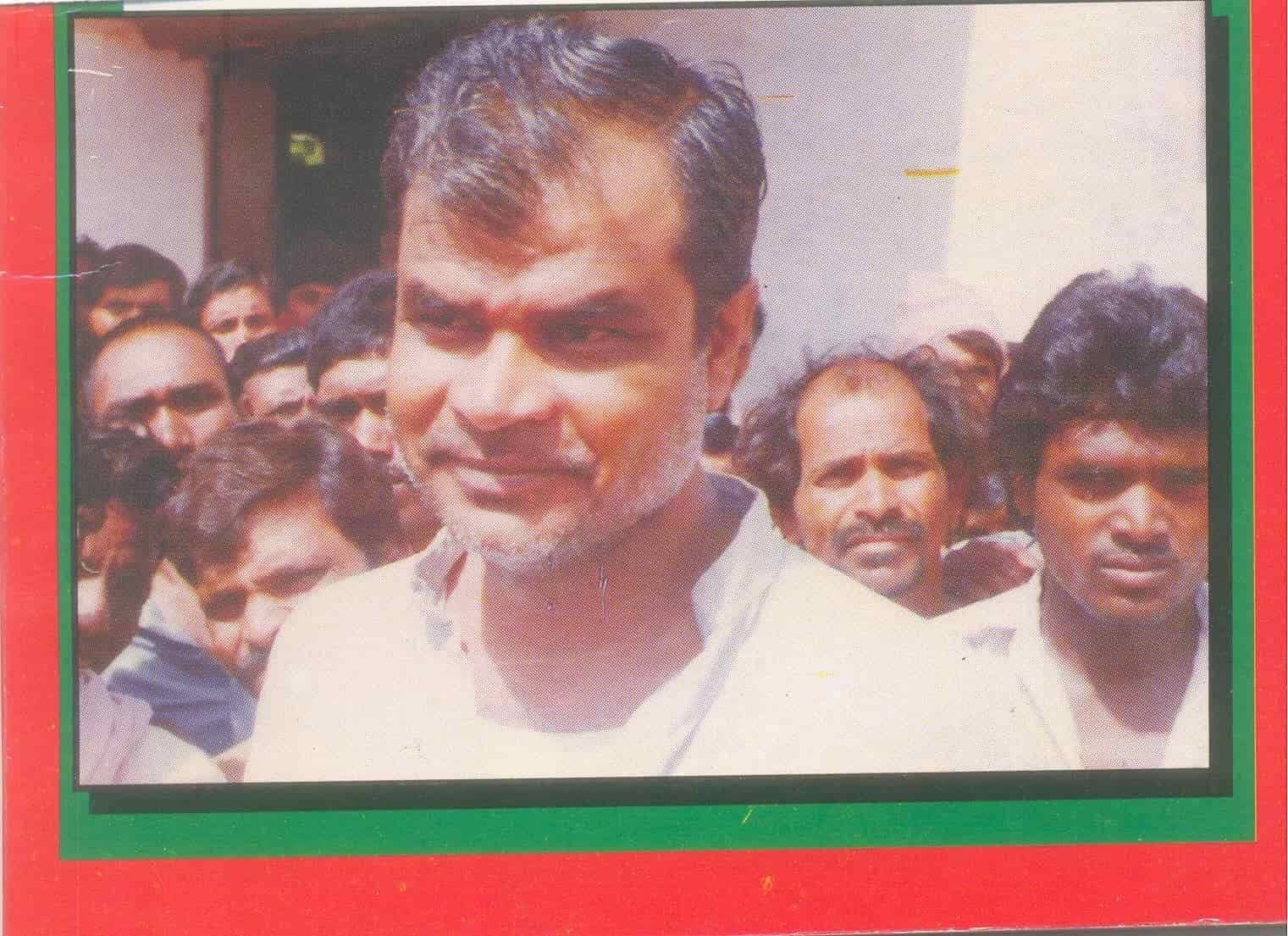
Struggle and Creation–Shankar Guha Niyogi Showed the Path of Integrating Diverse Needs of Comprehensive Socio-Economic Change
Niyogi built on the best of Indian experiences in diverse fields, attracting Marxists and Gandhians alike to his work-area where new dreams were being seen and turned into reality.

Key Takeaways
1 of 3
Automatically generated. Read full article for complete context.
Shankar Guha Niyogi (1943-1991) was a great trade union leader who became a legend within his lifetime, partly because of several significant victories of workers’ struggles within a relatively short time of about 14 years (1977-91) but even more so because of his highly innovative and creative approach to working class issues which included many-sided integrations leading to a comprehensive approach to improving the well-being as well as social consciousness of not just the workers but of all people of the working class belt including particularly the surrounding villages. Hence, along with common issues of wages and regularization, other significant issues concerning technology choices, with special emphasis on opposing indiscriminate mechanization, could also be taken up. The working class struggles could be integrated with struggles for justice in many villages, and the stronger working class communities agreed to support upcoming struggles of others. The trade union agenda included programs on improving workers’ access to health, education, and vocational skills; this was not confined to raising demands from the administration, but workers went ahead to create their own schools and hospitals. The anti-alcohol program started by the union became one of the most successful efforts of its kind in the country. Niyogi was deeply concerned about protection of environment, forests and wild life.
What is particularly memorable is that this many-sided creative and constructive work continued and succeeded amidst difficult and continuing struggles, emphasizing the importance of combining struggle and constructive work, thus taking forward Mahatma Gandhi’s legacy from the freedom movement days.
Thus Niyogi built on the best of Indian experiences in diverse fields, as evident from the fact that both committed Marxists and Gandhians were attracted to Niyogi’s work area where new dreams were being seen and were also being turned into reality. This attracted a significant number of doctors, other health personnel, social activists, artists and writers to this work-area and they wanted to contribute to these efforts in whatever way they could. I myself went many times and fortunately contributed about a hundred articles and reports, as well as many booklets and pamphlets, on this inspiring work. I was able to interview Niyogi Ji several times; the most memorable conversation took place when he was jailed. On the return journey, I wrote a poem based on this conversation which, to my happy surprise, was splashed on a full page of the leading Hindi magazine Hindustan. I was particularly keen to go there when the movement faced difficult and stressful times, as reporting during such periods was more helpful.
It would not be an exaggeration to say that the work-area of Niyogi Ji was almost becoming like a pilgrimage for those committed to seek alternatives based on justice and a different paradigm of development.
The enemies of workers and the people could hardly tolerate this, and Niyogi was assassinated on September 28, 1991, at the age of only 48.
The main base of the Niyogi-led trade union movement (CMSS) was among iron ore miners of Dalli Rajhara, Chhattisgarh (Central India), although it gradually extended to several mines, industries, and villages in the region, particularly in the industrial city of Bhilai.) was among iron ore miners of Dalli Rajhara, Chhattisgarh (Central India), although it extended gradually to several mines and industries as well as villages in the region, particularly in the industrial city of Bhilai. The wider organization to take forward numerous struggles in the region was called the Chhattisgarh Mukti Morcha (CMM). Niyogi and his colleagues broadened the trade union movement, linking it closely with many-sided struggles of peasants in nearby villages, mostly from tribal communities, whether for land and forest rights or against the pollution of water sources. Hence Niyogi and the wider movement have been widely recognized as a highly creative initiative that combined struggles with constructive activities (sangharsh aur nirman).
Shankar Guha Niyogi was born in Assam into a middle-class household and had his education in Bengal. Niyogi was active as a student leader in college. Coming from Bengal to work in the Bhilai Steel Plant in the Chhattisgarh region, he gave up a promising career to merge entirely with the poorest, neglected sections of miners, moving from village to village, mine to mine, taking up odd jobs (miner, farm worker, forest worker, goat grazer, fisher) while constantly trying to understand his people and their problems. in Chattisgarh region, he gave up a promising career to merge entirely with the poorest, neglected sections of miners, moving from village to village, mine to mine, taking up odd jobs (miner, farm worker, forest worker, goat grazer, fisher) but all the time trying to understand his people and their problems. In the course of his travels to Danitola, he married Asha, who worked in a mine, and they henceforth became partners in various struggles. They had three children, predictably named Kranti (revolution), Mukti (liberation) and Jeet (victory). These family members have continued to make important contributions.
In the early phase of the struggle, workers achieved some wage gains, but avoiding unemployment caused by mechanization posed a bigger challenge. Here Niyogi showed his great creativity and ability to respond to complex issues with innovative thinking. The foremost union led by Niyogi ( Chattisgarh Mines Shramik Sangh–CMSS) resisted heavy mechanization by arguing that the technology adopted by a country should be in keeping in with the conditions prevailing in the country. Heavy machines and total mechanization may be acceptable for countries where job loss is not a problem, but not for a country like India where unemployment is a significant issue. Documents prepared at that time by the union reveal a very appreciable understanding of the complex debate. This understanding is close to that of Mahatma Gandhi, who had strongly argued against machines that disrupt and destroy livelihoods.
The CMSS prepared an alternative plan for partial mechanization that would protect jobs and also address quality control aspects. On this basis the union was able to protect mining jobs for a longer period.
A lesser-known aspect of Niyogi is his firm faith in communal harmony; his union was active in protecting minorities and victims of sectarian, targeted violence. The CMSS played a very important role in protecting Sikhs at the time of anti-Sikh violence in 1984.
The anti-alcohol movement of the CMSS is still remembered as one of the largest collective voluntary giving up of alcohol, involving thousands of miners. This not only protected workers’ health and reduced domestic violence but also led to workers purchasing diverse goods for themselves and their children, thereby contributing to a sudden upswing in the local market after they had experienced wage rises and given up liquor around the same time.
Successes of workers were annoying several dominant persons of the area, including liquor sellers. Things became even more difficult when Niyogi moved from the mining belt to the nearby Bhilai industrial belt to fight the battles of workers employed by several leading private industrialists in the area. They were more aggressive towards workers and had closer relations with criminal mafias.
As a journalist, I had reported on several such attacks at that time. Niyogi realized that his own life was under threat. He even recorded a statement that indicated this. He then went with several workers to Delhi and met the President of India and others. On 28 September 1991 a hired goon fired on him when he was sleeping peacefully after a very tiring day. His death sent shock waves throughout the country. Workers gathered in huge numbers to bid a tearful farewell to the leader they had loved so much, with elders weeping endlessly as if they had lost their own child.
While the first court hearing of this murder case sentenced two top industrialists along with three others to life imprisonment, they successfully appealed against this decision, quickly returning to their luxury lives. Till as late as this year (2026) demands for justice in this case have been made.
The assassination of Niyogi was all the more tragic as he himself had striven hard to keep his movement largely non-violent despite grave provocations. His death was a significant blow to the spread of a very creative and innovative trade union movement, which was well-linked to villages around industrial-mining belts and had shown great promise. Niyogi died at the age of only 48, but his work still lives on in several struggles and efforts which draw inspiration from him.
Disclaimer:The views and opinions expressed in this article are those of the author(s) and do not necessarily reflect the official policy or position of The Rift.
* Shankar Guha NiyogiAssassinationChhattisgarhGandhiIndiainfocusLabor MovementMarxismShankar Guha NiyogiSocial JusticeTrade Unions