Opening The Rift
therift
© 2026 The Rift. All Rights Reserved.
The Jurisprudence of Hurt Religious Sentiments and Wounded Feelings
A thorn by any other name still draws blood. The jurisprudence of hurt religious sentiments, applied asymmetrically, is not law. It is armament.

Key Takeaways
1 of 3
Automatically generated. Read full article for complete context.
In 1976, Urdu speakers mischievously “appropriated” William Shakespeare as their own, calling him Wali Mian Sheik Peer: it was meant to be, and remains, a joke. The Brits, bewaqoof log, did not take offence. Hum se pooch lethe… !
(apologies to William Shakespeare)
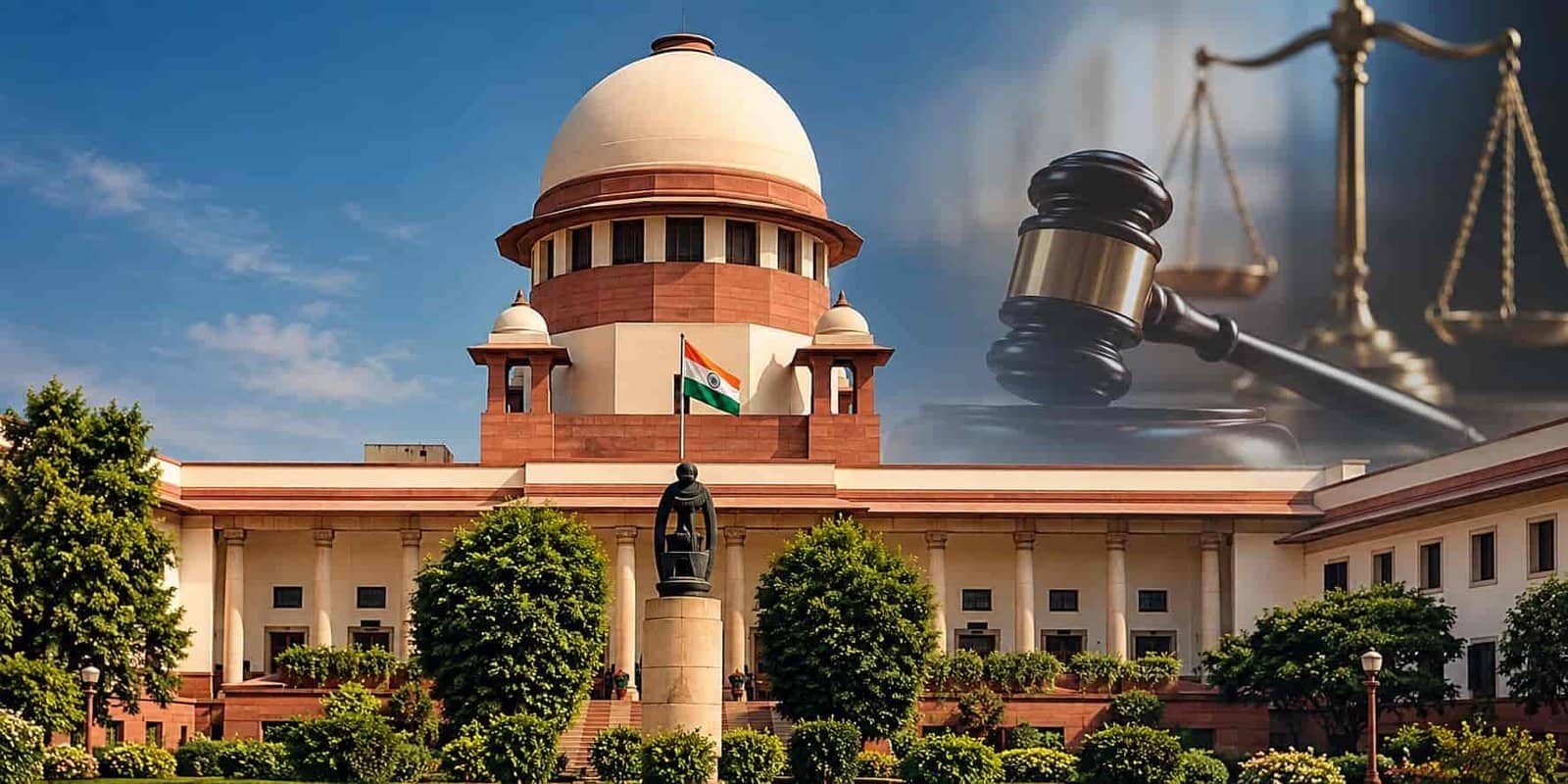
2026, a half century later, Deccan Chronicle (14 June) carried a news report: The removal of Donald Trump’s name from the John F. Kennedy Centre for the Performing Arts was questioned. On 29 May 2026 US District Judge named Christopher Cooper ruled the Kennedy Center had been renamed illegally by its governing board, because the Kennedy Center was established by Congress in 1964 as a “living memorial” to President John F. Kennedy, and only Congress possesses the legal authority to change its name. Renaming by a board of trustees Trump had recently reconstituted with his own loyalists violated this, said the ruling. Ordering removal of the signage, it also required all references to the name to be purged from official materials, including the institution’s website. The District Judge rejected multiple last-minute appeals to stay the ruling, stating public interest is “rarely served by the ‘perpetuation’ of ‘unlawful’ governmental action”. India’s Supreme Court is more powerful.
This was a mere District Judge, taking on the President of the USA. In stark contrast, the ongoing trend of renaming cities and landmarks in India often reflects a broader, ideologically driven campaign aimed at altering the cultural and historical landscape by systematically removing names associated with Muslim heritage. While the US action is a reactionary measure following a specific federal court ruling, India’s name-changing initiatives are proactive efforts to reshape national identity by reclaiming historical narratives and erasing significant layers of the country’s pluralistic past. Countries and institutions evolve over time. How India and its institutions of governance evolved is worth careful scrutiny. Judicial scrutiny.
“The ongoing trend of renaming cities and landmarks in India often reflects a broader, ideologically driven campaign aimed at altering the cultural and historical landscape by systematically removing names associated with Muslim heritage.”
Manufacturing Hurt
Dovetailing into a “make in India” campaign a brand-new tort of “hurt feelings” or “hurt religious sentiment” emerged in India, taking root at breathtaking speed in the welcoming soil of Indian jurisprudence. Across the country, citizens are being booked, arraigned, charge-sheeted, and prosecuted under Section 295A of the Indian Penal Code, now Section 299 of the Bharatiya Nyaya SanhitaBharatiya Nyaya Sanhita (BNS)The new criminal code enacted in India to replace the colonial-era Indian Penal Code (IPC)., for the newly minted constitutional tort of hurting religious sentiments. A fact-checker is arrested for a tweet. A Catholic priest is charged for declaring his faith the “only true religion”. An academic question about a Supreme Court judgment is challenged as an affront to belief. The machinery of the state, including police, courts, and the prosecutorial apparatus, has been freely deployed in defence of the feelings of the majority, with breathtaking efficiency and without meaningful pause.
Let us, for the sake of argument, assume that this jurisprudence is entirely bona fideBona FideIn good faith; without intention to deceive or act maliciously.. Let us assume it is not the weaponised instrument of majoritarian consolidation that critics allege it to be. Let us, generously, treat it as an emerging doctrine of constitutional sensitivity, i.e., a legitimate, principled legal norm that exists to protect all communities equally. Then, let us examine what happens when the mirror is turned.
Consider the facts on the ground. In 2018, the Uttar Pradesh government, led by Chief Minister Yogi Adityanath, renamed the ancient city of Allahabad, a name in use for nearly four centuries, to Prayagraj, within five days of initiating the proposal, without consulting residents, and in brazen violation of settled procedural norms. The urgency might suggest it was a matter of grave national interest. The Supreme Court was sufficiently troubled to issue notice to the UP government on a challenge filed by the Allahabad Heritage Society, which argued that the name change violated Article 29(1) of the Constitution: the right of minorities to conserve their language and culture. The petitioners told the court that “an abrupt overnight change… by executive fiat is a clear assault” on that right.
Meanwhile, Delhi BJP leaders formally requested the renaming of Akbar Road, Humayun Road, Tughlaq Road, Aurangzeb Lane, and Shahjahan Road, calling them symbols of “Muslim slavery”. The National Democratic Alliance government had already renamed Aurangzeb Road after APJ Abdul Kalam.
The pattern is systematic, not incidental. A comprehensive cultural cartography is being redrawn. You see, these names hurt Hindu religious sentiments and/or historic sensibilities. The possibility that the changes might hurt Muslim sentiments or their own historic sensibilities, was irrelevant. Second class citizens apparently don’t matter, so why should their feelings?
And so IF applying the new jurisprudence in the reverse direction, a Muslim citizen, whose ancestors built those cities, named those roads, and whose cultural memory is encoded in those names, were to file a complaint seeking an FIR, claiming that the renaming of Allahabad as Prayagraj, or the systematic erasure of Muslim nomenclature from Delhi’s streets, has outrageously hurt their religious and historical sentiments, would the same state machinery that arrested Mohammed Zubair for a tweet spring into action? Would the government that booked the Catholic priest for professing his own faith now prosecute itself?
The rhetorical question boasts a very big IF, but for those who believe in Constitutional guarantees and Article 14 of our Constitution, the silence heard in response to that rhetorical question is deafening.
Legislative Malice
The core jurisprudential question that no commentator has yet squarely confronted: Can malice be attributed to the legislation itself? The legislators who passed laws enabling rapid executive renaming are sworn officers of the Constitution. They took oaths under the Third Schedule of the Constitution to uphold the Constitution and laws of India “without fear or favour, affection or ill-will”. The President of India, under Article 60, is similarly bound to “preserve, protect and defend the Constitution”: a duty that is not merely ceremonial but constitutionally actionable, its breach attracting impeachment under Article 61.
Article 14 of the Constitution guarantees equality before the law to every person and prohibits what the Supreme Court has called “class legislation”: laws that facially apply to all but are, in operative reality, instruments of sectarian discrimination. Article 15 prohibits the State from discriminating against citizens on grounds of religion. When a legislative and executive architecture systematically renames Muslim-heritage sites, criminalises Muslim speech acts, and simultaneously deploys the machinery of hurt-sentiments law exclusively against critics of the majority religion, the cumulative effect is not merely discriminatory administration; it is discriminatory architecture.
“When a legislative and executive architecture systematically renames Muslim-heritage sites, criminalises Muslim speech acts, and simultaneously deploys the machinery of hurt-sentiments law exclusively against critics of the majority religion, the cumulative effect is not merely discriminatory administration; it is discriminatory architecture.”
The question then becomes one that constitutional law scholars should be asking urgently: Does legislation crafted with the demonstrable effect, even if not the formally declared intent, of demoralising one religious community, satisfying the majoritarian appetite of the ruling coalition, and erasing the cultural heritage of a minority, constitute malicious legislation for constitutional purposes? The Supreme Court has itself said that “not all insults to religion are offences” under Section 295A: only those accompanied by “deliberate and malicious intention”. The malice standard cuts both ways.
Now turn to the drafters themselves: the civil servants, the IAS officers, the Joint Secretaries and Additional Secretaries in whose anonymous hands legislative proposals are shaped, refined, and sent upward for political approval. The Indian bureaucrat, no less than the legislator, is a constitutional officer. The service oath binds civil servants to the Constitution and to impartial, honest performance of their duties. The Supreme Court has repeatedly held that administrative action arbitrary in nature or motivated by extraneous considerations is ultra viresUltra ViresBeyond one’s legal power or authority. Any act that is ultra vires is legally invalid. Articles 14 and 21 of the Constitution. Where an administrative action is shown to be “affected by bias, personal interest, or extraneous considerations,” it is void ab initioAb InitioFrom the beginning; meaning a legal action or document was invalid from the very start..
Consider then the bureaucrats who drafted legislation enabling the rapid renaming of cities and streets, without safeguards, without minority impact assessments, without any provision requiring consultation with affected communities or religious minorities. Consider those who drafted the Citizenship Amendment Act: legislation that Muslim organisations have argued expressly violates Article 14’s guarantee of equality by excluding Muslims from its beneficial scope while extending protection to every other named religion.
Two possibilities exist, and both are damning: If the legislative drafters foresaw the discriminatory impact of such legislation on Muslim citizens, such as the erasure of their cultural heritage, the selective deployment of laws against their community, and the chilling effect on their religious expression, and proceeded anyway, then they acted maliciously, in breach of their constitutional oath.
On the logic of the very jurisprudence that India’s courts are now developing, they have outrageously hurt the religious and historical sentiments of an entire community. The FIR writes itself.
If they did not foresee these consequences: if they, as trained legal and administrative professionals, failed to anticipate that legislation with no safeguards against selective enforcement would very likely be selectively enforced, causing discriminatory adverse impact on some citizens, that statutes with no minority-protection provisions would operate against minorities, that laws with no equality audits would produce inequality, then they have demonstrated a level of professional incompetence so profound that they should never have been entrusted with this responsibility.
Incompetence in the exercise of constitutional office is not an excuse; it is an additional ground for accountability and removal from office. The Indian Penal Code 1860 sec. 52 (Bharatiya Nyaya Sanhita 2023, sec. 2 (11)) both define “good faith” negatively reading: “Nothing is said to be done or believed in good faith if it is done without due care and attention.” Where is the due care and attention? Clearly, there was neither care nor attention. Another FIR writes itself.
There is no third option. The only escape from this dilemma would be to argue that the legislation was drafted in circumstances so politically pressured that professional judgment was suppressed: in which case, the accountability simply migrates upward to the political level, where it always rested in truth.
The Weapon of Silence
Missing safeguards are in reality a sort of suo motuSuo MotuA Latin legal term meaning ‘on its own motion’, used when a court takes up a case without a formal petition being filed. structural indictment for what is most damning about the legislative architecture under scrutiny is not what it says but what it omits. There are no safeguards requiring equal application across religious communities. There is no minority impact assessment requirement. There is no “sunset clause” requiring re-evaluation of effects on protected communities. There is no independent authority with power to receive complaints of discriminatory enforcement. There is no provision requiring the government to demonstrate that enforcement action has been taken proportionately across communities.
When the Citizenship Amendment Act was challenged, Muslim organisations specifically invoked Article 14, arguing that a law granting citizenship pathways to Hindus, Sikhs, Buddhists, Jains, Parsis, and Christians from neighbouring countries, but not Muslims, creates “biased treatment” and “undermines the principle of equal treatment under the law”. The absence of safeguards in these laws is not accidental silence. Silence, in legislative drafting, is a choice which must be exercised. The conclusion is it was a deliberate choice exercised: the law was never designed for equality of application. The intent being the core issue, the Indian Penal Code 1860 sec. 52 (Bharatiya Nyaya Sanhita 2023, sec. 2 (11)) kicks in. Absent due care and attention, res ipsa loquiturRes Ipsa LoquiturThe thing speaks for itself; a doctrine where the occurrence of an event implies negligence or intent without needing further evidence.. Will one more FIR write itself?
Compare this to constitutional best practice. A truly neutral legislation governing religious sentiments would, at minimum, require: (a) evidence that the alleged affront was deliberate and malicious, not incidental, as the Supreme Court itself required in 2017; (b) a prior sanction mechanism requiring independent judicial or quasi-judicial approval before an FIR can be filed; (c) equal and symmetrical application across all religious communities; and (d) independent oversight of prosecutorial discretion. None of these safeguards exist in operative practice.
There is clearly a Constitutional case for independent oversight of legislation.
“If we cannot trust legislators to draft laws that are truly neutral in effect; if we cannot trust the executive to apply those laws equitably; if we cannot trust civil servants to design legislative architecture that protects rather than imperils minorities; then what institution stands between the citizen and majoritarian capture of the State?”
The Institutional Void
This brings us to the most consequential aspect. If we cannot trust legislators to draft laws that are truly neutral in effect; if we cannot trust the executive to apply those laws equitably; if we cannot trust civil servants to design legislative architecture that protects rather than imperils minorities; then what institution stands between the citizen and majoritarian capture of the State?
The Supreme Court of India, to its credit, has shown moments of constitutional courage. It stayed proceedings against the Catholic priest. It issued notice on the Allahabad renaming. In 2025, it called for a “neutral, independent and autonomous” regulatory mechanism for digital content. These are important signals. But ad hoc judicial intervention is no substitute for structural reform.
What India requires, and what the logic of its own constitutional jurisprudence demands, is an Independent Multi-Party Legislative Oversight Commission, constitutionally entrenched, with at least the following powers:
- Mandatory pre-enactment review of all legislation touching on religion, minority rights, or cultural heritage, to examine discriminatory effect regardless of facially neutral language
- Power to stay implementation of legislation found to produce systematically discriminatory outcomes, pending parliamentary review
- Multi-party composition, including representatives of recognised minority communities, retired Supreme Court judges, and civil society members appointed through a transparent, non-executive process
- FIR oversight authority, with power to review and quash FIRs under Section 299 BNS (formerly 295A IPC) where the complaint appears to reflect selective enforcement against a protected minority
- Annual equality audit of all enforcement actions under religious-offence provisions, disaggregated by religion of the accused and the complainant
Such a commission would not encroach on parliamentary sovereignty. On the contrary it would give it real meaning. Parliament’s authority is legitimate only insofar as it is exercised in fidelity to the Constitution that Parliament swore to uphold. When legislation is crafted in breach of that oath, whether through malice or incompetence, the Constitution’s own provisions cry out for enforcement. We the People seek that enforcement.
The Indian Constitution is not without internal checks. Articles 14 and 15 prohibit discriminatory State action. Article 25 guarantees freedom of religion to all citizens: Muslim, Hindu, Christian, and Sikh alike. Article 226 empowers High Courts, and Article 32 empowers the Supreme Court, to enforce fundamental rights against the State. The doctrine of arbitrariness, evolved by the Supreme Court as an aspect of Article 14 review, holds that State action that is irrational, perverse, or motivated by extraneous considerations is constitutionally void.
An ordinary citizen who believes that a legislative or executive act has violated these provisions may:
- File a writ petitionWrit PetitionA formal written order issued by a higher court, directing a lower court or government authority to act or cease acting in a certain way. under Article 226 in the relevant High Court, seeking a declaration that the legislation or executive action violates Articles 14, 15, or 25
- File a Public Interest Litigation under Article 32 before the Supreme Court if the constitutional violation is of national importance
- Challenge discriminatory enforcement by demonstrating, through statistics or documentary evidence, that laws are being applied to one religious community and not another: a pattern that the Supreme Court has held can constitute discriminatory State action
- Invoke the doctrine of malice in law, which Indian courts have recognised as a ground for quashing administrative action, where it can be shown that the action was taken for an improper purpose
- The Supreme Court’s 2017 ruling that Section 295A applies only to deliberate and malicious acts, not “casual observations”, is itself a constitutional weapon available to any accused. So is the principle, stated by the Rajasthan High Court as recently as 2025, that a challenge to content on grounds of hurt sentiments “is not legally sustainable unless deliberate and malicious intent is established”.
A thorn by any other name still draws blood. The jurisprudence of hurt religious sentiments, applied asymmetrically, is not law. It is armament.
When the State deploys the “law of wounded feelings” exclusively in defence of the majority, when it erases minority cultural heritage and calls any protest against that erasure seditious, when it drafts legislation without safeguards and bureaucrats execute it without conscience, the Constitution is not being upheld: it is being used as a battering ram against the very people it was written to protect.
The founding fathers of the Indian Constitution, Ambedkar, Nehru, Patel, Azad, did not draft Articles 14, 15, 25, and 29 as decorative preamble. They were hard-won guarantees, inscribed in the aftermath of Partition’s violence, precisely to prevent the majoritarian impulse from consuming the Republic.
When legislators sworn to that Constitution craft laws that serve the majoritarian agenda, when bureaucrats sworn to impartial service draft architecture without safeguards, the question is not whether they have failed the Constitution. They certainly are seen to have. The question is whether the Republic has the institutional courage to say so, and the structural machinery to do something about it. That machinery does not yet fully exist. Building it, before the asymmetry becomes irreversible, is the constitutional imperative of our time.
Since we do not yet have any institution of independent oversight of legislation, and the ultimate trustees must of necessity move beyond the cycle of ad hoc interventions, the Indian judiciary cannot allow itself to reach a situation of freefall before it can build itself the wings that will enable it to fly. It must of necessity transition from a reactive guardian to a proactive architect of constitutional equilibrium. Critics observing events say the court functions like a fire brigade, arriving to extinguish the flames of specific injustices after the state’s machinery has already wrought its damage. While such interventions are vital for the individual victim, they are structurally insufficient to restrain an executive branch that has normalized the use of legislative silence and administrative bias as tools of governance. The evolution of the judiciary’s role necessitates a shift toward a more robust doctrine of “structural oversight.” This would involve moving away from the narrow adjudication of individual complaints toward a broader examination of the legislative architecture itself.
The Supreme Court must recognize that when statutes are designed to facilitate majoritarian overreach through vague language and the absence of safeguards, the law itself carries a presumption of constitutional fragility that necessitates judicial supervision. By establishing standing committees of jurists and civil society experts to audit the implementation of sensitive legislation, the Court could transform its intermittent warnings into a durable system of accountability.
Ultimately, the judiciary must reclaim its role as the final arbiter not merely of what the law says, but of what the law does. Judicial review was never conceived as an exercise in textual interpretation alone. It exists to ensure that constitutional guarantees survive contact with executive power and legislative design. If courts permit the language of “hurt sentiments” to be weaponised while remaining blind to the State’s own role in wounding the dignity, identity, culture and constitutional rights of minorities, they risk surrendering the very function that makes judicial review the bedrock of the Republic.
“A right that protects only some citizens is not a right. A law enforced against only some communities is not law in its constitutional sense. Equality before the law cannot coexist with asymmetry in its application.”
The path forward lies in a jurisprudence that treats symmetry of rights not as a desirable aspiration but as a constitutional imperative. A right that protects only some citizens is not a right. A law enforced against only some communities is not law in its constitutional sense. Equality before the law cannot coexist with asymmetry in its application.
The judiciary cannot remain a spectator to a constitutional disorder that increasingly presents itself as ordinary governance. Constitutional courts were not created merely to resolve disputes after the damage is done. They were constituted as guardians of a constitutional settlement, entrusted with preserving the balance between power and liberty, majority and minority, government and citizen. The time has therefore come for more than episodic intervention. The situation demands a response commensurate with the constitutional injury. When arbitrariness acquires the appearance of policy, when selective enforcement acquires the appearance of legality, and when silence threatens to become a substitute for equality, constitutional courts must speak with clarity and authority.
Every judge of a constitutional court has sworn an oath to preserve, protect and defend the Constitution. That oath is not discharged through silence, through indifference or by allowing constitutional guarantees to become contingent upon the identity of citizens seeking their protection. Judicial restraint is a virtue only when constitutional values are secure. When those very values are endangered, restraint risks being mistaken for acquiescence.
The Republic does not require judicial supremacy. It requires constitutional fidelity. The judiciary’s answer to the present moment need not be loud, but it must be unmistakable. Its constitutional “Order! Order!!” must resonate across every institution of governance, reaffirming that no authority is above the Constitution, no citizen is beneath its protection, and no government may claim fidelity to constitutional values while acting in derogation of them.
If constitutional promises are to remain more than words on parchment, the courts must ensure that they are honoured in practice, equally, impartially and without fear or favour. The alternative is a Constitution that speaks eloquently of liberty and equality while the world sees a judiciary presiding over the gradual erosion and selective denial of those very ideals.
If a District Judge in USA can block its President’s improper attempt to rename an institution, so can judges of the highest Constitutional Court of the world’s largest Parliamentary democracy. They can, of course, “exercise judicial restraint”. That can be prerogative. Or it can be a message.
That is the constitutional challenge of our time.
Jai Hind.
Disclaimer:The views and opinions expressed in this article are those of the author(s) and do not necessarily reflect the official policy or position of The Rift.
*Hurt SentimentsConstitutional LawHurt SentimentsIndian PoliticsJudiciaryMinority RightsSection 295A