Opening The Rift
therift
© 2026 The Rift. All Rights Reserved.
The Patna High Court’s Grilling of Police Brutality
The Patna High Court sharply reminded the state machinery that a police uniform is not a license for tyranny, drawing a sobering parallel between unchecked custodial violence and the dark days of totalitarian regimes.

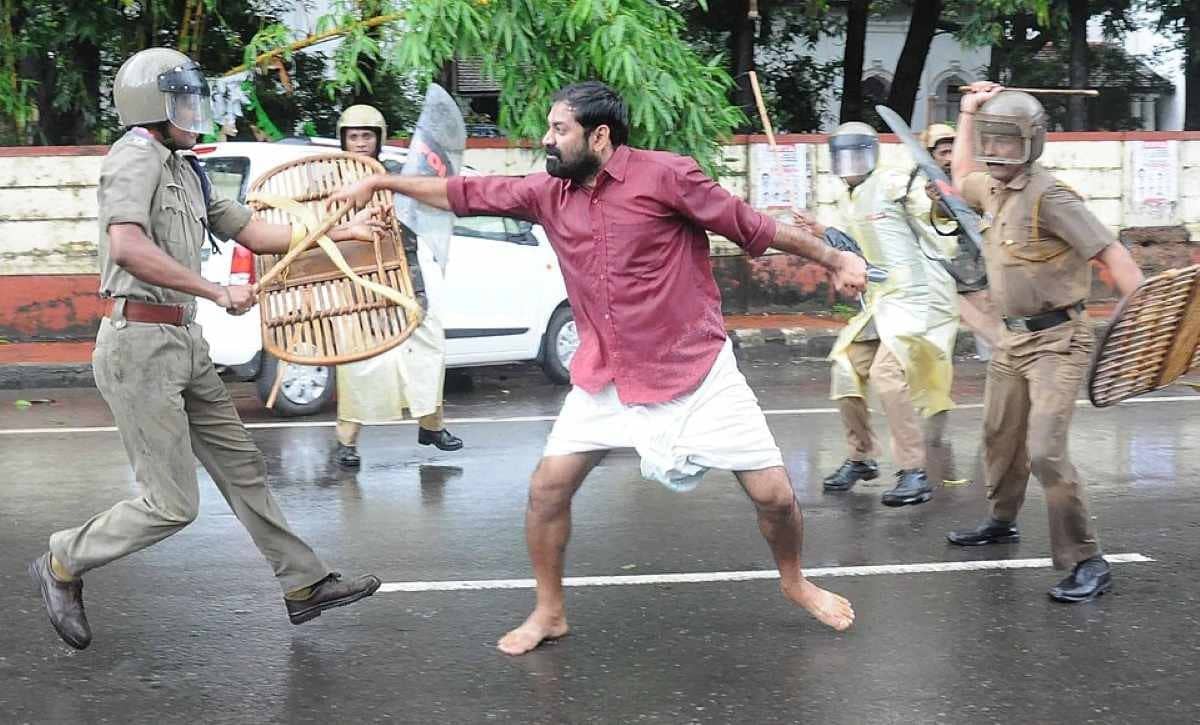
Image | Representative Only
Key Takeaways
1 of 3
Automatically generated. Read full article for complete context.
The foundational promise of a constitutional democracy is simple: the law is supreme, and every citizen, regardless of their socio-economic standing, is entitled to equal protection under it. Yet, this promise is routinely tested by the very institution tasked with upholding it, the police. In a recent, searing judgment, the Patna High Court sharply reminded the state machinery that a police uniform is not a license for tyranny, drawing a sobering parallel between unchecked custodial violence and the dark days of totalitarian regimes.
An Absurd Defense
The case before the High Court Manish Kumar v. The State of Bihar & Ors. reads like a grimly familiar script of institutional high-handedness. The petitioner, Manish Kumar, a resident of Bhojpur district, approached the court via a criminal writ petition seeking a direction to lodge a First Information Report (FIR) against Kamal Nayan Pandey, the then Station House Officer (SHO) of Murar Police Station in Buxar.
According to Kumar’s petition, he had gone to a friend’s stall in July 2024 to upload land title documents online. While stepping away to answer a call of nature, he was intercepted by the SHO and several constables. Upon questioning, and allegedly upon discovering Kumar’s caste, the officer unleashed a brutal assault with a danda (wooden staff), breaking both of Kumar’s legs.
An X-ray report clearly corroborated the severe fractures. In response, the police administration offered a defense that bordered on the farcical: the Superintendent of Police admitted the victim’s legs were broken but claimed Kumar had simply “slipped on account of rainy weather.”
Rejecting this explanation with the contempt it deserved, Justice Jitendra Kumar noted that the medical evidence told a completely different story. Furthermore, the court highlighted an inherent social truth: a poor citizen does not easily gather the courage to lodge an FIR against a fellow civilian, let alone fabricate a false, dangerous accusation against a powerful local police officer.
Bypassing Bureaucracy
What makes this judgment a crucial text for civil rights advocates is how the Patna High Court handled the standard bureaucratic roadblocks. Typically, when police refuse to register an FIR, victims are directed to exhaust alternative statutory remedies, such as filing a complaint before a Judicial Magistrate under Section 156(3) of the CrPCSection 156(3) CrPCA legal provision empowering a Magistrate to order a police investigation into a cognizable offense. (now Section 175(3) of the Bharatiya Nagarik Suraksha Sanhita/BNSSBNSSIndia’s new criminal procedure code, replacing the traditional CrPC.).
However, Justice Kumar observed that sending a victim with broken legs through a protracted legal maze would constitute “further injustice.” The court ruled that when a prima facie cognizable offense is clear, and where there is a flagrant violation of Article 21Article 21A fundamental right in the Indian Constitution guaranteeing the protection of life and personal liberty. (the Right to Life and Personal Liberty), immediate judicial intervention is a necessity.
“If immediate lodging of FIR is not directed,” the court warned, “the people of the Country would lose faith not only in police but even in the Writ Court.”
Importantly, the court swept aside potential defenses regarding the requirement of a prior government sanction to prosecute a public servant under Section 197 CrPCSection 197 CrPCA legal provision requiring prior government sanction before prosecuting a public servant for acts committed in the discharge of official duties. (or Section 218 BNSS). The judgment reiterated a well-established but frequently ignored legal boundary: unleashing a brutal, caste-tinged physical assault on a citizen can never be construed as part of a police officer’s official duty.
The Nazi Parallel
The court expressed profound distress over the fact that Kumar’s initial cries for help sent to the Superintendent of Police and the District Magistrate went completely ignored. In a democratic setup, when the statutory oversight mechanisms fail so comprehensively, the entire rule of law begins to fracture.
The judgment did not mince words regarding the systemic stakes involved, stating:
“If such conduct is not controlled and checked, the whole rule of law and constitutional protection of life and liberty of the citizen of the country would go to wind and the national police may become like one of Nazi Germany.”
This historical invocation serves as a stark reminder of what happens when law enforcement agencies operate under absolute impunity, viewing themselves as rulers rather than public servants.
Ensuring Accountability
To prevent local police elements from whitewashing the investigation of their own colleague, the High Court directed the Station House Officer of Murar to immediately register the FIR against the former SHO, Kamal Nayan Pandey. Furthermore, the Director General of Police (DGP) of Bihar was ordered to transfer the probe to the Crime Investigation Department (CID) to ensure an independent investigation.
The court also left the door wide open for the petitioner to approach it again for a CBI investigation if the CID probe proves unsatisfactory. The DGP has been given a strict 30-day window to submit a compliance report to the Registrar General of the Court.
This judgment stands out as a robust defense of citizen rights. It sends a clear message across the administrative hierarchy: no matter how high an officer’s rank or how deep their institutional protections, the Constitution remains above all. If the state’s guardians turn into predators, the courts will step in to break the shield of impunity.
Disclaimer:The views and opinions expressed in this article are those of the author(s) and do not necessarily reflect the official policy or position of The Rift.