Opening The Rift
therift
© 2026 The Rift. All Rights Reserved.
Two Bengals and a Widening Divide
Lines drawn along religious faultlines never stay politely on the map but instead run through families, economies, and elections on both sides.

Key Takeaways
1 of 3
Automatically generated. Read full article for complete context.
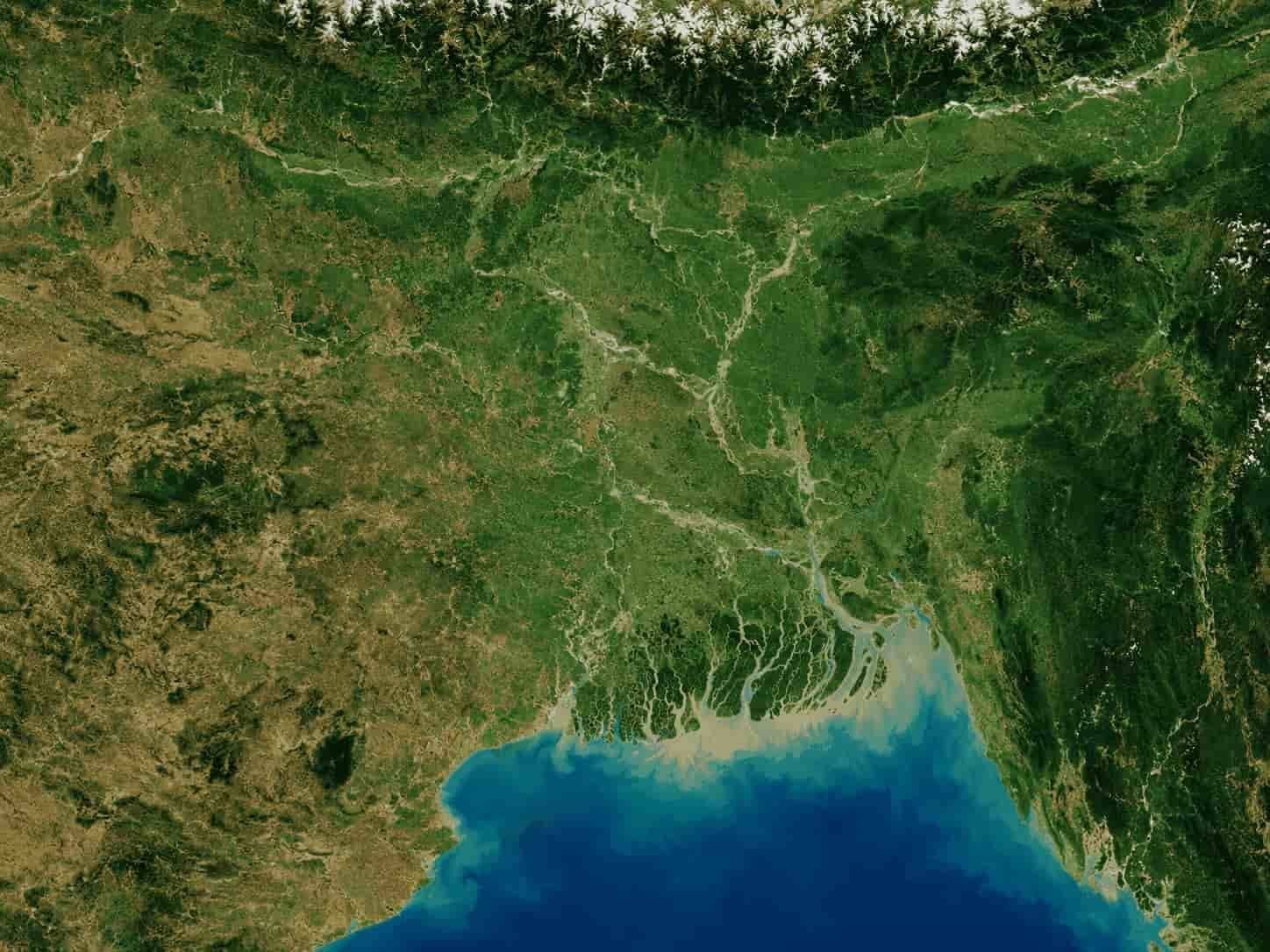
For much of the twentieth century, the bond between the two Bengals ran through language rather than religion. Bengalis in East Pakistan rose in 1952 to defend BanglaBengali LanguageThe official language of Bangladesh and the state of West Bengal in India. against the imposition of Urdu, and by 1971, had carried that defiance all the way to a war of liberation, during which India sheltered roughly ten million refugees and eventually sent its army in to help bring the conflict to an end. The founding story of Bangladesh, and of the Awami LeagueBangladesh Awami LeagueOne of the two major political parties in Bangladesh, founded in 1949, and a key force in the country’s independence movement. that governed it for so long, was one of secular Bengali nationalism in which India appeared as a friend in the hour of need, though the friendship was never as simple as the story made it sound, because Bangladeshis have long resented the diversion of the Ganges at FarakkaFarakka BarrageA barrage across the Ganges River located in West Bengal, India, designed to divert water into the Hooghly River. It has been a source of contention between India and Bangladesh., the unresolved sharing of the TeestaTeesta RiverA major river flowing through India and Bangladesh, whose water-sharing has been a long-standing dispute between the two countries.‘s waters, and the killings along the border, while Indian politicians have complained for decades about migration and insurgent groups that once found sanctuary across the frontier.
Communal violence, meanwhile, flowed in both directions and was repeatedly blamed on the other side, so that the demolition of the Babri MasjidBabri MosqueA mosque in Ayodhya, India, that was demolished in 1992 by Hindu nationalists, leading to widespread communal violence. in 1992 was followed by attacks on Hindus in Bangladesh, and the suffering of Bangladeshi Hindus in turn fed an Indian narrative of a neighbour unable or unwilling to protect its minorities. This meant that the minorities of each country became, over time, hostages to the politics of the other, culminating in a volatile equilibrium held in place by a working relationship between two governments that needed each other more than they needed to indulge their grievances.
From understanding to open confrontation
What has changed is that an unspoken understanding gave way to open ideological confrontation. For a long time, especially during Sheikh Hasina’s years in office, the relationship between the two states was insulated from street-level sentiment, allowing Delhi and Dhaka to cooperate on security, trade, and connectivity while each quietly managed its own communal tensions. It was this insulation that the rise of the Bharatiya Janata Party began to wear away in three distinct ways.’s years in office, the relationship between the two states was insulated from street-level sentiment, allowing Delhi and Dhaka to cooperate on security, trade, and connectivity while each quietly managed its own communal tensions, and it was this insulation that the rise of the Bharatiya Janata PartyBJPOne of the two major political parties in India, currently the ruling party, known for its Hindu nationalist ideology. began to wear away in three distinct ways.
First, migration became a national political campaign rather than a border management problem. The party’s sustained campaign against illegal immigration from Bangladesh added a major strain on bilateral relations. The Assam citizenship exercise, the Citizenship Amendment Act, and the more recent detention and pushback of Bengali-speaking Muslims suspected of being Bangladeshi have all reinforced the impression across the border: that Bangladeshi Muslims are unwelcome in India and that faith has become the test of belonging.
The second was that religion became the lens through which India chose to look at its neighbour, because the fast-track path to citizenship offered to persecuted non-Muslim minorities from Bangladesh, Pakistan, and Afghanistan implicitly declared that Bangladesh is a country from which Hindus must flee, and while it is true that Bangladeshi Hindus have suffered real and documented violence, the moment their suffering is folded into an Indian electoral message, it stops being a humanitarian concern and becomes a bargaining chip. This is exactly how many Bangladeshis, including those who deplore attacks on minorities, have come to read it.
The third was that Delhi placed almost its entire Bangladesh policy on a single person. When students and ordinary citizens toppled Hasina in 2024 and she fled to India, the anger her government had accumulated at home was transferred, almost intact, to the country that gave her shelter.
A shift in public mood
The consequence is a change in public mood that officials on both sides are now openly acknowledged by officials on both sides, with Bangladesh’s state minister for foreign affairs stating this month that Dhaka wants to reset its relationship with India. He described ties during Hasina’s tenure as uncomfortable, while also cautioning, through a memorable metaphor about eating every meal in India, that Bangladesh should not fixate on a single neighbour and must keep its foreign policy balanced. This signals that Dhaka wants to assert an independent identity while still valuing strong ties with New Delhi.
The enmity trickles beyond the corridors of government. Cricket, of all things, has become fertile ground for confrontation. Earlier this year, the BCCI instructed Kolkata Knight Riders to drop Bangladeshi pacer Mustafizur Rahman from the IPL, citing security concerns and public backlash in India over mob violence against minority communities in Bangladesh. Subsequently, Bangladesh boycotted the T20 World Cup in India, and the resulting standoff forced the postponement of India’s tour of Bangladesh. instructed Kolkata Knight Riders to drop the Bangladeshi pacer Mustafizur Rahman from the IPL, citing security concerns and public backlash in India over mob violence against minority communities in Bangladesh, after which Bangladesh boycotted the T20 World Cup in India and the resulting standoff forced the postponement of India’s tour of Bangladesh. What once was a sporting fixture became a vehicle for national grievance, and the grievance has clearly reached ordinary people.
There is some hope, as India’s External Affairs Ministry, in its latest annual report, describes the relationship as a broad-based partnership anchored in strong ties and decades of positive interdependence, despite the political transition of 2024\. Both governments have solid reasons to steady the ship, given that Bangladesh needs Indian trade and energy while India needs Bangladeshi cooperation on border security and regional connectivity. The 1996 Ganges water-sharing treaty, which is up for renewal before it expires in December, with Dhaka, signalling that cordial relations will depend on its extension, will put both governments to the test.
However, leaders can reset a relationship but cannot so easily reset a public, especially when neither government can bring itself to stop using the other country’s minorities as raw material for domestic politics. As long as Hindus in Bangladesh are invoked in Indian campaign speeches and Muslims in India are invoked in Bangladeshi ones, every act of violence against a minority on either side will be read across the border as a deliberate message rather than a tragedy.
Lines drawn along religious faultlines never stay politely on the map but instead run through families, economies, and elections on both sides for generations afterwards. While India and Bangladesh still possess shared language, ethnicity, cultural practices, rivers, and landscapes, the choice to build on those foundations is now harder than it used to be and is being made against a backdrop of public resentment that is not likely to dissolve on its own.
Disclaimer:The views and opinions expressed in this article are those of the author(s) and do not necessarily reflect the official policy or position of The Rift.
*India-Bangladesh RelationsAwami LeagueCitizenship Amendment ActDiplomacyGeopoliticsReligious PoliticsSheikh HasinaSouth Asia