Opening The Rift
therift
© 2026 The Rift. All Rights Reserved.
Why are there Double Standards of Justice in the Judiciary?
The higher judiciary’s unconstitutional and discriminatory double standards of justice place its own conduct in the dock.

Key Takeaways
1 of 3
Automatically generated. Read full article for complete context.
The Hon’ble Supreme Court has, on several occasions, directed High Courts and subordinate courts that hearings and decisions on bail applications should not be indefinitely delayed because bail is the rule and jail is the exception. The Court has also clarified that this principle applies even to persons arrested under stringent laws such as the Unlawful Activities (Prevention) Act (UAPAUnlawful Activities (Prevention) ActA stringent Indian law aimed at preventing unlawful activities, often criticized for its broad definitions and strict bail provisions.) and the Prevention of Money Laundering Act (PMLAPrevention of Money Laundering ActAn Act of the Parliament of India enacted to prevent money laundering and to provide for confiscation of property derived from, or involved in, money laundering.). It is deeply unfortunate, however, that in many cases these principles are not being applied in the same spirit when deciding bail applications.
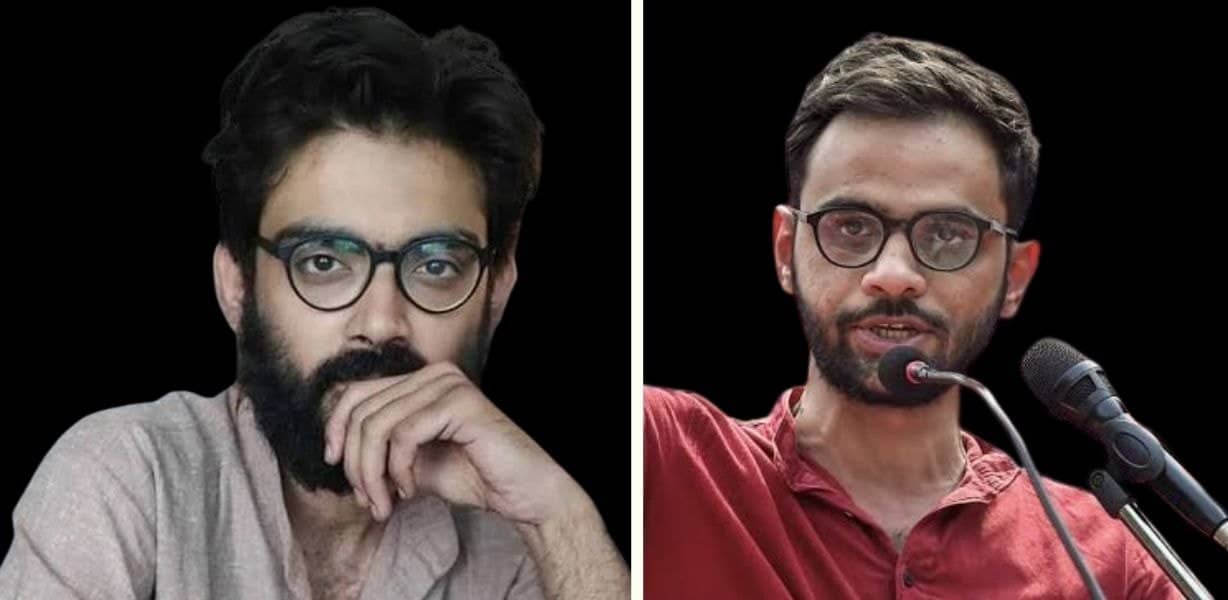
For example, student leaders Umar Khalid, Sharjeel Imam, and several other activists arrested under the UAPA in connection with the alleged conspiracy behind the February 2020 Delhi communal riots during the protests against the Citizenship Amendment Act have remained imprisoned for the past six years without the commencement of trial.
Investigating agencies have neither conclusively proved the allegations against them nor have they been granted bail. Umar Khalid’s bail application has been rejected five times by lower and higher courts, while hearings have been adjourned on twenty-six occasions. In contrast, some co-accused in the same case have already been granted bail. The prosecution has listed 460 witnesses, making it likely that the trial will continue for many more years. Clearly, keeping him incarcerated for such a prolonged period is not only unlawful but also a grave violation of the right to life and personal liberty guaranteed under Article 21 of the Constitution.
Expressing concern over this issue, on May 18th, a Supreme Court bench comprising Justices B.V. Nagarathna and Ujjal Bhuyan granted bail to Syed Iftikhar Andrabi, who had been imprisoned for five years under the UAPA in a narcotics trafficking and terrorism case. While doing so, the bench expressed disagreement with the January 5 judgment of another Supreme Court bench comprising Justices Aravind Kumar and N.V. Anjaria, which had denied bail to social activists Umar Khalid and Sharjeel Imam, and raised serious questions about that decision. The bench observed that a two-judge bench is bound by the decision of a larger, three-judge bench. However, the earlier two-judge bench, while deciding the Gulfisha Fatima case, overlooked the important bail principles laid down in the K.A. Najeeb v. Union of IndiaSupreme Court Bail PrecedentA landmark 2021 Supreme Court judgment by a three-judge bench that clarified constitutional courts may grant bail in UAPA cases, even with stringent conditions, if there is prolonged incarceration, upholding Article 21. judgment. The judges also expressed serious concern over the extremely low conviction rate—between two and six percent—in UAPA cases especially in Jammu and Kashmir, where it is below one percent.
It is worth noting that in the 2021 judgment in K.A. Najeeb v. Union of India, a three-judge bench of the Supreme Court clearly held that where an accused has remained in prolonged incarceration, constitutional courts may grant bail notwithstanding the stringent conditions imposed by Section 43D(5) of the UAPABail Restrictions under UAPAA provision within the UAPA that imposes stringent conditions for granting bail, making it difficult for accused persons to secure release if the court believes the accusation is prima facie true.. The Court clarified that the statutory restrictions under the UAPA are subordinate to Articles 21 and 22 of the Constitution. Therefore, even in UAPA cases, bail remains the rule and jail the exception, and no accused should be kept in prison for years before the trial is concluded.
It should also be noted that in its 5 January judgment, the two-judge bench granted bail to some of the accused in the Delhi riots case but rejected the bail applications of Umar Khalid and Sharjeel Imam, observing that the material on record suggested that the violence was not spontaneous but appeared to be part of a larger conspiracy and planned operation. Consequently, the Court held that the restrictions under Section 43D(5) of the UAPA applied to them. It also barred them from seeking bail again for one year, which is also a direct violation of Article 21 of the Indian Constitution.
Shouldn’t the Delhi High Court and Supreme Court have held the police and central investigating agencies accountable? If the accused had really planned a major anti-national conspiracy through the Delhi violence, why have the police and investigating agencies failed to present the evidence and facts of that conspiracy in court and prove the charges over the last six years?
Shouldn’t the Supreme Court judges have taken serious note of this serious failure and negligence by the police and investigating agencies? It seems that some judges connected with the case may have been working under government pressure. It appears that all this is being done out of political revenge, to teach them a lesson because they are seen as being against the Modi government and because they are Muslims. Such discrimination is an act of undeclared dictatorship.
In contrast, BJP ministers and leaders like Anurag Thakur, Kapil Mishra, and Parvesh Verma, who allegedly made inflammatory speeches and spread communal hatred against minority communities have not even had criminal cases registered against them by the Delhi Police.
Similarly, several distinguished intellectuals, lawyers, journalists, and social activists have remained imprisoned for the past eight years in the Bhima Koregaon case on charges of sedition and terrorism without any trial having commenced. To date, none of the allegations against them has been conclusively proved, yet they have repeatedly been denied bail.
Professor G.N. Saibaba of Delhi University, who was ninety percent physically disabled and suffered from multiple serious illnesses, was confined for ten years in the high-security “Anda Cell” of Nagpur Central Jail. Although the Supreme Court acquitted him of all charges on March 8, 2024, he died on October 12, 2024, due to illnesses that had worsened during his imprisonment. Similarly, 84-year-old Jesuit priest and social activist Stan Swamy also died in custody after suffering from serious health complications. It is a matter of concern that no legal action against the Police Officials registering false cases have been taken by the Court.
In reality, their only ‘crime’ was that they peacefully raised their voices against anti-people economic and communal policies, agreements, repressive laws, economic and communal-fascist attacks on working people, forced displacement, and the unchecked exploitation by corporate houses.
While social activists and dissenting voices face harsh treatment, in contrast, BJP Member of Parliament Sadhvi Pragya Thakur, Colonel Purohit, Swami Aseemanand, and others, who are accused of terrorist incidents involving bomb blasts allegedly linked to the RSS, have remained out on bail for many years. This is despite the charges against them having been established, while the criminal cases against them are being weakened and the accused are being acquitted.Even those accused in the Gujarat massacre who were associated with the BJP and the Sangh, such as Babu Bajrangi, Maya Kodnani, and others, have been out on bail for several years by exploiting legal loopholes, despite having received severe sentences.
Furthermore, despite being held responsible by the Justice Liberhan Commission constituted in connection with the demolition of the Babri MasjidHistoric Mosque in AyodhyaA 16th-century mosque in Ayodhya, India, whose demolition in 1992 by Hindu nationalists sparked widespread communal riots and a long-standing legal dispute., BJP leaders such as Lal Krishna Advani, Atal Bihari Vajpayee, Murli Manohar Joshi, Ashok Singhal, Vinay Katiyar, Uma Bharti, Sadhvi Rithambhara, and others were never arrested. After the Modi government came to power, the evidence and witnesses were weakened, allegedly under governmental pressure, leading to their acquittal.
Is this not a blatant injustice to the law, the justice system, and the victims—that Dera chief Gurmeet Ram Rahim, who is serving two life sentences for serious charges including murder and rape, has been released on parole/furlough 17 times over the past nine years, for several weeks at a time, under the patronage of BJP governments, effectively making a mockery of the judicial system?
The most glaring instance of bias in the higher judiciary was also evident when the Bombay High Court rejected the bail plea of Arnab Goswami, the pro-Modi government Editor-in-Chief of Republic TV, who had been arrested on November 4, 2020, in connection with a double-suicide case, on November 9. Yet, on the very next day, the Supreme Court convened a special hearing, and a bench comprising Justice D. Y. Chandrachud and Justice Indira Banerjee granted Arnab Goswami immediate bail.
Not only this, but while delivering the judgment, Justice Chandrachud stated, ‘If we do not intervene in this case today, we would be walking on the path of destruction.’ He further said, ‘For a moment, forget about Arnab Goswami; we are a constitutional court, and if we, as a constitutional court, do not uphold individual liberty and the law, then who will?’
The question is: why did the then Chief Justice of India, Justice Chandrachud, not feel the need at that time to demonstrate the same constitutional morality by protecting the fundamental right to personal liberty and ensuring the immediate release of several prominent journalists, lawyers, intellectuals, writers, and social activists who had been arrested by the Mumbai Police in June 2018 under the UAPA in the alleged Bhima Koregaon violence case, despite there being no concrete evidence against them? This is particularly significant when the Supreme Court itself had repeatedly rejected their bail applications without any solid basis. The same Chief Justice had also repeatedly rejected the bail applications of Umar Khalid, Sharjeel Imam, and Gulfisha Fatima.
Therefore, the biggest question is: why are the higher judiciary and the Modi government ultimately adopting such unconstitutional and discriminatory double standards of justice? By displaying such bias, the higher judiciary has itself placed its own conduct in the dock. Does the higher judiciary have any answer as to why such discrimination is being practiced and on what basis? Who will determine accountability for, and provide redress for, this grave injustice and bias?
The greatest injustice is that thousands of innocent ordinary citizens remain in prison for years without trial or conviction due to political vendetta, state repression, corruption, draconian laws, fabricated evidence, false witnesses, poverty, judicial delays, a severe shortage of judges, and the high cost of justice, yet they continue to be denied bail.
The Modi government, through the “Godi mediaLapdog MediaA pejorative term used in India to describe news media outlets perceived as biased in favor of the government, acting as its ‘lapdog’ rather than an independent watchdog.,” is deliberately portraying minorities, particularly Muslims, as a criminal community under a calculated conspiracy. They are kept in prison for years under false charges, only to be “honorably acquitted” later. After wrongfully detaining an innocent person in jail for years, being honorably acquitted by a higher court cannot be considered justice. It is clear that the precious years an innocent person spends in jail cannot be returned to them in any way, nor can a wrongful death or life sentence under judicial custody bring back an innocent person’s life. If the courts themselves fail to deliver timely justice, where can ordinary people turn?
Justice demands that higher courts initiate strict legal action against police officers, investigating agency officials, lawyers, witnesses, and the political authorities responsible for fabricating evidence and registering false cases. They should be awarded exemplary punishment, while the victims should receive appropriate compensation and genuine justice.
To preserve public confidence in the judiciary and protect the democratic rights of citizens, all courts, including the higher judiciary, must function free from governmental pressure, fear, or inducement. They should order the release of Umar Khalid, Sharjeel Imam, intellectuals, lawyers, and social activists imprisoned in Bhima Koregaon case and thousands of other innocent undertrial prisoners languishing in jails, as well as prisoners who have already completed their sentences.
It is also the moral duty of all pro-people and democratic mass organizations and intellectuals across the country to launch, at the national level, a democratic, organized mass movement—along the lines of the historic farmers’ movement—not only to safeguard the Constitution, democracy, and the judiciary of the country, but also to demand the unconditional and immediate release of thousands of innocent accused persons languishing in the country’s prisons for years due to a flawed justice system. This should include innocent intellectuals, lawyers, journalists, social and political activists, as well as prisoners who have already completed their sentences.
Disclaimer:The views and opinions expressed in this article are those of the author(s) and do not necessarily reflect the official policy or position of The Rift.