Opening The Rift
therift
© 2026 The Rift. All Rights Reserved.
What’s Goin’ On ? A Critical Analysis of India’s Eroding Rule of Law
When the executive branch seeks to subvert, bypass, or openly challenge judicial mandates, it strikes at the very heart of the rule of law.

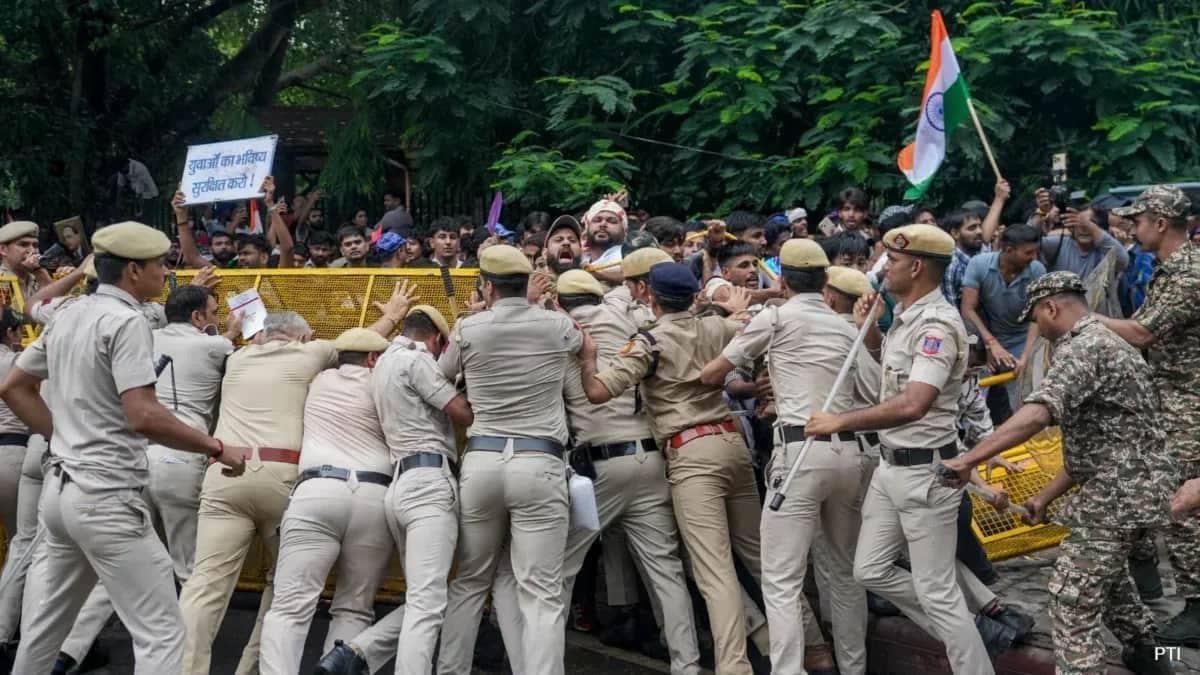
(Photo- PTI)
Key Takeaways
1 of 3
Automatically generated. Read full article for complete context.
What’s Goin’ On is the refrain of a song. It sounds loud and clear these days, when we see executive overreach and institutional erosion. Consider the Telangana High Court–HYDRAA standoff. The foundational premise of constitutional democracy rests on the delicate equilibrium of the separation of powers. Montesquieu’s tripartite division: allocating distinct spheres of authority to the legislature, the executive, and the judiciary : is not merely an administrative convenience; it is the ultimate structural defense against tyranny. When the executive branch seeks to subvert, bypass, or openly challenge judicial mandates, it strikes at the very heart of the rule of law.
Recent developments in Telangana, highlighted by the state government’s posture following the Telangana High Court’s directives concerning the Hyderabad Disaster Response and Asset Protection Agency (HYDRAA) and its Commissioner, A.V. Ranganath, bring these systemic anxieties into sharp focus. Ranganath apologised, but the Court said he ought to have apologised at the first opportunity. However, he also made it clear the alleged apology was mere strategic statement of expediency : his statement reported in a newspaper showed he was actually proud of what he had done, and opined that private parties had misled the High Court. Even so, it was the duty of State counsel to show that to the Court, not for the official to continue doing what he thought was right despite orders not to : effectively stating that even if a State official is directed to desist from doing something by the highest Court of the State, he would and can with impunity (as the army motto goes) “bash on regardless”. If anything, the statement also merits “judicial displeasure” if you don’t know what I don’t mean.
The Anatomy of the Standoff: Executive Defiance and Judicial Authority
The legal friction centers on a consequential judicial intervention by the Telangana High Court, which ordered the transfer of HYDRAA Commissioner A.V. Ranganath. In response, the state government signalled its intent to challenge the order, asserting through official channels that officer postings rest solely within the executive domain.
The state government announced plans to contest the High Court’s single-judge order, contemplating a Special Leave Petition (SLP) in the Supreme Court or an appeal before a division bench on the grounds that transfer powers fall purely within the executive domain.
Conversely, political opposition figures, such as BJP state president N. Ramachander Rao, hailed the High Court’s order, criticizing the ruling establishment for cultivating an instrument of intimidation and undermining the rule of law. While correct, the stand also is indicative of mere political posturing. (After all, a recent resignation saw the “resignee” lauded with celebration and slogans !)
This institutional discord transcends a routine employment or service law dispute. It encapsulates a broader ideological clash regarding whether executive administrative bodies can operate insulated from judicial scrutiny and constitutional accountability, announcing erosion of the rule of law and the judiciary’s position. When the executive branch treats judicial oversight as an administrative inconvenience rather than an authoritative constitutional check, the rule of law is fundamentally compromised.
The supremacy of constitutional morality and rule of law demands that all state actions : including elite bureaucratic appointments and urban demolition drives executed by specialized agencies like HYDRAA : remain subservient to judicial review. Undermining institutional legitimacy by publicly questioning or resisting judicial mandates weakens the judiciary’s institutional posture. When executive rhetoric frames court interventions as administrative overreach rather than constitutional correction, it erodes public trust in the adjudication of rights.
The CM claiming an absolute, unreviewable executive domain over officer postings in the face of judicial queries concerning institutional conduct creates an imperium in imperio : an autonomous state apparatus operating beyond judicial correction. This destroys the Separation of Powers which at any given time is a precarious balance, designed to ensure checks and balances, not institutional warfare. As legal scholars and constitutionalists have long argued, the organs of the state are meant to function in a complementary tandem, not as adversarial combatants in a zero-sum game of political will.
The executive cannot view judicial directives as hostile encroachments. When the executive takes an adversarial posture against judicial rulings, it disrupts the constitutional dialogue necessary for democratic governance and creates a chilling effect on accountability. Agencies tasked with high-stakes urban governance and asset protection : such as HYDRAA, which has been involved in extensive land and lake conservation actions : must operate strictly within the bounds of due process. Commissioner Ranganath’s defense that his actions were executed with a commitment to truth and compliance with Articles 21 and 48A of the Constitution highlights the tension between developmental/environmental enforcement and individual property rights. However, the final arbiter of that constitutional boundary must be the judiciary, not the executive enforcing the policy.
The friction between the Telangana executive and the judiciary over the operational autonomy of HYDRAA serves as a cautionary tale for modern constitutional democracies. When the executive chooses to contest, resist, or treat judicial mandates as political challenges, it bodes ill for the separation of powers. A robust democracy requires an executive that respects judicial supremacy in interpreting the law, ensuring that administrative zeal never eclipses constitutional liberty.
Contempt and the Double Standard of Justice
We go further, noticing a steady erosion of judicial authority. State patronage creates contempt impunity, and harms the rule of law. The foundational premise of any constitutional democracy rests upon the principle of equality before the law : a doctrine articulated by Dicey, which posits that no individual, regardless of rank or office, is above the law of the land. In a system governed by the rule of law, judicial orders command compliance not merely through the physical coercion of the state, but through their intrinsic moral authority and the constitutional sanctity vested in courts. However, a dangerous erosion of this framework occurs when judicial institutions treat state officials who commit repeated acts of contempt differently from ordinary citizens.
A recent and striking illustration of this dynamic unfolded in the Telangana High Court concerning the Hyderabad Disaster Response and Asset Protection Agency (HYDRAA). Faced with a staggering 63 pending contempt cases and deliberate, systemic violations of subsisting judicial orders regarding land disputes in Lothkunta, the High Court directed the Chief Secretary to remove the commissioner from his post. While framed as a measure to protect the rule of law, relying merely on administrative removal : rather than enforcing the penal consequences mandated for ordinary contemnors : risks establishing a pernicious precedent : that state-backed actors can violate judicial decrees with systemic impunity.
Under the framework of civil and criminal contempt in India, wilful disobedience of a court’s judgment, decree, direction, or order carries severe legal consequences. For an ordinary private citizen, repeated, flagrant, and conscious defiance of judicial mandates typically triggers harsh penal measures, including civil imprisonment, attachment of property, and uncompromising prosecution.
where a civilian faces prison, an official merely changes designation ! So much for Rule of Law !
When an executive official acting under the colour of state authority accumulates 63 distinct contempt complaints for ignoring judicial injunctions, the nature of the violation transforms. It ceases to be an isolated error in judgment and hardens into an institutionalized pattern of defiance. Yet, when the judiciary responds to over six dozen breaches merely by instructing the executive branch to shuffle personnel or relieve the officer of a specific charge, a profound asymmetry emerges : where a civilian faces prison, an official merely changes designation ! So much for Rule of Law !
“When there is a wilful and deliberate violation of an order passed by a court, it would be like giving an olive branch to the contemnor, further undermining the rule of law and the majesty of the court” said the High Court.
By stopping short of the rigorous penal actions that would swiftly be deployed against non-official citizens, the judicial response risks projecting a double standard. It signals that institutional power cushions state actors from the direct penal consequences of lawlessness. The conveys a far more dangerous message to the Executive : thou art immunised, thou shalt not be proceeded against, thou canst do as thou pleaseth ! No wonder we saw what we saw during the recent Delhi events.
State Violence and Judicial Inertia
And while on the Delhi events, there has been facial recognition software in use. Terrific. Now the State and the Judiciary (the Supreme Court is hearing matters) can identify every single one of the rogue policemen who committed atrocities (the SC merely stating lathi charging protestors is not proper is neither here nor there : action must follow words) can identify every single one of the non-official stormtroopers who used the opportunity, doubtless immunised by the nod from up high, to assault intimidate and injure countless students. The nails on some of the lathis and the injuries inflicted are a blot, and not just on those who acted against protestors in the streets protestors : they are a blot on those who govern as well as on those who adjudicate. If the judicial conscience goes into hibernation at such critical points its enables questions about the legitimacy of its existential purpose.
Institutional damage to judicial credibility is guaranteed for the power of the judiciary is uniquely intangible : it commands neither the sword nor the purse. Its ultimate strength lies in public trust, voluntary compliance, and the collective belief that its pronouncements are final and binding. When this authority is openly mocked by executive functionaries who operate with state backing, when the judiciary fails to live up to that trust, the damage extends far beyond the immediate litigants.
If executive agencies come to understand, as they do given judicial inertia, that systemic non-compliance results at worst in administrative relocation rather than incarceration or severe punitive fines, a culture of impunity takes root. Law enforcement and state-backed bodies are effectively emboldened to take the law into their own hands, emboldening lawlessness by State officials and police. suggesting a false equivalence between resistance to British action then and resistance to the power operating now.
Citizens are compelled to carry (and live with) the disquieting impression that judicial orders are mandatory for the powerless and optional for the powerful…”
Permitting state officials to evade strict contempt penalties and stripping them of power immediately on its misuse, creates the illusion of state-sanctioned immunity, a tiered system of justice. Citizens are compelled to carry (and live with) the disquieting impression that judicial orders are mandatory for the powerless and optional for the powerful causing the clear degradation of judicial deterrence, for contempt jurisprudence relies on deterrence. When 63 instances of wilful disobedience culminate merely in a directive for administrative transfer, the deterrent value of contempt proceedings evaporates, reducing judicial reprimands to hollow rhetoric.
If actual defiance invites mere shift in designation, what of a plausibly deniable bashing up of students and assaulting of protestors. That is surely less of a problem ! The High Court correctly observed that allowing such conduct to persist places the rule of law and the majesty of the court in grave peril. However, safeguarding constitutional governance requires more than administrative recalibration : it demands parity in accountability.
True supremacy of the law can only endure when no official is too powerful to be imprisoned for contempt, and no citizen is too weak to be protected by the courts.
If the judiciary is to retain its moral high ground and preserve its institutional credibility, it must apply the law uniformly. Treating state-backed officers who commit dozens of contempt counts with judicial leniency : while ordinary citizens face the unyielding might of penal law : undermines the core of constitutional democracy. True supremacy of the law can only endure when no official is too powerful to be imprisoned for contempt, and no citizen is too weak to be protected by the courts.
If a person being an IPS officer and required to implement judicial orders acts in this manner that is a most surprising thing… or maybe it is not surprising at all and as illustrated of the manner in which police authorities tend to conduct themselves as above the law, not required to adhere to any Constitutional principle or statutory provision or, for that matter, honour any constitutional guarantee. The citizen, to the cop with a stick, it seems is simply an enemy to be struct, injured, emasculated and subjugated to abject surrender of rights.
As noted in legal observations of the subsequent SC hearings, the bench rightly acknowledged that “injury to individual, be it to policemen or [students], is of equal concern” and called for uniform police protocols. Yet, these late-stage declarations ring hollow for students who experienced state violence when protection was most desperately required. What use are protocols when the very Court that calls for them issues guidelines, fails to ensure their implementation, fails to call to account those who violate all of those, and fails to issue writs of quo warranto against those in power sitting in ivory towers issuing those directions obviously guaranteeing immunity to underlings? The citizens, who are not fools, see through what’s going on, bristle at their own helplessness…but that simmering discontent is not good.
The Supreme Court’s overarching duty is not merely to articulate constitutional ideals in hindsight, but to actively police the boundaries of executive power when civil liberties are actively imperilled. The juxtaposition between dismissing real-time visual evidence as a “waste of time” and later issuing stern reminders on the sanctity of peaceful protest exposes an unacceptable institutional ambivalence. Until the highest judiciary aligns its procedural urgency with the acute distress of the populace, its rhetorical defenses of democracy will continue to read as hollow consolations rather than true guarantees of the rule of law.
The Normalization of Impunity: Celebrating Administrative Failure
Normalization of impunity is on display in Parliamentary felicitations of those who “resigned” taking “responsibility”. Crushing dissent is of the essence of erosion of democratic accountability, and recent political developments within the Indian legislature : exemplified by the grand, celebratory reception accorded to former Union Education Minister Dharmendra Pradhan upon his arrival in Parliament following his resignation : lay bare a profound systemic transformation. Rather than viewing political resignation as an acknowledgment of administrative failure or institutional accountability, the ruling dispensation increasingly converts such exits into acts of defiance and a display of power. This phenomenon mirrors a broader pattern wherein state resistance to mass mobilization is complemented by the subsequent lionization of figures associated with systemic failure or heavy-handed governance. By placing these dynamics into a comparative framework with past instances of political felicitations extended to individuals including police officials released from judicial incarceration for grave crimes, these public displays of triumphalism threaten the foundational tenets of the rule of law and constitutional morality.
In modern constitutional democracies, the resignation of a high-ranking cabinet minister in the wake of protracted mass protests and systemic crises : such as widespread examination irregularities and paper leaks : is conventionally understood as an admission of collective or individual ministerial responsibility. It serves as a necessary, albeit modest, institutional reset intended to restore public trust. However, the scenes reportedly witnessed inside the Parliament complex, where ruling party legislators converged to greet the departing minister with enthusiastic Zindabad slogans, traditional stoles, and vibrant fanfare, signal a radical departure from democratic norms.
This spectacle cannot be read merely as an intra-party show of solidarity. Instead, when contextualized against the backdrop of a month-long youth and student agitation that faced severe state crackdowns, this celebratory welcome operates as a deliberate political signal. It functions less as a compassionate farewell and more as an act of political thumbing-of-the-nose at the protesting citizenry : a public demonstration that accountability is elastic and that power is retained regardless of administrative outcomes.
The overarching governing apparatus has increasingly demonstrated an approach where dissent is met with an iron hand : ranging from administrative clampdowns and heavy police mobilization to stringent penal actions against demonstrators. When sustained grassroots pressure finally cracks the political armor, forcing a high-profile resignation or a temporary removal from office, the ruling formation’s immediate reaction is frequently defensive posturing designed to invert the narrative.
Rather than confronting the systemic failures that triggered public outrage, in an inversion of accountability, political communication is weaponized to frame the departing official not as one who erred, but as a casualty of opposition machinations or an unyielding ideological warrior. By garlanding and cheering leaders who step down under a cloud of governance failures, the establishment signals to its cadre that loyalty to the executive core overrides public transparency and institutional ethics.
This practice mirrors a troubling precedent observed in various instances across the Indian political landscape, where individuals convicted or accused of heinous crimes : ranging from high-profile corruption to brutal societal atrocities like the Bilkis Bano case : have historically been greeted, garlanded, or paraded upon their release from prison. Across both domains, the core messaging remains uniform: the normalization of impunity. Whether dealing with administrative malfeasance or severe criminal transgressions, public optics are managed to project unyielding strength over moral contrition.
The translation of a forced ministerial exit into a celebratory spectacle carries severe institutional consequences. Westminster-style parliamentary democracy relies heavily on the convention of ministerial responsibility. When a minister is fêted like a conquering hero immediately after being forced out by popular mobilization, the deterrent value of accountability is entirely neutralized. Ministers no longer fear political or moral reckoning because administrative failure does not carry a professional stigma within the ruling culture.
Peaceful protests and democratic mobilizations are vital safety valves in a functioning republic. When the state responds to a successful mass movement by elevating the ousted official to a status of honour within the hallowed halls of Parliament, it communicates disdain, if not actual contempt, for the governed. It tells citizens that their struggles, petitions, and sacrifices are treated by the ruling elite with ironic detachment or contempt.
“Turning the legislative complex into a theatre for partisan chest-thumping in defense of a failed administrator degrades the sanctity of the institution…”
We see a degradation of institutional discourse. Parliamentary spaces are meant to embody deliberative democracy and constitutional restraint. Turning the legislative complex into a theatre for partisan chest-thumping in defense of a failed administrator degrades the sanctity of the institution, reducing it to an instrument for shielding executive governance from genuine introspection.
The glorification of figures who stumble under the weight of governance crises : much like the broader cultural tolerance for honouring those linked to grave societal wrongs : points to a profound ethical decay within contemporary political architecture. When political posturing supersedes constitutional duty, and when the forced exit of an administrator is reframed as a victory lap against the citizenry, the rule of law suffers a quiet erosion. True administrative accountability requires humility, institutional introspection, and a commitment to systemic reform. Until the political dispensation abandons its reliance on triumphalist posturing, democratic governance will remain subordinate to the whims of unbridled political impunity.
Rhetoric, Repression, Hate Speech and State Policy on Dissent
The recent incendiary remarks reportedly made by a prominent RSS ideologue from Kerala, proposing that student demonstrators at Jantar Mantar should have been met with live ammunition and that women participating in secular and democratic protests “enjoy being gangraped”, are far beyond the pale of civilized political discourse. While mainstream organizations may attempt to dismiss such declarations as “personal opinions”, the dangerous alignment between this violent rhetoric and the practical actions of the ruling establishment on the ground exposes a disturbing blueprint for how civic dissent is viewed and neutralized in contemporary India.
This toxic rhetoric does not exist in a vacuum : rather, it shines a harsh light on the underlying intent of a governing dispensation that increasingly treats dissent not as a pillar of democracy, but as a treasonous act requiring state-sponsored or state-condoned suppression. The architecture of intimidation transitions from words to state action, and when an ideologue publicly fantasizes about imposing a military-style curfew, opening fire on young student protesters, and reducing democratic assembly to a bloody spectacle, it articulates the quiet, unexpressed desire of an authoritarian administrative framework. It cannot be lost sight of that the organisation is a close ally and an integral part of the Parivar.
The parallels between this violent fantasy and the actual treatment of student movements across the country are striking. The criminalization of youth and student movements in seen in action when, whether addressing protests against systemic examination failures, legislative overreaches, or socioeconomic policies, the state response has routinely shifted away from dialogue to repression. Instead of discussion to understand, student leaders are slapped with draconian anti-terror laws like the UAPA, subjected to prolonged detentions without trial, and vilified as “anti-national.”
The specific targeting of women protesters with vile, sexualized slurs reflects a patriarchal strategy designed to deter women from claiming public spaces. By painting women who march for justice as morally corrupt or inviting rape and violence upon themselves, the ecosystem attempts to inflict psychological terror, reinforcing a broader state culture that routinely minimizes or mishandles crimes against women while silencing those who demand accountability. This weaponization of misogyny against women dissenters is a matter of shame. Its source makes it that much worse. There were judgements mandating suo motu registration of FIRs by police, but naturally those seem forgotten at such times.
The casual proposal to “collect the bodies” after police action mirrors a chilling reality where custodial violence, heavy-handed lathi charges, and disproportionate use of force against peaceful demonstrators are increasingly normalized under the guise of maintaining “law and order.”
Misreading dissent as threat is a distorted response which operates towards a destruction of constitutional values. The ruling dispensation’s reaction : or lack thereof : to such virulent commentary reveals its true philosophical posture toward the Constitution. The Indian Constitution guarantees freedom of speech, expression, and peaceful assembly precisely to protect citizens from state tyranny. However, the operational philosophy of the current administration views a questioning citizenry not as rights-bearing stakeholders, but as adversaries.
When student bodies protest institutional failures, they challenge the infallibility of the state. The visceral hatred directed at them by ideological foot soldiers stems from a deep-seated intolerance for pluralism. By labelling opposition voices as existential threats, the dispensation creates a political climate where violence against protesters is implicitly legitimized. It sends a chilling message: comply silently, or face the full, unbridled might of state coercion and institutional ruin.
Call for Corrective Measures
This steady erosion of democratic norms and the creeping normalization of fascist rhetoric represent a deplorable state of affairs.
A nation that turns its guns and legal machinery against its own studying youth is mortgaging its future for the sake of authoritarian control.“
Reversing this descent into institutionalized intimidation requires immediate, uncompromising corrective measures :
- Swift Legal Accountability: Law enforcement and the judiciary must treat public incitements to mass murder and sexual violence as cognizable, non-bailable offenses, cutting through political patronage to prosecute hate speech rigorously.
- Reclaiming Democratic Spaces: The state must re-establish the sanctity of peaceful protest, ensuring that universities, streets, and public squares remain safe platforms for civic debate rather than zones of state-managed fear.
- Resisting Normalization: Civil society, opposition parties, and independent institutions must relentlessly call out the ideological continuum connecting fringe hate speech with core government policy, refusing to let violent rhetoric become the accepted baseline of Indian politics.
Democracy survives only so long as the state listens to those who question it. Unless this aggressive intolerance toward dissent is checked through active legal and political resistance, the fantasy of the bullet will permanently replace the promise of the ballot.
Jai Hind
Disclaimer:The views and opinions expressed in this article are those of the author(s) and do not necessarily reflect the official policy or position of The Rift.