Opening The Rift
therift
© 2026 The Rift. All Rights Reserved.
Financial Misadventures and Adjudicatory Safe Harbours
When a system allows state-backed lenders to absorb total loss while a promoter walks away legally discharged, it resembles legalized wealth destruction.

Key Takeaways
1 of 3
Automatically generated. Read full article for complete context.
The approval of a personal insolvency repayment plan permitting the settlement of approximately ₹22,006 crore in admitted debt for a mere ₹6.5 crore : translating to a staggering 99.97% haircut for lenders (many often crooks mishandling money belonging to the public, therefore financial fraudsters eating away at the entrails of a financial system in collusion with borrowers, destroying national wealth) : marks a watershed moment in the structural asymmetry of India’s financial and legal architecture. When a system allows state-backed and institutional lenders to absorb a virtually total loss (a loss to the public exchequer, and the citizens whose money the fraudulent bankers are expected to handle as trustees under fiduciary obligation) while a promoter walks away legally discharged, it ceases to function as economic resolution and begins to resemble legalized wealth destruction.
Structural Failure of the Insolvency Framework
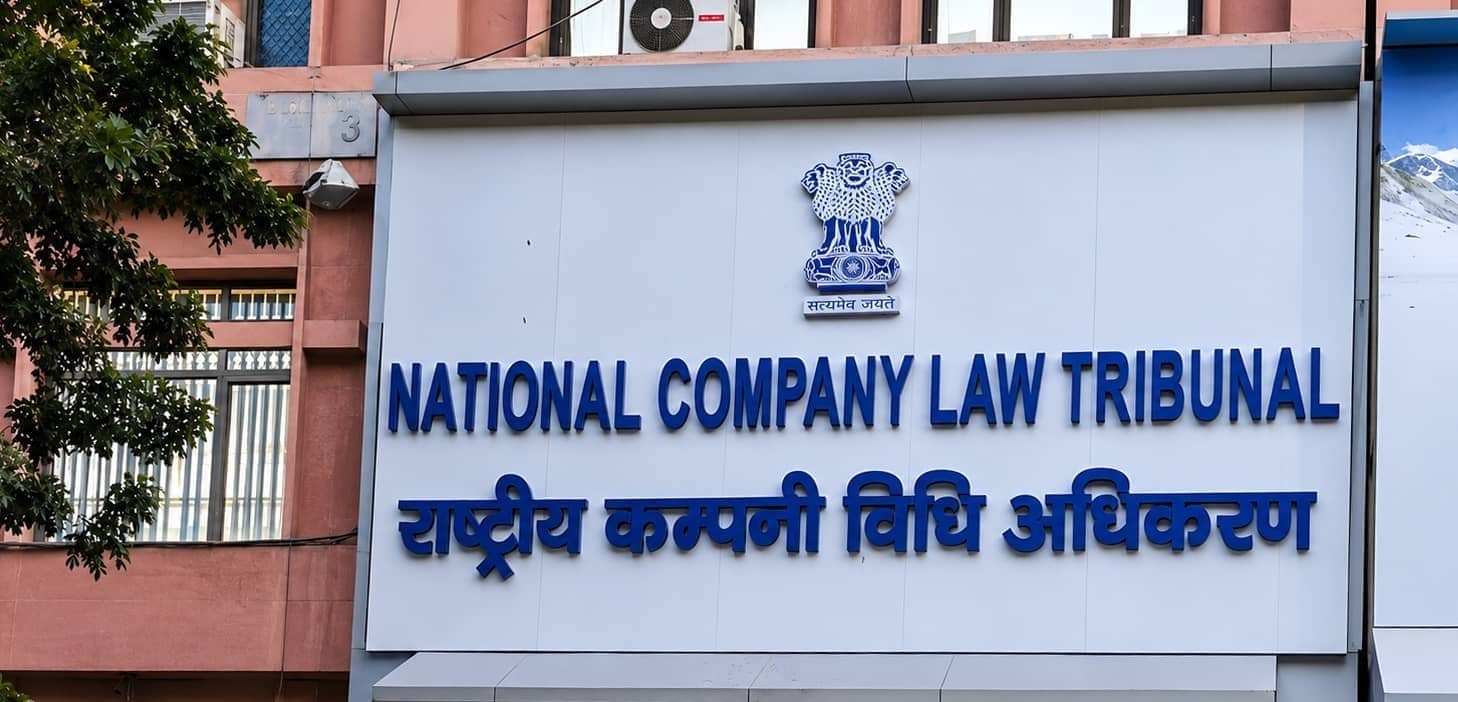
The Insolvency and Bankruptcy Code (IBC) was enacted to maximize asset value and balance the interests of all stakeholders. However, the operational reality of tribunal adjudications often reflects a mechanistic deference to procedural checkboxes rather than substantive economic justice.
- The Illusion of “Commercial Wisdom”: Quasi-judicial bodies frequently shield steep haircuts behind the doctrine of the “commercial wisdom of the Committee of Creditors (CoC).” In doing so, judicial benches often abdicate active oversight, refusing to interrogate the underlying forensic integrity of asset trails or the viability of nominal token settlements. They effectively simply perpetuate a fraud upon the citizens and on national wealth. Who, and what, permits them that right, is a question that ought to trouble every judicial mind.
- Absence of Strict Judicial Intervention: By declining to leverage wider supervisory or inherent powers to halt settlements that offer virtually zero recovery, the adjudicatory mechanism inadvertently (or perhaps deliberately, obviously not without some reason, howsoever invisible, howsoever camouflaged, howsoever convoluted it may be) “legitimizes” the systemic offloading of private corporate liabilities onto public balance sheets. If the several thousand crore borrower walks free, and does not go to jail, surely there must be some quid pro quo somewhere, surely there must be flaws in documentation meriting forensic analysis. Do we see a semblance somewhere, in godmen and rapists, hate speech specialists and rioters, walking free or on bail, only to be received by crowds of admirers, tumultuous welcomes, garlands, sweets and slogans? Who admires these people, and what is their allegiance to constitutional values and principles, to rule of law, to ethics and morality?
- Perverse Precedent: Such outcomes effectively dismantle the deterrence of personal guarantees, turning personal insolvency provisions into an escape hatch rather than a mechanism of accountability.
The Crony-Lending Nexus and Moral Hazard
This scale of capital erosion cannot occur in a vacuum; it is the culmination of years of uncritical credit expansion, evergreen lending, and lax due diligence by institutional bankers.
• Privatizing Gains, Socializing Losses: Promoters leverage personal guarantees and corporate pledges to secure immense credit lines during boom periods. When ventures falter, the capital losses are transferred directly to public sector banks : and by extension, the taxpayer : through recapitalization and write-offs.
• Collusive Underwriting: The repeated willingness of financial institutions to accept disproportionate write-downs without aggressive forensic tracing of diverted funds points to severe governance deficiencies and systemic complicity within institutional lending frameworks.
The Two-Tiered Justice Paradigm
The starkest indictment of this framework lies in the disparity between how the law treats institutional defaulters versus everyday citizens.
| Tier | Profile & Quantum | Legal & Institutional Response |
|---|---|---|
| Elite Debtors | Thousands of crores in commercial defaults | Extended restructuring, procedural delays, protection under corporate veils, and multi-thousand-crore haircuts approved by tribunals. |
| Common Citizens | Micro-loans, education, agriculture, or retail credit | Coercive recovery mechanisms, public naming and shaming, asset seizures under SARFAESI, and persistent institutional harassment. |
An agrarian borrower or small business owner defaulting on a few thousand rupees faces swift social humiliation, credit blacklisting, and relentless collection agencies. Conversely, massive high-value defaults are insulated by legal sophistry and institutional restructuring.
This glaring inequity reflects the poignant truth captured by poet Wasim Barelvi:
“ग़रीब लहरों पे पहरे बिठाए जाते हैं,
(Garrisoning guards upon the helpless ripples, while the vast oceans remain unexamined.)
समंदरों की तलाशी कोई नहीं लेता।”
When legal and regulatory institutions scrutinize the common individual with unrelenting rigor while allowing billions in public credit to dissolve with a gavel stroke, the credibility of the rule of law is severely eroded. Without rigorous forensic tracing, genuine judicial scrutiny over lopsided resolutions, and institutional accountability for errant lenders, the debt resolution framework risks functioning not as an instrument of economic revival, but as an institutional conduit for moral hazard.
Now map this to Supreme Court judgments which have issued caveats against such schemes and have on occasion expressed displeasure and we see that this is mere lip service and a pretence of ensuring justice is done whereas no adjudicating authority is willing to walk the talk and do what is required.
The systemic inertia seen in macro-financial insolvencies mirrors a broader, structural malaise across Indian jurisprudence : a recurring tendency of the judiciary to substitute substantive relief with procedural lip service. While the Supreme Court has occasionally expressed stern rhetoric against collusive schemes and unconscionable haircuts, the operational reality across tribunals and lower courts frequently defaults to passive formality rather than restorative justice.
Judicial Rhetoric vs. Substantive Enforcement
The Supreme Court has, on multiple occasions, warned against turning statutory mechanisms into safe harbours for errant debtors and unscrupulous commercial actors:
- Critique of Token Restructuring: In landmark jurisprudence governing credit recovery and the Insolvency and Bankruptcy Code (such as Essar Steel, Swiss Ribbons, and subsequent reviews on personal guarantors in Lalit Kumar Modi), the apex court repeatedly emphasized that insolvency processes must not become a ruse to offload debt while leaving promoters intact.
- The “Commercial Wisdom” Trap: Despite these warnings, judicial benches frequently hide behind the non-justiciability of the “commercial wisdom of creditors,” reducing judicial review to a rubber-stamping exercise. The Court’s intermittent displeasure regarding 90%+ haircuts remains mostly rhetorical when lower tribunals and benches continue to approve schemes that effectively liquidate public wealth with no clawback of personal assets.
- Failure to Pierce the Veil: While constitutional courts possess sweeping powers under Article 142 to do “complete justice,” these powers are rarely leveraged suo motu to aggressively freeze personal estates or pierce the corporate veil of high-profile defaulters to protect the public exchequer.
The Classroom and the Palace: A Case Study in Asymmetric Justice
This institutional hesitation to deliver muscular, restorative justice is not new; it has historically disadvantaged vulnerable citizens while granting impunity to bad-faith actors.
A stark illustration lies in the systemic handling of eviction and property vandalism cases : such as the instance nearly two decades ago where a private landlord deliberately punctured holes in the roof of a rented premises over a weekend, rendering a small school uninhabitable:
- The Timid Response: When approached, the judicial apparatus merely granted a formal stay on further demolition. By failing to grasp the urgency of the crime, the court allowed the perpetrator’s bad-faith tactic to succeed: the school became functionally unusable, the children were displaced, and the institution was forced to shut down permanently.
- What True Substantive Justice Required: An authentic exercise of judicial duty would have treated such deliberate vandalism as an affront to equity. The court should have :
- Ordered the immediate eviction of the landlord from his own residence to host the classrooms until full repairs were completed.
- Compelled the landlord to reconstruct the damaged building entirely at his own expense.
- Mulcted the wrongdoer in punitive damages for disrupting the education of children and abusing the legal process.
Instead, the perpetrator achieved his illicit goal through deliberate damage and protracted litigation, insulated from any real penalty.
The Constitutional Default: Paper Decrees over Meaningful Relief
The parallels between the destroyed school and multi-thousand-crore haircut schemes expose the same underlying jurisprudential failure:
| Domain | The Bad-Faith Action | The Ideal Constitutional Remedy | The Actual Judicial Outcome |
|---|---|---|---|
| Micro Level (Tenancy / School) | Landlord intentionally destroys property to force eviction. | Commandeer the wrongdoer’s personal premises, mandate immediate reconstruction at his cost, and impose heavy punitive damages. | A superficial stay order on further demolition while the school is effectively extinguished. |
| Macro Level (Insolvency / Defaults) | Promoters divert public funds and offer pennies on the rupee via settlement schemes. | Rigorous forensic clawback of personal wealth, rejection of lopsided resolution plans, and attachment of undisclosed assets. | Mechanical approval under the guise of procedural compliance, writing off massive public debt. |
When judicial forums restrict themselves to interim stays and mechanical approvals rather than enforcing equitable, restorative remedies, they fail in their core constitutional mandate. A legal system that allows aggressive perpetrators and large-scale defaulters to profit from their own wrongs : while ordinary citizens are left holding paper decrees : reduces justice to an empty formality.
The contemporary judiciary stands as a pale shadow of the transformative institution envisioned by the framers of the Constitution. Decades ago, the portals of higher judicial office were graced by jurists of towering intellect and unyielding moral courage : figures who did not hesitate to expand the frontiers of equity, hold the powerful to uncompromising account, and breathe substantive life into fundamental rights without hiding behind procedural technicalities.
Today, that institutional audacity has increasingly given way to administrative timidity and ritualistic adjudication. Despite being shielded by judicial immunities, privileges, and statutory safeguards far more insulated than those enjoyed by their illustrious predecessors, the modern bench frequently retreats into passivity when confronted by powerful corporate interests, inadvertently permitting collusive financial manoeuvring, and systemic injustice.
When an institution tasked with upholding public trust reduces its role to mechanical approvals and symbolic decrees, the common citizen is left with a sobering realization. The towering figures who once guarded the republic’s conscience have been replaced by functionaries casting outsized silhouettes : not by virtue of their own constitutional stature, but because the sun is slowly setting on the judicial and constitutional history of the nation.
Jai Hind
Disclaimer:The views and opinions expressed in this article are those of the author(s) and do not necessarily reflect the official policy or position of The Rift.
*Insolvency and Bankruptcy CodeCrony CapitalismEconomic JusticeFinancial FraudIndiaJudicial OverreachPublic Sector Banks