Opening The Rift
therift
© 2026 The Rift. All Rights Reserved.
An Open War in the West: The De-stabilization of the Durand Line
Pakistan’s Defense Minister has openly warned of an “open war” against Afghanistan, while Kabul accuses Islamabad of externalizing its internal failures through military aggression.

Key Takeaways
1 of 3
Automatically generated. Read full article for complete context.
For decades, Pakistan’s military establishment pursued a doctrine known as “Strategic DepthStrategic DepthA military doctrine developed by Pakistan in the 1980s, aimed at ensuring a friendly Afghanistan to provide a secure rear base and prevent encirclement by India..” The idea was simple but deeply ambitious: a friendly regime in Kabul would secure Pakistan’s western frontier, suppress Pashtun nationalism, and provide strategic leverage against India. Afghanistan was not viewed merely as a neighboring state, but as a geopolitical buffer central to Pakistan’s regional security calculations. When the Taliban returned to power in Kabul in August 2021, many within Pakistan’s security establishment celebrated what appeared to be a historic strategic victory. Islamabad had long advocated engagement with the Taliban and supported their international legitimacy after the withdrawal of Western forces.
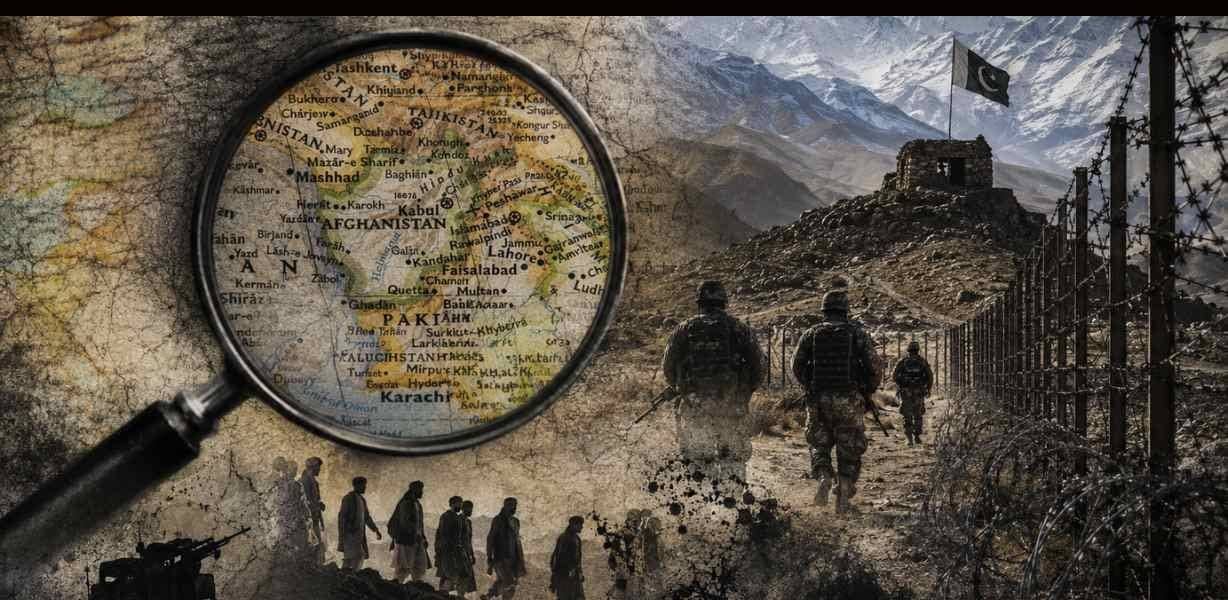
Yet, by 2026, that moment of triumph has transformed into a serious strategic crisis. Today, the Durand LineDurand LineThe 2,670-kilometer border established in 1893 between British India and the Emirate of Afghanistan. Afghanistan does not formally recognise it, leading to persistent border disputes with Pakistan. has become one of the most volatile frontiers in South Asia. Mortar exchanges, cross-border airstrikes, militant attacks, refugee pressures, and accusations of proxy warfare now dominate Pakistan-Afghanistan relations. Pakistan’s Defense Minister has openly warned of an “open war” against Afghanistan, while Kabul accuses Islamabad of externalizing its internal failures through military aggression. What Pakistan once imagined as strategic depth has increasingly turned into a strategic abyss.
The Fallacy of the Friendly Proxy
The foundational error in Pakistan’s Afghan policy was the assumption that ideological affinity would override Afghan nationalism and state sovereignty. Islamabad viewed the Taliban primarily as a reliable ideological ally shaped by religious conservatism and historical dependence on Pakistan’s support structures. However, once the Taliban assumed state power, the logic of sovereignty and national identity became stronger than the logic of patronage.
Like every Afghan government since 1893, the Taliban continue to reject formal recognition of the Durand Line as a permanent international border. For many Afghans, particularly Pashtun communities divided by the frontier, the Durand Line represents a colonial scar imposed during British rule. Pakistan’s extensive fencing of the border, designed to stop militant infiltration and regulate movement, did not produce stability. Instead, it deepened resentment among communities that historically moved freely across the frontier. The Taliban may share ideological links with Pakistan, but they remain deeply rooted in Afghan nationalism and Pashtun political identity. This has fundamentally disrupted Islamabad’s expectation that the Taliban would function as a compliant strategic proxy. The result is a major geopolitical irony: the very force Pakistan once considered its closest regional ally has now become one of its most difficult security challenges.
The Frankenstein of the TTP
The most dangerous blowback from Pakistan’s Afghan strategy has been the resurgence of the Tehrik-i-Taliban Pakistan (TTP)Tehrik-i-Taliban Pakistan (TTP)An umbrella organization of various militant groups formed in 2007 along the Afghan-Pakistan border, aiming to overthrow the Pakistani state and enforce its strict interpretation of Sharia law.. Islamabad expected the Afghan Taliban to dismantle TTP sanctuaries or hand over militant leaders after returning to power. Instead, Kabul has largely resisted Pakistan’s demands for large-scale military operations against the group. The reasons are both ideological and structural. The Afghan Taliban and the TTP share tribal linkages, battlefield histories, religious narratives, and long-standing operational relationships.
For the Taliban leadership, openly abandoning the TTP risks damaging its own ideological legitimacy among militant constituencies. Afghan authorities have repeatedly argued that they prefer mediation rather than direct confrontation. Taliban leaders claim they possess influence over the TTP and can facilitate negotiations, but they reject Pakistan’s expectation that Afghanistan should fight Pakistan’s internal war on its behalf.
Pakistan, however, increasingly views the TTP as an existential national security threat. Terror attacks across Khyber Pakhtunkhwa, Lakki Marwat, Bannu, Bajaur, and other frontier areas have intensified public pressure on the Pakistani state. Thousands of civilians and security personnel have been killed or injured over the years in attacks linked to militant groups operating across the frontier. As frustration grew, Pakistan shifted toward a more aggressive military posture, including “hot pursuit” operations and cross-border airstrikes inside Afghan territory. Islamabad presents these actions as defensive counterterrorism measures aimed at militant hideouts and training camps. Yet these operations have also generated allegations of civilian casualties, including strikes on hospitals and rehabilitation centers.
This escalation has produced a dangerous cycle. Pakistan argues that it cannot remain passive while attacks continue from Afghan soil. Afghanistan responds that Pakistan is attempting to externalize domestic governance and security failures. Meanwhile, every airstrike strengthens anti-Pakistan sentiment inside Afghanistan and reinforces militant propaganda portraying Pakistan as hostile to Afghan sovereignty. The deeper paradox is impossible to ignore: militant networks once cultivated as strategic assets have evolved into autonomous forces destabilizing Pakistan itself.
The Two-Front Squeeze: KP and Balochistan
Pakistan’s western crisis is not limited to the Afghan border alone. The state is simultaneously confronting multiple insurgencies stretching across its western arc, creating one of the most severe internal security pressures in decades. In Khyber Pakhtunkhwa, Pakistan faces an asymmetric insurgency led by the TTP and allied militant networks. In Balochistan, it continues to confront ethno-nationalist insurgencies led by groups such as the Baloch Liberation Army (BLA)Baloch Liberation Army (BLA)An ethno-nationalist militant organization fighting for independence or greater autonomy for the Balochistan province in Pakistan..
The convergence of religious militancy in the north and separatist violence in the south has stretched Pakistan’s military and intelligence apparatus to its operational limits. This dual-front pressure is not only military but also political and social. Communities in frontier regions increasingly feel trapped between militant violence and heavy-handed state securitization. Decades of militarization, displacement, underdevelopment, and political marginalization have deepened distrust toward the central state.
Pakistan’s response has largely remained security-centric. Border fencing, checkpoints, intelligence operations, and military deployments dominate state policy. However, long-term stability cannot be achieved solely through coercive means when local populations experience exclusion from political and economic processes. The frontier crisis therefore reflects not only a failure of regional strategy but also deeper internal contradictions within Pakistan’s state structure.
The Economic Drain of a War Footing
Pakistan’s growing confrontation along the Durand Line comes at a time of severe economic fragility. Inflation, debt dependency, unemployment, political instability, and reliance on international financial assistance have significantly weakened state capacity. Maintaining a near-war posture on the western frontier imposes enormous costs. Continuous military mobilization, aerial operations, intelligence expansion, refugee management, and border surveillance consume financial resources that Pakistan can scarcely afford.
Every escalation increases economic pressure on an already struggling state. The conflict has also disrupted regional trade and connectivity. Afghanistan, once heavily dependent on Pakistani transit routes, has increasingly shifted economic engagement toward Central Asian partners. At the same time, repeated border closures and deportation policies have damaged cross-border commerce and humanitarian mobility.
The humanitarian dimension of the crisis is equally alarming. Afghanistan continues to suffer from economic collapse, declining international aid, food insecurity, and political isolation after the Taliban’s return to power. As global attention shifts elsewhere, humanitarian assistance to Afghanistan has declined significantly. The worsening relationship with Pakistan further compounds the suffering of ordinary civilians living along the frontier. The Durand Line has therefore become not only a security flashpoint but also an economic and humanitarian fault line destabilizing the wider region.
Turning the Mirror Inward
The destabilization of the Durand Line reflects the long-term failure of a security-centric regional policy rooted in proxy warfare, strategic manipulation, and militarized geopolitics. For decades, Pakistan treated Afghanistan less as a sovereign neighbor and more as a strategic arena through which regional influence could be projected. Today, the consequences of that approach are visible in rising militancy, border conflict, civilian casualties, economic exhaustion, and diplomatic mistrust.
Pakistan faces genuine security threats from militant violence, but military escalation alone cannot resolve a crisis rooted in decades of historical grievances, political contradictions, and failed regional policies. The Afghan Taliban, meanwhile, cannot indefinitely balance ideological solidarity with militant groups while simultaneously seeking regional legitimacy and diplomatic recognition. Both states remain trapped in a cycle where retaliation produces further instability without addressing the deeper structural causes of conflict.
If Pakistan seeks lasting stability on its western frontier, it must move beyond the doctrine of Strategic Depth and rethink the meaning of national security itself. Sustainable peace requires political inclusion, regional diplomacy, economic cooperation, and an abandonment of the logic of proxy warfare. Building higher fences, conducting airstrikes, or escalating nationalist rhetoric will not stabilize the frontier. The fire along the Durand Line cannot be extinguished through permanent militarization alone.
Disclaimer:The views and opinions expressed in this article are those of the author(s) and do not necessarily reflect the official policy or position of The Rift.