Opening The Rift
therift
© 2026 The Rift. All Rights Reserved.
The Armoor Incident: Vigilantism, Language, and the Challenge to Academic Freedom in India
The Armoor incident tests institutional resilience, demanding swift, fair resolution to reinforce public faith in rule of law and educational integrity.

Key Takeaways
1 of 3
Automatically generated. Read full article for complete context.
The classroom has long been considered a space deserving protection. It is where the state’s promise to educate its children is fulfilled, where knowledge is transmitted across generations, and where a teacher’s authority rests on institutional trust rather than personal or political power. When that space is disrupted by outsiders, including political actors, and when the response involves parallel legal proceedings against both assailants and victims, important questions arise about law enforcement, administrative consistency, and the boundaries of public institutions.
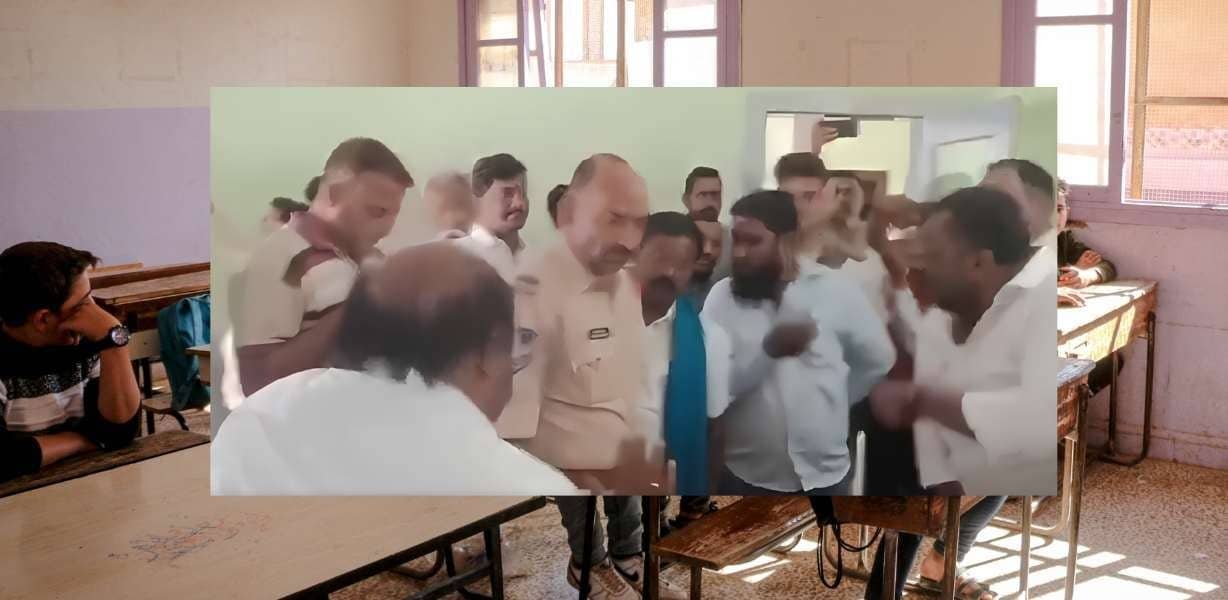
The recent incident at Bharat Chandra School in Armoor, Nizamabad district, Telangana, on June 27, 2026, illustrates these tensions. Reports indicate that local BJP-affiliated individuals entered the school premises during an Urdu class, leading to an altercation in which the principal (Amir Khan) and/or Urdu teacher (Amer/Aamir) were allegedly slapped or manhandled in front of students and in the presence of police officers. An FIR was registered against the intruders for criminal trespass and assault. Simultaneously, a counter-FIR was filed against school staff for allegedly teaching Urdu without proper permission. Video footage and local accounts circulated widely, sparking public debate.
This event is not merely procedural. Violence or intimidation inside a school raises concerns about the safety of educational environments. At the same time, parental complaints referenced in reports : alleging exposure to Urdu religious content such as the “kalma,” songs, or writings, alongside perceived “behavioural changes” : highlight underlying disputes over curriculum in private schools serving diverse communities. Such disagreements are common in plural societies and deserve examination beyond any single incident.
Police Response and Procedural Symmetry
An FIR against the alleged perpetrators represents a standard response to reported assault. However, the near-simultaneous counter-case against the principal and teacher for bureaucratic or regulatory issues has drawn criticism for appearing to equate physical intrusion with administrative non-compliance. In Indian policing, counter-FIRs can sometimes complicate investigations, reduce witness cooperation, or create perceptions of equivalence between distinct wrongs. Prompt arrests and clear separation of issues help maintain public confidence; delays or perceived passivity by officers present at the scene, as alleged here, warrant internal review.
Police neutrality is fundamental. If officers observed an altercation without intervening effectively, this merits scrutiny under established guidelines, including those from the Supreme Court in Tehseen S. Poonawalla v. Union of India (2018), which addresses mob violence and state responsibility. That judgment emphasizes nodal officers, timely FIRs, and accountability for police inaction : principles applicable regardless of the parties involved. Hate crime provisions, where evidence supports communal motivation, can serve as aggravating factors, though their application requires careful evidentiary assessment rather than automatic invocation.
Urdu, Language Policy, and Educational Context
Urdu holds status as Telangana’s second official language, a recognition rooted in the Deccan’s historical and cultural heritage and the linguistic rights of minorities under the Constitution. Thousands of students in the state study in Urdu-medium or Urdu-as-subject settings, supported by state institutions. Promoting regional languages alongside the official one (Telugu) aligns with India’s multilingual framework.
The Telangana (Compulsory Teaching and Learning of Telugu in Schools) Act, 2018, mandates Telugu as a compulsory subject from Classes 1 to 10 across various boards, with phased implementation. Its intent is to strengthen proficiency in the state’s primary language without necessarily prohibiting others.
Debates arise when enforcement appears selective or when private institutions are accused of prioritizing one language in ways that may sideline Telugu or introduce religious elements in secular settings. A teacher of Sanskrit, classical Telugu, or any subject would ideally face the same regulatory standards; consistency in application strengthens policy legitimacy.
The Armoor case reflects broader challenges in balancing mother-tongue instruction, regional language promotion, and parental expectations in diverse classrooms. Private schools have flexibility but must adhere to registration norms, curriculum guidelines, and RTE provisions where applicable. Disputes over content : whether linguistic, cultural, or religious : test the boundaries of academic freedom versus public accountability.
Wider Patterns and Institutional Responses
Incidents involving disruptions at educational institutions occur amid India’s complex social fabric. Reports of challenges to minority-associated practices (language, food, dress, institutions) coexist with concerns over integration, curriculum transparency, and uniform standards. Mosques, festivals, and trading practices have faced local disputes or regulations, often framed differently by stakeholders. These are best addressed through evidence-based policy rather than generalized narratives of unidirectional hostility or unchecked majoritarianism.
In education, madrasasMadrasas (Islamic Schools)Educational institutions, often religious, that teach Islamic subjects alongside some secular subjects. illustrate ongoing tensions. The Right to Education Act, 2009 (Section 1(5)), exempts institutions primarily imparting religious instruction, reflecting constitutional protections under Articles 19, 25-30 for minorities to establish and administer educational institutions. The Supreme Court in T.M.A. Pai Foundation (2002) affirmed reasonable regulation for standards while cautioning against measures amounting to suppression.
Critics, including bodies like the National Commission for Protection of Child Rights (NCPCR), have highlighted gaps: many madrasas may not provide adequate modern secular education in mathematics, science, or social studies, potentially limiting students’ opportunities.
Recommendations have included mainstreaming, improved oversight, stopping funding for non-compliant institutions, and enrolling children (including non-Muslims in some cases) in formal schools. Supporters argue madrasas fill gaps where state schooling is inadequate, serving poor communities and preserving cultural continuity.
A constructive approach involves partnership rather than closure. The government could provide financial aid for teaching secular subjects in madrasa settings, ensuring children receive both religious instruction and foundational academic education. This would be educationally sound. Instead of using RTE non-compliance as a pretext for closures in areas where state alternatives are limited, which risks denying education while invoking its name, authorities should prioritize support and regulation. The same cultural and policy debates that surfaced in Armoor find expression here.
There is also a deeper jurisprudential point. Madrasas often provide non-gratuitous service to children who might otherwise receive no formal instruction. Under principles rooted in Indian contract law and equity, one who receives the benefit of a non-gratuitous act bears an obligation to the provider. Where the state has failed to fully discharge its sovereign duty to educate every child, and private institutions step in, the appropriate response is partnership and support, not solely prosecution.
India’s legal framework offers tools for resolution. Courts can examine selective enforcement, quash procedurally flawed cases, or direct investigations. A suo motuSuo Motu (Latin)On its own motion; refers to an action taken by a court or other official body without a formal request from another party. review of the Armoor counter-FIR, alongside directions for prompt action on the assault case, could clarify facts. Broader application of guidelines on police accountability and hate crime recording (where substantiated) aids data-driven policy. Judicial review ensures constitutional guarantees : secularism, equality, and minority rights : are applied evenly.
Academic freedom, grounded in Article 19 and the Directive Principles on education, protects teaching and learning from undue political interference. This applies across subjects and communities. At the same time, schools operate within regulatory ecosystems designed to serve the public interest, including language policies and child welfare standards. Political actors entering classrooms set poor precedents; responses should prioritize de-escalation, investigation, and systemic fixes.
Nuanced Perspectives on Cultural and Policy Debates
India’s democracy accommodates profound diversity. Urdu’s role in Telangana reflects syncretic history, while Telugu promotion addresses linguistic identity post-state formation. Similar dynamics exist nationwide: promotion of regional languages, debates over medium of instruction, and efforts to balance secular education with cultural rights. Challenges arise when language becomes proxy for identity politics or when institutions blur lines between linguistic and religious instruction.
Vigilantism undermines rule of law wherever it occurs : whether targeting educators, places of worship, or public spaces. Equally, administrative or legal responses perceived as biased erode trust.
Data from crime records, education surveys (e.g., ASER), and judicial outcomes provide better insight than isolated cases. For instance, madrasa reforms have seen both court interventions (e.g., Allahabad High Court rulings, later stayed or modified) and state initiatives for modernization.
Parents have legitimate interests in their children’s curriculum. Teachers deserve protection from harassment. Administrators must ensure compliance. Students benefit most from stable, high-quality environments free of disruption. In Armoor, the presence of children witnessing conflict is regrettable regardless of underlying grievances.
Path Forward
The Armoor incident should prompt a review: a full investigation without political influence, clarification of permission norms for language teaching, training for police in school settings, and dialogue on curriculum in plural contexts.
Broader efforts could include:
- Uniform regulatory standards applied consistently.
- Support for multilingual education with strong foundational skills in regional/official languages.
- Madrasa modernization programs combining religious and secular education, backed by targeted financial aid.
- Mechanisms to prevent vigilante intrusions while addressing parental complaints promptly through proper channels.
Constitutional values : secularism, equality, freedom of expression, and minority rights : provide the framework. Implementation requires vigilance against excess from any quarter. Educational institutions thrive when insulated from day-to-day politics yet responsive to societal needs and legal norms.
Incidents like Armoor test institutional resilience. Swift, fair resolution : arrests where warranted, quashing of meritless cases, and policy clarity : reinforces public faith. Long-term, investing in quality schooling for all, irrespective of medium, reduces reliance on unregulated institutions and mitigates tensions. Language and culture enrich India; their management in education demands prudence, evidence, and commitment to the common good.
The teacher, students, and school community will carry the immediate effects. Policymakers and courts have opportunities to demonstrate that rule of law and educational integrity prevail over partisan optics. In a diverse democracy, protecting classrooms while addressing genuine regulatory concerns serves every community.
Neither vigilantism nor partisan policing can have any place in our society ; both deserve scrutiny and administrative as well as judicial oversight.
Jai hind
Disclaimer:The views and opinions expressed in this article are those of the author(s) and do not necessarily reflect the official policy or position of The Rift.