Opening The Rift
therift
© 2026 The Rift. All Rights Reserved.
Socialist Party (India) Condemns Uttar Pradesh Government’s Decision to Demolish Mohammad Ali Jauhar University
The government’s rush to demolish clearly reflects the politically motivated nature of the whole process, disguised as routine institutional functioning.

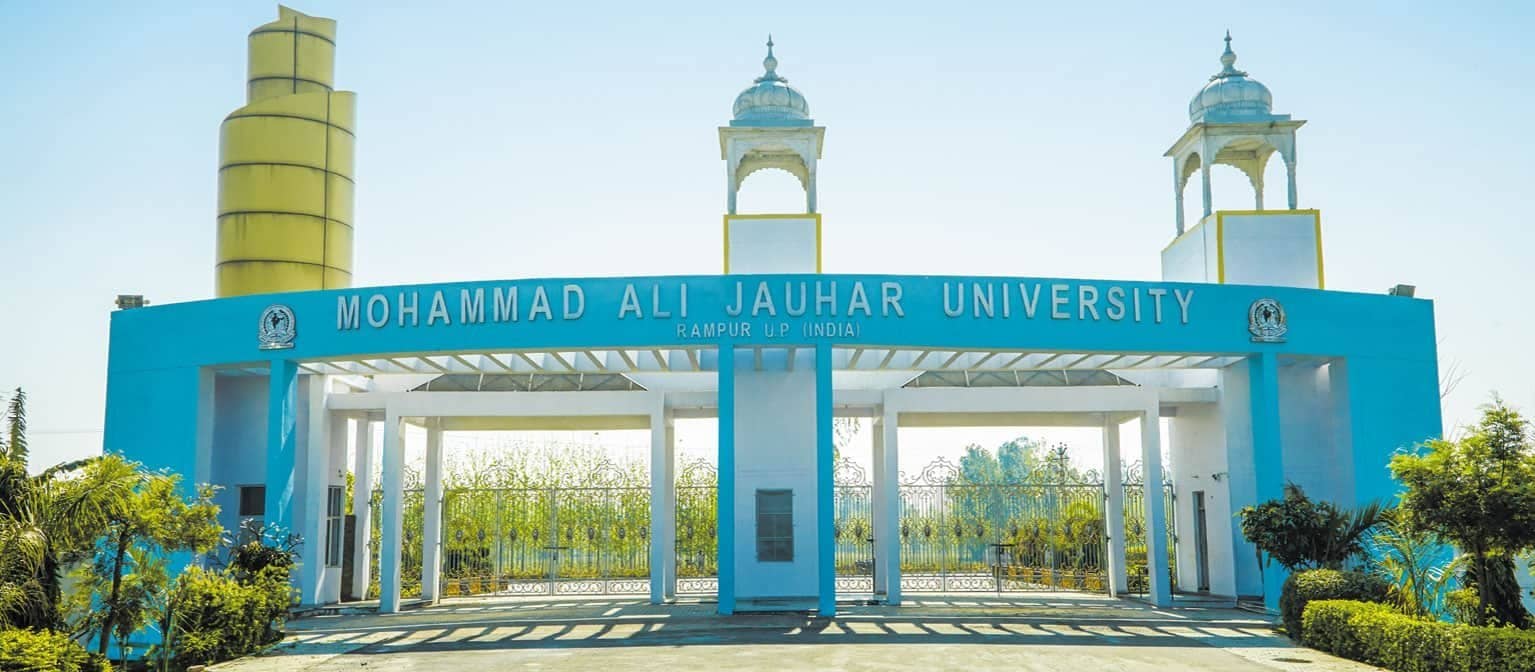
Mohammad Ali Jauhar University
Key Takeaways
1 of 3
Automatically generated. Read full article for complete context.
Rampur Development Authority (RDA) has issued a demolition notice pertaining to 38 out of the 40 buildings on the campus of the Mohammad Ali Jauhar UniversityMohammad Ali Jauhar UniversityA private university in Rampur, Uttar Pradesh, India, established by former MLA Azam Khan. It was granted university status by the UGC and minority status by the government., Rampur. The university is a private institution established in 2006 by the former Samajwadi PartySamajwadi PartyA political party in India, primarily based in Uttar Pradesh, known for its socialist and secular ideology. MLA Azam Khan. It was granted university status by the UGCUniversity Grants Commission (UGC)The statutory body responsible for the coordination, determination, and maintenance of standards of higher education in India. It provides recognition to universities. in 2012, and minority status in 2013. The university is currently fully functional, with over 3000 students on its rolls. The university campus has extensive educational, administrative, and recreational infrastructure including classrooms, labs, offices, and sports facilities, in active use by students and staff members.
The RDA served notice to the university administration earlier this month, after which a hearing was held to determine if the university had the required permissions for the constructions on its campus. Subsequently, the RDA declared 38 out of 40 buildings to be unauthorised, and ordered their demolition.
It beggars belief that the government intends to raze to the ground such a large, well-equipped and functional university, catering to thousands of students — that too in a region of the country where educational infrastructure is sorely lacking and access to quality higher education remains elusive for most. This is just one example among countless many of the extent to which the BJP can stoop in its vindictiveness towards its political rivals, and in its contempt for the country’s Muslim population.
If there are unauthorised constructions on the university campus, there are many ways the issue can be resolved without destroying valuable educational infrastructure and jeopardising the futures of thousands of students. Development authorities like the RDA routinely regularise unauthorised constructions through the imposition of fines and compounding fees. The rush to demolish clearly reflects the politically motivated nature of the whole process.
If there were such serious irregularities in the functioning of the university, how was it able to obtain recognition and university status in the first place? If this indicates the undue influence of the UP state government of the time over the UGC, should the priority not be to take measures to ensure the autonomy and transparency of regulatory bodies like the UGC?
The current political dispensation shows a pattern of targeting educational institutions, especially those that cater to minority groups. Previously, the BJP and its supporters had attempted to cancel the admission of an entire batch of students to the MBBS program at the Shri Mata Vaishno Devi Institute of Medical Excellence in Katra, Jammu and Kashmir, because 42 of the 50 students admitted were Muslims. They reasoned that because the institution receives donations from Hindu devotees, it should reserve seats for Hindu students. However, as the National Conference leader Tanvir Sadiq clarified, the institution was receiving substantial funding from the Union Territory government as well. Eventually, the institute’s MBBS program was shut down, after the National Medical Commission found “serious deficiencies” in its conduct. Nobody is fooled when the government disguises its political vindictiveness and abuse of power as routine institutional functioning.
A recent RTIRight to Information (RTI)An Act of the Parliament of India which enables citizens to access information from the Government of India and state governments. petition has revealed that in the last five years there has been a reduction of 18,727 in the number of government primary schools in the country. A NITI AayogNITI AayogThe National Institution for Transforming India, a policy think tank established by the Government of India to replace the Planning Commission. It focuses on economic development and policy research. report published in May this year revealed a decline of 2.26 crore in the total number of students enrolled in school in the last 10 years. While most developing countries in the world are working to achieve universal education, we are moving backwards. The BJP knows that quality education reaching the country’s common and marginalised people — such that they become able to question and critique political and social structures — is the biggest threat to Hindutva, an ideology that thrives on propaganda, oppression, and hate.
The SP(I) demands that the Mohammad Ali Jauhar University be allowed to continue its operations so that the education of thousands of students is not compromised merely due to political pettiness and ill-will.
Mir Shahid Saleem (Ph: 9622002001)
Vice-President and Spokesperson
Socialist Party (India)