Opening The Rift
therift
© 2026 The Rift. All Rights Reserved.
India’s Hate Crime Crisis Has No Off Switch
The victims span four states, three age groups, and both genders. What connects them is faith, and what follows them is a familiar choreography: a crime, a delayed FIR, a local uproar, a national silence, and then the next incident.

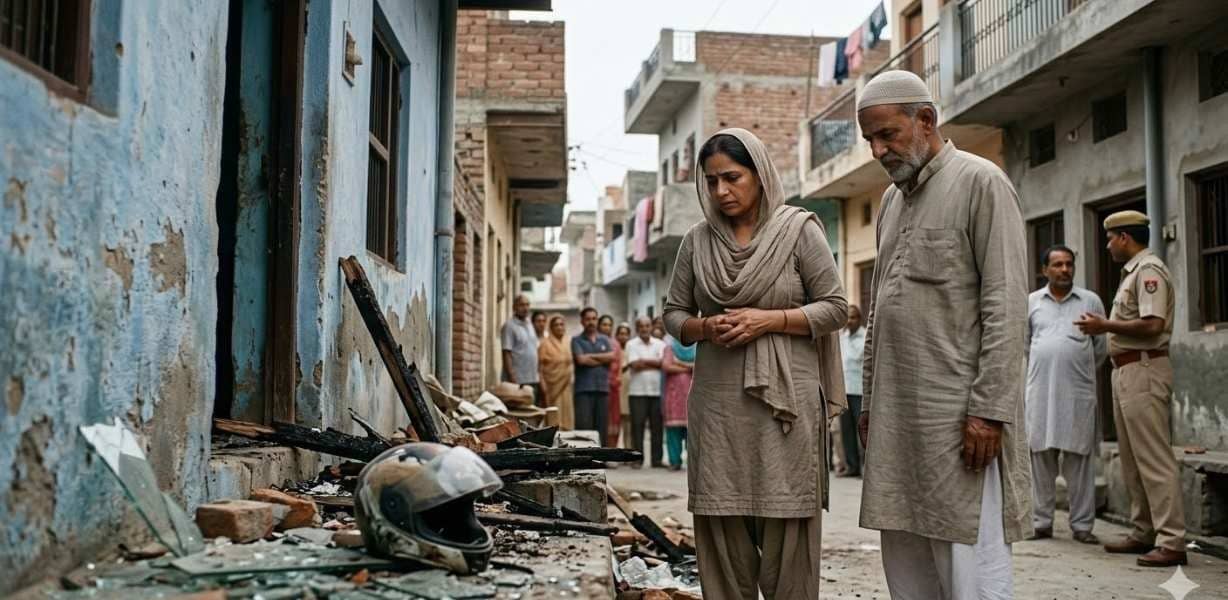
Illustrative only
Key Takeaways
1 of 3
Automatically generated. Read full article for complete context.
Hate crimes against Muslims in India claimed four lives between March 1 and March 7, 2026, across four different states, in incidents so varied in method and geography that they resist the comfort of being called isolated.
A Week Written in Blood
The youngest was Unaiz Khan, twelve or thirteen years old depending on which report you read. He was shot in the forehead in Lucknow on March 2 after reportedly being invited to a birthday party by friends. He had been observing his Ramadan fast. The revolver belonged to one Sanjeev Tripathi, a real estate contractor who also happens to be the brother-in-law of Uttar Pradesh Deputy Chief Minister Brajesh Pathak. Police called it accidental firing. His family called it premeditated murder, alleging Unaiz was shot at point-blank range.
That same weekend, 28-year-old Aamir, a truck driver from Palla village in Haryana, was shot dead near Bhiwadi in Rajasthan. His family says members linked to the Bajrang Dal intercepted his vehicle, accused him of cow smuggling, and opened fire. Aamir left behind a pregnant wife and a young daughter. He was, his family insists, transporting fruit.
Two days later in Madhubani, Bihar, 65-year-old Roshan Khatoon approached her village head to resolve a local dispute. She was reportedly tied to a pole, beaten by a mob, and allegedly forced to drink a mixture of alcohol and urine while she was fasting. She died during treatment in Patna.
And in neighbouring Darbhanga, 65-year-old Abdus Salam was beaten to death with an iron rod for the offence of asking a group of men to stop using communal slurs. Three of the five accused have been arrested.
The Impunity
What makes these killings corrosive is not the violence itself, horrifying as it is, but the ecosystem that enables repetition. India’s National Crime Records Bureau has not maintained a separate category for hate crimes or mob lynchings since 2017, when the heading was dropped citing “unreliable data.” The gap is not accidental. Without an official count, there is no official problem.
Independent trackers fill the void, and their numbers are grim. A joint report by the Association for Protection of Civil Rights (APCR) and the Quill Foundation documented 947 hate-related incidents between June 2024 and June 2025, including 602 hate crimes and 345 instances of hate speech. Muslims were the primary targets, with at least 25 killed during the period. Only 13% of cases resulted in a formal police complaint.
The Centre for Study of Society and Secularism (CSSS) counted 14 mob lynchings in 2025, all eight fatalities Muslim. That is a fact, not an editorial judgement. Cow vigilantism and accusations of “love jihad” were reported as the dominant triggers. Uttar Pradesh and Madhya Pradesh topped the state-wise lists, which, if you have been following this story for any length of time, will surprise exactly nobody.
The Silence That Speaks
There is a phrase you hear in Indian political commentary that has become almost reflexive: “law and order is a state subject.” It is factually correct. It is also morally bankrupt as an explanation when four people from a single religious minority die in a week and no national leader mentions it. No prime ministerial tweet. No home ministry statement. No BJP spokesperson acknowledging even the possibility of a pattern.
The India Hate Lab documented 1,318 hate speech events targeting religious minorities in 2025, a 13% rise from the previous year. That is not the fringe. That is the atmosphere. When a sitting deputy chief minister’s nephew’s birthday party produces a dead Muslim child and the institutional response is to classify the killing as accidental, what signal does that send to the next vigilante group considering whether to pull a trigger?
Where the Data Ends and the Crisis Begins
The four deaths of March 2026 are not a spike. They are a continuation. The victims span four states, three age groups, and both genders. What connects them is faith, and what follows them is a familiar choreography: a crime, a delayed FIR, a local uproar, a national silence, and then the next incident.
Amnesty International India and the APCR have repeatedly urged the government to reinstate hate crime tracking under the NCRB framework. The demand is not radical. The United States, the United Kingdom, and much of Europe maintain such categories precisely because naming a problem is the first step to measuring it, and measuring it is the precondition for addressing it. India has chosen, for nearly a decade now, not to count. The question is whether the refusal to count is itself a policy position, and what that position protects.