Opening The Rift
therift
© 2026 The Rift. All Rights Reserved.
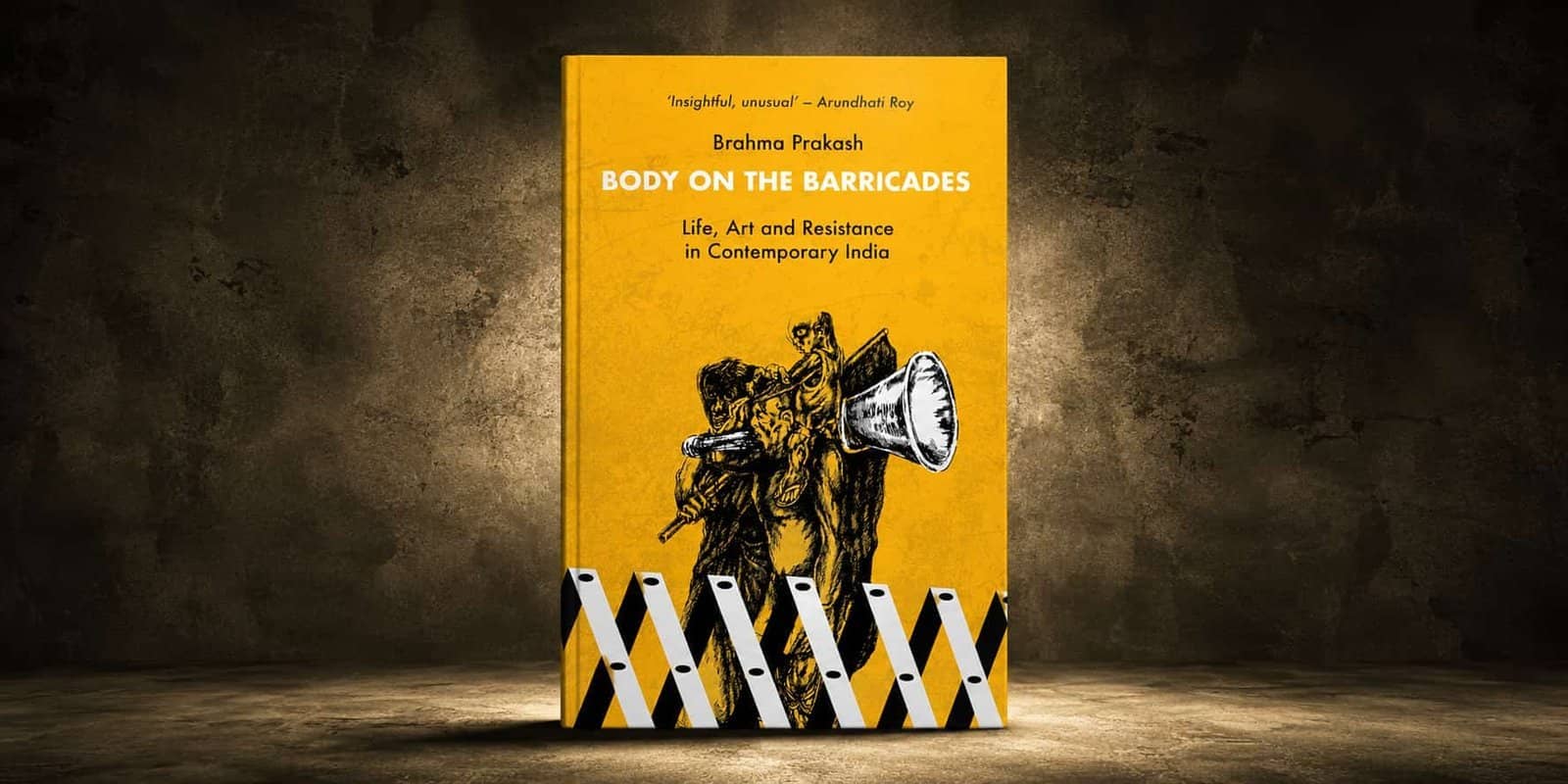
Review: Body on the Barricades: Life, Art and Resistance in Contemporary India
Prakash’s insistence that resistance survives through bodies, words, art, and collective action makes the book a valuable contribution to discussions of contemporary India.


Key Takeaways
1 of 3
Automatically generated. Read full article for complete context.
We often recognise the value of something when its accessibility is threatened. The act of breathing, which we barely notice, is the most important condition of life; it becomes significant when we relate it to the question of freedom. In Body on the Barricades: Life, Art and Resistance in Contemporary India, Brahma Prakash presents a contemplative collection of essays that engages with some of the most pressing concerns of contemporary India. He examines the body as a site where political power, vulnerability, and resistance intersect in contemporary India. The book reflects on the impacts of COVID-19 through the metaphor of breathlessness, which connects the vulnerability of the body with mass protest and rising curtailment of democratic freedoms. Prakash examines the act of resistance experienced in life through language, art, protest, culture and mourning.
The author further looks into the changing political and social conditions in India, where we can witness the growing restrictions on expressing one’s voice. The COVID-19 pandemic, the CAA protest, and the farmer protest, returning of migrant workers, mourning over death provide us with the context to examine the tension. The presence of barricades undermines the solidarity and challenges the nation’s conscience while, the body resisting the barricade symbolises the struggle for democratic freedom.The curtailment pushes people into the dark, where the body seeks to express itself without fear.
Prakash discusses the power of words and speeches which hold the ability to challenge those in power. Parallelly, he draws attention to how contemporary public discourse often reduces meaningful language to empty rhetoric. At the same time he examines how words can challenge those in power. He reflects on the curtailment of poets, writers, and artists as the authoritarian regime censors their creation marking them as dissenting voices. In this context the author mentions Roland Barthes’ idea of the ‘ Death of the Author’ in a more literal sense of silencing the writers differing from the theoretical argument. Such attempts to suppress the texts reveal the power of words and the threat they can pose to the authoritarian regime.
Beyond the suppression of voice, Prakash examines how language can be manipulated by those in power. The demagogues try to twist reality by replacing dialogic communication with monologue, leaving little space for disagreement or counterargument. Yet throughout history, several examples show how words have become powerful tools for resistance. Faiz Ahmed Faiz’s poetry gave expression to resistance against oppression, while Martin Luther King Jr.’s speeches became a powerful voice in the struggle against racial segregation and inequality. The current situation paints a different picture for us, where language becomes a means of controlling and manipulating thought, leading to the silencing of critical voices, resembling the Orwellian world of 1984.
The manipulation of the language extends to stigmatising the people and communities.
Drawing on Susan Sontag’s concept of ‘ illness’, Brahma reflects on how disease can become a metaphor to create social stigma. He connects this with the COVID-19 pandemic, particularly the use of the term Corona Jihad, and the suffering of the migrant workers. The book reflects the painful situation of migrants observed through their painful plight as ‘Nomadic Proletarians’ and ‘Bidesiya’ who were left to die during pandemic. From these experience of marginalization author moves to discuss the collective form of resilience through CAA-NRC, farmers’ protests, and the Una uprising as an expression of solidarity and collective action.
These movements reflect the current scenario in our country where the protest, chaos, and disruption have become increasingly visible, reminding us that a collective voice can not be silenced for long. Prakash’s discussion of media is equally significant because protests do not exist only in public spaces; they are also produced and interpreted through images. The representation of protesters in the media can shape how audiences understand resistance, sometimes reproducing dominant narratives and sometimes challenging them.
The book, as a discussion ground, portrays how emotional turmoil, pain, and vulnerability bring solidarity amidst diversity. The author references the act of mourning, which is banned by the authorities. Prakash’s treatment of mourning is particularly compelling because he transforms mourning from a private emotional response into a political act. The death that we witness needs to be mourned not as an act of cowardice but as an act of holding one’s ground in dignity and strengthening solidarity. The author’s achievement is reflected in the interdisciplinary approach through the intersection of cultural studies and political theories, presenting the contemporary social relationship with the institution. This discussion establishes the space to understand the relationship between political power, resistance and vulnerability.
Body on the Barricades is an important intervention in contemporary debates on democracy, resistance, and political power in India. Its greatest strength lies in bringing together everyday experiences of vulnerability with larger questions of language, art, protest, migration, and mourning. At times, however, the essayistic structure makes the argument feel fragmented, and a more sustained engagement with counterarguments and gendered experiences would have strengthened the book. Nevertheless, Prakash’s insistence that resistance survives through bodies, words, art and collective action makes the book a valuable contribution to discussions of contemporary India.
Disclaimer:The views and opinions expressed in this article are those of the author(s) and do not necessarily reflect the official policy or position of The Rift.