Opening The Rift
therift
© 2026 The Rift. All Rights Reserved.
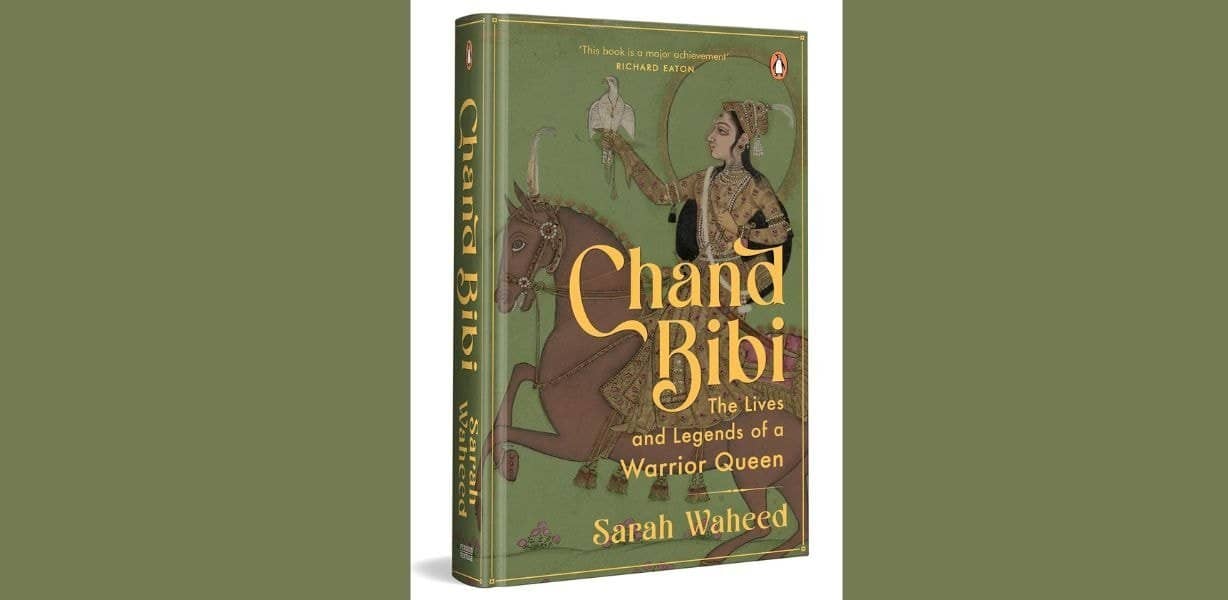
Chand Bibi: The Lives and Legends of a Warrior Queen
Chand Bibi, a sovereign, administrator, diplomat, and military strategist, stood courageously against the Mughal Empire, yet historians have seldom accorded her the place she deserves.

Key Takeaways
1 of 3
Automatically generated. Read full article for complete context.
History has a peculiar way of choosing whom to remember and whom to consign to oblivion. At times, it appears to make its own selections; at others, it seems to bend to the will of those who wield power. Some historical figures are permanently inscribed in the public consciousness having their names preserved in textbooks and official records, commemorated through public holidays, and attached to cities, airports and roads. Others survive only in fragments: an old portrait, a dilapidated fort, a forgotten manuscript, or a tale passed down through generations. Chand Bibi Sultana seems to belong to the latter category.
She was a sovereign, an accomplished administrator, a skilled diplomat and military strategist, and a discerning patron of art and culture. She stood courageously against the expansionist ambitions of the mighty Mughal Empire and fought to preserve the sovereignty of the Deccan. Yet, despite the magnitude of her achievements, historians have seldom accorded her the place she deserves.
Sarah Waheed, a historian at the University of South Carolina, has sought to redress this historical imbalance. The culmination of her painstaking research is Chand Bibi: The Lives and Legends of a Warrior Queen. The book does more than recover the story of a remarkable woman; it explores the process through which a historical figure moves, over the centuries, from documented reality into the realm of legend.
Chand Bibi was born in 1550 to Hussain Nizam Shah I, the Sultan of Ahmednagar. As befitted a princess, she received an education under accomplished tutors. Alongside the recitation of Holy Quran, she was trained in reading and writing, calligraphy and poetry, and acquired proficiency in several languages, including Arabic, Persian, Dakhini, Marathi and Kannada. She had a keen passion for horse riding and hunting. Artistic representations depict her on horseback, sometimes engaged in a game resembling polo. These intellectual and martial accomplishments were inherited from her mother, Begum Khunza Humayun.
The sixteenth-century Deccan was neither a peripheral nor an intellectually barren corner of India. It was a vibrant world of sophisticated political institutions, competing kingdoms, military alliances, diplomatic manoeuvring and flourishing courtly cultures. Coalitions were forged and broken, armies marched across contested territories, and rival rulers struggled for sovereignty, influence and strategic advantage. At the same time, the courts of the Deccan nurtured literature, music, architecture, painting and a remarkable mingling of linguistic and cultural traditions.
The sultanates of Ahmednagar, Bijapur and Golconda were frequently embroiled in conflict, each seeking to consolidate its territorial and political influence. It was within this turbulent yet culturally fertile milieu that Chand Bibi emerged as a formidable political presence, one whose authority extended far beyond the conventional confines of royal womanhood.
Ahmadnagar itself bore eloquent testimony to the sophistication of the Deccan. Its fort, palaces, gardens and monuments reflected a civilisation in which power and culture were closely intertwined. The noted historian Tabatabai wrote admiringly of the city, its fortifications, internal structures and gardens. Ironically, the same fort would centuries later become a site of colonial confinement, where the British imprisoned Mahatma Gandhi, Jawaharlal Nehru, Sardar Patel and Maulana Azad. On a hill near Ahmadnagar stands the shrine of the saint Sayyid Ishaq Shah Miran Wali, within whose complex lies the grave of Chand Bibi’s younger sister, Khadija. Until recently, the city retained the historic name Ahmadnagar. However, the name fell victim to majoritarianism, and since October 2024, it has been renamed Ahilya Nagar. History watches it all with its unblinking, stony gaze.
In 1595, the Mughal forces, commanded by Prince Murad, invaded Ahmadnagar and laid siege to the fort. The Mughal Empire had by then established itself as the dominant political power in northern India, and its advance towards the Deccan posed a serious challenge to the autonomy of the southern states. Chand Bibi did not remain a distant spectator behind the fortifications. She assumed direct responsibility for the defence of Ahmadnagar. In one of the fascinating paintings, she appears mounted on horseback, clad in armour and wielding a sword, leading her troops into battle.
The defenders unleashed volleys of arrows and rockets containing explosives against the besieging army. The Mughals, meanwhile, attempted to breach the fort through mines and explosions. At one point, a massive explosion created a breach in the fortifications. Chand Bibi personally appeared at the threatened point, supervised the restoration of the damaged walls overnight. The siege was eventually lifted, and the Mughal army had to return. Chand Bibi had demonstrated that courage and military management skills by defeating a powerful aggressor.
Her political career, however, had begun long before the sieges of Ahmadnagar. At the age of fourteen, Chand Bibi was married to Sultan Ali Adil Shah I of Bijapur. She was barely thirty when her husband died. Even before his funeral rites had been completed, powerful nobles at the Bijapur court began manoeuvring to prevent her from exercising any political authority.
Chand Bibi, however, was not easily pushed aside. She had no children of her own; her father was already dead, and her brother suffered from recurring bouts of mental illness. In these difficult circumstances, she assumed effective control of Bijapur by governing during the minority of her husband’s successor. She demonstrated an ability to navigate the treacherous waters of court politics while balancing rival factions and protecting the interests of the dynasty. Years later, when circumstances compelled her to return to Ahmadnagar, she once again found herself at the centre of a political crisis. The kingdom was weakened by internal divisions, factional rivalries and external threats. Yet Chand Bibi stepped into the breach and assumed responsibility for its administration.
In 1600, the Mughals launched another major assault on Ahmadnagar, this time under Prince Daniyal. The siege was better prepared, and the Mughal forces were determined to bring the Deccan kingdom to its knees. Once again, Chand Bibi organised the defence. But the circumstances were now far more desperate. The fort was under sustained pressure, internal divisions were deepening, and the possibility of prolonged resistance was rapidly disappearing. Eventually, the Mughal forces gained access to the fort. What followed remains a mystery.
According to one account, Chand Bibi realised that further resistance was futile and began negotiating terms with the Mughals. Her decision was allegedly misrepresented by some of her own men as an act of treachery. Suspicion turned into fury, and a group of soldiers stormed the women’s quarters, where the Sultana was reportedly engaged in prayer. She was attacked with daggers and killed by her own supporters.
A Marathi source, the Fateh Nama, presents a different version, suggesting that Chand Bibi escaped through secret underground tunnels and disappeared. Other traditions maintain that she chose death by her own hand rather than submit to captivity or dishonour.
The ambiguity surrounding her death has also encouraged later generations to interpret her according to their own historical and cultural concerns. To some, she is the warrior queen who died defending her kingdom. To others, she is the victim of factional politics. Still others have transformed her into a symbol of feminine courage and resistance.
The reviewer spoke to Asif Dulhe Khan, the President of Ahmednagar Itihas Premi Mandal. Heis cartological. The Sultana was murdered by her own forces. Shaikh Shabbir Ahmed Bilal, a curator of literary records in Ahmednagar, also ruled out possibility of escape or suicide.
Waheed’s deep engagement with her Muslim Deccan heritage is evident throughout the book. At the same time, she approaches her subjects through a distinctly feminist lens, drawing attention to the ways in which women negotiated, exercised and sometimes challenged structures of male power. Her narrative brings into view figures such as Begum Hamid Khan, Hayat Bakshi Begum, Punji Khatun, Rooh Parwar Begum and Auliya Begum. These women exercised political authority in an age when power was overwhelmingly understood as a masculine domain.
What, ultimately, impelled a woman to rise above the conventions of her time and exercise authority in a society so deeply rooted in patriarchy? The question becomes even more intriguing if we move beyond the conventional distinction between male and female historical actors and examine the deeper impulses that drive human beings towards power and action.
Was it territorial ambition? The pursuit of power for its own sake? A commitment to justice? Dynastic loyalty? Religious or political honour? A sense of duty? Personal ambition? Or perhaps an instinct for survival sharpened by circumstances? These questions open an intriguing avenue for future historical scholarship. Behind every decision of a historical person, lies a temperament, a set of fears and desires and a particular psychological disposition. What if historians were to explore these dimensions more systematically, in conversation with the specialists of contemporary psychology?
This approach could help us move beyond the simplistic categories of hero and villain, ruler and subject, victor and vanquished, and bring us closer to the inner depths of human minds concealed behind historical events.
Disclaimer:The views and opinions expressed in this article are those of the author(s) and do not necessarily reflect the official policy or position of The Rift.
*Book ReviewChand BibiDeccan SultanatesFeminist HistoryHistorical BiographyMughal EmpireReviewSarah Waheed