Opening The Rift
therift
© 2026 The Rift. All Rights Reserved.
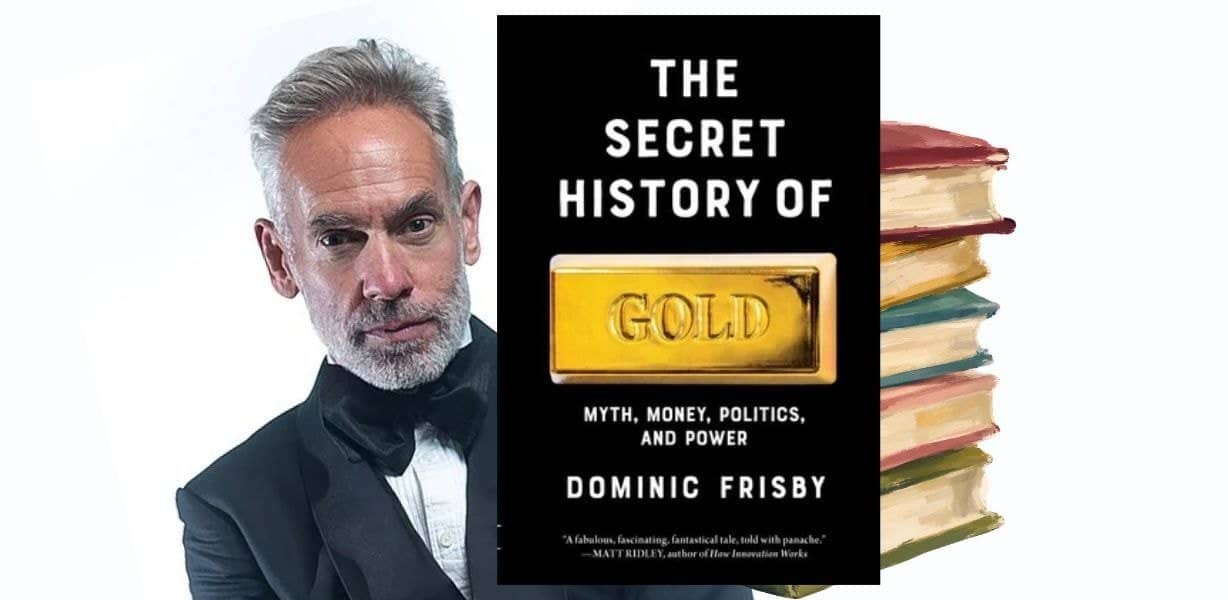
The Secret History of Gold: Myth, Money, Politics and Power
Gold remains a tangible asset whose existence is independent of government promises, serving as a safe refuge during instability.

Key Takeaways
1 of 3
Automatically generated. Read full article for complete context.
“Sona hun, kured kar to dekho
Mitti me daba hua pada hun”
“I am gold. Dig me out and take a look
I lie buried here in the worthless soil.”
These simple Urdu lines penned by Khalil-ur-Rahman Azmi, conceal a universe of meaning. Yet, when I first heard the poet recite them during my childhood, all I could comprehend was that gold was a highly precious metal. It was only much later that I began to appreciate the deeper significance of this enduring symbol of value. Why do we describe the finest period in history as a golden age, our most treasured memories as golden memories, and the profoundest utterances of eminent personalities as golden words? The answer lies in gold’s timeless association with rarity, permanence and intrinsic worth. In The Secret History of Gold, British commentator Dominic Frisby traces the fascinating journey of this shining metal through the corridors of history, economics, politics and power.
In ancient Egypt, gold was regarded as divine, a metal worthy of the gods. Its significance, however, varied across civilisations: it embodied royal authority, symbolised mercantile prosperity and offered ordinary people a measure of security against adversity. What accounts for humanity’s enduring fascination with gold? Perhaps it is the metal’s enduring nature. It can be touched, felt, securely stored and passed down from one generation to the next. These very qualities once made it an ideal medium of exchange.
Unlike paper currency, gold does not derive its worth from a government’s promise. The DemonetisationCurrency PolicyThe act of stripping a currency unit of its status as legal tender. In India, this occurred in November 2016 when 500 and 1000 rupee notes were withdrawn. in India in November 2016 offered a striking reminder of how the bundles can turn valueless in a matter of hours. Money, after all, rests fundamentally on trust. It flows through the arteries of society much as blood circulates through the human body. For an economy to function, its currency must command confidence and retain its credibility. Gold, by contrast, remains what it has always been: a tangible asset whose existence is independent of the promises made by governments.
For centuries, the world’s major currencies were linked, directly or indirectly, to gold under the system known as the gold standardMonetary SystemA monetary system where a country’s currency or paper money has a value directly linked to gold. Governments agree to convert paper money into a fixed amount of gold.. Its underlying principle was straightforward: money should be anchored to a tangible asset rather than left entirely to the discretion of those who issue it. Gold, in this arrangement, served as a restraint on governmental extravagance. A government operating under the gold standard could not simply print money without regard to its gold reserves; fiscal deficits would have to be addressed through expenditure cuts, higher revenues, or other adjustments.
Yet the very discipline that made the gold standard attractive could also prove restrictive. During economic crises, governments needed flexibility to stimulate demand, support employment and respond to financial emergencies. The constraints imposed by gold increasingly came to be viewed as an obstacle to effective economic management. This tension ultimately contributed to the gradual abandonment of the system.
Gold is a deeply political metal. French President Charles de Gaulle famously championed gold as the ultimate standard of value. Following the Second World War, the Bretton Woods systemPost-WWII Monetary OrderAn international monetary management system established in 1944, pegging the US dollar to gold and other major currencies to the dollar, lasting until 1971. established an international monetary order in which the US dollar was attached to gold for foreign monetary authorities, while other major currencies were pegged to the dollar. That arrangement came to an end in 1971, when President Richard Nixon suspended the dollar’s attachment to gold. What was initially presented as a temporary measure became a permanent turning point in the history of international finance.
The world thus entered an era of fiat currenciesGovernment-Issued MoneyCurrency that a government has declared to be legal tender, but is not backed by a physical commodity. Its value is derived from public trust and government decree., whose value rested not on direct convertibility into gold but on public confidence, government credibility, central-bank policies and the underlying strength of national economies. The dollar emerged as the dominant currency of international trade and finance. Although it was no longer backed by gold, much of the world remained dependent on it. Frisby suggests that the international community is increasingly seeking alternatives to this dollar-centric order. Such a transition, however, is unlikely to be swift, given the dollar’s entrenched position in global commerce and financial markets.
Our conventional understanding of money is still shaped by banknotes and coins. However, much of the world’s wealth exists not in physical vaults but on computer screens. The balance in a bank account is, in essence, a numerical representation of a financial value. We regard it as wealth because others consider it wealth!
Gold occupies a different position. It is neither a promise issued by a government nor a numerical entry in a digital ledger. This raises an intriguing question: as the world becomes increasingly digital and central banks explore the possibilities of digital currencies, will gold retain its relevance? History suggests that it will. Whenever confidence in financial systems and institutions weakens, investors tend to seek refuge in gold. During periods of inflation, war and political instability, it becomes a safe refuge. Its continued presence in the reserves of central banks across the world testifies to its enduring significance in the international monetary system.
Frisby advances a provocative argument: in the contemporary world, money is inextricably linked to debt. Modern economies depend heavily on credit, and the expansion of money is often accompanied by an accumulation of debt. He challenges the familiar assumption that money simply loses value with the passage of time. In his view, it is not time itself but monetary and fiscal policies that erode purchasing power. His criticism of the measurement and definition of inflation also raises important questions
History is replete with instances of governments imposing restrictions on the purchase, ownership and trade of gold. Yet such restrictions have rarely extinguished the public’s appetite for the metal. Frisby points to the flourishing of gold smuggling during the 1960s, particularly along the route from Dubai to India.
In India, gold occupies a place in the popular imagination that extends far beyond its monetary value. Gold jewellery is often accumulated over a lifetime and passed from mothers to daughters, serving as both an heirloom and a financial reserve. Given the remarkable appreciation in gold prices in recent years, many Indian ladies must have found their wealth considerably enhanced. Better late than never, this reviewer extends congratulations to them!
The global gold market, meanwhile, presents a fascinating picture of production, consumption and strategic accumulation. China is among the world’s leading gold producers and is also a major importer. The United States holds the largest official gold reserves, at approximately 8,133 tonnes, compared with China’s reported holdings of around 2,242 tonnes and India’s 822 tonnes.
The metal’s price history is equally revealing. In 1970, gold traded at roughly $40 an ounce. By 1980, it had briefly surged to around $850. Two decades later, in 2000, its price had fallen to approximately $300 an ounce. It peaked to $ 5589 in January 2026 and at the time of writing, it is trading at around $4,000 an ounce. The prices have fallen to around 28% from its highest value. It is said that Russia is selling its gold assets to meet war expenses.
The Indian gold market has also undergone significant changes. The average Indian consumer feels that for years, most jewellers exploited consumers through questionable purity claims. The introduction of hallmarking and the wider availability of reliable purity-testing instruments have helped us make more informed choices. Meanwhile, Gold Exchange-Traded Funds (ETFs) and Sovereign Gold Bonds have offered investors alternatives to holding physical gold, although each instrument carries its own costs, risks and limitations.
Some critics contend that he does not sufficiently appreciate the economic and political circumstances that led to the abandonment of the gold standard. Over the decades following the collapse of Bretton Woods, many countries experienced substantial reductions in extreme poverty and child mortality.
Nevertheless, The Secret History of Gold is an illuminating and engaging work. It successfully bridges the divide between the dense, often forbidding literature of economic scholarship and the accessible prose of popular non-fiction. Frisby makes a subject that might otherwise appear remote and technical both comprehensible and compelling, demonstrating how a single metal has shaped empires, influenced monetary systems, fuelled political rivalries and captured the human imagination across centuries. The word secret in the title may be more a marketing device.
One wishes, however, that Frisby had devoted a separate chapter to India’s complex relationship with gold. From ancient trade routes and royal treasuries to wedding jewellery, household savings and the contemporary investment market, India offers a particularly rich perspective on the metal’s economic and cultural significance. Such an addition would not only have strengthened the book but also introduced Western readers to a civilisation in which gold has long been woven into the fabric of everyday life.
Disclaimer:The views and opinions expressed in this article are those of the author(s) and do not necessarily reflect the official policy or position of The Rift.