Opening The Rift
therift
© 2026 The Rift. All Rights Reserved.
Nationalist Exclusion: Electoral Revision and the Crisis of Citizenship in India
“Liberal democracy requires not only individual rights but fair terms of inclusion for minority groups.” – Will Kymlicka

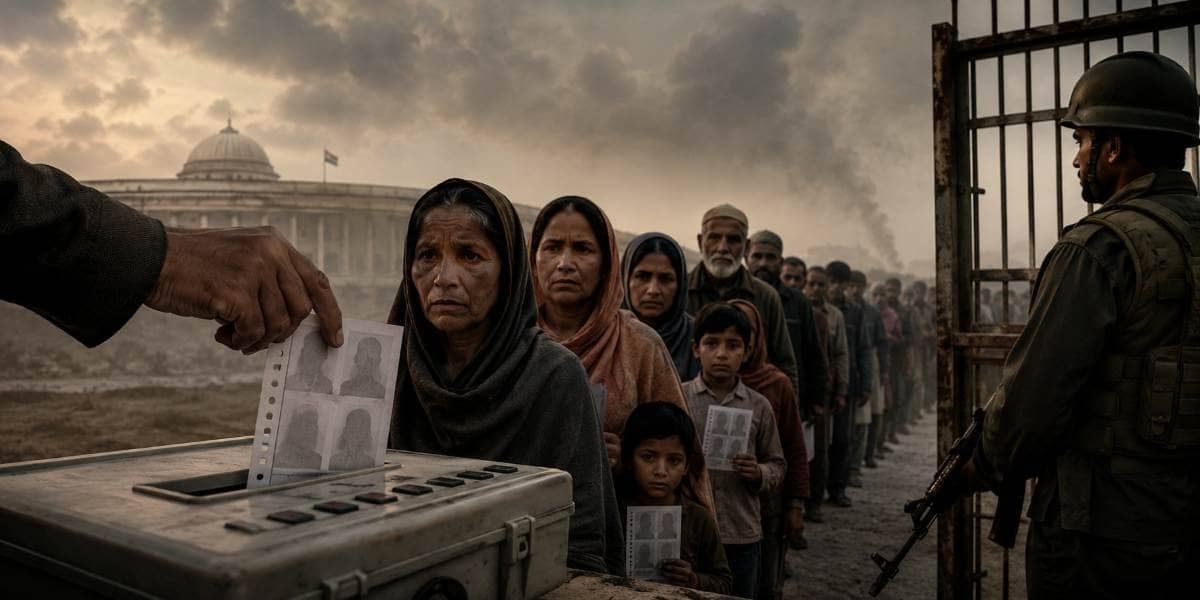
Image | Only Representative
Key Takeaways
1 of 3
Automatically generated. Read full article for complete context.
Modern democracies rarely deteriorate through abrupt constitutional collapse. More often, democratic erosion proceeds through administrative procedures that appear neutral, technical, and legally justified while producing deeply unequal political consequences. The Election Commission of India’s (ECI) recent Special Intensive Revision (SIR)Special Intensive RevisionAn exercise conducted by the Election Commission to update electoral rolls by adding new voters and removing duplicates or ineligible names. of electoral rolls in Bihar, and its subsequent expansion to other states, has emerged as a significant site for examining the relationship between citizenship, nationalism, and political exclusion. Although officially justified as an exercise to ensure the “purity” and accuracy of electoral rolls, the SIR has generated widespread concern regarding the disproportionate marginalization of vulnerable communities, particularly Muslims, migrants, women, and economically disadvantaged populations (Election Commission of India, 2025; Supreme Court proceedings reported in Supreme Court Observer, 2025).
The controversy surrounding the SIR is not merely administrative. It reflects a deeper transformation in the nature of citizenship itself. The central question is no longer who possesses constitutional rights, but who can continuously prove eligibility to exercise them. Citizenship increasingly functions not as a guaranteed constitutional status but as a documentary condition subject to bureaucratic verification.
The scale of the Bihar revision exercise was unprecedented. According to official electoral data released after the completion of the SIR process, the electoral roll declined from approximately 7.89 crore voters to about 7.42 crore voters, resulting in the deletion of nearly 47 lakh names. Earlier draft revisions had reportedly excluded around 65 lakh voters pending verification and objections (Times of India, 2025; Economic Times, 2025). While the Election Commission attributed these deletions to duplication, migration, deaths, and ineligibility, opposition parties and civil society groups questioned both the methodology and the social consequences of such large-scale exclusions.
Impact of the Special Intensive Revision in Bihar
👥Pre-Revision
7.89 Cr
Total registered voters before the SIR process.
⚠Deleted
-47 Lakh
Net names removed (initial draft excluded ~65 lakh).
🗳Post-Revision
7.42 Cr
Final electoral roll upon completion in Sept 2025.
VISUALS BY THE RIFT
SOURCE: ELECTION COMMISSION OF INDIA
The political significance of these figures lies not merely in their magnitude but in their demographic implications. Reports from civil society organizations and electoral monitoring groups suggested that Muslim-majority districts in Bihar’s Seemanchal region, including Kishanganj, Katihar, Araria, and Purnea, experienced unusually high levels of deletions and objections during the revision process. Although the ECI has consistently denied maintaining religion-based voter data and rejected allegations of communal targeting, the concentration of exclusions in socio-economically vulnerable and Muslim-concentrated regions intensified public apprehension regarding selective disenfranchisement (The Wire, 2025; Quintillion Media, 2025).
These concerns become more significant when viewed alongside the broader trajectory of citizenship verification in India. The most notable precedent remains Assam’s National Register of Citizens (NRC)National Register of CitizensA register maintained by the Government of India containing names and certain relevant information for the identification of Indian citizens.. The final NRC list published on 31 August 2019 excluded 19,06,657 individuals from the citizenship register out of approximately 3.3 crore applicants (Office of the State Coordinator, NRC Assam, 2019; Indian Express, 2019). While exclusion affected multiple communities, the political discourse surrounding the NRC was overwhelmingly shaped by narratives of “illegal infiltration,” often directed toward Bengali-speaking Muslims. The NRC process consequently produced widespread anxiety among marginalized populations who were compelled to repeatedly establish documentary proof of belonging.
From a theoretical perspective, these developments reflect what Michel Foucault (1991) conceptualized as governmentalityGovernmentalityA concept by Michel Foucault describing how modern states exercise power through administrative classification, surveillance, and bureaucratic regulation.—the exercise of power through administrative classification, surveillance, and bureaucratic regulation rather than overt coercion. Modern states increasingly govern through databases, identity documents, verification systems, and statistical categorization. Such mechanisms appear politically neutral because they operate through technical procedures. Yet their consequences are profoundly political because they determine who becomes visible, legitimate, and recognizable to the state.
The contemporary Indian experience also illustrates the emergence of what may be termed documentary citizenship. Classical democratic theory treats citizenship as a foundational legal status from which rights emerge. Contemporary verification regimes reverse this relationship. Rights become conditional upon successful documentation. Citizens are not presumed to belong; they must continually demonstrate that they do. The burden of proof shifts from the state to the individual.
Rights become conditional upon successful documentation. Citizens are not presumed to belong; they must continually demonstrate that they do.
This phenomenon is neither historically unique nor unprecedented. Comparative political history demonstrates that nationalist state-building projects have often employed bureaucratic and legal mechanisms to redefine political membership.
In Sri Lanka, the Ceylon Citizenship Act of 1948 denied citizenship to a vast majority of Indian Tamil plantation workers. Although they constituted nearly 11 percent of the population, only about 5,000 qualified for citizenship under the law, while more than 700,000 were rendered effectively stateless (Kanapathipillai, 2009; Ceylon Citizenship Act records; Senevirathne, 2024). The legislation was formally legal but politically exclusionary, linking citizenship to majoritarian definitions of national belonging.
Similarly, Nazi Germany’s Nuremberg Laws of 1935 transformed German Jews from citizens into subjects of racial classification through documentary and legal mechanisms. Exclusion began not with mass violence but through bureaucratic redefinition of citizenship and belonging (Evans, 2005).
Myanmar’s 1982 Citizenship Law institutionalized the exclusion of the Rohingya by linking citizenship to officially recognized ethnic categories, ultimately producing one of the largest contemporary populations of stateless people (Human Rights Watch, 2020).
In each case, exclusion was first normalized through administrative categorization before becoming embedded in broader structures of political marginalization.
India is neither Nazi Germany nor Myanmar, and historical comparisons should never be employed simplistically. However, comparative political sociology reveals a recurring lesson: when citizenship becomes tied to ideological notions of national authenticity, minorities disproportionately bear the burden of proving belonging.
When citizenship becomes tied to ideological notions of national authenticity, minorities disproportionately bear the burden of proving belonging.
The contemporary debate over electoral revision therefore raises a deeper epistemological concern. Civic nationalism conceives citizenship as a shared political identity grounded in equal constitutional membership. Ethnic or majoritarian nationalism, by contrast, increasingly links citizenship to cultural, religious, or civilizational identity. The danger emerges when administrative institutions begin operating within a political environment shaped by majoritarian understandings of nationhood. Under such conditions, bureaucratic verification ceases to be merely administrative; it becomes a mechanism through which national belonging is selectively negotiated.
The challenge before India is therefore larger than electoral rolls. It concerns the future character of the Republic itself.
If India seeks to preserve its constitutional commitment to pluralism, democratic inclusion must remain central to the nation-building project. Electoral integrity cannot be pursued at the expense of political equality. Administrative efficiency cannot substitute constitutional justice.
Several policy correctives are therefore necessary.
First, all future intensive electoral revision exercises should be subjected to independent parliamentary and judicial oversight to prevent arbitrary exclusions.
Second, voter identity cards, Aadhaar-linked records, and previously verified electoral registrations should retain presumptive validity unless substantial contrary evidence exists.
Third, electoral verification exercises should be accompanied by publicly available demographic impact assessments and independent social audits.
Fourth, robust appeals mechanisms must be institutionalized so that no citizen loses voting rights without meaningful due process and adequate opportunities for correction.
Fifth, the Election Commission should publish anonymized and disaggregated data regarding deletions, objections, reinstatements, and district-level outcomes to strengthen transparency and public trust.
India needs a renewed commitment to constitutional patriotism, emphasizing equal citizenship over religious majoritarianism. True nation-building ensures that every citizen, regardless of identity, experiences dignity. The effectiveness of democracy is measured by its protection of the vulnerable, not by exclusion. The future of Indian democracy hinges on institutions promoting inclusion rather than filtration, making the SIR debate crucial for defining belonging in this diverse nation.
Disclaimer:The views and opinions expressed in this article are those of the author(s) and do not necessarily reflect the official policy or position of The Rift.
*CitizenshipCitizenship CrisisDemographic ExclusionElectoral Roll RevisionIndian DemocracyMinority RightsNRC AssamVOTER DELETION