Opening The Rift
therift
© 2026 The Rift. All Rights Reserved.
On the familiar burden of sanskar and the nation’s favourite guilt-trip
Forgiveness only works as a gift if you’ve accepted that the giver had the right to withhold it. That’s not softness, that is patriarchy in softness’s clothing.

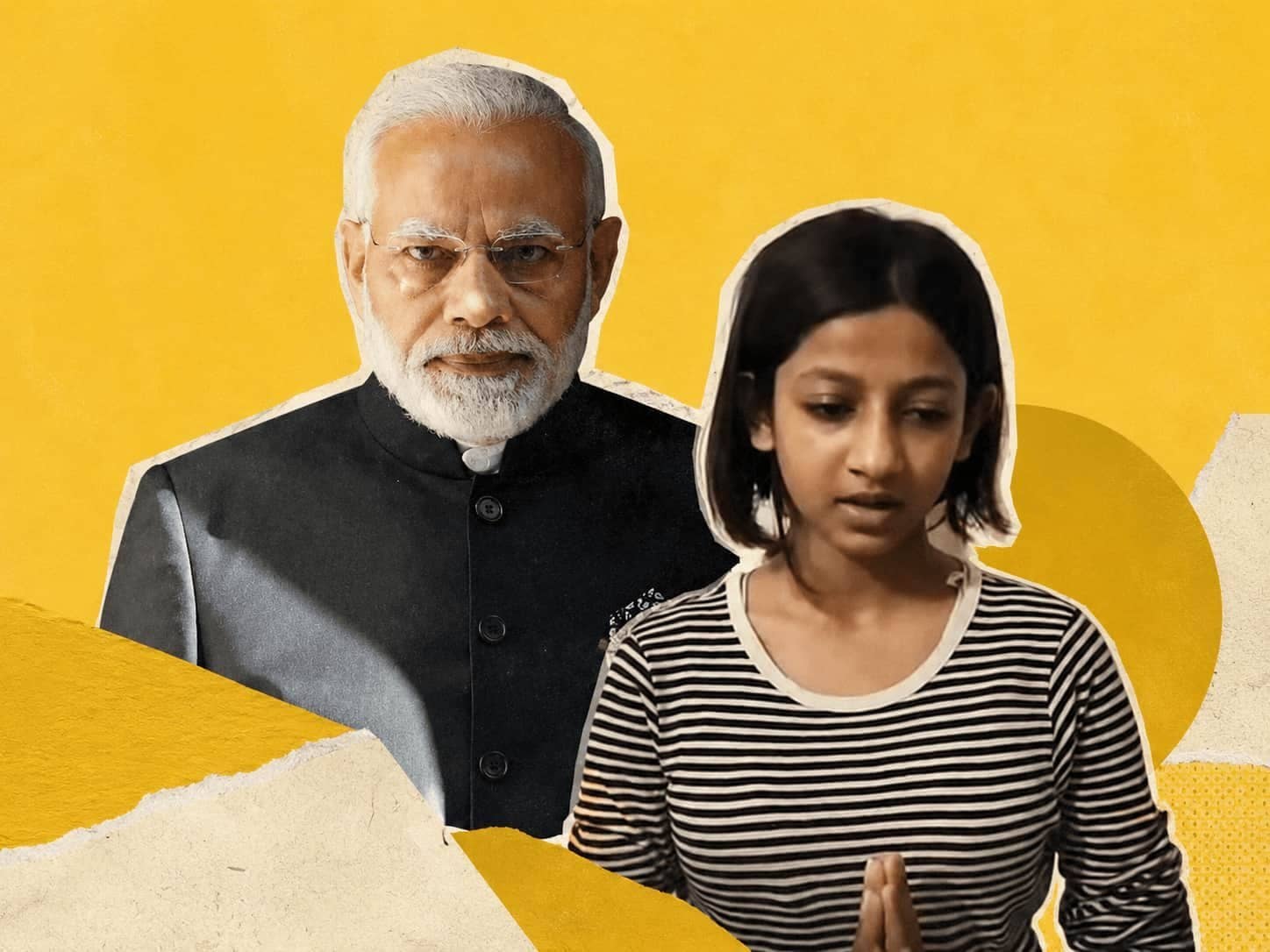
The weight of cultural expectations and guilt in modern society (Representative Image)
Key Takeaways
1 of 3
Automatically generated. Read full article for complete context.
The Prime Minister posted a reel late on a Friday night. India’s biggest youth uprising in years was still unfolding outside his window. He picked up his phone, softened his voice, and forgave the nation’s daughters for speaking out of turn.
Betiyan (Daughters). I sat with that word for a while. An entire political movement, students furious about a rigged exam, a jobless future, a government that had stopped listening—got shrunk down to one family scene. Girls who forgot their manners; a father generous enough to let it slide.
That word is carrying the whole video. Once you see it, you can’t unsee it. This was never about grace. It’s the old reflex: hand women the job of guarding a nation’s respectability, then act scandalized when they’d rather be furious.
What actually happened
A national entrance exam leaked, and two million students had to retake it. That fury turned into a movement organized loosely around an Instagram-born group called the Cockroach Janta Party. At Jantar MantarHistoric Protest SiteAn astronomical observatory in Delhi, India, which has also become a prominent and recognized site for public protests and demonstrations., things turned ugly. Police used tear gas on unarmed students and, according to some accounts, lead pellets. Students across the country joined in. The Education Minister resigned under pressure. Then the state responded—not with policy, but with an FIR..
A young woman, named in reports as Ruchika Singh, was booked by Noida police over things she said at the protest. Her age became its own small scandal: the police paperwork said 25, her tearful apology video said 15. A stranger dug through her Instagram and tracked down where she worked just to build the case. She works at a salon in Sector 8. She’d bought a flat in Noida a few months earlier; it sat locked and empty while the case against her moved to Delhi Police.
The forgiveness, in other words, was never asked for.
Daughters and not sons
But here’s where the hypocrisy comes in: young men were right there too—just as loud, just as crude. Nobody called that a ‘cultural shock’. A young man swearing at a protest is noise, but a young woman doing the same becomes a witch hunt—a referendum on the country’s morals.
This is how deep the roots of patriarchy run in our culture. Partha ChatterjeeIndian Political TheoristA renowned Indian political theorist, historian, and postcolonial scholar, known for his influential work on nationalism, civil society, and subaltern studies. writes about this exact dilemma in Indian Nationalism: the independence movement split the project of nation-building into two zones. An outer one that pragmatically adopted Western administrative and technological systems to build a sovereign state; and an inner realm of religion, language, and family life—the cultural home as a moral space to be protected from colonial interference. Willingly or not, women were assigned to guard the inner one. Their conduct became proof that the culture hadn’t been corrupted, no matter what else changed. Men got to move with the times, while women had to be the ones being protected. Nira Yuval-DavisSociologist and Feminist ScholarA prominent sociologist and feminist scholar, known for her extensive work on gender, nation, nationalism, and racism, particularly her theories on women as symbolic carriers of national honor., in Gender and Nation, makes the same point: women are treated as symbols in almost every national imagining, carriers of an invisible burden called honour, without ever signing up for the job.
Modi didn’t say his feelings were hurt; that would have trivialized it. He called it a ‘cultural shock’ that ‘daughters’ were talking that way. And Ruchika didn’t apologise to Modi; hands folded, eyes down, it was the entire country she apologised to. Nobody apologizes to a nation over shouting at a protest unless they’ve already been cast as representing it, and the apology was for the discomfort of a patriarchal setup failing at that representation.
The problem with being forgiven
Forgiveness only works as a gift if you’ve accepted that the giver had the right to withhold it. Modi didn’t drop the case against Ruchika, nor did he do anything to rein in a legal system that moves fast on ‘hurt feelings’ and slow on actual harassment. He decided, from his own authority, that the ‘daughters’ would be let off this time. That’s not softness; that is patriarchy in softness’s clothing. A father doesn’t need to change the house rules; he just needs everyone to keep believing the rules are his to bend.
CJP’s founder, Abhijeet Dipke, made a sharper point: ruling-party-aligned accounts have spent years hurling vicious abuse at women online, and almost none of it becomes a police case. No FIRs. No forgiveness reels, because it was never treated as serious enough to need forgiving in the first place. One young woman yells at a protest, and it becomes a national morality tale.
This isn’t an argument for excusing abuse. Insulting someone’s dead mother isn’t a feminist statement. It is an attempt to point out the hypocrisy: the same insults, when uttered from a young woman’s mouth, run through a different machine. A political protest becomes cultural ‘pearl-clutching’. One angry moment becomes a national scandal requiring a folded-hands apology and a Prime Minister’s mercy.
It’s time to ask why this nation’s ‘daughters’ were ever put in charge of its dignity to begin with.
Disclaimer:The views and opinions expressed in this article are those of the author(s) and do not necessarily reflect the official policy or position of The Rift.