Opening The Rift
therift
© 2026 The Rift. All Rights Reserved.
Hear ! Hear !! See How Great We Are !!!
When government advertising shifts from citizen-centric dissemination to political brand-building and personal image promotion, it undermines public interest.

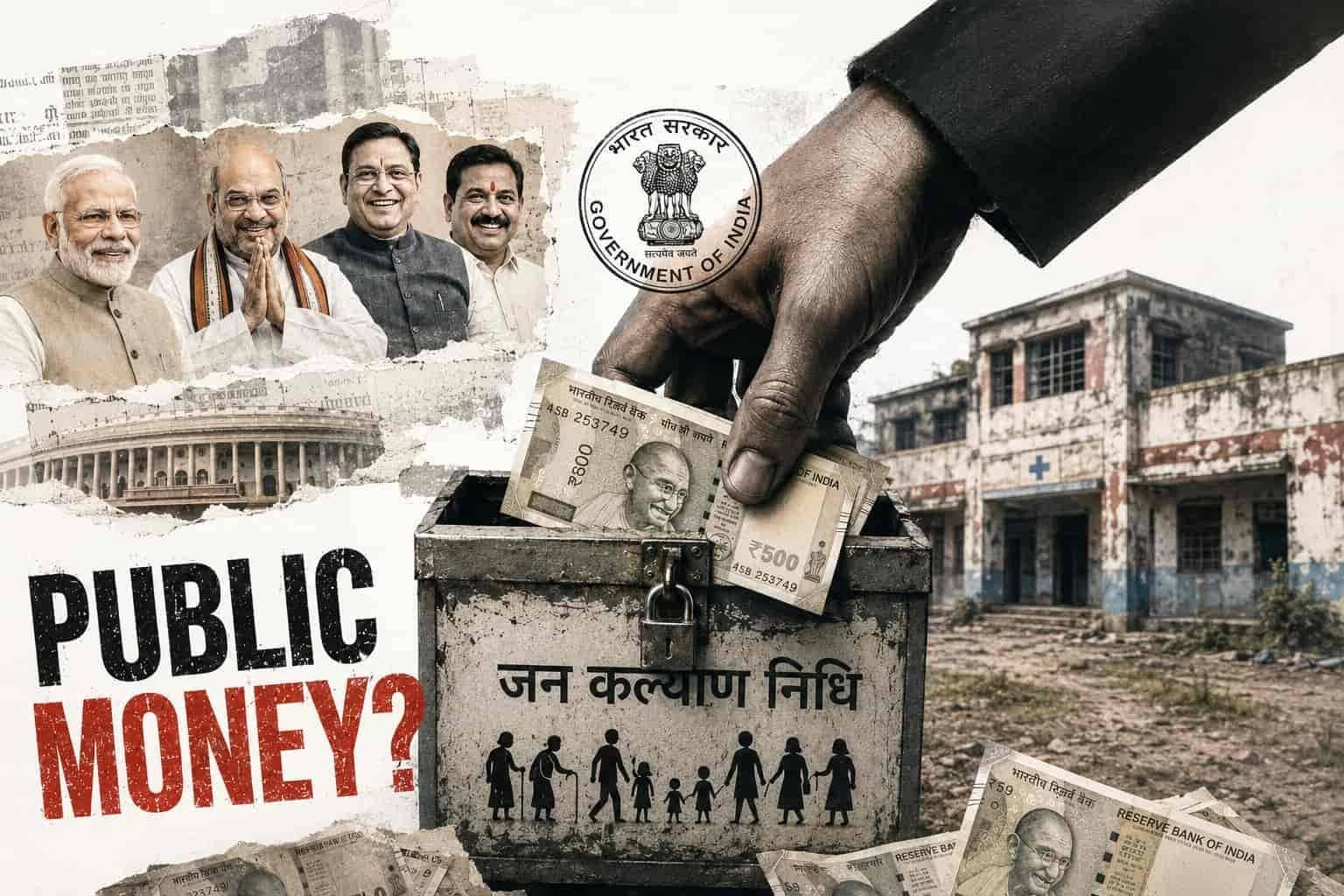
A moment of triumph and celebration, highlighting outstanding accomplishments (Representative Image)
Key Takeaways
1 of 3
Automatically generated. Read full article for complete context.
Self-Aggrandizement at public expense has come to stay despite judicial precedents, fiduciary duty, and executive liability in government advertisement spending. No one cares, and we see no suo motu questions raised by the Constitutional Courts.
Abstract
State spending on public communications is nominally justified as a means to inform citizens about welfare schemes, statutory rights, and policy updates. However, when government advertising shifts from citizen-centric dissemination to political brand-building and personal image promotion, it undermines public interest.
This article examines the legal and constitutional dimensions of public ad expenditure in India. Drawing on constitutional mandates, administrative law doctrines, and landmark rulings of the Supreme Court of India—most notably Common Cause v. Union of India (2015)—it argues that deploying public funds for political self-aggrandizement constitutes an arbitrary exercise of executive power, a violation of the Public Trust Doctrine, and a actionable breach of fiduciary duty that exposes decision-makers to legal liability.
1. Introduction: The Scale and Shift in Public Communication
Government advertising through centralized bodies such as the Central Bureau of Communication (CBC) (formerly DAVP) and state publicity departments consumes thousands of crores of taxpayer funds annually. While public outreach is essential for a functioning democracy—ensuring citizens know how to access entitlements, public health advisories, and disaster alerts—a substantial portion of these budgets is diverted toward self-congratulatory campaigns.
Such expenditures often feature:
- Large-format photo spreads of political leaders preceding election cycles.
- Full-page print advertisements detailing political achievements rather than public utility instructions.
- Multi-media “brand-building” campaigns funded entirely from the public exchequer.
This practice creates a systemic distortion: the state exchequer is leveraged to fund partisan publicity, tilting the political playing field while starving essential welfare services of capital.
2. Supreme Court Jurisprudence on Government Advertising
The Indian judiciary has repeatedly held that executive power over the public purse is bounded by Article 14 (Equality and Non-Arbitrariness) and Article 21 (Right to Life and Fair Governance).
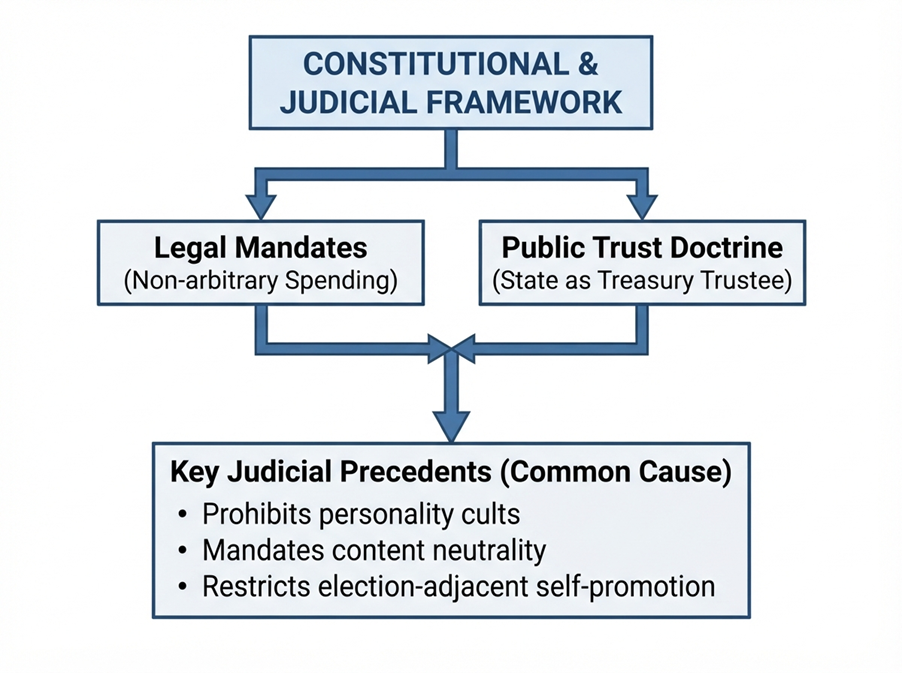
A. The Non-Arbitrariness Standard
- Ramana Dayaram Shetty v. IAAI (1979) & Kasturi Lal Lakshmi Reddy v. State of J&K (1980): The Supreme Court established that state discretion in allocating public resources or spending money must satisfy the test of reasonableness and public interest. Any expenditure lacking a discernable public purpose is prima facie arbitrary and unconstitutional.
- Shrilekha Vidyarthi v. State of U.P. (1991): The Court affirmed that state actions—even in contractual or administrative domains—must be free from arbitrariness, as the state acts exclusively for the benefit of the public.
B. The Landmark Ruling: Common Cause v. Union of India (2015)
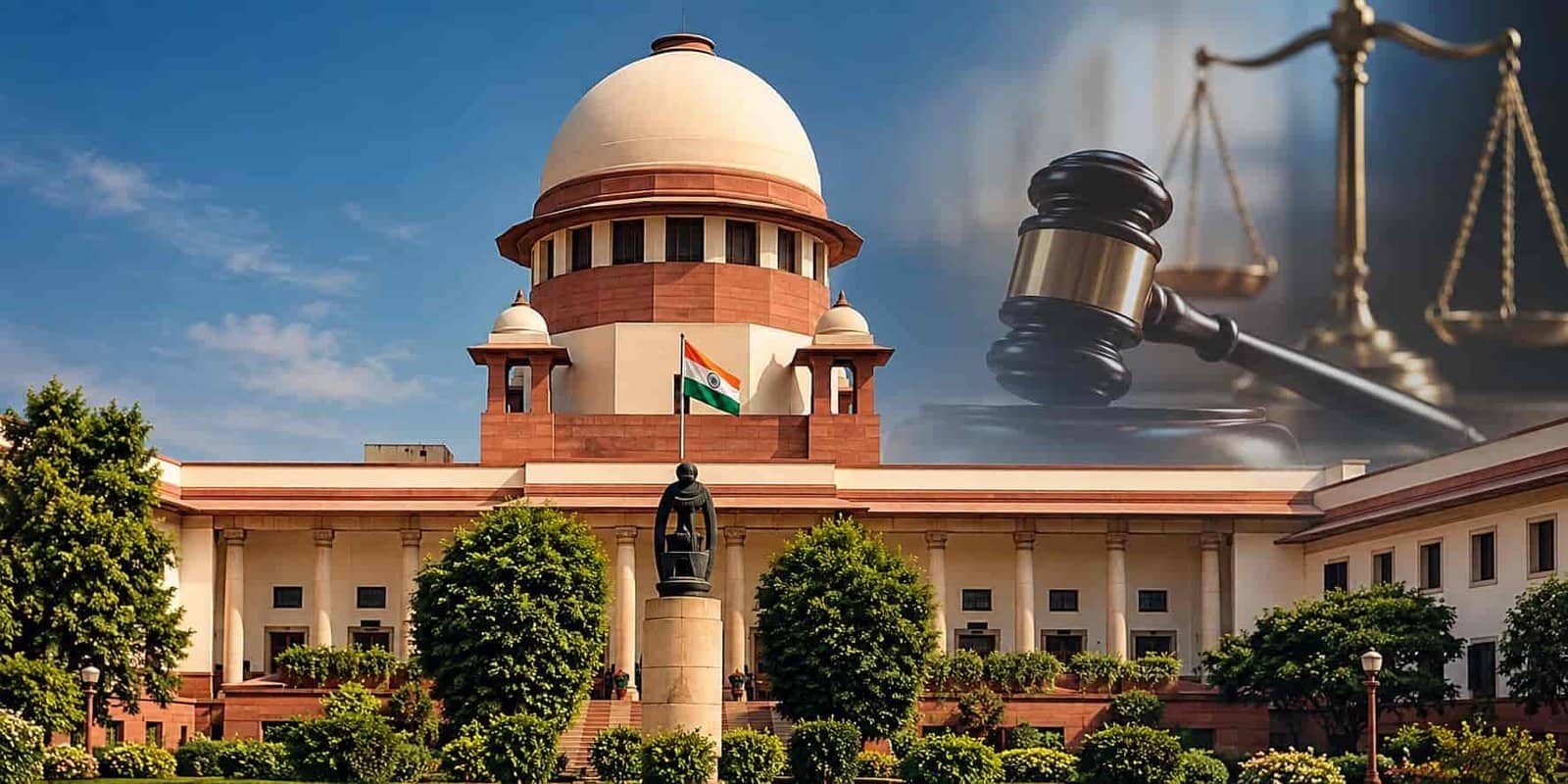
In Common Cause v. Union of India (2015) 7 SCC 1, the Supreme Court directly addressed the misuse of public funds for political advertising. The Court observed that taxpayer money cannot be utilized to build “personality cults” or advance partisan political interests.
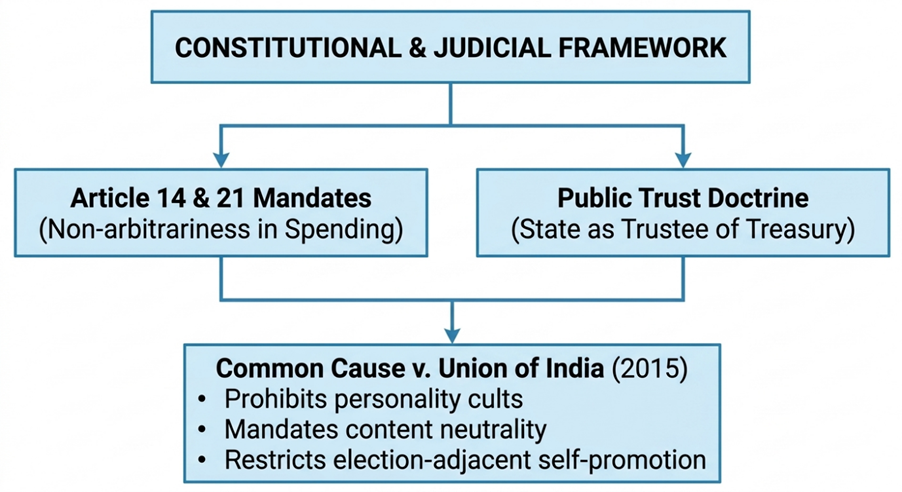
Key directives laid down by the Supreme Court include:
- Objectivity and Neutrality: Advertisements must be presented in a fair, balanced, and objective manner, addressing the information needs of citizens rather than political agendas.
- Prohibition of Personal Image Building: Photos of ministers and political leaders were generally banned, with strict exceptions (such as the Prime Minister, President, Chief Justice of India, and Chief Ministers), to prevent image-branding at state expense.
- Proximity to Elections: Government campaigns shortly before elections were flagged as a potential misuse of public funds to gain unfair electoral advantages.
- Institutional Mechanism: The Court mandated the creation of a three-member regulatory body—the Committee for Content Regulation in Government Advertising (CCRGA)—to monitor compliance and adjudicate complaints.
3. The Public Trust Doctrine and Fiduciary Duty
The legal case against self-aggrandizing government advertising rests on the Public Trust Doctrine and fiduciary principles in public law.
The State as a Fiduciary
Under traditional trust law, a fiduciary must act strictly in the interest of the beneficiary and is prohibited from profiting from the trust position or creating a conflict of interest. Applied to public law:

In M.C. Mehta v. Kamal Nath (1997) 1 SCC 388, the Supreme Court formally imported the Public Trust Doctrine into Indian jurisprudence, ruling that the State is a trustee of all natural and public resources, holding them for the collective enjoyment of the citizenry.
By extension, the public exchequer is a public trust asset. When policy makers authorize expenditure on political self-promotion:
- They divert trust funds from public welfare to private political capital.
- They create an irreconcilable conflict of interest, spending public money to secure personal or political reelection.
- They breach the fundamental obligation of a fiduciary to act exclusively for the beneficiary (the public).
4. Legal Exposure and Accountability for Policy Makers
Expenditures made in clear violation of judicial guidelines and fiduciary obligations do not merely represent bad policy; they create grounds for legal liability for the decision-makers involved.
| Mechanism of Legal Action | Legal Basis / Precedent | Potential Consequence |
| Surcharge & Personal Recovery | Executive spending without statutory or valid public purpose (Civil Administrative Law) | Civil recovery of spent funds directly from the personal assets of responsible ministers/officials. |
| Tort of Misfeasance in Public Office | Common Law Tort (Lucknow Development Authority v. M.K. Gupta, 1994) | Damages awarded against public officers acting with bad faith or willful disregard of law. |
| Criminal Misconduct / Misappropriation | Section 13(1)(d), Prevention of Corruption Act, 1988 & IPC/BNS provisions | Prosecution for abusing official position to obtain a valuable advantage (e.g., political leverage/brand value). |
| Judicial Audit & CAG Scrutiny | Article 148–151 of the Constitution | Adverse CAG findings leading to PAC (Public Accounts Committee) summons and legislative surcharge. |
A. The Tort of Misfeasance in Public Office
Where public officials deliberately bypass Supreme Court guidelines (e.g., via the CCRGA) to approve self-promotional publicity campaigns, their actions fulfill the criteria for Misfeasance in Public Office:
- Exercise of power as a public officer.
- Knowledge that the act is targeted to achieve an unauthorized purpose (political branding over public instruction).
- Resulting loss to the public exchequer.
In Lucknow Development Authority v. M.K. Gupta (1994) 1 SCC 243, the Supreme Court held that when public officers act arbitrarily or maliciously, causing loss to the state or public, the compensation can be recovered directly from the pocket of the erring officer.
B. Personal Surcharge Procedures
Under state and central financial rules, expenditures that are ultra vires or incur loss due to negligence or deliberate violation of constitutional standards are subject to surcharging. Applying this principle to advertising:
- If an ad campaign is found by a court or ombudsman to violate Common Cause guidelines, the expenditure lacks lawful authority.
- The funds spent can be declared an unauthorized diversion, making the sanctioning authority personally liable to reimburse the treasury.
5. Conclusion: A Path Toward Strict Enforcement
Government advertising designed for self-aggrandizement represents a structural erosion of constitutional governance. By spending taxpayer funds to construct personal or party brands, policy makers violate the principle of non-arbitrariness under Article 14 and breach their fiduciary duty as trustees of the public treasury.
To enforce actual accountability, the legal and institutional framework must evolve beyond mere content guidelines:
- Binding Personal Recovery: Granting statutory powers to bodies like the CCRGA or Comptroller and Auditor General (CAG) to order direct financial recovery from political sanctioning authorities for non-compliant campaigns.
- Mandatory Third-Party Audits: Requiring pre-campaign certification for any government ad budget exceeding a specified threshold during non-emergency periods.
- Judicial Enforcement: Encouraging Public Interest Litigations (PILs) that specifically seek personal surcharge and damages against decision-makers under the doctrine of Misfeasance in Public Office.
Only when public officials face real financial and personal legal liabilities will the public treasury be protected from partisan exploitation.
Jai Hind
Disclaimer:The views and opinions expressed in this article are those of the author(s) and do not necessarily reflect the official policy or position of The Rift.