Opening The Rift
therift
© 2026 The Rift. All Rights Reserved.
When the State Fears a Protester: Delhi Police Must Answer
The real test of democracy is not how the State treats those who support it. The real test is how it treats those who stand on the other side of the barricade.

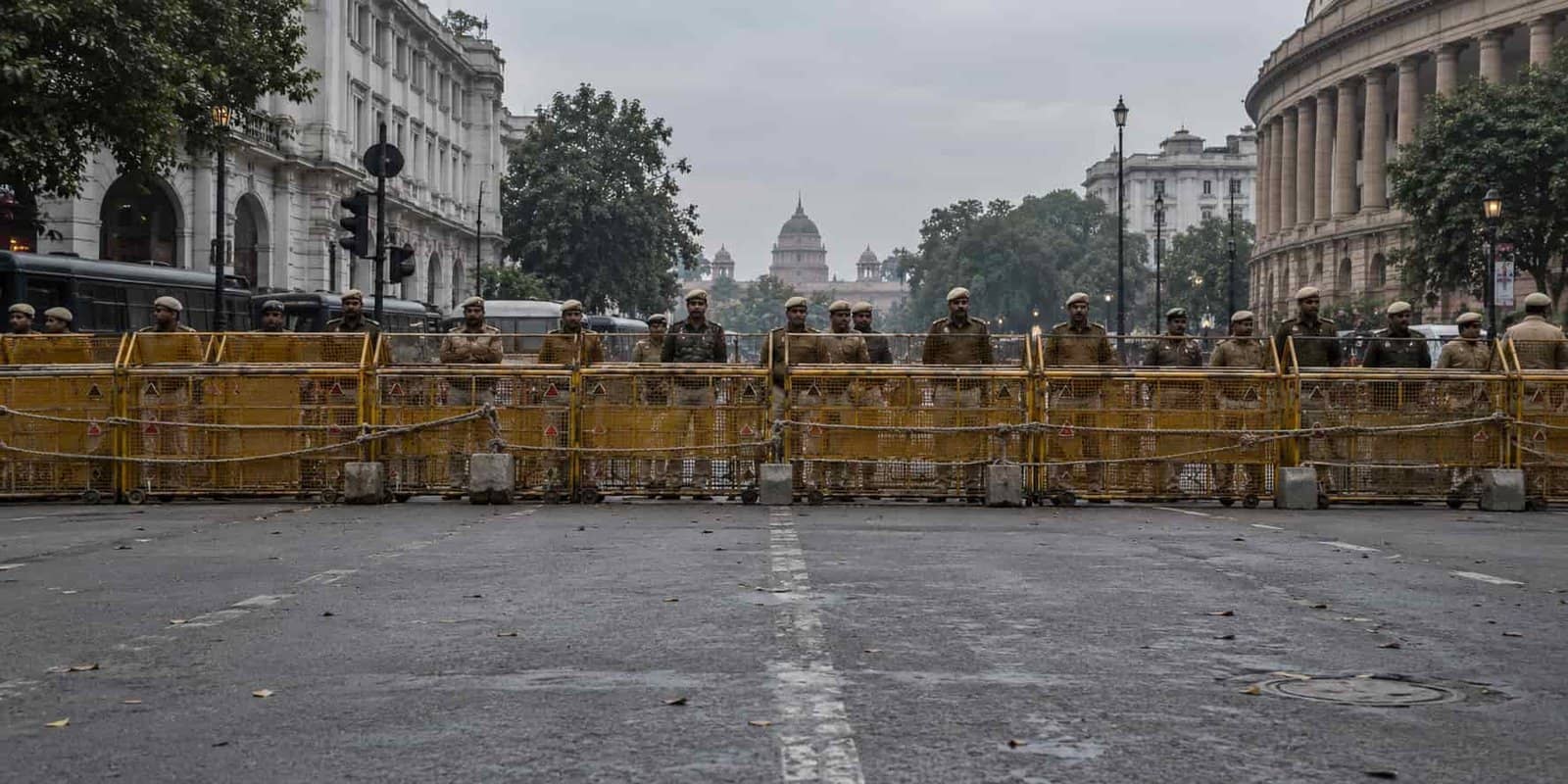
(Representative Image)
Key Takeaways
1 of 3
Automatically generated. Read full article for complete context.
What exactly is wrong with citizens protesting against the Chief Election Commissioner? This should be the starting point of any discussion for the Delhi Police action on 2 October. The protesters were raising questions about the functioning of the Chief Election Commissioner and demanding accountability. They were not attacking the Constitution. They were not attacking the Election Commission as an institution. They were exercising the most basic democratic act available to a citizen—standing together and saying, “We disagree.”
Yet the response was police force, barricading and detention. And that is where the real constitutional concern begins.
Let us be absolutely clear: the police have every right, and indeed a duty, to act when a protest becomes violent, when public property is damaged, when police personnel are attacked or when there is a genuine and immediate threat to public safety. No one is arguing for an unrestricted right to create chaos in the capital. But using force against peaceful protesters is totally unacceptable. The police cannot treat peaceful dissent as a law-and-order threat merely because the subject of the protest is politically or institutionally sensitive.
The Delhi Police has relied upon Section 163 of the Bharatiya Nagarik Suraksha Sanhita. But the invocation of a statutory provision cannot end the constitutional inquiry. Section 163 is a power to prevent a specified threat to public order; it is not a licence to suppress inconvenient political expression. The public is entitled to know what material justified the order, what precise threat was anticipated, why less restrictive measures were insufficient and why citizens attempting to reach a recognised protest location had to be stopped and detained.
The same question arises with the invocation of Section 223 of the Bharatiya Nyaya Sanhita. If a lawful order has been duly promulgated and knowingly violated, the law can certainly take its course. But the existence of an order cannot transform every protester into an offender. The police must distinguish between someone who commits violence and someone who merely raises a slogan, carries a placard or stands peacefully with fellow citizens. Individual liberty cannot disappear behind a blanket police action.
And then there is Jantar Mantar.
For decades, Jantar Mantar has been associated with public demonstrations. It exists, in large part, because a democracy needs a physical space where citizens can bring their grievances into the public domain. The Supreme Court has also dealt with the regulation of demonstrations at Jantar Mantar and recognised the need to balance public order with the fundamental right to protest.
Therefore, the question is not whether the police can regulate a demonstration. Of course they can. The question is whether regulation has now become a convenient method of preventing dissent altogether.
If citizens cannot reach a recognised protest site because the subject of their protest is considered inconvenient, then what exactly remains of the right to peaceful assembly?
There is an even more uncomfortable institutional question. Delhi Police is under the administrative control of the Union Government through the Ministry of Home Affairs. This fact, by itself, does not establish that the Union Government directed the police to suppress this particular protest. That allegation requires evidence. But it does create an obvious need for transparency when the protesters are questioning the Chief Election Commissioner and the police functioning under the Union administrative structure are simultaneously preventing that protest.
The simplest way to remove suspicion is also the easiest: publish the order, publish the reasons, explain the detentions and account for the use of force.
Why was Section 163 imposed? What was the intelligence input? What specific threat was identified? Why could the protest not be regulated instead of stopped? Why were people detained? Under what precise legal provision was each person detained? Was force used against people who were peaceful? Who authorised that force?
These are not unreasonable questions. They are the minimum questions that citizens are entitled to ask when the State restricts their liberty.
The role of the Delhi Police Commissioner therefore deserves serious scrutiny. The Commissioner cannot simply stand behind the existence of a prohibitory order. Administrative responsibility does not end with issuing instructions. When police personnel use force against citizens, there must be accountability for how those instructions were implemented on the ground.
There is a dangerous tendency in India to reduce every protest to a question of “law and order”. It is an easy administrative response. A group of citizens gathers; the police arrive; barricades go up; prohibitory orders are issued; protesters are detained; and the entire matter is described as a security issue. But democracy cannot function if every expression of dissent is first converted into a policing problem.
The Government does not have to agree with the protesters. The Election Commission does not have to accept their allegations. The Chief Election Commissioner does not have to resign because a group of citizens demands it. But none of these institutions has a constitutional right to be protected from peaceful criticism.
The police protect people from violence. They should not protect public officials from criticism.
That distinction must never be lost.
The timing makes the episode even more uncomfortable. The action took place on 2 October, the birth anniversary of Mahatma Gandhi. Gandhi’s politics was built on the idea that citizens could challenge authority through peaceful resistance. Modern India is obviously not colonial India, and simplistic historical comparisons would be misplaced. Yet the symbolism is difficult to ignore. On the day India remembers the man whose politics made dissent a moral and political force, citizens were being stopped and detained while attempting to raise their voice against those in authority.
That should make every institution pause.
The question is not whether these protesters are right about the CEC. That is a matter for evidence, public debate and, where appropriate, judicial scrutiny. The question is whether a citizen should require the permission of the State before criticising a constitutional authority.
If the protest was genuinely peaceful, then the use of force demands an explanation.
If the authorities possessed credible information that violence was imminent, let that information be placed on record.
If individual protesters committed offences, prosecute those individuals according to law.
But do not blur the distinction between dissent and disorder.
That distinction is the foundation of constitutional democracy.
There is also a larger issue here. The Election Commission is one of the pillars of India’s electoral system. Its independence must be protected. But independence from executive interference does not mean immunity from public criticism. In fact, the more powerful and constitutionally important an institution becomes, the greater the need for transparency and public accountability.
A citizen saying “CEC must resign” is not an attack on the Republic.
A citizen questioning the Election Commission is not an enemy of democracy.
A protest against a constitutional functionary is not, by itself, a threat to constitutional government.
The State must learn to distinguish between opposition and violence.
And if it cannot, then the problem is not with the protesters.
It is with the way power is being exercised.
The courts should therefore examine the complete record: the Section 163 order, the material relied upon for issuing it, the restrictions imposed, the circumstances of the detentions, and the manner in which force was used. The question before the judiciary should not merely be whether the police possessed statutory powers. The deeper question is whether those powers were exercised lawfully, necessarily and proportionately.
Because in a constitutional democracy, having power and using power are two different things.
The State has the power to detain.
The State has the power to impose restrictions.
The State has the power to deploy police.
But the Constitution demands restraint in the exercise of all three.
A government that is confident of its institutions should not be frightened by a peaceful protest. A constitutional authority should be capable of answering criticism without requiring the police to silence the critic.
The real test of democracy is not how the State treats those who support it. The real test is how it treats those who stand on the other side of the barricade.
On 2 October, Delhi witnessed those barricades.
Now the Delhi Police must answer what justified them.
Disclaimer:The views and opinions expressed in this article are those of the author(s) and do not necessarily reflect the official policy or position of The Rift.