Opening The Rift
therift
© 2026 The Rift. All Rights Reserved.
ECOCIDE: Development under the shade of financial gain
Why the global movement to recognize ecocide as an international crime is gaining momentum and what it means for India’s Great Nicobar and beyond.

Key Takeaways
1 of 3
Automatically generated. Read full article for complete context.
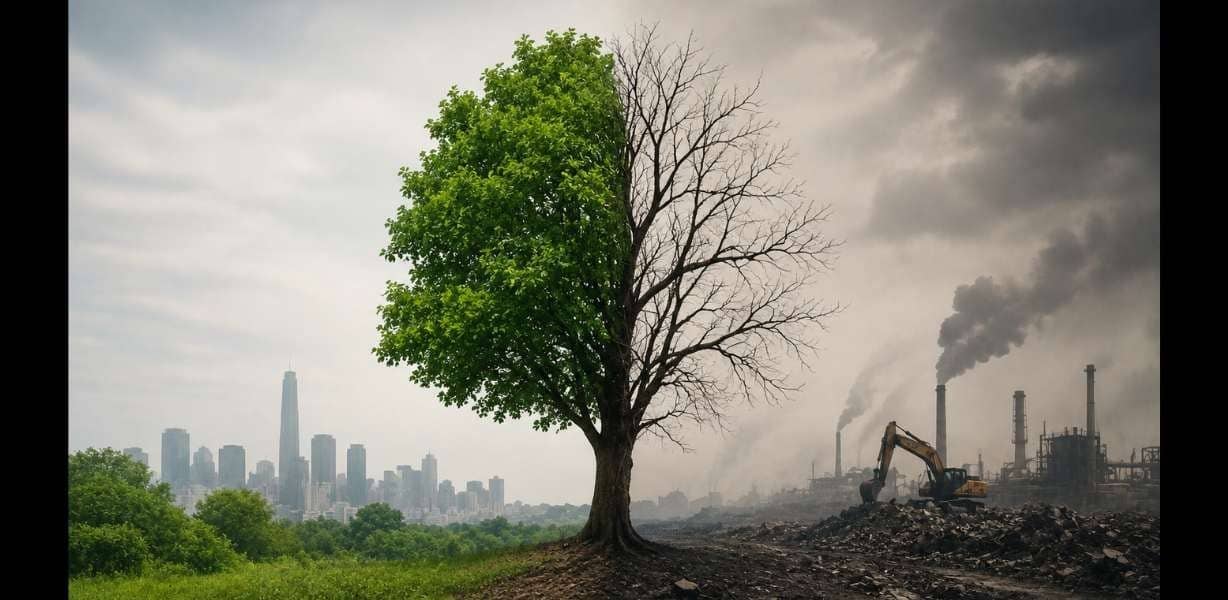
Somewhere right now, a forest is falling. Not to wildfire or drought, but to a boardroom decision — cleared, flattened, and re-zoned in the name of progress. The Greeks had a word for this kind of home: Oikos — meaning living environment, the root from which we get Eco. Attach the suffix -cide (to kill) and you arrive at a term, the 21st century can no longer afford to ignore Ecocide, the killing of one’s home. It is the unlawful act committed with the knowledge that it will cause severe and mass long-term damage to the environment and the world is finally beginning to treat it as a crime.
In September 2024, Pacific island nations Vanuatu, Fiji, and Samoa formally proposed an amendment to Article 5 of the Rome StatuteArticle 5 — Rome StatuteThe Rome Statute is the 1998 treaty that established the International Criminal Court. Article 5 lists the four ‘most serious crimes of international concern’ the ICC can prosecute: (a) Genocide, (b) Crimes against humanity, (c) War crimes, and (d) The crime of aggression. The proposal by Vanuatu, Fiji, and Samoa seeks to add Ecocide as a fifth crime under this article. to criminalise ecocide at the International Criminal CourtInternational Criminal Court (ICC)A permanent international tribunal established in 2002 and based in The Hague, Netherlands. The ICC prosecutes individuals for the most serious crimes of international concern such as genocide, war crimes, crimes against humanity, and the crime of aggression when national courts are unable or unwilling to do so. — the first proposal of its kind. In December 2025, the ICC Office of the Prosecutor released its Policy on Addressing Environmental Damage Through the Rome Statute, clarifying that environmental destruction can already be prosecuted as evidence for existing crimes such as genocide, crimes against humanity, and war crimes — even without a standalone ecocide charge. Separately, the Council of EuropeCouncil of EuropeAn international organisation founded in 1949, comprising 46 member states. It is distinct from the European Union (EU). The Council focuses on human rights, democracy, and the rule of law across the European continent, and is responsible for the European Convention on Human Rights. adopted the Convention on the Protection of the Environment through Criminal Law in May 2025, signalling a broader European shift toward treating ecological devastation as a criminal matter.
There is a mass global movement to recognise ecocide as the 5th International crime against peace, where it will be recognised as a crime alongside the other crimes like genocide, at the International Criminal Court.
The Great Nicobar Flashpoint
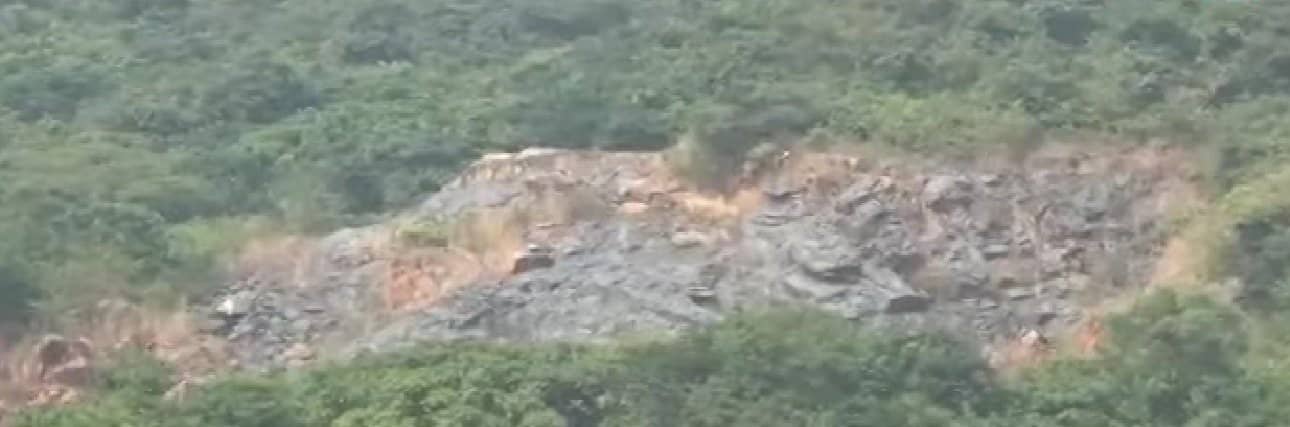
It gained momentum, emphasising how regional environmental issues (such as the Great Nicobar Development) are being used in the name of development to cause mass environmental destruction for economic gain. The Great Nicobar Development ProjectGreat Nicobar Development ProjectA mega-infrastructure initiative on Great Nicobar — the southernmost island of the Nicobar Islands archipelago. The island holds103,870 hectares of tropical evergreen forest. The project envisions a major transshipment port, an international airport, a power plant, and a greenfield township on this ecologically sensitive territory. — a mega-infrastructure initiative aimed at creating a major transshipment and economic hub — has become one of India’s most contentious environmental battles. The project involves the diversion of approximately 130.75 square kilometres of forest land in a UNESCO-designated biosphere reserveUNESCO Biosphere ReserveAn internationally recognised area designated under UNESCO’s Man and the Biosphere (MAB) Programme. These reserves are ‘learning sites for sustainable development’ — regions where conservation of biodiversity is balanced with its sustainable use. Great Nicobar was designated in 2013. that is home to over1,800 species, some endemic to the islands. Government estimates indicate that up to 7.11 lakh trees may be felled in phases, destroying pristine rainforests, fragmenting critical habitats of the endangered Nicobar megapodeNicobar MegapodeA rare, ground-nesting bird (Megapodius nicobariensis) found only in the Nicobar Islands. Unlike most birds, megapodes incubate their eggs using the heat of decaying vegetation or volcanic soil rather than body warmth. Listed as Vulnerable on the IUCN Red List., and threatening vital nesting sites of the giant leatherback sea turtle at Galathea BayGalathea BayA pristine bay on the southern tip of Great Nicobar Island and one of the largest nesting grounds in the Indian Ocean for the giant leatherback sea turtle — the world’s largest turtle species. The proposed transshipment port would be built directly on this site.. Critics have dismissed the government’s compensatory afforestationCompensatory AfforestationA legal requirement under India’s Compensatory Afforestation Fund Act (2016) mandating that when forest land is diverted for non-forest use, an equivalent area must be afforested elsewhere. Critics argue this mechanism cannot replicate complex, centuries-old ecosystems like tropical rainforests. plans which propose planting replacement trees in other parts of India as inadequate, arguing that a complex tropical rainforest ecosystem simply cannot be replaced by plantations elsewhere. As of May 2026, political leaders and environmental groups have renewed demands for an immediate pause on the project to re-evaluate its impact, particularly regarding the rights of the indigenous ShompenThe ShompenAn aboriginal Mongoloid tribe of approximately 237 people who inhabit the interior rainforests of Great Nicobar Island. They are semi-nomadic hunter-gatherers and one of the most isolated indigenous communities in the world. The Great Nicobar project directly threatens their ancestral habitat. and Nicobarese communities.
India’s Constitutional and Legislative Response
The Supreme Court of India has formally recognised the ‘Right against the adverse impacts of climate change’ as a fundamental right, paving the way to ensure inter-generational justiceInter-generational JusticeThe ethical and legal principle that present generations have a responsibility to protect the environment and natural resources for the benefit of future generations ensuring that today’s development decisions do not irreversibly compromise the ecological inheritance of those who come after us. by holding both the State and the corporate polluters strictly liable. This recognition came through the landmark 2024 ruling in M.K. Ranjitsinh & Ors. v. Union of India & Ors.Climate Rights Jurisprudence in IndiaIn M.K. Ranjitsinh (2024), the Supreme Court explicitly recognised the right to be free from climate change as a fundamental right under Articles 14 and 21. This built on a lineage of environmental cases including Ridhima Pandey v. Union of India, where a nine-year-old climate activist petitioned the National Green Tribunal in 2017 demanding India honour its Paris Agreement commitments — one of the earliest youth-led climate cases in the world., where the Court explicitly held that the right to be free from the adverse effects of climate change is integral to the fundamental rights guaranteed under Articles 14 and 21 of the Constitution. The Court’s interpretation builds on decades of environmental jurisprudence — from Subhash Kumar v. State of Bihar to the Vellore Citizens Welfare Forum case — that has consistently held the right to a clean and healthy environment as part of the Right to Life.
At present, India does not have a specific law on ecocide. Instead, it relies on a fragmented patchwork of statutes : the Environment (Protection) Act, 1986, the Wildlife (Protection) Act, 1972, and the Forest (Conservation) Act, 1980 alongside oversight from the National Green TribunalNational Green Tribunal (NGT)A specialised judicial body established under the National Green Tribunal Act, 2010, for the effective and expeditious disposal of cases relating to environmental protection, conservation of forests, and enforcement of environmental legal rights. It is one of the few dedicated environmental courts in the world.. None of these frameworks treat severe environmental destruction as a distinct criminal offence. A private member’s bill, The Ecocide (Prevention and Accountability) BillEcocide Bill, 2025A private member’s bill introduced in the Rajya Sabha on December 5, 2025 by MP Sujeet Kumar. It defines ecocide as any unlawful or wanton act committed with knowledge of a substantial likelihood of severe, widespread, or long-term environmental damage. Key provisions include imprisonment starting at ten years, mandatory ecological restoration, and corporate criminal liability., was introduced in the Rajya Sabha on December 5, 2025 by Member of Parliament Sujeet Kumar. The Bill proposes to hold both individuals and corporations criminally liable, with penalties including imprisonment starting at ten years and mandatory obligations for ecological restoration and community compensation. It seeks to classify severe and long-term environmental degradation as a distinct criminal offence.
The Road Ahead
Both at the International and National levels, experts are advocating for ecocide laws because of the mass ecological disasters (like the Great Nicobar Development) in the name of development. With the ICC’s 2025 prosecutorial policy, Europe’s new criminal law convention, and India’s own private member’s bill now on record, the legal architecture for environmental accountability is slowly taking shape. Whether these instruments will mature into enforceable protections or remain aspirational — depends on the political will to prioritise ecological survival over short-term financial gain.
Disclaimer:The views and opinions expressed in this article are those of the author(s) and do not necessarily reflect the official policy or position of The Rift.