Opening The Rift
therift
© 2026 The Rift. All Rights Reserved.
Mother Mary Comes to Me: A Deep Dive into Arundhati Roy’s Memoir
This book is not merely a chronicle of personal recollections; it is the story of a woman’s consciousness, rebellion, loneliness, and relentless search for identity.

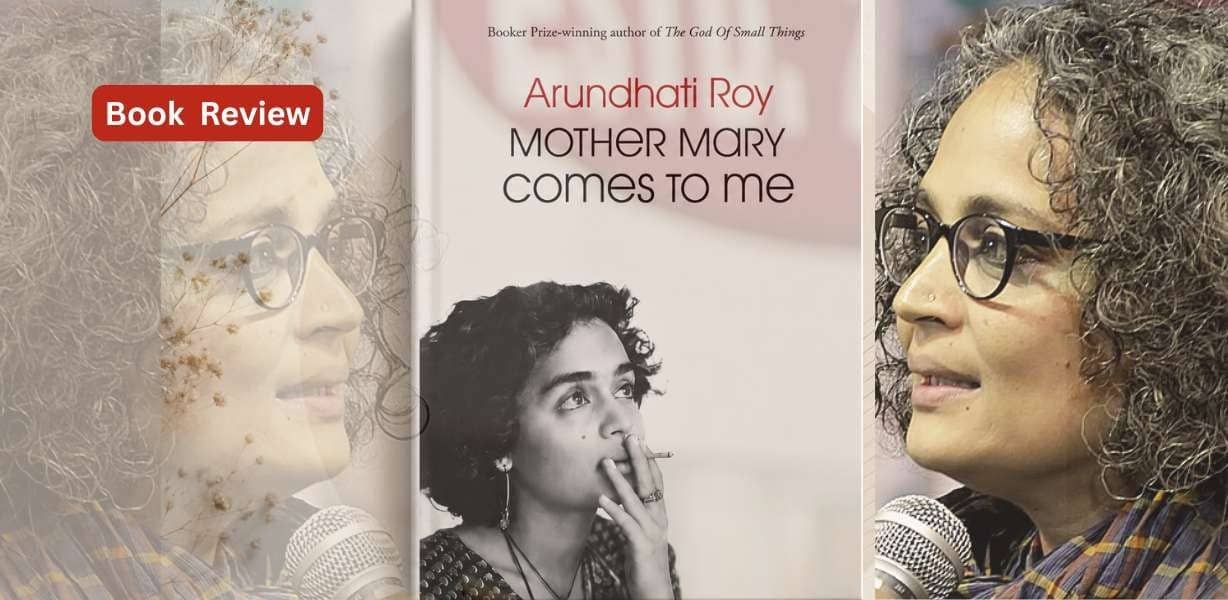
image via Wikimedia Commons
Key Takeaways
1 of 3
Automatically generated. Read full article for complete context.
Every work of literature is, in essence, an arrangement of meaningful words. Yet there are certain books that transcend the boundaries of mere narration and become the living echoes of human wounds, memories, and emotions. Mother Mary Comes to Me by Arundhati Roy is one such deeply affecting work, where the psychological turmoil of a daughter, the formidable personality of a mother, the fragility of relationships, and the harsh realities of society unfold simultaneously. This book is not merely a chronicle of personal recollections; it is the story of a woman’s consciousness, rebellion, loneliness, and relentless search for identity.
Arundhati was barely two years old when her mother, Mary Roy, separated from her husband and returned to her native Kerala with her two children. Mary Roy, a Syrian Christian woman battling chronic asthma, possessed an indomitableIndomitableImpossible to defeat, conquer, or subdue; unyielding. will and an unyielding spirit. She founded a school, fought fiercely for women’s rights, and carved a place for herself in a deeply conservative society. Growing up under the shadow of her mother’s stern temperament, Arundhati reached adolescence carrying the emotional scars. At sixteen, after completing school, she left for Delhi and enrolled at the School of Planning and Architecture. By the age of eighteen, she had severed ties with her family and stepped alone into the uncertainties of life.
The journey that followed was marked by struggle, reinvention, and survival. She abandoned her birth name, “Suzanna,” and slowly reshaped herself into a new identity. She drifted through odd jobs, searching for purpose and direction, until opportunities in cinema introduced her to acting and scriptwriting. Recognition eventually arrived when she won the National Award for Best Screenplay. Around 1992, an unpublished article she had written accidentally caught the attention of the editor of the widely read magazine, Sunday. “Who wrote this?” he reportedly asked. Like a child claiming ownership of a hidden treasure, Arundhati quietly raised her hand: “I did.” It was the beginning of her literary journey.

Then came 1997, when her celebrated novel The God of Small Things stormed the literary world and earned her the prestigious Booker Prize. Overnight, she became an internationally acclaimed writer. Fame did not soften her voice. Her pen moved like a sharpened blade, fearlessly confronting domestic injustice and global oppression through a long series of essays and non-fiction works. Two decades later, her second novel, The Ministry of Utmost Happiness, once again captivated readers across the world.
At the emotional core of this autobiography stands the mother, Mary Roy, an extraordinary, courageous, and profoundly complicated woman. She challenged the discriminatory inheritance laws1986 LandmarkMary Roy won a Supreme Court ruling securing equal property rights for Christian women in Kerala. of Kerala’s conservative Christian society and emerged as a symbol of resistance for women. Outwardly fearless and resolute, she nevertheless carried within her a temperament marked by rigidity, anger, and emotional distance. This contradiction forms the most poignant and psychologically haunting aspect of the memoir: the daughter loves her mother yet simultaneously suffers because of her and so hates her. Arundhati recognises, with painful honesty, that the very discipline and intellectual training she once resented became the foundation of her later success. This emotional duality lends the book its remarkable psychological depth.
Throughout the memoir, Arundhati refers to her mother formally as “Mrs. Roy,” a choice that itself reveals an ocean of emotional distance. Illness and frustration often drove Mrs. Roy into violent outbursts, and the children frequently became the targets of her rage. Arundhati recalls her mother always treated her as someone who constantly needed discipline and instruction. Such humiliations sank silently into the daughter’s heart, where they remained buried for years like unhealed wounds.
Eventually, Arundhati fled home. Yet her departure was not born out of hatred. She did not leave her mother because she ceased to love her, but to be able “to continue loving her.” Few sentences capture the tragedy of fractured relationships with such devastating tenderness. Years later, when Arundhati returned after a long estrangement, her mother never once asked how she had survived during those years of wandering, how she had completed her education, or what hardships she had endured. The silence between them spoke louder than words ever could.
And yet, paradoxically, it was Mrs. Roy who taught her daughter how to think independently, who nurtured her intellect, and who introduced her to the world of writing — only to grow resentful when that independence fully blossomed. She shaped the writer, then struggled to accept the woman the writer became.
The reader can scarcely restrain emotion when the mother sends a message sometimes at the end of her life: “There is no one in this world whom I have loved more than you.” The daughter’s reply is restrained, dignified, and profoundly moving: “You are the most unusual, wonderful woman I have ever known. I adore you.”

After leaving home, Arundhati Roy spent long years in a life of deprivation, learning life not from books but from the unforgiving streets themselves. She traversed the roads of Delhi on a bicycle, as though measuring the city with the restless wheels of survival. She sat among the wandering hippie boys and girls of Goa and befriended the destitute who lived in the shadow of the revered Hazrat Nizamuddin Dargah. Those were years when money was painfully scarce. She recalls that buying ready-made clothes or even a simple T-shirt was no easy luxury in those days. She would patch her old trousers with triangular scraps to fashion bell-bottoms, steal a few of her brother’s shirts, and dye his undershirts until they resembled faded, well-worn T-shirts. Compared to today’s culture of labels and conspicuous consumptionConspicuous ConsumptionBuying luxury goods to publicly display wealth and status., she remembers those makeshift garments as possessing a strange and liberating pleasure of their own.
Today, wealth and literary renown have come to her, yet she has not forgotten the hunger and humiliation of those years. She devotes part of her income to helping emerging writers, extending to them the support she herself once lacked. Admittedly, some aspects of her personal lifestyle, as candidly described in her memoir, may unsettle the sensibilities of a conservative reader and may even strike some as severe or unconventional. Yet, on the other side of this personal rebellion stands her unwavering moral commitment: she has consistently kept both herself and her pen aligned with the oppressed and the dispossessed.
Her writing has often served as a fierce instrument of resistance. In her celebrated essay on the catastrophe of large dams, she laid bare the devastating consequences such projects inflict upon rivers, ecosystems, and the lives of displaced communities. She exposed with piercing clarity the human and economic tragedy endured by thousands uprooted in the name of development. Her solidarity with the Narmada Bachao AndolanNarmada MovementA major Indian social struggle against mass displacement caused by large dams. against the construction of the Sardar Sarovar DamSardar Sarovar DamA mega-dam that displaced over 250,000 tribal and farming families. remains one of her most notable acts of public activism.
She was deeply impressed by Phoolan DeviThe Bandit QueenA lower-caste rebel who later became a Member of Parliament. and sharply criticised her cinematic representations. She wrote passionately against nuclear armament and fearlessly documented human rights violations in Kashmir after witnessing conditions there firsthand. She has criticised successive governments and their ideologies without hesitation, often at considerable personal cost.
Her courage was perhaps most vividly demonstrated when Maoist guerrillasMaoist InsurgencyArmed far-left rebels in central India’s tribal forest belts. invited her into the dense forests of DantewadaDantewadaA Chhattisgarh district at the centre of state-rebel conflict.. She accepted. For several days, she lived among these rebels while the government was conducting an aggressive campaign against them. Together they wandered through the forests from one hidden encampment to another, carrying only the bare essentials, surviving on rice and chutney made from red ants. Later, she chronicled this remarkable experience in detail for Outlook magazine.
The consequences of her sharp writings, time and again, were swift and severe. Dozens of cases were filed against her, and in one instance she was sentenced to spend a day in prison for refusing to offer an apology.
Roy also exposes the subtle machinery of international NGO fundingNGO-isationRoy’s critique that donor funding tames radical grassroots movements., which, in her view, ensnares intelligent minds in financial dependency and gradually mutes their dissenting voices. She reflects with striking honesty that fame itself can become a kind of prison. Speaking of the grand ceremony of the Booker Prize, she remarked that she felt less like a writer than a racehorse upon which gamblers had placed their bets, all waiting to see who would emerge victorious.
She considers herself neither wholly Christian nor Hindu, and surely not entirely communist. She exists beyond inherited labels. As she memorably says: “I hereby declare myself an independent, mobile republic. I own no territory. I have no flag.”
What gives her memoir such rare power is its dreamlike unfolding of memory. The past emerges slowly, as though lifting itself from mist before the reader’s eyes. She does not conceal her weaknesses, confusions, wounds, or failures. She accepts her defeats and her inner contradictions with uncommon honesty. Such courage is not granted to every writer.
And yet, even in passages of deep emotional excavation, Roy never allows the narrative to collapse beneath its own sorrow. The artist within her chisels meaning from language with exquisite precision, coining unforgettable phrases such as “Insult Brigade,” “The Exquisite Art of Failure,” and “Ridiculously Pretty.” Such expressions reveal a mind capable of transforming pain into beauty and irony into literature.
Whether one ultimately chooses to read this book or not, a word of caution may be offered. If, while reading, you feel tempted to smoke in imitation of literary rebellion, resist the impulse as smoking is injurious to health. And the deeper ethical caution is this: absorb what enlightens, reflect on what disturbs, but never imitate what your conscience recognises as destructive. Literature is meant to awaken judgment, not suspend it.
Disclaimer:The views and opinions expressed in this article are those of the author(s) and do not necessarily reflect the official policy or position of The Rift.