Opening The Rift
therift
© 2026 The Rift. All Rights Reserved.
Improving Educational Prospects of Children from Poorest Rural Households
The Sabal project acts as a vital bridge, helping children from the poorest rural households overcome barriers to education and re-integrate with formal schooling.

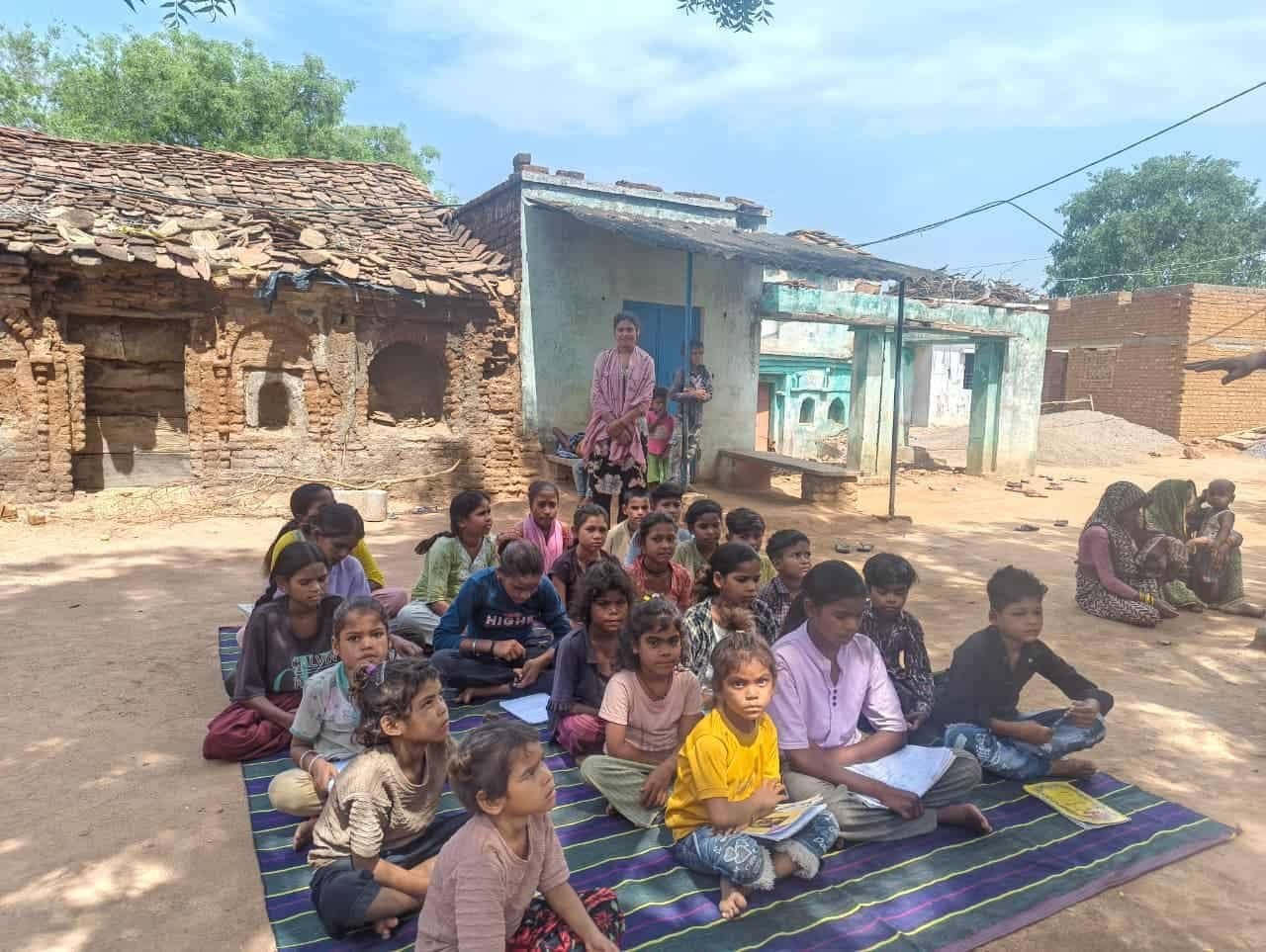
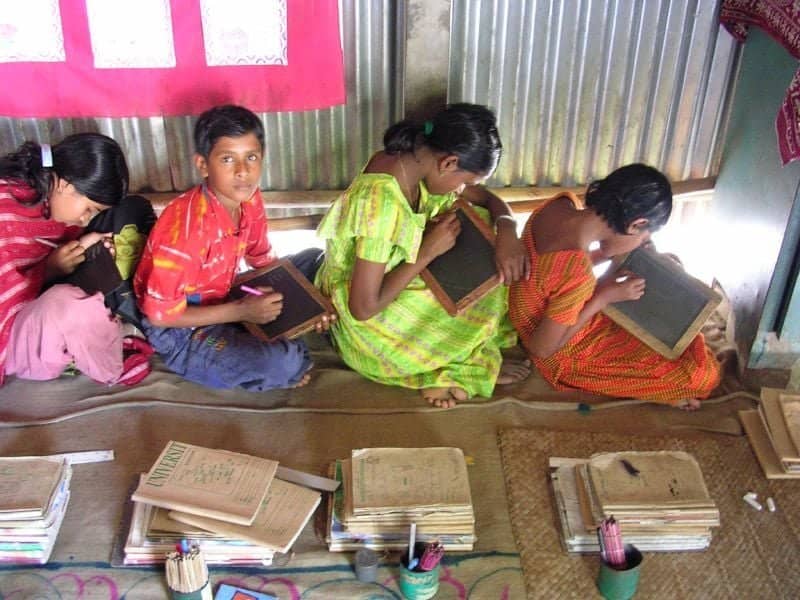
Rural children in a open classroom, symbolizing hope for a better future through education
Key Takeaways
1 of 3
Automatically generated. Read full article for complete context.
Baghaura is a very remote village in Babina block of Jhansi district. In the hamlet of Sahariya tribal communityIndigenous GroupAn indigenous tribal group primarily found in the Bundelkhand region of Madhya Pradesh and Uttar Pradesh, India, often facing socio-economic challenges and marginalization. of this village, about 25 students have gathered under a tree. Earlier most of them went to the regular government school in the morning, but after returning from there in the afternoon they found it helpful to revise their lessons and seek other help from their teacher Neelu in this non-formal school run by Parmarth social organization as a part of its Sabal project.
As there are about 25 children here of different age groups, the teacher separates those who are just starting school from others and concentrates on the basics so that they can get a confident start at the formal school. In the case of the more senior children they learn from the special curriculum of this non-formal school and can also obtain help for any problems they face at their formal school.
This project is at present limited to Sahariya tribal community settlements in parts of Jhansi district but may be extended later to other areas if funds are available as the need for such intervention is felt in other places too where Parmarth has an active presence.
Special problems are faced by children whose parents migrate. They miss the formal school for several weeks when they go out. Hence this non-formal school, called Shiksha Sanskar Kendra (SSK), is particularly useful for these children for catching up with their lessons without which they would not be able to cope in their formal school.
At a wider level, children from these poorest rural households may drop out of school for other reasons too. The SSK plays the role of a bridge in such cases, helping the children to re-integrate with the main school.
Some of the problems faced by children from the poorest households in accessing educational facilities cannot be easily appreciated by outsiders. In the case of several such households the most basic documents such as birth certificate and Aadhar card may be missing, so that much has to be done before he admission to the government school and its various facilities can be assured.
So one important aspect of the Sabal project has been to help the Sahariya tribal households to obtain these documents, and then also take up other follow-up work to ensure that these students, some of whom gain admission while the access to documents is still under way, are able to get the benefits of various schemes like mid-day meals, free uniforms and books, etc.
In some schools complaints of discrimination, bullying and teasing students from poorest households have been received. In such cases Sabal project members interact with students and teachers or community members to resolve these issues. In one recent case when students from poorest households on their way to school were being harassed, an intervention by the SSK teacher and a Sabal member resolved this.
Girl students are being encouraged to continue their education in higher classes. Where there is talk of child marriage, discussion and counseling with parents often leads to postponing such marriages. Hence the number of girls going in for higher education is increasing.
The small world of these remotely located schools brightens up with songs, storytelling, artwork and playing games. This year several of them were also taken to summer camps where they were exposed to and also participated in several extracurricular activities and cultural programs.
Eco clubs have been started in several of these schools. In Mathurapur and Simariya centers, the tree planting efforts of children have been successful and they have also helped to protect the plants in their early stage of growth.
In addition Kishori samoohs have also been organized in several villages where adolescent girls can learn and discuss various aspects of life related to their age group.
Additionally, several Kishore Kaushal Vikas KendrasAdolescent Skill Development CentersSkill development centers for adolescents, offering vocational training, computer literacy, and other practical skills to enhance their employability and future economic prospects. or skill development centers have also been set up which help to provide more specific vocational skills including computer skills to adolescents. Bal Sansads have been organized to educate children about democratic processes in interesting ways.
All these activities taken together can help a lot in improving educational prospects, preparation for future life and social awareness for children from poorest families. This helps in increasing children’s confidence and they know that a helping hand is available when they run into some problems relating to education and social inter-actions.
In addition the inter-actions of social activists with these remote hamlets in the course of the implementation of this project can be helpful in other ways as well as activists come to know about their other problems as well and can provide help. For example, in the Baghaura village that I visited to see the non-formal school, a serious problem relating to water supply has emerged and now efforts are being made by activists to sort this out.
Disclaimer:The views and opinions expressed in this article are those of the author(s) and do not necessarily reflect the official policy or position of The Rift.
*Rural EducationChild MigrationIndiaJhansiNon-formal EducationParmarth OrganizationSocial WorkTribal Communities