Opening The Rift
therift
© 2026 The Rift. All Rights Reserved.
Juridicide and Authoritarian Legalism: India’s Administrative Paralysis
This is a tragedy; this is the truth; and this is much more than an Emergency. It is a juridicide; it is also an instance of authoritarian legalism.


Key Takeaways
1 of 3
Automatically generated. Read full article for complete context.
On 10 October, Delhi witnessed a familiar template of this regime over the past decade: the weaponisation of police and paramilitary forces to stifle dissent, prevent people from speaking out, and unleash brutal violence against them—men, women and children alike; no one is spared. Advocates are being subjected to brutality; seeing someone like Shadan Farasat being manhandled by the police is both disturbing and cruel. The goons, without any fear or remorse, are beating children and women on the streets, right in front of the Delhi Police. When the government doesn’t know how to handle the dissenters in a Constitutionally valid manner, has to use only brute force and right wing goons then you know that it has lost control over legally justified means of governance and has gone into paralysis. The Delhi Police is not merely obeying orders; it is also complicit in such acts of violence. The difference between goons in uniform and without uniform disappeared on this day.
What, then, is different?
The CJP movement has called out the government for its cowardice, its flaws and its fear of dissent. That fear has now morphed into paranoia. Preventive detention, as provided for in Article 22 of the Constitution, cannot be carried out in the manner we witnessed on this date. Thousands of people had been detained. The basic criterion for ordering preventive detention is the existence of sufficient grounds to believe that a person may pose a threat to, inter alia, the security of the State or public order. The grounds for such preventive detention must be communicated to the person concerned. The person is also entitled to make a representation against the detention. What we witnessed on this day, however, was that people were dragged away inhumanely. It would be overly optimistic to believe that they were informed of the grounds for their detention, and it would be absurd, to say the least, to assume that they were allowed to make a representation against their detention. The mass detentions and restrictions on protest in Delhi demand serious scrutiny. The only rationale for these detentions was the paranoia of a government afraid of its own people. It is a government unwilling to listen to any dissent whatsoever.
This is a tragedy; this is the truth; and this is much more than an Emergency. It is a juridicide; it is also an instance of authoritarian legalism. When a government becomes scared of its own people, it starts to unleash violence in various forms: it attempts to colonise them, it endeavours to scare them through the operation of draconian laws, it detains them and restricts their freedom of movement and expression, it tries to portray itself as the victim and turns people against one another in the name of religion and by pushing a sense of othering. The tragedy is also evident; it has been successful to an extent. The Delhi Police has always been a weapon of the government, and whether during the farmers’ struggle, anti-CAA-NRC protests or NEET paper leak student-youth demonstrations, under the pretext of following ‘orders’, it has inflicted violence on a massive scale. The resulting visuals have seared our collective consciousness. It is heart-rending to see that this brutality continues to increase.
Exposure to Violence
The constant acts of violence that have taken over the mass media and social media have made society, to an extent, so numb or desensitised to violence that it may no longer even prick our conscience. That, too, is not society’s fault. People may experience and process pain differently, sometimes with markedly different intensities. Nonetheless, no person of sound conscience can deny the very existence of this pain. The language adopted by the protestors—the youth of this country participating in the movement against voter list manipulation—is the language of complaint. It is also a reflection of the pain that this regime has inflicted on its own people for more than a decade, across multiple protests. It is shameful to remain silent and do or say nothing.
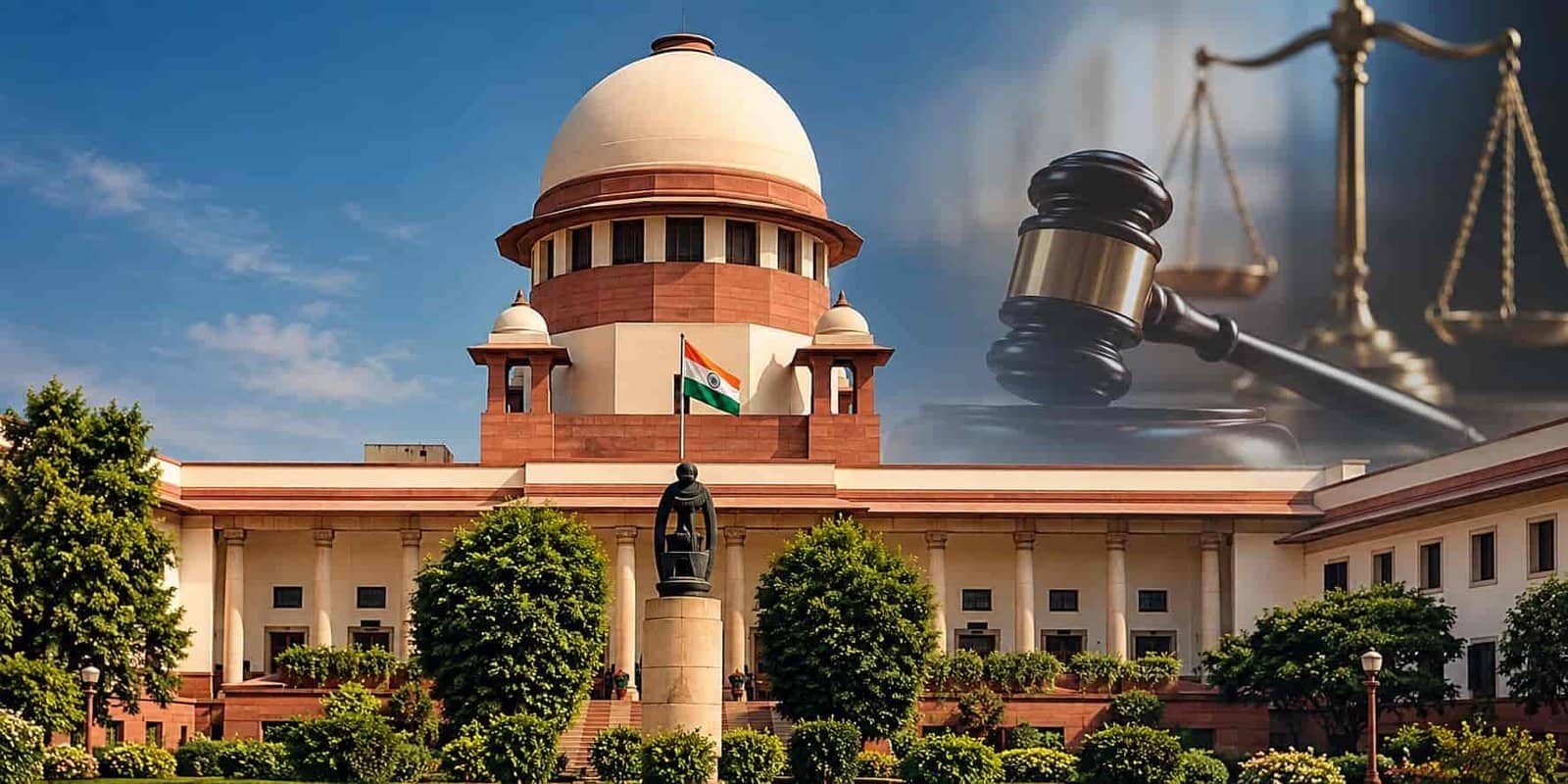
The freedoms of movement and expression are too precious to be placed at the mercy of a paranoid government. It is pointless to cite the various Supreme Court judgments affirming this principle—the courts are aware of it, yet remain inactive. Some judges are accomplices, while institutions serve as an alibi for this butchering of Constitutional values.
Crony Capitalism
Nevertheless, some people continue to support this regime because of their own vested capitalist or other interests. However, as previously remarked, the government has successfully pitted innocent people against one another, and they cannot see beyond the smokescreen this government has created. They are unemployed; or, if they are employed, they lack social security and labour rights (because those rights were diluted while people were dying of COVID!). One can only hope that there will be some redemption.
The crony-capitalist model of governance has offered this country nothing but vanity for the middle class under the guise of achche din. Mere consumerism is what this system offers—everything is a product, and the rich are allowed to become super-rich. This system necessitates and sustains a paranoid government that will lock our cities, detain the people and crush dissent, however peaceful and democratic, whenever its foundations are threatened.
Hope
It may sound hopeless, but hope always lies with the people—the people who struggle to survive life’s difficulties and yet remain committed enough to care about these values rather than dismiss them as merely abstract constructs. It is not merely about defeating a tyrannical government in elections; it is about preserving and developing constitutional values and upholding them despite the misery, unfairness, and unequal application of the law. Even today, equality remains elusive. For people who do not understand the Constitutional intricacies, they understand one thing. They know that the country is now ruled by an arrogant despot who has scant regard for the rights of common people. People did not tolerate the tyranny of British, they did not tolerate the excesses of Indira Gandhi of 1975-77 and after the situation has fast evolved in the last several months they are now ready to take Narendra Modi head-on. Gyanesh Kumar is only the face. The legitimacy of Modi government will go if Gyanesh Kumar goes.
Nothing is permanent. Yet it is impossible to predict whether this government will be defeated in the next election or whether the election itself will be free and fair. Life is a process of making meaning; we choose to strive for the things to which we assign meaning. We must re-emphasize that the constitutional and democratic values of equality, freedom, and dignity remain meaningful. Although it should be basic and self-evident that everyone deserves to be treated as a human being, this principle needs to be reiterated more often, in the hope that it will one day reach even the deaf ears of the Delhi Police, Union Government, and most importantly, the Judiciary.
Disclaimer:The views and opinions expressed in this article are those of the author(s) and do not necessarily reflect the official policy or position of The Rift.