Opening The Rift
therift
© 2026 The Rift. All Rights Reserved.
Weaponizing Privacy: Is the RTI Dead?
The state has discovered an elegant loophole by reclassifying bureaucratic accountability as personal privacy to dismantle the Right to Information.


is the RTI dead?
Key Takeaways
1 of 3
Automatically generated. Read full article for complete context.
The Right to Information (RTI) Act of 2005 survived two decades of bureaucratic pushback, institutional dilution, and outright political hostility. Yet, the architecture of transparency in India is now facing its most sophisticated existential threat: not a frontal assault, but a quiet, structural sabotage executed under the unimpeachable moral banner of data privacy leading many to ask: is the RTI dead?
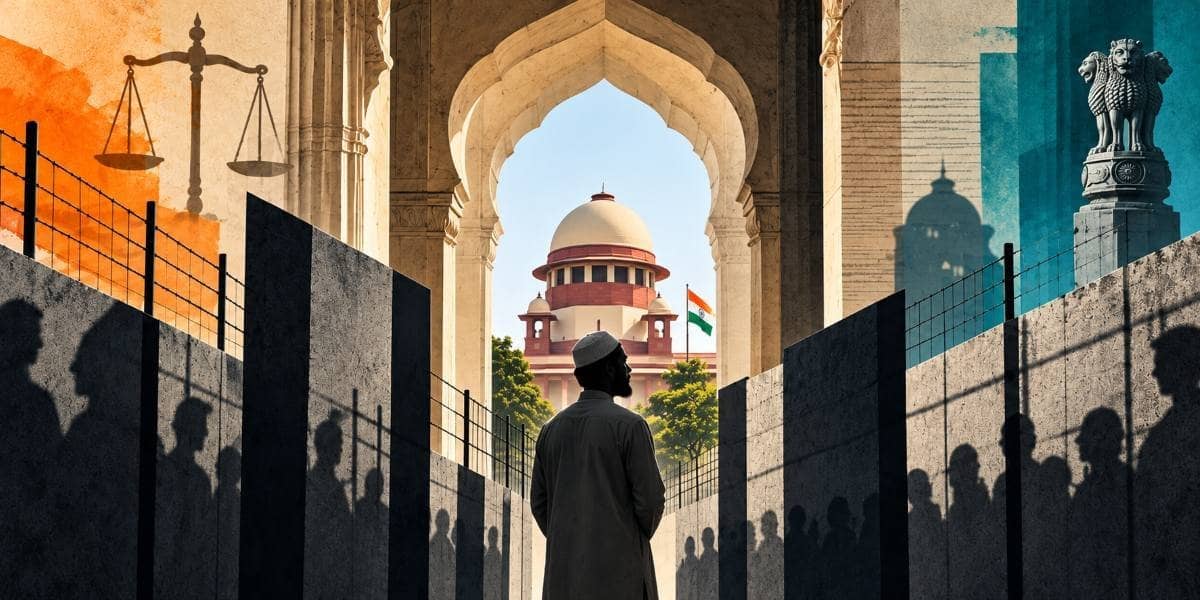
The fundamental clash between the Digital Personal Data Protection (DPDP) Act of 2023 and the RTI Act has reached a critical flashpoint before the Supreme Court in April 2026. At the heart of the matter is the subtle rewriting of Section 8(1)(j) of the RTI Act via Section 44(3) of the DPDP Act. This amendment, deliberately complex in its legal phrasing, achieves a brutally simple outcome. It allows the state to use the privacy rights of its own officials as a shield against public accountability.
The Death of the Public Interest Test
To understand the scale of the damage, one must look at what the amendment erased.
For 18 years, the original Section 8(1)(j) of the RTI Act provided a narrow exemption: personal information could be withheld only if its disclosure had no relationship to public activity, or if it caused an unwarranted invasion of privacy. Crucially, however, the law contained a larger public interest override. If an RTI request sought information that served a larger democratic good—such as exposing corruption, verifying the declared assets of a minister, or auditing the beneficiaries of a public scheme—the information had to be disclosed, regardless of the privacy claim.
The DPDP Act surgically excised this balancing mechanism.
The amended provision now exempts the disclosure of any information that “relates to personal information,” seamlessly aligning it with the DPDP Act’s sprawling definition of personal data. The larger public interest test, the cornerstone of the RTI’s democratic utility, has been effectively removed from this specific exemption clause.
The Union government and the Ministry of Electronics and Information Technology (MeitY) maintain that this amendment is merely a harmonization effort, designed to align India’s transparency framework with the landmark Puttaswamy judgment that recognized privacy as a fundamental right. They argue that Section 8(2) of the RTI Act, a broader clause allowing information to be released if the public interest outweighs protected harms remains intact.
But in the administrative reality, this defense rings hollow. By removing the explicit public interest requirement from the specific personal information exemption, the state has flipped the presumption. Public Information Officers (PIOs), terrified of statutory penalties under the DPDP Act, are now defaulting to a presumption of non-disclosure.
The Bureaucratic Panopticon
The implications are not theoretical. They are immediate and severe. If a citizen files an RTI to verify the educational qualifications of a public official, the PIO can reject it that is the official’s personal data. If an investigative journalist requests access to the list of beneficiaries of a state welfare scheme, it can be denied saying that those individuals have a right to privacy. Even the most basic functions of a social audit are now potentially criminalized under the guise of data protection.
This creates a scenario where the state insists on monitoring the citizen while demanding absolute opacity for itself.
The amendment reveals a profound contradiction in the Indian state’s approach to data rights. When it comes to the citizen, the government aggressively champions data maximization and instant digital compliance. It recently proposed Draft IT Rules that slash the window for social media platforms to execute censorship orders from 36 hours down to a mere three hours, effectively denying creators due process. Concurrently, it has implemented sweeping new internet CCTV certification mandates and invasive data retention logs, laying the groundwork for a normalized domestic panopticon. Yet, when the gaze is turned backward when a citizen uses the RTI to extract data from the state apparatus, the government suddenly discovers the sacred inviolability of personal privacy. The state demands real-time omniscience over the public square while legislating its own right to operate in the shadows.
Defining the Line Before the Court
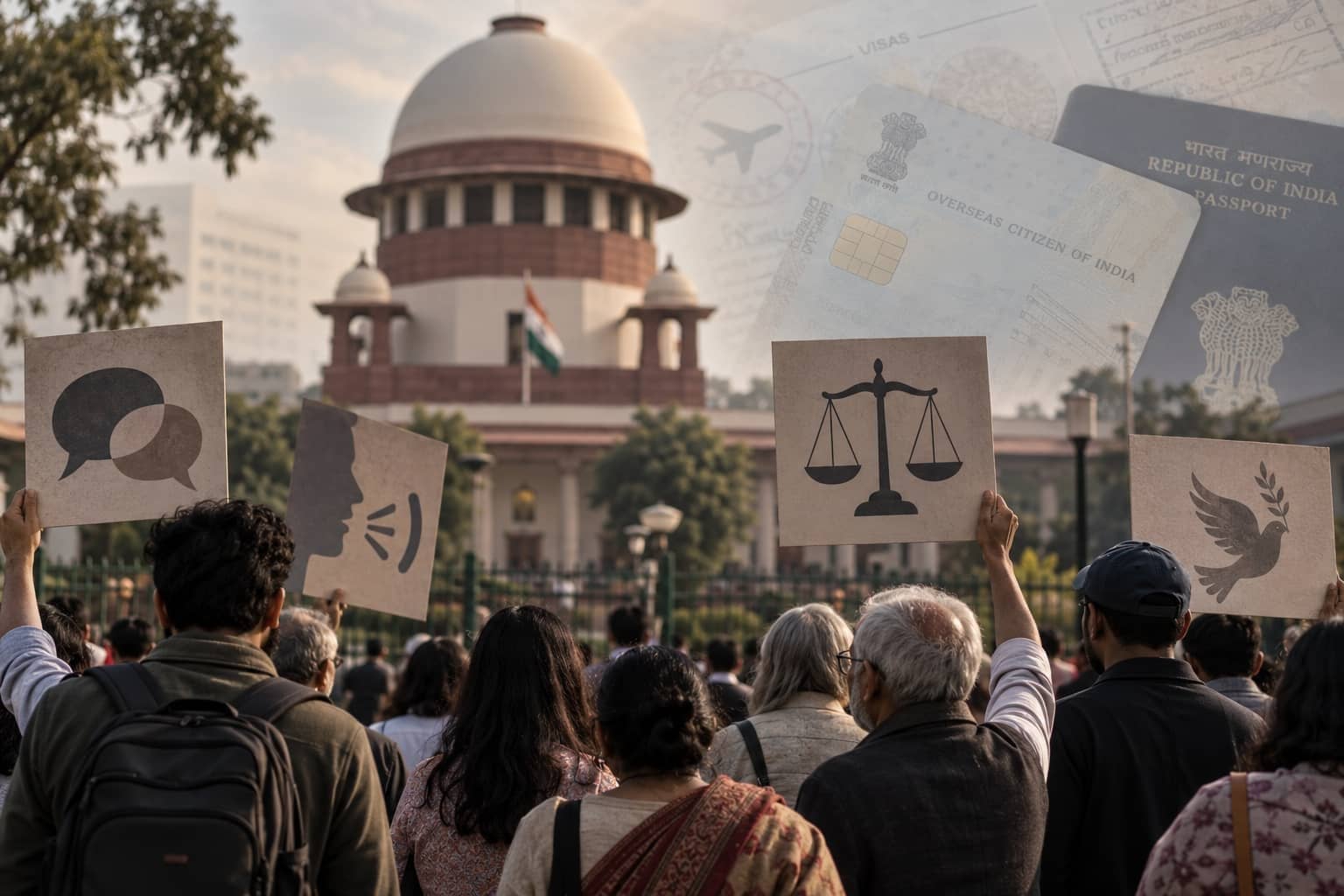
The Supreme Court, led by Chief Justice Surya Kant, is currently grappling with this constitutional crisis. In recent hearings, the bench declined to issue an interim stay on the amendment but acknowledged the constitutional sensitivity of the matter, referring it to a larger Constitution Bench.
The core of the judicial inquiry, as noted by the bench in March 2026, rests on an urgent need to delineate between public data and private data, particularly concerning public officials functioning in their official capacity. When does the administrative action of an IAS officer cease to be public record and become personal data?
If the court fails to draw a hard line severing official conduct from personal privacy, the RTI Act will be reduced to a dead letter. The DPDP Act, sold to the public as a shield against corporate exploitation, is currently being weaponized as the ultimate bureaucratic cloaking device.
Privacy was recognized as a fundamental right to protect the citizen from the overreach of the state. It is a grotesque irony that the Indian government is now utilizing that exact precedent to protect itself from the oversight of the citizen.