Opening The Rift
therift
© 2026 The Rift. All Rights Reserved.
Why the Attendance Case Before the Supreme Court Reflects a Civilisational Crisis & Requires Structural Intervention
The Supreme Court is debating mandatory college attendance, but the real crisis goes much deeper: a society that rewards virality, misogyny, and toxic ‘icons’ over education. It’s time for structural intervention to save the classroom.

Key Takeaways
1 of 3
Automatically generated. Read full article for complete context.
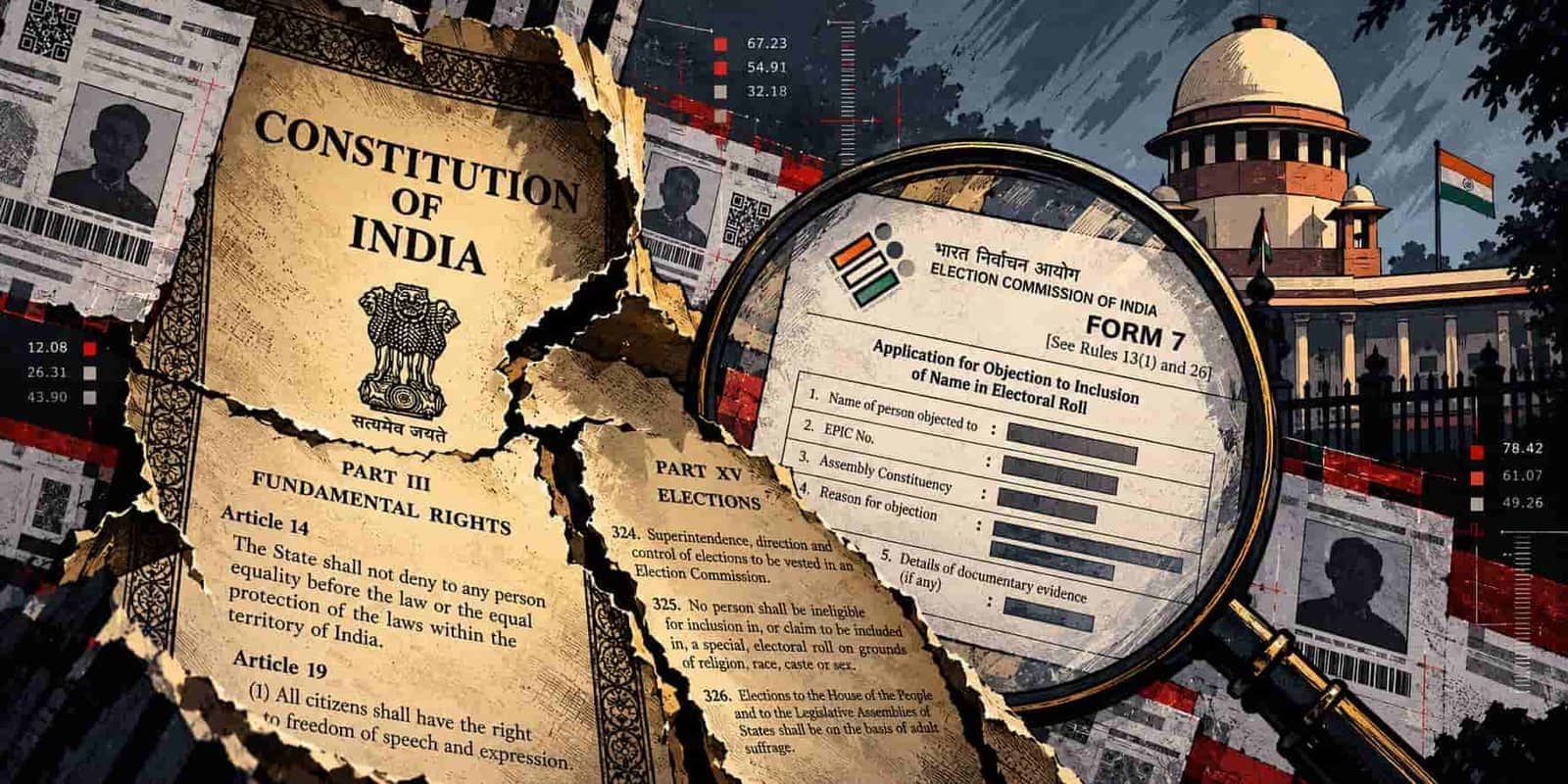
In recent weeks, the issue of law students’ attendance in classrooms has received considerable public attention. Several colleges debarred students from appearing in examinations due to insufficient attendance, sparking an uproar on social media. Those criticizing the college’s actions relied heavily on the judgment delivered by the Delhi High Court in November last yearSushant Rohilla Case (Nov 2025)A Delhi HC ruling stemming from the 2016 suicide of law student Sushant Rohilla over attendance shortage. The court ruled colleges should not debar students in genuine cases and directed the BCI to frame more flexible, humane rules.. Challenging the Delhi HC judgment, the Narsee Monjee Institute of Management Studies (NMIMS) has filed a plea. In its last hearing, the Supreme Court issued a notice to the Bar Council of India (BCI)Bar Council of IndiaA statutory body created by Parliament to regulate and represent the Indian legal profession, including setting standards for legal education. and sought its response. The matter is listed for hearing on May 26, 2026.
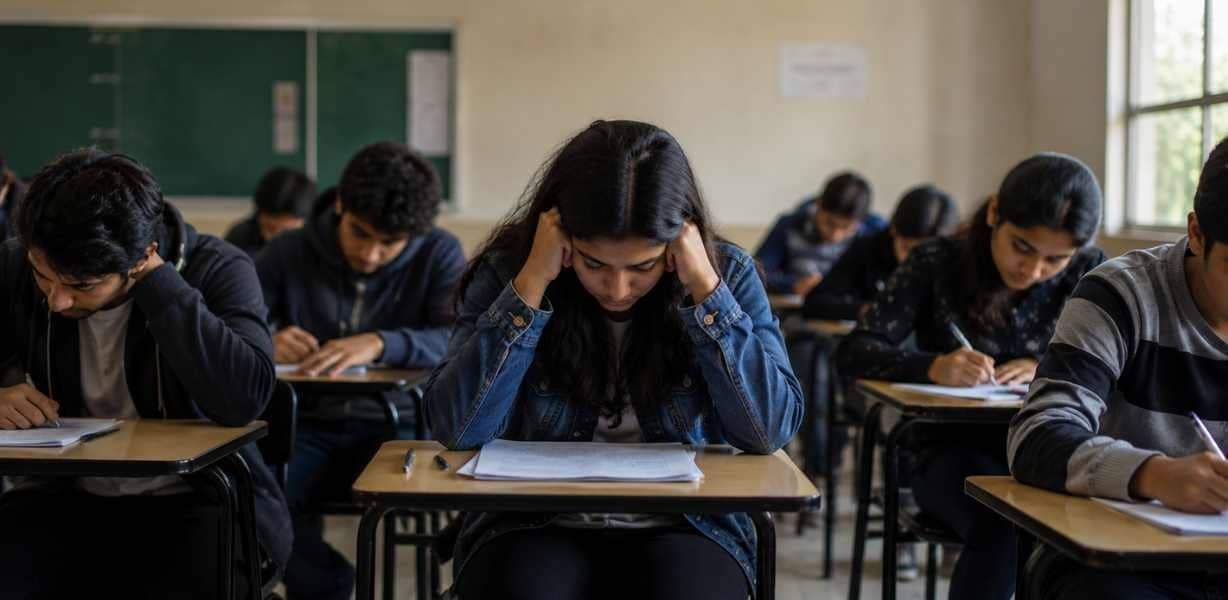
From the oral observations made so far, it appears that the Court is adjudicating the attendance issue too narrowly. This issue is viewed as disciplinary or administrative only. The indifference of students towards the classroom is a far more complex issue and signals a civilisational crisis. At the core lies the legitimacy of formal education and the ideas it stands for. The Court has rightly observed that if attendance is not compulsory, students will not attend classes. But the Court has not asked why students feel alienated from class? Why are lectures perceived as irrelevant? Why has knowledge lost social prestige?
“In the age of social media, ‘virality’ matters more than scholarship… There appears to be a sharp difference between ‘classroom morality’ and ‘functional morality’ in our society.”
‘Virality’ Vs. Scholarship
One may argue that the growing indifference towards the classroom is primarily a consequence of ineffective pedagogy. However, such an explanation appears inadequate. The central problem does not lie in pedagogy alone. This is evident from the fact that many students who absent themselves from classes are not necessarily engaging in intellectually productive alternatives such as internships or certificate courses available online. Rather, a significant portion of their time is increasingly absorbed by entertainment and recreational distractions. There exists a significant disconnect between the realities of our society and the idealism represented by the classroom, and it is the primary reason why our students feel alienated from it.
The classroom teaches constitutional moralityConstitutional MoralityThe adherence to the core principles of the Constitution, such as freedom, equality, and justice, rather than prevailing societal norms., civility, and gender sensitivity. It stresses the need and importance of rational discourse and the rule of lawRule of LawThe legal principle that law should govern a nation, as opposed to being governed by arbitrary decisions of individual government officials.. But, if society rewards misogyny, sensationalism, and anti-intellectualism, the students, as rational observers, are bound to notice who gets rewarded and what gets ignored. They will naturally be attracted to values that confer status and success.
India has expanded higher education quantitatively, but knowledge and its affiliated values are losing social prestige. In the age of social media, ‘virality’ matters more than scholarship. Public discourse increasingly rewards popularity over intellect. Expertise is mocked, and scholars rarely become public icons or ‘influencers’. There appears to be a sharp difference between ‘classroom morality’ and ‘functional moralityFunctional MoralityThe actual moral norms and behaviors that are practiced, accepted, and rewarded by society in everyday life, regardless of what is taught theoretically.‘ in our society. Unfortunately, our students are internalizing the latter over the former. They view classroom teaching as too idealistic, impractical, and disconnected from the lived reality.
Linguistic Alienation of Classrooms
The contradiction between the classroom and society is not limited to ‘what is’ and ‘what is taught to be.’ The crisis extends to the very language spoken in a classroom. A class lecture is perhaps the only form of content that our students consume that is devoid of any infamous North Indian misogynist expressions. It is also the only space where they are required to restrain themselves from expressing misogynistic language they may otherwise be accustomed to using. Since the ‘gaali culture’ is the new normal, they find classroom language too alien and often suffocating.
An important question that requires the Court’s attention is how these misogynist gaalis have become the lingua franca of the day. Is it a bottom-up or a top-down phenomenon? What are the centers of power and influence where these misogynist words are glorified and presented as the language of an ‘alpha maleAlpha MaleA term often used in internet subcultures to describe a dominant, assertive man, frequently associated with toxic masculinity and misogynistic behavior.‘?
Teachers Vs. ‘Icons’
The answer takes us to some of the harsh yet overlooked realities of our time. Our students are not inspired to use abusive words by some lumpen element of society. They are normalizing the use of these misogynistic expressions after drawing inspiration or seeking validation from the so-called ‘icons’ of our time. A significant section of mainstream popular movies often projects the protagonist uttering these words. The stand-up comedians (even those considered progressive and feminist) casually make people laugh at these words and misogynistic ideas. We have instances where star cricketers do not shy away from uttering these words, knowing that the stump mic will amplify them and it will negatively influence the millions of teenagers watching them.
Such normalization of ‘gaali culture’ has reduced the teacher to a lone idealist in society and renders the classroom an alien space in the eyes of students. The ‘respect’ that these ‘icons’ command in our society outweighs any teacher of the day. Thus, students are tempted to imitate them. If we do not want classroom language to appear foreign or suffocating to our students, urgent intervention on these issues is required.
The Social ‘Conditioning’
The social ‘conditioning’ of our students is not limited to language only. Today, Bollywood has become the primary advertising agency for cigarettes, alcohol, and drugs. On the one hand, India takes pride in banning the advertisement of cigarettes and alcohol. On the other hand, it has allowed its entertainment industry to consistently present these products as an integral part of a youth’s life.
The crisis is further compounded by how these products are depicted in movies. They are shown to be consumed by the protagonist himself. There is hardly any movie in which a successful or powerful personality, such as a district magistrate, police inspector, encounter specialist, RAW agent, or successful entrepreneur, is shown without consuming such products. He is specifically shown to be consuming it either before or after doing something ‘heroic’ in those movies! Similarly, they are portrayed as using misogynistic expressions without shame or hesitation.
The leverage we have given content creators in the guise of ‘artistic freedom’ is not without repercussions. This popular culture often creates peer pressure among teenagers. Such is the dominance of these values that anyone resisting these products or verbal expressions is mocked as a ‘Mumma’s boy’ and declared incompatible to live in this era. The rising rate of alcoholism, drug addiction, and crime among teenagers should serve as a wake-up call for society at large, and the Court must take a leading role in addressing this crisis.
The Way Forward
There are two ways the Court can approach this issue. First, it can treat the crisis as episodic, stemming from the confusion created by the Delhi High Court judgment, and close the matter by reaffirming that attendance will remain a mandatory criterion. Second, the Court can take this opportunity to delve deep. The crisis before us should not be considered episodic; rather, it is a structural one. The legitimacy of the classroom and the ideas it represents is challenged in an unprecedented manner. On several occasions, the Court was initially approached to resolve grievances concerning a specific issue or institution. However, upon realizing the broader and systemic nature of the issue, the Court took proactive steps to address the matter in a holistic manner.
For instance, in the University of Kerala case (2006)University of Kerala Case (2006)A landmark Supreme Court case (University of Kerala v. Council, Principals’, Colleges) that sought to decouple student politics from criminal elements and led to the Lyngdoh Committee., the Court was approached to challenge the order of the Kerala High Court, which had granted significant autonomy to the principals of affiliated colleges regarding students’ elections. The Court did not limit itself to the concerned institutes and acknowledged that students’ union elections across India had increasingly become associated with crime, violence, and excessive money power, leading to the disruption of the academic atmosphere. The Court directed the union government to constitute a high-powered committee to examine the entire issue and recommend reforms. Subsequently, the government constituted the Lyngdoh CommitteeLyngdoh CommitteeA committee headed by former CEC J.M. Lyngdoh, formed in 2006 under Supreme Court directions, to frame guidelines for student union elections in India. and the Court accepted most of its recommendations, including the requirement of 75% attendance in the classroom to contest students’ union elections.
Similarly, when the Court was asked to delve into the menace of ragging in Vishwa Jagriti Mission v. Central Government & others (2001)Vishwa Jagriti Mission Case (2001)A landmark Public Interest Litigation (PIL) that forced the Supreme Court to acknowledge the deadly reality of ragging in India and led to the Raghavan Committee., it realized that the issue required a thorough study. It requested the government to constitute a committee, and subsequently, the Raghavan CommitteeRaghavan CommitteeA committee constituted in 2006 to recommend measures for the prevention of ragging in educational institutions. was constituted. The Court, later, accepted several of its recommendations, which include the establishment of anti-ragging committees in the institute, mandatory FIRs against the accused students, and the mandatory submission of anti-ragging affidavits, among others.
The Court should live up to its own rich tradition of appreciating the gravity of the issue presented, as it has done in earlier important matters concerning students. It should resist the temptation of disposing of this case by treating it narrowly as a mere administrative question. Instead, consistent with its prior approach, the Court may consider requesting the union government to constitute a high-powered committee to undertake a comprehensive examination of the broader civilisational concerns underlying the present issue. The crisis we are witnessing requires sustained dialogue among all stakeholders. Any meaningful reform must involve serious engagement with students, parents, and teachers to address the growing delegitimization of the classroom and the values it represents. It must also include constructive engagement with the celebrities and ‘icons’ who significantly shape social behavior and aspirations. A wider consultation is required with officials associated with the Ministry of Information & Broadcasting and the Censor BoardCensor Board (CBFC)The Central Board of Film Certification, a statutory film-certification body in the Ministry of Information and Broadcasting of the Government of India. to reimagine our regulatory frameworks. The collective craving for phenomena like ‘Kabir Singh’ or ‘Animal’Kabir Singh & AnimalRecent controversial Indian films criticized for glorifying toxic masculinity, extreme violence, and misogyny. cannot coexist with an expectation that the classroom and its values will continue to inspire the students.
The Court should take cognizance of the broader structural realities and initiate meaningful institutional reforms. Such an exercise may require a combination of short-term, medium-term, and long-term interventions aimed at bridging the gap between the values taught in the classroom and the lived realities of our society. Where the disease demands intensive treatment, the court should guard against prescribing superficial remedies. Students must attend the classroom, but the classroom cannot survive through compulsion. Their legitimacy depends upon whether the society itself honors the values they seek to teach.
Supreme Court Structural Interventions
Vishwa Jagriti Mission Case
- Raghavan Committee
- Mandatory Anti-Ragging Cells
University of Kerala Case
- Lyngdoh Committee
- 75% Attendance Rule
Sushant Rohilla (Delhi HC)
- No Arbitrary Debarment
- BCI Rule Revision Ordered
NMIMS Case (Supreme Court)
- High-Powered Committee?
- Structural Reforms Needed
Disclaimer:The views and opinions expressed in this article are those of the author(s) and do not necessarily reflect the official policy or position of The Rift.