Opening The Rift
therift
© 2026 The Rift. All Rights Reserved.
The Deforestation of Hyderabad : KBR Felling, Law Broken, What Must Follow
What KBR tests is whether those tools will be used against the State with the same firmness as against a private farm owner.


Key Takeaways
1 of 3
Automatically generated. Read full article for complete context.
Nearly two thousand mature trees around Kasu Brahmananda Reddy National Park were cut down in the spring of 2026 for fourteen flyovers and underpasses that will now never be built. On 5 October 2026 the Greater Hyderabad Municipal Corporation confirmed that the multi-structure plan had been dropped in favour of a single elevated corridor, because a one-way traffic loop introduced in August to help construction had done what the concrete was supposed to do.
That sequence is not a planning misfortune. It is a breach of trust in the precise legal sense the Supreme Court has given that phrase, and it was committed by a State government that had, barely a year earlier, been warned by the same Court over the clearing of the Kancha Gachibowli forest a few kilometres away. This article sets out what went wrong, why it went wrong, and what the law already supplies by way of penal consequence, departmental action and ecological restoration. Nothing new needs to be invented. What is needed is that the existing law be applied to those who hold public office, and not only to private landowners.
A word on facts. Several figures in circulation, including a claimed 3,000 trees and a claimed Rs 300 crore already spent, are not borne out by any official disclosure. The GHMC has published neither a final tree count nor the expenditure on the abandoned works. Where this article relies on reported figures, it says so. The absence of an official account is itself one of the wrongs.
What went wrong
The record, as it can be reconstructed from reporting, is short and damning.
| When | What happened |
| 27 October 2020 | MoEFCC final notification fixes the KBR eco-sensitive zone at a width of only 3 to 29.8 metres. Petitioners say the 2012 to 2015 proposal had been 25 to 35 metres, and that no public hearing was held before the cut. |
| 2021 | PIL filed in the Telangana High Court by Kaajal Maheshwari, Jasveen Jairath and Sagar Dhara challenging the ESZ notification. In August 2021 the High Court stayed tree felling under the earlier SRDP version of the project. |
| October 2024 | H-CITI works around KBR sanctioned at Rs 826 crore, later revised to Rs 1,090 crore: seven steel flyovers and seven underpasses, in two phases of Rs 580 crore and Rs 510 crore. |
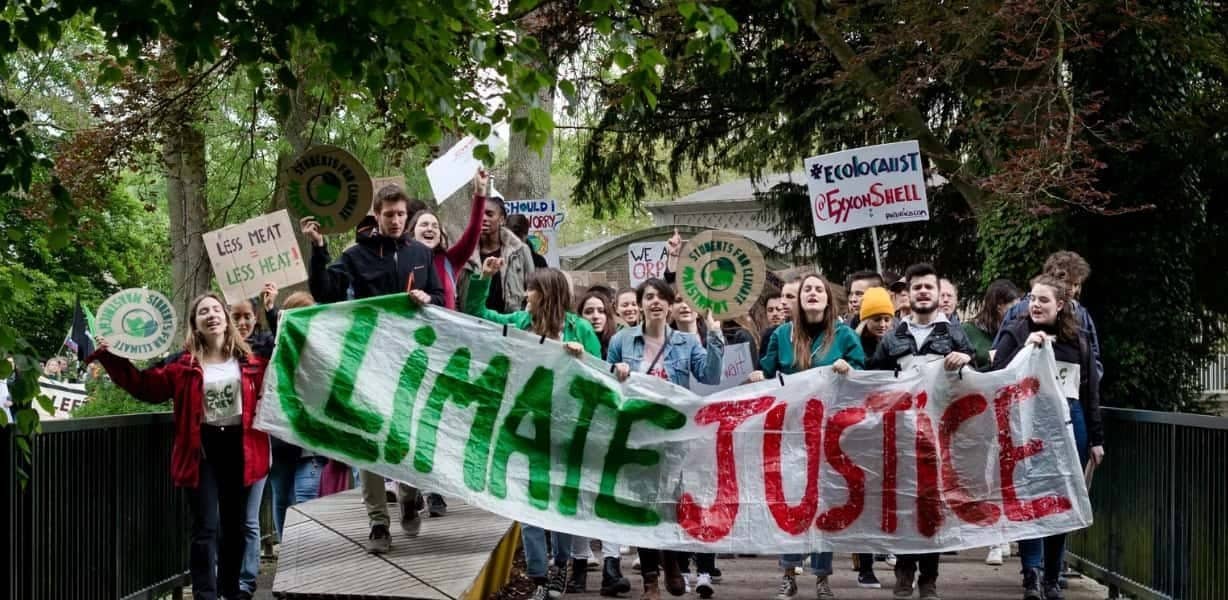
| 26 April 2026 | Save KBR campaign launched as works restart. |
| Spring 2026 | High Court declines interim relief and adjourns the matter, asking petitioners to research permissible activities in the ESZ. |
| By 16 May 2026 | Nearly 2,000 mature trees felled or severely lopped at Jubilee Hills Check Post, Mugdha Junction and the Indo-American Cancer Hospital stretch. The GHMC’s own revised proposal had listed 1,942 trees. |
| 18 May 2026 | Supreme Court (Nagarathna and Bhuyan, JJ.) restrains felling within the 25 to 35 metre zone around the park, issues notice to the Centre and the State, and questions why the buffer was reduced so sharply. |
| 28 May 2026 | Citizens report that felling and site activity continue between the Indo-American Cancer Hospital and Maharaja Agrasen junction. |
| August 2026 | Traffic police introduce a clockwise one-way loop around the park to manage construction. Travel time at each junction reportedly falls from 10 to 20 minutes to 5 to 10. |
| 5 October 2026 | GHMC confirms the fourteen-structure plan is scrapped for a single elevated corridor. Contracts with KNR and Megha for the dropped works are terminated. Pillar foundations at Jubilee Hills Check Post stand complete; underpass pits lie open at Maharaja Agrasen and Basavatarakam junctions. |
Three facts stand out. First, the cheapest solution was tried only after the trees were gone, and only by accident. Second, no authority has disclosed how much was spent on the cancelled works; an opposition leader puts it at Rs 100 to 200 crore, and the GHMC Commissioner speaks only of a Rs 400 crore saving on the revised plan. Third, the State’s own justification for dropping the flyovers, that land acquisition costs had risen from about Rs 300 crore to Rs 750 crore, was knowable before a single tree was touched.
The failure was not one bad decision. It was a chain of five, each of which the law already forbids.
The buffer was hollowed out first, then used as a licence. An eco-sensitive zone exists to absorb shock at the edge of a protected area. A zone that narrows to three metres absorbs nothing. Once the 2020 notification had thinned the buffer, the roadside belt of neem, jamun and copperpod could be treated as ordinary municipal median. The GHMC’s “zero park intrusion” line depends entirely on that prior dilution.
The alternative was never tested. The precautionary principle places the burden on the developer to show that its action is environmentally benign. That burden cannot be discharged without asking whether a less destructive option exists. A one-way loop costs signage and policing. It was the first thing that should have been trialled, and it was the last.
The project was presented in pieces. Campaigners allege that H-CITI was split into smaller components so that no single piece crossed the thresholds for an environmental impact assessment and public hearing under the EIA Notification, 2006. Whether or not each fragment was lawful in isolation, the effect was that no one ever assessed the whole ring of structures around a national park.
Permission became a formality. Under the Water, Land and Trees Act, 2002, no tree or branch may be felled without the prior permission of the designated officer. Permission is meant to be a judgment on necessity. Where a project is abandoned within months, the necessity on which permission was granted was never real, and the officer who certified it must explain what was examined.
The courts were outrun. The High Court declined interim relief and asked the petitioners to do research while the felling went on. By the time the Supreme Court intervened on 18 May, most of the damage was done. Speed was the strategy. The same pattern had been condemned at Kancha Gachibowli in April 2025, when the Supreme Court said it was difficult to appreciate “what was the alarming urgency” behind the deforestation. The lesson was not learnt.
What the Supreme Court said
Every element of the KBR episode has a Supreme Court answer. The authorities below are confined to those whose text has been checked.
The State is a trustee, not an owner. In M.C. Mehta v. Kamal Nath, (1997) 1 SCC 388, decided on 13 December 1996, the Court declared the public trust doctrine part of the law of the land. It held that “The State is the trustee of all natural resources which are by nature meant for public use and enjoyment,” and that such resources “cannot be converted into private ownership.” A shaded public avenue at the edge of a national park is exactly such a resource. Converting it into pillar foundations for a project the trustee itself later abandoned is the conversion the doctrine forbids. The Court there quashed the lease, directed the State to restore the area “to its original-natural conditions,” and made the wrongdoer pay the cost of restitution.
Precaution places the burden on the actor. In Vellore Citizens Welfare Forum v. Union of India, (1996) 5 SCC 647, the Court held that the precautionary principle and the polluter pays principle are part of the law of the land. Under the first, the State must “anticipate, prevent and attack the causes of environmental degradation,” and the onus is on the developer “to show that his action is environmentally benign.” Under the second, liability extends to “the cost of restoring the environmental degradation.” The GHMC cannot show that felling was benign when a cost-free alternative was available and untried. It must therefore bear the cost of restoration.
Damages, and exemplary damages, can follow. When Kamal Nath returned to the Court on 12 May 2000, reported at [2000] Supp. (1) SCR 389, the Court held that a fine is a criminal sanction requiring a trial, but that in addition to damages, a wrongdoer “can also be held liable to pay exemplary damages so that it may act as a deterrent for others.” The deterrent purpose matters here. The person who pays must be someone who can be deterred.
Officers who misuse power can be made to pay personally. In Lucknow Development Authority v. M.K. Gupta, (1994) 1 SCC 243, the Court held that “No functionary in exercise of statutory power can claim immunity, except to the extent protected by the statute itself,” recognised misfeasance in public office as a tort, and said “He who is responsible for it must suffer it.” It directed that compensation paid from public funds be recovered from the officers found responsible, proportionately from their salaries, because “It is the tax payers’ money which is paid for inaction of those who are entrusted under the Act.” The principle applies with greater force where the loss is a public resource that money cannot replace.
Hyderabad has been warned before. In In Re: Kancha Gachibowli Forest, State of Telangana, Suo Motu W.P. (C) No. 3 of 2025, the bench of Gavai and Masih, JJ. recorded on 3 April 2025 that nearly 100 acres had been destroyed. It asked the Chief Secretary what was “the compelling urgency to undertake the developmental activities, including removal of trees,” whether an Environmental Impact Assessment had been obtained, and whether forest permission had been secured. It ordered “no activity of any sort, except the protection of the trees already existing,” and warned that the Chief Secretary “would be held personally responsible” for non-compliance. By its order of 16 April 2025 the Court directed the Wildlife Warden to take immediate steps for wildlife affected by the deforestation. Every one of those questions can be put, word for word, to the GHMC about KBR.
Mass felling is punished per tree, without leniency. In M.C. Mehta v. Union of India (Taj Trapezium Zone), W.P. (C) No. 13381 of 1984, order dated 25 March 2025, the bench of Oka and Bhuyan, JJ. dealt with 454 trees felled overnight. It observed that “It will take a minimum of 100 years to again re-generate or recreate the green cover created by 454 trees,” accepted the Central Empowered Committee’s recommendation of a penalty of a minimum of Rs 1,00,000 per tree, and refused to reduce it: “There is no reason to show any leniency to a person who has caused huge damage to the environment.” At that rate, 2,000 trees represent at least Rs 20 crore. The question is why a public body should be held to a lower standard than a private landowner.
Officials who fell trees in defiance of court orders are personally sanctioned. In Bindu Kapurea v. Subhashish Panda, 2025 INSC 784, [2025] 5 SCR 2764, decided on 28 May 2025, the bench of Surya Kant and Kotiswar Singh, JJ. found Delhi Development Authority officials in contempt for felling in the Delhi Ridge, which it described as functioning “as the lungs of the city.” It directed each responsible official to “deposit a sum of Rs. 25000 each as an environmental fee,” imposed “a formal penalty of censure,” kept this “without any prejudice to the departmental action,” and required pending departmental proceedings to conclude within six months. It ordered compensatory afforestation of 185 acres at the DDA’s entire cost under a named expert committee, with bi-annual photographic compliance reports. It also allowed a levy on affluent direct beneficiaries of the road. Most usefully, it directed that every order relating to road construction or tree felling must mention the pendency of proceedings before the Court, so that “the plea of ignorance is not taken as a defence.” That is a template ready-made for KBR.
Penal consequences
Penal liability must be argued honestly. It depends on facts that only an independent inquiry can fix: how many trees were felled, where, on whose order, against what permission, and on what date relative to the Supreme Court’s stay. Each route below turns on one of those facts.
| Route | What must be shown | Consequence |
| Contempt of the Supreme Court | Any tree felled within the 25 to 35 metre zone after 18 May 2026, including the felling citizens reported on 28 May | Contempt jurisdiction of the Supreme Court; on the Bindu Kapurea model, a personal environmental fee and censure on each official, without prejudice to departmental action |
| Water, Land and Trees Act, 2002, section 28(5) and Rules, 2004, rule 26(2) | Trees felled without, or beyond, the designated officer’s prior permission | Fine of not less than two and up to five times the value of each tree; at least two seedlings for every tree felled, or recovery of the cost of raising them |
| Wild Life (Protection) Act, 1972, section 35(6) | Any destruction or removal of wild life, which includes vegetation forming part of a habitat, or damage to habitat, inside the national park | Prohibited except under a permit of the Chief Wild Life Warden; an offence under the Act |
| Environment (Protection) Act, 1986, section 15B | Contravention of the ESZ notification by a Government department | Head of Department liable to a penalty of one month’s basic salary; any other officer whose neglect caused it, the same |
| Bharatiya Nyaya Sanhita, 2023, section 198 | A public servant knowingly disobeying a direction of law on how he must conduct himself, intending or knowing it likely to cause injury | Simple imprisonment up to one year, or fine, or both |
Two observations follow. The first is that the statutory penalties are trivial beside the harm. Two to five times the timber value of a forty-year-old rain tree, or one month’s salary, will deter no one. Since the Jan Vishwas amendments of 2023 took effect, the Environment (Protection) Act no longer imprisons for ordinary contravention at all. That is why the Supreme Court’s own measure, a minimum of Rs 1 lakh per tree in the Taj Trapezium order, is the more realistic benchmark for compensation, even if it is not a criminal fine.
The second is that criminal prosecution of officers is the narrowest route, not the widest. Section 198 requires knowledge and intent, and prosecution of a public servant needs sanction. It should be pursued where the inquiry shows deliberate disregard, such as felling after the stay or felling beyond the permitted count. If the audit of payments to contractors shows dishonest gain, the anti-corruption law follows. But the main burden must be carried by contempt, by compensation, and by departmental discipline, where the standard of proof is within reach.
Departmental action and recovery of public money
Accountability begins with a finding of who decided what. The State should appoint an inquiry headed by a retired judge, with a forest officer and a traffic engineer from outside Telangana, and a fixed term of three months. Its terms of reference should be the questions the Supreme Court put at Kancha Gachibowli, adapted to KBR:
- What was the compelling urgency to fell before any traffic management measure was tried?
- Was the project assessed as a whole for environmental impact, or only in fragments, and who decided to fragment it?
- How many trees were permitted, how many felled, how many translocated, and how many of those survive? Where are the replacement seedlings the Act requires?
- Was any tree felled inside the 25 to 35 metre zone after 18 May 2026?
- What was paid to each contractor for the cancelled works, what was the cost of terminating their contracts, and what portion of the completed foundations can the new corridor actually use?
- Were the courts told, at each hearing, what had already been felled? Bindu Kapurea examined an omission of exactly that kind, a failure to tell the Court that felling had already begun.
On those findings, three consequences follow.
Discipline. Officers of the All India Services are answerable under their discipline rules; GHMC engineers and the officers who issued felling permissions under the State’s service rules. Bindu Kapurea shows the minimum: censure, a personal environmental fee, and a six-month outer limit on proceedings. Where the inquiry finds that permission was certified without examination of necessity, that is a failure of the core duty of the post, not a technical lapse.
Personal recovery. Lucknow Development Authority allows loss caused by misfeasance to be recovered from the responsible officers proportionately from their salaries. A portion of the restoration cost should be recovered in that way. The object is not to make officers bear the whole cost of a government decision. It is to end the assumption that the public purse absorbs every reckless choice.
Contractual recovery. Mobilisation advances and payments for work that the revised design cannot use should be audited and recovered where the contract permits. Material already procured should be inventoried and reused. A special audit report should be laid before the GHMC Council and published.
Political responsibility cannot be delegated to officers. The decision to proceed, and later to abandon, was taken at the level of the State government. A statement in the Legislative Assembly accounting for the trees and the money is the least that is owed.
Ecological restoration
Restoration is not the planting of saplings somewhere and the publication of a photograph. The Supreme Court has said that 454 trees take a minimum of 100 years to regenerate. Restoration of 2,000 must therefore be planned, funded and supervised over decades, not a budget year. The polluter pays principle, as stated in Vellore, makes the cost of restoring the degradation the wrongdoer’s liability. The following is the minimum.
- Count before planting. A geo-tagged, species-wise enumeration of every tree felled, lopped or translocated, with girth and location, published within sixty days. Without it, every later figure is a guess.
- Plant where the loss was. Replacement must be on the same corridor: the medians, walkways and the pits and foundations the revised corridor will not use. Planting in a distant layout restores nothing for Jubilee Hills and Banjara Hills.
- Treat the statute as a floor. The Water, Land and Trees Act requires at least two seedlings for each tree felled. Given the century-long regeneration period, the ratio should be fixed by an expert committee, using native canopy species of the kind lost.
- Audit the translocations. Every translocated tree should be traced and its survival recorded. A dead translocation is a felling and must be counted as one.
- Remove the dead concrete. Foundations and excavations the new design cannot use should be removed and the soil made permeable again before the next monsoon.
- Restore the buffer. The ESZ should be restored to the 25 to 35 metres originally proposed, after the public hearing that petitioners say never took place. Restoration that leaves the buffer at three metres invites the next felling.
- Supervise independently. On the Bindu Kapurea model: a committee of named experts, the entire expenditure borne by the authority, and a jointly signed bi-annual compliance report with photographs and video to the Court.
- Ring-fence the money. A dedicated restoration fund from the GHMC budget, supplemented by personal recoveries and, if the State chooses, a levy on the direct beneficiaries of the new corridor, as Bindu Kapurea permitted for the Ridge road.
The pending Supreme Court proceedings in Kaajal Maheshwari’s case are the natural forum. The Court has already questioned the reduction of the buffer. It can now be asked to direct the enumeration, appoint the committee and fix the compensation.
So that it does not happen again
Four rules would have saved KBR, and they cost nothing.
- Least destructive option first. No felling for a traffic project until a documented trial of non-structural measures, signal phasing, one-way loops and turning restrictions, has been run and published. KBR proved that such a trial can take weeks.
- No fragmentation. A ring of structures around a protected area is one project and must be assessed as one, with a public hearing.
- Disclosure of pending litigation. Following Bindu Kapurea, every felling permission and work order near a protected area should recite the pendency of any court proceedings, so that no officer can later plead ignorance.
- A public felling register. Every application, permission, tree number and objection window published online before the first cut.
Conclusion
The Supreme Court has already built every tool this case needs. Kamal Nath makes the State a trustee. Vellore puts the burden of proof on the developer and the cost of repair on the polluter. Lucknow Development Authority reaches the officer’s salary. The Kancha Gachibowli orders put the Chief Secretary personally on notice. The Taj Trapezium order prices a tree at no less than a lakh of rupees and refuses leniency. Bindu Kapurea combines censure, personal fees, time-bound discipline and court-supervised afforestation in a single judgment.
What KBR tests is whether those tools will be used against the State with the same firmness as against a private farm owner in Mathura.
Two thousand trees were cut for a plan that its own authors discarded within months.
If no one is found responsible for that, the citizens can assume the next felling is already authorised.
Jai Hind
Sources
- M.C. Mehta v. Kamal Nath, judgment of 13 December 1996: Indian Kanoon; reported citation confirmed from the judgment of 15 March 2002
- M.C. Mehta v. Kamal Nath, order of 12 May 2000: Supreme Court Reports
- Vellore Citizens Welfare Forum v. Union of India: Indian Kanoon
- Lucknow Development Authority v. M.K. Gupta: Indian Kanoon
- In Re: Kancha Gachibowli Forest: order of 3 April 2025, order of 16 April 2025
- M.C. Mehta v. Union of India (Taj Trapezium), order of 25 March 2025, as annexed in NGT O.A. 820 of 2024
- Bindu Kapurea v. Subhashish Panda, judgment of 28 May 2025: Supreme Court; SCR headnote
- Water, Land and Trees Act, 2002, section 28; Rules, 2004, rule 26
- Wild Life (Protection) Act, 1972, section 35; Environment (Protection) Act, 1986, section 15B; Bharatiya Nyaya Sanhita, 2023, section 198
- Facts: Telangana Today, 16 May 2026; The News Minute; Deccan Chronicle on the 18 May order; Siasat; Telangana Today, 28 May 2026; The Pioneer, 5 October 2026; Gulte; The SouthFirst
Disclaimer:The views and opinions expressed in this article are those of the author(s) and do not necessarily reflect the official policy or position of The Rift.
*Environmental LawAccountabilityConstitutional LawHyderabadKBR National ParkPublic Trust DoctrineSupreme Court of IndiaTree Felling