Opening The Rift
therift
© 2026 The Rift. All Rights Reserved.
Accusing One’s Wife Of Adultery For Merely Speaking To Her Male Friend Amounts To Mental Cruelty: Jharkhand HC
Accusing a wife of adultery for merely speaking to a male friend amounts to mental cruelty, ruled the Jharkhand High Court.

Key Takeaways
1 of 3
Automatically generated. Read full article for complete context.
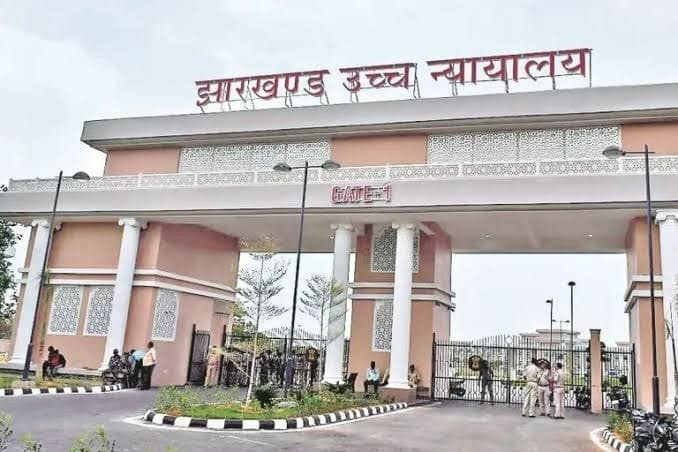
It is entirely in the fitness of things that while taking the most pragmatic decision, the Jharkhand High Court at Ranchi in a most learned, landmark, logical, laudable and latest judgment titled X v Y cited in Neutral Citation No.: (2026:JHHC:32222-DB) that was initially reserved on 07/10/2026 and then finally pronounced on 03/11/2026 has minced absolutely just no words whatsoever to hold most explicitly, elegantly, eloquently and eruditely that accusing one’s wife of adultery for merely speaking to her male friend amounts to Mental Cruelty. It merits noting that this most commendable observation was made by a Division Bench of Jharkhand High Court comprising of Hon’ble The Chief Justice Mr MS Sonak and Hon’ble Mr Justice Manoj Prasad while dismissing a man’s plea seeking a divorce from his wife. It must be noted that the most specious allegations that was made by the husband was that his wife was in an extra-marital relationship as she used to talk to an unknown male over mobile phone. It is a no-brainer that just because a wife speaks with some male over mobile phone cannot lead one to conclude that she was in an extra-marital relationship because we are now not living in 18th century but in 21st century and so we must be more broad minded and not so narrow minded that just because wife speaks to a male should divorce be granted most haphazardly in such cases!
At the very outset, this brief, brilliant, bold and balanced judgment authored by Hon’ble Mr Justice Manoj Prasad for a Division Bench of Jharkhand High Court comprising of Hon’ble The Chief Justice Mr MS Sonak and himself sets the ball in motion by first and foremost putting forth in para 2 that, “The present First Appeal has been filed by the appellant-husband under Section 19(1) of the Family Courts Act, 1984, impleading the wife as respondent No.1 and respondent No.2 (IEL), who has been made a party to this proceeding under the orders of the court. This appeal challenges the judgment dated 30.11.2023 and the decree dated 07.12.2023 passed by the learned Additional Principal Judge, Additional Family Court, Bermo at Tenughat, Bokaro, in Original Suit No.132 of 2021, whereby the petition for dissolution of marriage by a decree of divorce under Section 13(1)(i-a) of the Hindu Marriage Act, 1955 (hereinafter referred to as “the Act, 1955”) was dismissed.”
To put things in perspective, the Division Bench while elaborating on the facts of the case envisages in para 3 stating and laying bare that, “The brief facts of the case are that the marriage between the parties was solemnised on 30.04.2005 in accordance with Hindu rituals. After marriage, they lived together as husband and wife in village Gomia, District Bokaro, and had two children out of wedlock, namely one son and one daughter. It is stated that after marriage, the respondent-wife came to her matrimonial home but never sought to establish a marital relationship with the petitioner and always kept her distance from her husband, stating that she did not like him. However, through the efforts of the present appellant, the marital relationship somehow continued between the parties. It is alleged that the respondent-wife tried to create disturbances in the matrimonial life and also disregarded her in-laws. Thus, the appellant was tortured both physically and mentally on account of the ill-behaviour and short temper of the respondent-wife, who used to talk continuously on her husband’s mobile phone with some other male person, resulting in disputes and quarrels between the parties. It is alleged that the respondent was a lady of suspicious character. It is further alleged that on 15.04.2015, the respondent left the house of the appellant without informing her in-laws and went to her parental home at Jamua Tand, P.S. Baghmara, District Dhanbad, and since then she has been residing with her parents. The appellant went several times to her in-laws’ house to get the matter settled and for Restitution of conjugal rights, but to no effect. Hence, a prayer has been made for dissolution of marriage by decree of divorce.”
While delving deeper and elaborating further, the Division Bench specifies in para 4 stating that, “After appearance, the respondent filed a show cause-cum-written statement before the learned Trial Court, stating that the parties were legally married husband and wife, and that the marriage was solemnised on 30.04.2005. The marriage was also consummated, and a son and a daughter were born out of wedlock. The respondent further stated that she fully co-operated in maintaining the conjugal relationship. However, the respondent was tortured by the appellant, and demands for dowry were made. Her dignity and honour were compromised. Allegations of an extra-marital relationship were made against her, whereas the real fact was that the appellant had established an extra-marital relationship with a lady working with him. The respondent returned to her parents’ house on account of the physical and mental torture and the illegal demand for dowry made by her husband and in-laws. Despite returning to her parents’ house, the appellant never tried to restore conjugal life and never made any effort to bring her back to her matrimonial home. All efforts were unilaterally made by the present respondent, who also filed a complaint under the provisions of the Dowry Act and Section 498-A of the Indian Penal Code, which was compromised with the intent to restore conjugal life. The respondent still expressed her desire to restore conjugal life, subject to the condition that she is given due respect and honour at her matrimonial home. She has not even been allowed to meet her children during this period.”
Be it noted, the Division Bench notes in para 16 that, “Cruelty can be either physical or mental, or both. In the present case, although there are allegations of physical cruelty, namely that the respondent frequently quarrelled with her husband, i.e. the appellant, and the mother-in-law, the appellant has brought three witnesses, apart from himself, and examined them in Court to support this contention. Two of them appear to be his colleagues and friends, who are not family members. Their evidence, therefore, cannot be accepted without an element of suspicion. Evidence from a family member, particularly the mother, who is also alleged by the respondent to be a victim of such quarrels, would have corroborated the present appellant’s case, but such evidence has not been brought on record. The daughter, who has been examined in this case as a witness, was about 11 years old. It can always be considered that when a minor child is residing with only one of her parents, the possibility of poisoning of mind against the other spouse/parent cannot be ruled out. Even in her cross-examination, P.W.-3 has admitted that her entire evidence was prepared under the dictation of her father. Under such circumstances, and in the absence of sufficient evidence showing her (P.W.-3, the daughter of the parties) competence and neutrality in deposing before the Court, and also in view of her own statements made in course of cross-examination, the evidence of the minor child cannot be read into in order to conclude the allegations of cruelty made by the respondent against the appellant.”
It also merits noting that the Division Bench notes in para 17 that, “So far as the evidence of the appellant is concerned, although he has stated that he was subjected to both physical and mental cruelty, that statement is not corroborated by any credible evidence. No complaint was made before any competent authority, nor was any effort made towards reconciliation at any time. These facts lead to the conclusion that the allegations of cruelty were not proved by the present appellant.”
Most significantly, most commendably, most forthrightly and so also most remarkably, the Division Bench then encapsulates in para 18 what constitutes the “cornerstone and nucleus” of this notable judgment postulating precisely that, “Coming to the second dimension of cruelty, i.e. mental cruelty, which centres on an allegation that the wife is alleged to have had an extramarital relationship. Such allegations, if proved, may amount to mental cruelty in appropriate cases, but in the present case there are allegations and counter-allegations. The husband’s allegations begin with an assertion that his wife had an extramarital relationship, including statements that she used to talk to an unknown male over the husband’s own mobile phone. To our considered view, such allegations are typical gender-based stereotypes, where, if a woman talks to a man, even if he is a friend, charges of adultery or of an extramarital relationship are levelled. We are, therefore, of the considered view that such allegations amount to cruelty towards the wife. Counter-allegations by the wife of an extramarital relationship against her husband, without appropriate proof, may also amount to cruelty. However, in this case, the allegations were made by the husband against his wife. Thus, we are of the considered view that no case of mental cruelty is made out.”
It cannot be just glossed over that the Division Bench points out in para 20 that, “As already referred to, an order passed by a Co-ordinate Bench of this Court records that the wife expressed her desire to restore conjugal life, which was refused by the present appellant. Such a statement sufficiently establishes the absence of animus deserendi, thereby establishing the element of desertion for the purpose of divorce. Certain documents, marked as the Exhibit-X series, which have not been disputed by the parties during the course of the hearing, also show that even in the year 2015 there was a compromise. However, it appears that the compromise was entered into only for the purpose of settling the criminal case, as despite the terms of the compromise requiring the parties to live together, the same appears not to have been complied with.”
It is also worth noting that the Division Bench notes in para 21 that, “A maintenance case was filed by the wife, and even in an order passed under Section 24 of the Act, 1955, where interim maintenance of just Rs.3000/- was ordered, the husband challenged the same by filing a C.M.P. before this Court, which, though dismissed, speaks volumes about the conduct of the present appellant. The order dated 01.05.2015 passed in Cr.M.P. No.867 of 2015 shows that, in terms of a compromise between the parties, they were living together. An application was filed by the present respondent for permission to compound the said case in the year 2015 itself, as the parties had restored conjugal life, as is apparent from the documents, which is permission to compromise the case relating to Baghmara P.S. Case No.109 of 2014, which is marked as Exhibit-X/10. These entire documents, the oral evidence produced by the parties, and the other preceding discussions clearly establish that the case of desertion was also not established.”
Most strikingly, it would be instructive to note that the Division Bench then hastens to add in para 22 noting that, “Having considered the matter, we are of the considered view that the points for determination formulated by us must be decided against the appellant and in favour of the respondent, holding that the appellant failed to make out a case of cruelty or desertion under Section 13(1)(i-a) or (i-b) of the Act, 1955, for dissolution of marriage by a decree of divorce.”
It would be worthwhile to note that the Division Bench then notes in para 23 that, “Since an order under Section 24 of the Act, 1955, was passed, which was challenged before this Court and the same was affirmed. We, therefore, do not want to pass any separate order on the said aspect of interim maintenance. However, the respondent is always at liberty to move the appropriate application for modification of the order in view of any changed circumstance, if she so desires, which may be decided by the court of competent jurisdiction following the principles of law after giving an opportunity of hearing to both the parties.”
As a corollary, the Division Bench then directs and holds in para 24 that, “With the above observations, the present First Appeal is accordingly dismissed without any order as to costs.”
Finally, the Division Bench then aptly concludes by directing and holding in para 25 that, “Pending Interlocutory Application(s), if any, do not survive and stand disposed of.”
In conclusion, we thus see here that Jharkhand High Court has caught the right pulse by holding indubitably that accusing wife of adultery for just speaking to male friend amounts to cruelty towards the wife. It was also very rightly concluded by the court that such allegations are typically gender-based stereotypes. It was held so most rationally while dismissing a man’s plea seeking divorce from his wife. Very rightly so!
Disclaimer:The views and opinions expressed in this article are those of the author(s) and do not necessarily reflect the official policy or position of The Rift.