Opening The Rift
therift
© 2026 The Rift. All Rights Reserved.
Power Must Be Met With Countervailing Power: The Autobiography of Malcolm X
Human beings are not fixed monuments—they are living processes, capable of transformation, growth, and moral evolution.

Key Takeaways
1 of 3
Automatically generated. Read full article for complete context.
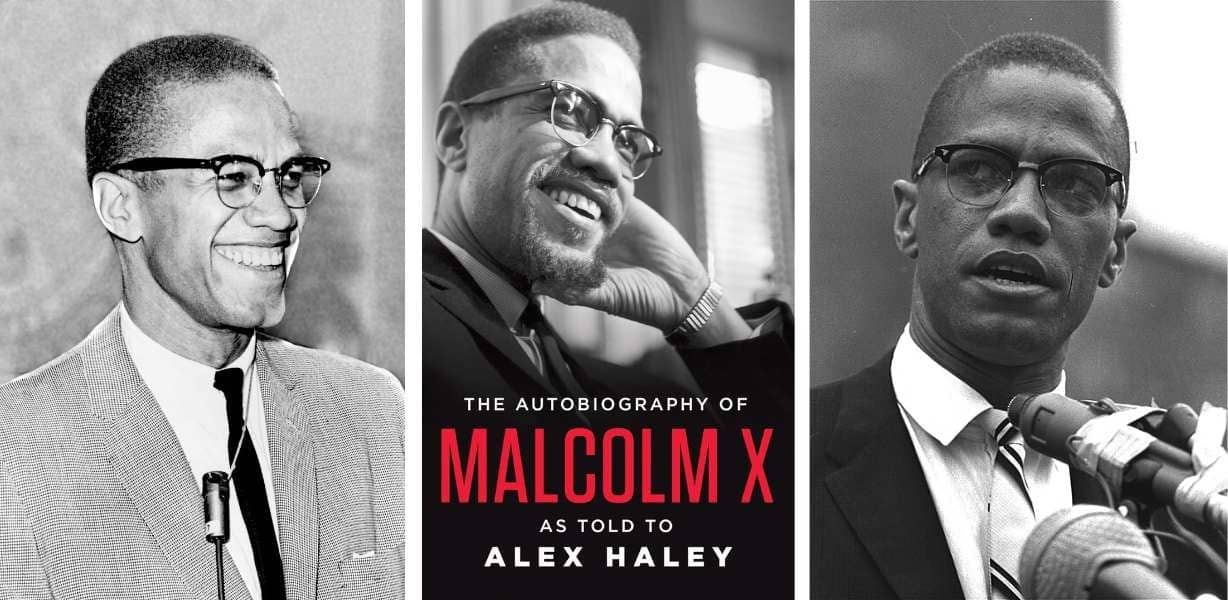
El-Hajj Malik El-Shabazz Malcolm X (1925–1965) stands among the most controversial yet profoundly influential revolutionary leaders in American history. The Autobiography – Malcolm X is far more than the life story of a single man; it is a social document, a living chronicle of collective deprivation, fractured identity, intellectual insurgency, and spiritual metamorphosis in twentieth century Black America. It traces the slow forging of a revolutionary consciousness, charting a journey from childhood innocence to adult militancy, from moral chaos to moral clarity. The narrative introduces a man who rises from the abyss of crime, rage, and vengeance into the illumination of self-discipline, political awareness, and universal brotherhood.
Malcolm’s father, Earl Little, was a fierce advocate of Black self-determination and a devoted follower of Marcus Garvey, the visionary founder of the Universal Negro Improvement AssociationUniversal Negro Improvement AssociationA Black nationalist fraternal organization founded by Marcus Garvey in 1914.. His commitment to racial dignity became a death sentence. White supremacist organizations hounded him relentlessly, burned down his home, and ultimately killed him under circumstances thick with suspicion. The weight of this terror crushed Malcolm’s mother, Louise Little, whose mental health collapsed under the combined burden of trauma and grinding poverty. As a child, Malcolm was shuttled through orphanages and reformatories, a life of institutional coldness replacing parental warmth. It was here that the seeds of rebellion, insecurity, and simmering rage were planted deep within his psyche. The posture of white America branded itself upon his consciousness with brutal clarity: to be Black in America was not merely a condition, it was treated as a crime.
On the streets of Boston and New York, Malcolm came of age as a young man severed from his roots and estranged from his identity. He slipped into the underworld with chilling ease. Drugs, theft, hustling, and gambling became the currency of his daily existence. During this period, he was known as “Detroit Red,” a name that embodied not just a nickname but a fractured self, an emblem of cultural exile and spiritual dislocation. This phase of his life was not simply personal decay; it was social indictment. It exposed a structure that offered Black youth no ladder to climb, only a trapdoor to fall through. In his autobiography, Malcolm X lays bare the bitter anatomy of American racism, revealing how society systematically relegates a section of society to second- and third-class existence, stripping it of dignity, opportunity, and hope.
His rapid descent into crime ultimately led him behind bars. In 1946, Malcolm X was sentenced to ten years in prison, a punishment that paradoxically became his salvation. Prison became the crucible of his transformation. There, he turned to books with monastic devotion. Reading became his refuge, his discipline, and his awakening. History, philosophy, politics, and religion formed the scaffolding of his new consciousness. Each page turned was a chain broken. He would later write that prison was where reading permanently altered the trajectory of his life—where ignorance gave way to illumination.
During this period, he heard about the Nation of Islam, led by Elijah MuhammadElijah MuhammadThe spiritual leader of the Nation of Islam from 1934 to 1975 who mentored Malcolm X.. Its followers, known as Black Muslims, had established their own institutions, mosques, and disciplined communities. They observed strict dietary laws, emphasized modest dress, and cultivated moral discipline. While some of their doctrines diverged from Islam, their central message was a clear blend of values: Disciplined and virtuous life, Black self-respect, self-reliance, racial pride, and resistance to white domination. The movement preached that Black people were inherently superior and that white society was morally corrupt. Malcolm embraced the movement with fervour. He discarded his inherited surname “Little” and adopted the letter “X,” a symbolic erasure of the stolen African identity obliterated by slavery, an emblem of loss, resistance, and rebirth.
After his release, Malcolm’s elder brother Wilfred welcomed him into his home. By then, Wilfred and his family were devoted members of the Nation of Islam. Living among them left a deep imprint on Malcolm’s soul. He encountered, perhaps for the first time, a Black household governed by discipline, dignity, and spiritual order. The family rose early, greeted one another with Assalamu Alaikum (may peace be on you), observed prayers, and lived lives marked by restraint and moral clarity. Within the Nation, members addressed one another with honorifics—Brother, Sister, Madam, Sir—language that restored dignity through everyday speech. Malcolm would later reflect that he had never imagined a world in which Black people would meet one another not with envy, suspicion, and bitterness, but with fraternity, respect, and shared humanity, where dark skin was not a mark of shame but a badge of pride, and Blackness was not a burden, but a crown.
Malcolm X rose as the most formidable orator and the most compelling spokesman the Nation of Islam had ever produced. His speeches cut like sharpened steel—incisive, unsparing, and electrifying. He stripped racism of its disguises, reminded Black communities of their inherent right to self-defence, and openly challenged the one-sided absolutism of nonviolence. Where Martin Luther King Jr. placed his faith in nonviolent persuasion, Malcolm X argued that moral appeals alone were toothless in the face of structural violence; power, he insisted, must be met with countervailing power. This stance branded him a radical in the eyes of the mainstream, but among Black youth he became a living emblem of dignity, courage, and resistance. Gifted with magnetic leadership and a masterful command of rhetoric, he quickly rose to become the second most influential figure within the organization. It was largely through Malcolm’s persuasion and personal influence that the young boxing prodigy Cassius Clay entered the Nation of Islam and emerged reborn as Muhammad Ali.
With time, however, cracks began to appear in Malcolm’s faith in the organization’s leadership, particularly in the personal and organizational conduct of Elijah. The Nation publicly upheld rigid moral codes, yet multiple teenage girls accused Elijah of sexual misconduct, exposing a chasm between preached virtue and practiced reality. Jealousy was playing within the Nation’s ranks. Public stance taken by Malcolm on President John F. Kennedy’s assassination deepened the rift. By 1964, Malcolm could no longer reconcile conscience with loyalty, and he had to sever his ties with the organization.
Malcolm X’s pilgrimage to Mecca marked the most decisive turning point of his life. There, he witnessed a living tapestry of humanity—Muslims of every colour, race, and nation standing shoulder to shoulder in worship. The experience shattered his racial absolutism. For the first time, he began to see the white man not merely as an oppressor, but as a human being. After the pilgrimage, he became Alhaji Malik al-Shahbaz—a believing Muslim, spiritually reborn and intellectually transformed, now detached from the doctrines and practices of the Nation of Islam. He went on to establish the Muslim Mosque Inc. and the Organization of Afro-American UnityOrganization of Afro-American UnityA Pan-Africanist organization founded by Malcolm X in 1964 to fight for the human rights of African Americans.. His message was no longer anchored in racial antagonism but in universal human rights, moral justice, and global brotherhood. He had come to understand that the true struggle was not between colours, but against systems of oppression.
This rapid and profound intellectual evolution made him dangerous to many. On February 21, 1965, Malcolm X was assassinated during a rally in New York. He was only thirty-nine years old. His wife and children were present when he rose to address the gathering. Members associated with the Nation of Islam were arrested in connection with the murder. His life was cut short, but his ideas were not silenced.
Malcolm’s influence extended even into the heart of the Nation of Islam itself. Elijah’s son, Warith Deen Muhammad, was deeply shaped by Malcolm’s thought. After Elijah’s death, ten years after Malcolm’s martyrdom, Warith Deen Mohammad assumed leadership. He redefined relations between Blacks and Whites, and dismantled the old doctrines, steering the movement toward mainstream Islam and reintegrating it into the broader Muslim world. Although America today is not the America of fifty, sixty, or a hundred years ago, white racism has not vanished; it has merely changed its masks and learned new languages.
The enduring power of this book lies in its truthfulness. Malcolm X does not sanctify himself. He lays bare his flaws, contradictions, and errors with disarming honesty. This candour transforms the work from a mere biography into an intellectual confession. It teaches a profound lesson: human beings are not fixed monuments—they are living processes, capable of transformation, growth, and moral evolution.
Spiritual Metamorphosis of Malcolm X
1925
Born as Malcolm Little; father killed by white supremacists.
1946
Sentenced to ten years in prison; undergoes intellectual awakening.
1952
Embraces the Nation of Islam, erasing his inherited surname for “X”.
1964
Pilgrimage to Mecca; severs ties with the Nation of Islam.
1965
Assassinated on February 21 at age thirty-nine.
VISUALS BY THE RIFT
The autobiography was the outcome of a collaboration between Malcolm and Alex Haley, a trained journalist and writer. Malcolm, consumed by activism during the day, often met Haley late at night. Malcolm spoke; Haley listened and recorded. From dozens of such conversations emerged this monumental narrative of struggle, awakening, and redemption. It remains an evergreen work, timeless, urgent, and alive. Malik El-Shabazz’s burning desire for a just world, and a liberated humanity continues to warm hearts and unsettle consciences alike.
Disclaimer:The views and opinions expressed in this article are those of the author(s) and do not necessarily reflect the official policy or position of The Rift.