Opening The Rift
therift
© 2026 The Rift. All Rights Reserved.
Pradip Prabhu, Who Brought Hope to Many Oppressed People, is No More
Pradip Prabhu’s deep commitment to justice led him to risk his life for oppressed people, notably tribal communities, shaping landmark legislation like PESA.

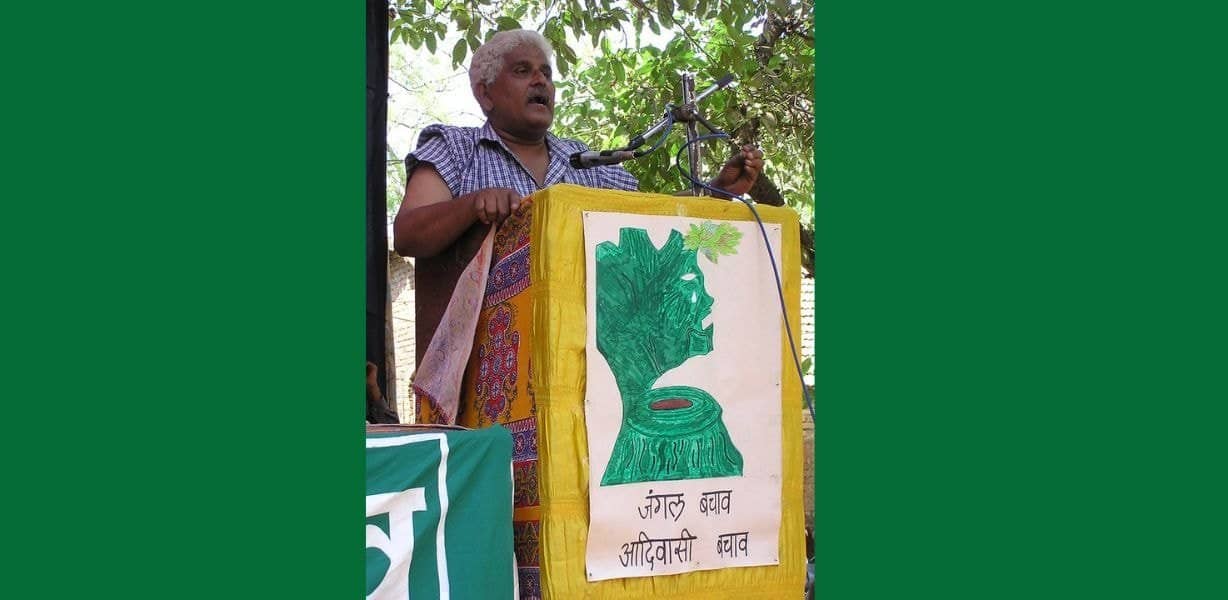
Pradip Prabhu’s deep commitment to justice led him to risk his life for oppressed people, notably tribal communities
Key Takeaways
1 of 3
Automatically generated. Read full article for complete context.
Activist, teacher, lawyer—Pradip Prabhu contributed a lot in his many-sided roles—the one uniting thread in all this work being his deep commitment to justice. It is seldom that one sees such a combination of someone going to jail and risking his life in the course of struggles for various oppressed people and particularly for the rights of tribal communities, and at the same time serving with distinction on several government committees; teaching students in top institutes and training senior officers, while at the same time fasting for many days to press for the passing of legislation to protect rights of tribal communities.
Pradip Prabhu, also known as Pradipbhau to many people particularly villagers among whom he worked, breathed his last on August 25 at the age of 78. He studied at the Tata Institute of Social Sciences (TISS) in his early years (later he also taught here and contributed in many ways to this prestigious institute. He found his true calling when he played a leading role in the setting up the Kashtkari Sangathan (translated as organization of those who toil) in Dahanu (Maharashtra) in 1978. Here he was involved in many struggles against exploitation and injustices which ultimately helped to bring many-sided benefits to marginal and small farmers as well as landless workers, mainly of tribal communities.
Pradip Prabhu’s Legacy: A Timeline of Key Events
1978: Co-founded the Kashtkari Sangathan in Dahanu, Maharashtra, initiating struggles against exploitation for tribal communities.
1993: Significant improvements to Panchayati Raj (rural decentralization) sought through the 73rd Constitutional Amendment.
January 1996: Bhuria Committee submitted its report, recommending a framework for decentralization in Scheduled Areas.
December 24, 1996: Parliament passed the Panchayats (Extension to Scheduled Areas) Act, popularly known as PESA legislation.
VISUALS BY THE RIFT
It was in the course of these struggles that Pradip developed the deeper understanding and perspective which helped him later to contribute in important ways to national-level legislation for strengthening the rights of tribal communities in the form of Forest Rights ActForest Rights Act (FRA), 2006A landmark legislation in India that recognizes and vests the forest rights and occupation in forest land to forest dwelling Scheduled Tribes and other traditional forest dwellers. and PESAPESA (Panchayats (Extension to Scheduled Areas) Act), 1996An Indian law enacted to extend the provisions of the 73rd Constitutional Amendment (Panchayati Raj) to the Scheduled Areas, granting special powers to Gram Sabhas in tribal regions. or Panchayats (Exension to Scheduled Areas) Act.
At various stages of his life Pradip Prabhu was closely associated with several prestigious academic and training institutes including, apart from TISS, the National Institute of Rural Development and the Lal Bahadur Shastri Academy. Apart from his continuing work in the the Kashtkari SangathanKashtkari SangathanAn organization of toiling people, co-founded by Pradip Prabhu in Dahanu, Maharashtra, to fight exploitation and injustice, particularly for tribal communities., he contributed in important ways to several other social movements including the Bharat Jan AndolanBharat Jan AndolanA social movement mobilized by Dr. B.D. Sharma, focusing on advocating for stronger decentralization and empowerment of tribal communities in India., Shoshit Jan Andolan, Campaign for Survival and Dignity and Barefoot Academy of Governance. In fact it is in the course of the meetings of Bharat Jan Andolan that I first met him. Dr. B.D.Sharma, former Commissioner for Scheduled Castes and Tribes in the Government of India, had after his retirement mobilized this social movement with the help of social activists in several parts of the country and one of the main demands that emerged in the course of this mobilization was in the form of extending decentralization of governance to tribal communities in a stronger form. Dr. Sharma found in Pradip Prabhu a very important friend and firm supporter to take this forward.
While rural decentralization in the form of Panchayati RajPanchayati RajA system of local self-governance in rural India, established through constitutional amendments, aiming to decentralize administration to elected village councils (Panchayats). was sought to be improved significantly in 1993, one criticism was that even the new law had not adequately strengthened the wider rural community as more powers were vested in the few elected representatives rather than in the community. However as this law did not apply to Scheduled Areas and there was provision of enacting different legislation for scheduled areas where most of the tribal communities live, there was still an opportunity for empowering entire tribal communities.
At this juncture an important role was played by Bharat Jan Andolan and its convener Dr. B.D.Sharma. This movement and Dr. B.D. Sharma along with friends like Pradip Prabhu played an important role in advancing the cause of a different decentralization law for Scheduled Areas that would strengthen tribal communities.
In the middle of a continuing campaign for this a committee under the chairmanship of Sh. Dilip Singh Bhuria, Member of Parliament, consisting of several MPs and experts, was appointed to suggest a suitable frame of decentralization legislation for Scheduled Areas. This committee gave its report in January 1996.
However, when there was no suitable follow-up action after this, representatives of tribal communities from various parts of the country went on a fast at Rajghat in Delhi. Both Dr. Sharma and Pradip joined this fast. Members of various political parties came to extend their support and finally a consensus could emerge on new and different decentralization legislation for Scheduled Areas that would go a long way in strengthening the tribal communities.
On 24 December, 1996 the Parliament finally passed the Panchayats (Extension to Scheduled Areas) Act, 1996, popularly known as PESA legislation. This legislation which applies only to scheduled areas (having a significant tribal population) firmly establishes the Gram SabhaGram SabhaThe general assembly of all adult residents of a village or a group of villages, serving as the foundational unit of local self-governance in India’s Panchayati Raj system, especially empowered in Scheduled Areas by PESA. as the most basic unit of Panchayati Raj in these areas. Section 4(d) of this Act states: “Every Gram Sabha shall be competent to safeguard and preserve the traditions and customs of the people, their cultural identity, community resources, and the customary mode of dispute resolution.”
Section 4(e) states that every Sabha shall approve the plans, programs, and projects for social and economic development before such plans, programs, and projects are taken up for implementation by the panchayat at the village level. Section 4(f) states: “Every panchayat at the village-level shall be required to obtain from the Gram Sabha a certification of utilization of funds by that panchayat for the plans, programs and projects referred to in clause (e).”
Other clauses give the Gram Sabha important rights before any village land can be acquired for various projects or before any village land can be auctioned for its minor minerals. Similarly the Gram Sabha has been given significant power regarding minor forest produce, preventing alienation of land and restricting the sale of liquor.
Thus, it is clear that the tribal communities in the form of Gram Sabhas in Scheduled Areas have been empowered in very significant ways by the PESA law. While this has been widely appreciated, this has also evoked a good deal of opposition from powerful interests. Hence there have been several obstacles in implementing this this legislation and taking this forward in the right spirit for empowering tribal communities in a significant challenge.
The absence of Pradip Prabhu will be deeply felt whenever such challenges are being faced. He is survived by his wife Shiraz Bulsara, a highly regarded activist and scholar in her own right. Pradip’s memory is cherished, apart from family members and close friends, by a very large number of people who stand for justice, by his numerous students and fellow-activists and by the people among whom he worked continuously for many decades.
Disclaimer:The views and opinions expressed in this article are those of the author(s) and do not necessarily reflect the official policy or position of The Rift.