Opening The Rift
therift
© 2026 The Rift. All Rights Reserved.
Critical Care as a Human Right: Reimagining India’s ICU Infrastructure
The right to life cannot be protected if individuals cannot obtain timely emergency medical assistance, making critical care a constitutional imperative.

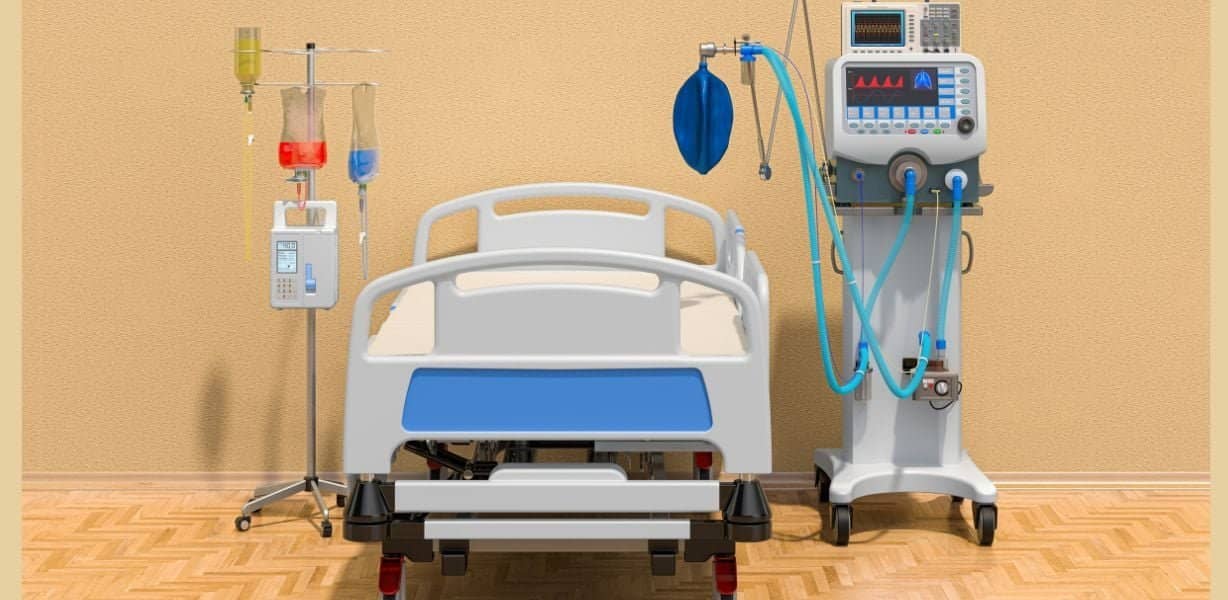
The right to life cannot be protected if individuals cannot obtain timely emergency medical assistance, making critical
Key Takeaways
1 of 3
Automatically generated. Read full article for complete context.
Healthcare is increasingly recognised as a fundamental human-rights concern, particularly where delayed treatment can determine whether a person survives. Against this backdrop, the Supreme Court of India’s order dated 20 May 2024 in Asit Baran Mondal & Anr. v. Dr. Rita Sinha & Ors. represents a significant judicial intervention in India’s critical-care system. By addressing ICU infrastructure, emergency transportation, telemedicine and nursing education together, the Court has shifted the conversation from individual medical treatment to the State’s broader responsibility to ensure accessible and effective critical care.
The Court’s reasoning is firmly anchored in Article 21Right to Life and Personal LibertyA fundamental right enshrined in the Constitution of India, guaranteeing protection of life and personal liberty, which the Supreme Court has interpreted to include the right to health and timely medical care. of the Constitution. The right to life, it emphasised, cannot be meaningfully protected if individuals cannot obtain timely emergency medical assistance. Critical care, therefore, is not merely a healthcare facility but an essential component of the constitutional protection of life and dignity.
From ICU Shortage to Systemic Healthcare Reform
India’s critical-care challenge extends beyond the number of ICU beds. Unequal distribution of facilities, inadequate emergency transportation, shortages of trained professionals and limited access to specialist care particularly affect rural and underserved populations. Consequently, the availability of an ICU in a particular hospital does not necessarily guarantee meaningful access to critical care.
The Court’s intervention is significant because it recognises these interconnected deficiencies. From a human-rights perspective, healthcare cannot be genuinely accessible when survival depends upon geographical location or socio-economic capacity. The judgment therefore seeks to establish a more uniform and accountable framework for delivering emergency care.
Standardising Critical Care Through Three-Tier ICUs
A key feature of the order is the approval of a three-level ICU classification. Level I ICUs provide basic critical-care support and essential monitoring; Level II ICU facilities offer enhanced capabilities, specialist support and advanced equipment; while Level III ICUs provide comprehensive tertiary care through multidisciplinary specialists.
Such standardisation can address an important regulatory gap. Merely labelling a facility an “ICU” does not establish the quality or extent of care it can provide. Clearly defined minimum standards can facilitate accreditation, resource allocation, patient referrals and institutional accountability. More importantly, they can help ensure that patients receive treatment appropriate to the seriousness of their condition.
Making States Accountable for Infrastructure Gaps
The Court has directed all States and Union Territories to conduct a gap assessment within two months, examining deficiencies in ICU infrastructure, manpower and emergency-care systems. Healthcare institutions are expected to progressively meet at least Level I standards, particularly to enable timely stabilisation of critically ill patients.
This direction transforms healthcare planning from a broad policy objective into a measurable administrative responsibility. However, identification of deficiencies must be followed by adequate funding, recruitment, training and continuous monitoring. Otherwise, the exercise risks becoming merely an administrative formality.
Emergency Transport as a Continuation of Critical Care
Access to an ICU is meaningful only if critically ill patients can reach it safely and quickly. The Court has therefore emphasised standardised ambulances equipped with ventilators and life-support systems and proposed that districts should have at least five advanced ambulances capable of stabilising patients during transportation and facilitating inter-hospital transfers.
Equally important is the Court’s concern that families should not be forced to arrange hospital transfers during medical emergencies. Institutional coordination between hospitals can reduce delays and ensure continuity of care. This approach recognises that the responsibility for an effective emergency system cannot be shifted onto vulnerable patients and their families.
Tele-ICU and Digital Healthcare as Tools of Equality
The proposed GPS-enabled national digital platform could provide information regarding ICU availability and facility levels, facilitate hospital-to-hospital coordination and support patient transfers. The Court has also endorsed telemedicine and tele-ICU networks to extend specialist expertise to underserved regions.
From a human-rights perspective, digital healthcare offers an opportunity to reduce geographical inequalities. Tele-ICU services cannot substitute for adequate physical infrastructure, but they can enable specialists to guide treatment remotely and potentially prevent unnecessary transfers. The challenge will be ensuring reliable connectivity, technological capacity and equitable access.
Nursing Education and the Human-Resource Crisis
The Court also expressed concern over nursing institutions being located far from hospitals with ICU facilities. Meaningful ICU exposure is essential for developing competent nursing professionals, making clinical training an important component of patient safety.
Its direction for information concerning ICU access and infrastructure across approximately 800 nursing colleges highlights a broader reality: infrastructure alone cannot strengthen critical care without adequately trained personnel. Human resources must therefore remain central to healthcare reform.
Global Models of Critical-Care Infrastructure
India’s proposed reforms can also be viewed against established critical-care systems in other countries. Germany has historically maintained comparatively high ICU capacity and developed substantial surge arrangements during health emergencies and has one of the highest densities of ICU beds worldwide, with 35.3 ICU beds per 100,000 population capita. While the Czech Republic and Estonia have reported among the highest ICU-bed availability in the OECD. Japan and South Korea demonstrate particularly strong overall hospital capacity, with 2023 figures showing approximately 12.5 and 12.6 hospital beds per 1,000 population respectively. The United Kingdom, Australia and Canada, meanwhile, illustrate the importance of integrating ICU capacity with organised emergency and hospital systems, although capacity pressures and staffing constraints remain significant.
OECD evidence also underscores that the adequacy of trained personnel, rather than bed numbers alone, is critical to effective intensive care. These international experiences demonstrate that resilient critical-care infrastructure requires more than physical ICU beds: it depends upon defined levels of care, trained professionals, emergency transport, referral networks, surge capacity and effective coordination. In this comparative context, the Supreme Court’s directions in Asit Baran Mondal represent an attempt to move India towards a more standardised, integrated and equitable critical-care architecture, while adapting global lessons to India’s distinctive demographic and geographical realities.
Global Critical Care & Hospital Capacity (2023)
| Country | Metric | Value |
|---|---|---|
| Germany | ICU Beds per 100,000 Population | 35.3 |
| Japan | Hospital Beds per 1,000 Population | 12.5 |
| South Korea | Hospital Beds per 1,000 Population | 12.6 |
VISUALS BY THE RIFT
Situating the order within Global Health and Human Rights Law
The Supreme Court’s approach also resonates with the emerging international recognition of emergency and critical care as integral to the right to health. Article 12 of the International Covenant on Economic, Social and Cultural Rights (ICESCRInternational Covenant on Economic, Social and Cultural RightsA multilateral treaty adopted by the United Nations General Assembly, committing its parties to work toward the granting of economic, social, and cultural rights to individuals, including the right to the highest attainable standard of health.) recognises the right to the highest attainable standard of health, while the WHOWorld Health OrganizationA specialized agency of the United Nations responsible for international public health, setting global health standards, and providing technical support to countries. has increasingly translated this principle into concrete obligations of availability, accessibility, acceptability and quality of healthcare.
The WHO’s Emergency Care System Framework and its human-rights-based approach emphasise that timely emergency care must be accessible to all, including vulnerable and geographically isolated populations. This approach was reinforced by World Health Assembly Resolution WHA 72.16World Health Assembly Resolution 72.16 (2019)A resolution adopted by the World Health Assembly that called for universal access to timely, essential, and quality emergency care as a component of universal health coverage. (2019), which called for universal access to timely emergency care; and WHA 76.2, which places integrated emergency, critical and operative care within the broader objectives of universal health coverage and protection from health emergencies.
The WHO’s current global strategy for integrated emergency, critical and operative care for 2026–2035 further demonstrates that resilient critical-care systems are now viewed internationally as both a health system necessity and a component of equitable access to healthcare. Against this global backdrop, Asit Baran Mondal can be understood as an important instance of domestic constitutional adjudication translating the right to health, non-discrimination, universal access and timely emergency care into concrete institutional obligations.
Towards a Rights-Based Critical-Care System
The importance of Asit Baran Mondal lies in its broader understanding of the right to life as requiring functional healthcare systems, not merely formal constitutional recognition. Its focus on ICU standards, emergency transport, digital connectivity, specialist access and professional training reflects an integrated approach to critical-care reform.
Yet judicial directions can only provide the framework. Their success will depend upon sustained public investment, effective implementation and institutional accountability. Ultimately, a rights-based healthcare system must ensure that a patient’s chance of survival does not depend upon where they live, the hospital they reach first, or their ability to navigate a fragmented healthcare system. The Supreme Court’s intervention therefore marks an important step towards recognising critical care as not simply a medical necessity, but a constitutional and human-rights imperative.
Disclaimer:The views and opinions expressed in this article are those of the author(s) and do not necessarily reflect the official policy or position of The Rift.