Opening The Rift
therift
© 2026 The Rift. All Rights Reserved.
Relationships of Dominance as Seen in a Great Novel on Freedom Movement of India—Revisiting A Hindi Classic Chitralekha
Relationships of dominance repeatedly come back to haunt not just the feudal lackeys of colonial rule, they keep troubling even those who are in liberation movements.

Key Takeaways
1 of 3
“A feudal chief of an estate in central India, Pandit Ramnath is a firm supporter of colonial British rule and opponent of the freedom movement.”
Automatically generated. Read full article for complete context.
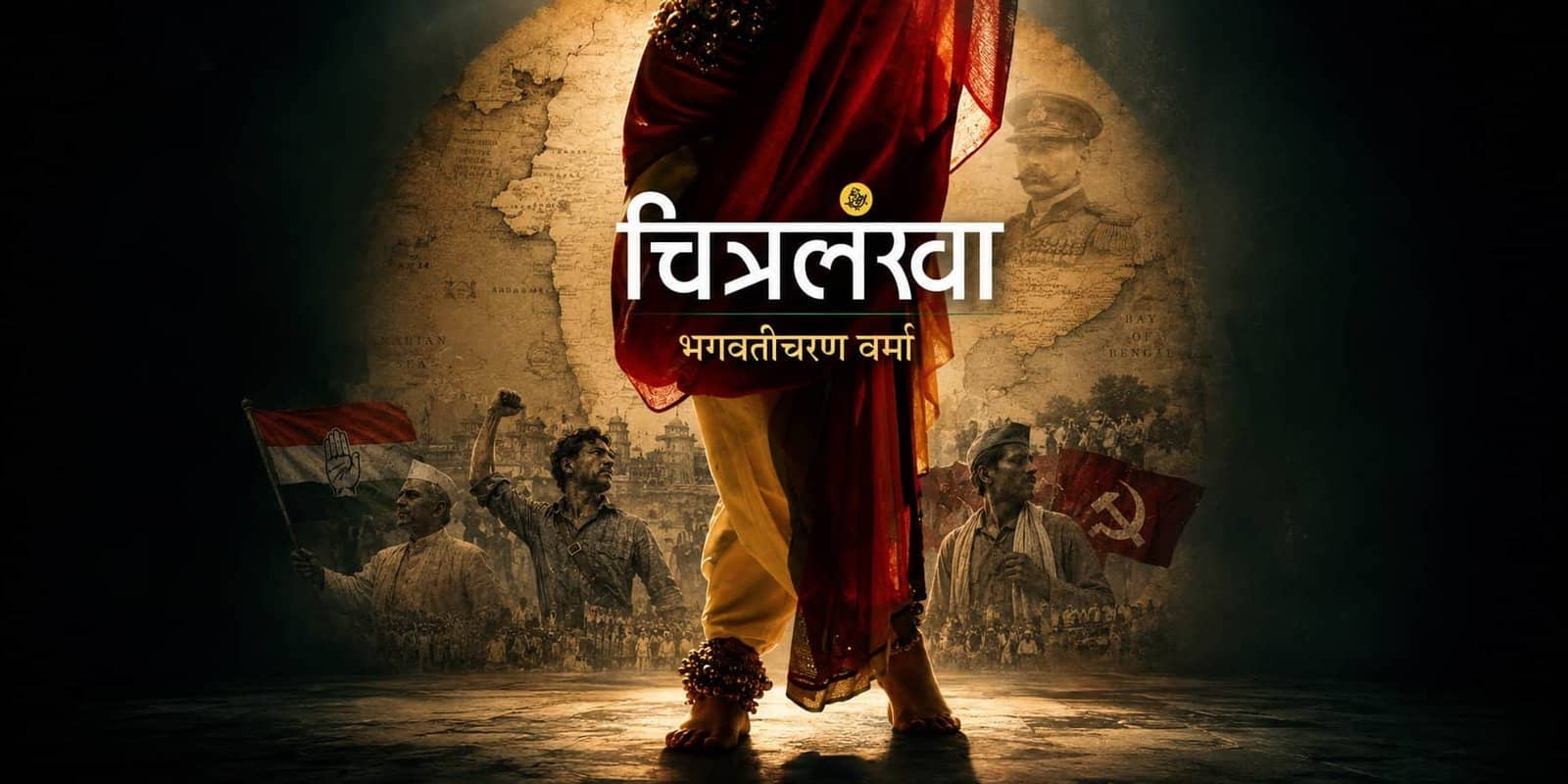
Bhagvati Charan Varma (1903-81) achieved enduring fame for his philosophical novel ‘Chitralekha’ which is still widely read and was twice made into popular films, the latter version starring Meena Kumari and Ashok Kumar with some great songs written by Sahir. However, I am here going to discuss a less remembered book of this author because of the abiding, in fact, increasing—relevance of some important issues this book raised. The reference here is to the novel titled ‘Terhe Merhe Raaste’ (roughly translated as ‘The Curved Paths of Life’).
The plot of this novel, set in the period around 1930, is highly dramatic and full of ironic situations. A feudal chief of an estate in central India, Pandit Ramnath is a firm supporter of colonial British rule and opponent of the freedom movement. He feels strongly that it is completely foolish to try to dislodge the biggest imperialist powerImperialist PowerA nation that extends its power and influence through colonization, military force, economic dominance, or other means over other territories or peoples. and in any case, feudal interests like him are best protected under colonial rule. Such thinking is equally strongly reflected in his personal life in which he seeks to dominate all his relationships—on the one hand capable of being quite ruthless towards opponents but on the other hand, also seeking to dominate close social relationships including those with his family members. So even when in his own way he is being kind and affectionate towards family members, he cannot escape this attitude of dominance that pervades and guides his life.
However, in a highly ironic twist, all three of his sons join liberation movements—one son joins the Congress-led freedom movement, another the revolutionary freedom movement, and the third the international communist movement. and the third one joins the international communist movementInternational Communist MovementA global political and social movement advocating for a classless society, the abolition of private property, and the establishment of communism, often associated with Marxist-Leninist ideologies.. This creates a very interesting situation in which the reader is very eager to know what happens next. Will his love for his sons lead him to a new understanding of the wider socio-political situation, or will his strong sense of dominance make it impossible for him to acquire such new understanding? I am not going to give away the very absorbing plot, but suffice it to say that the novel brings out in a very gripping way how the strong urge for dominance is destructive and ultimately self-destructive.
While this is most effectively brought out in the experiences of the central character Ramnath, the experiences relating to this theme extend to other parts of the story. As the three sons of Ramnath join different paths, there are several situations in which Congress members and communist activists engage in heated discussions. One aspect emphasized is that these intense discussions, sometimes involving very strong, caustic, and even insulting remarks, are characterized more by a strong desire to dominate the other side than by a spirit of mutual learning or understanding.
On the other hand, the third brother in the revolutionary movement is constrained by the need for complete secrecy and in his case and that of his companions, only discussion within a small group or with oneself is possible, a situation that can be very inhibiting.
In the absence of true democratic discussions and self-correction based on these, even those who have made courageous decisions of fulfilling wider social responsibilities, making big personal sacrifices, are unable to achieve truly significant aims and when the situation becomes difficult, sometimes they are seized by self-doubt and sometimes the situation becomes very tragic.
Relationships of dominance repeatedly come back to haunt not just the feudal lackeys of colonial rule, they keep troubling even those who are in liberation movements.
I feel the increasing social relevance of this novel is most prominently revealed in this context, although, of course, the novel also needs to be appreciated for its many-sided literary achievements. The only shortcoming I could find in this context is that more attention should have been given to developing several women characters and exploring their strong feelings as they often suffer the most from relationships of dominance without even being able to articulate them. If only their voices were heard more often and more carefully, many more opportunities for self-correction would be available.
Disclaimer:The views and opinions expressed in this article are those of the author(s) and do not necessarily reflect the official policy or position of The Rift.