Opening The Rift
therift
© 2026 The Rift. All Rights Reserved.
Urgent Steps Needed to Improve Implementation of Right to Information in India
Recent neglect has led to the weakening of India’s Right to Information law, a critical pillar of democracy achieved after a long struggle.

Key Takeaways
1 of 3
Automatically generated. Read full article for complete context.
People of this country have a right to know every public act, everything done in a public way, by their public functionary. They are entitled to know the particulars of every public transaction in all its bearing.”
Justice Mathew, Supreme Court of India,(in State of Uttar Pradesh vs Raj Narain, 1975)
“No democratic government can survive without accountability and the basic postulate of accountability is that the people should have information about the functioning of the government… that an open society is the new democratic culture towards which every liberal democracy is moving. Our society should be no exception.”
Justice P. N. Bhagwati, Supreme Court of India (in S.P. Gupta vs Union of India, 1981)
A recent review of the implementation of the Right to Information (RTI) legislation in India has revealed that this has weakened considerably and an important reason for this relates to the long delays in appeals being heard and decisions taken on them. This is highly unfortunate as prompt and satisfactory response to appeals is crucial for the satisfactory realization of the aims of this very important democratic law.
The reference here is to the latest review of RTI implementation conducted by the Satark Nagrik Sangathan—SNS– (translated as Organization of Alert Citizens), a Delhi-based organization that has made a pioneering contribution to the use of RTI law for protecting the entitlements of urban poor households. I still remember participating in some public hearings organized in some slums or hut colonies of South Delhi by the SNS in the early days of the RTI law. Follow-up revealed that good results were being achieved in terms of improved entitlements.
This review has revealed that 12 of the 25 information commissions (ICs), including the Central Information Commission (CIC) have a waiting periods of one year or more for the disposal of appeals. In fact, two ICs are not functional at all. In extreme cases, three states have waiting periods of even 18 or 19 years! If one is to add up all the pending appeals and complaints before all the ICs, this amounted to the extremely high figure of 3,85,716 on June 30, 2026. On the plus side, the CIC has lately managed to significantly reduce its backlog. The number of appeals being rejected or returned has also been at a very high level, this review found.
However this review also reveals that with sincere efforts, the waiting period can be reduced to very reasonable levels, as is evident from the example of Gujarat and Karnataka ICs succeeding in keeping the waiting period down to just one month.
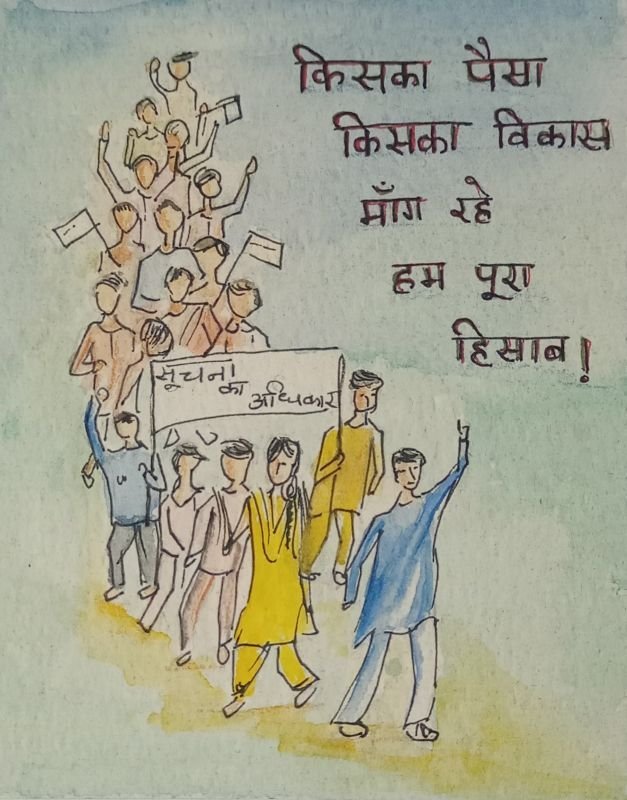
Aside from such data, anecdotal evidence from several parts of the country has also revealed increasing problems at the implementation level. This is highly unfortunate as RTI in a robust form was achieved in India only after a long drawn struggle. This writer still remembers the days leading up to and following RTI legislation in India when at international seminars the story of India’s RTI journey would get special attention and applause as here this journey had been led by people’s grassroots struggles.
The efforts and yearnings of about 15 years culminated in RTI legislation being passed in India in 2005. While not perfect, the legislation was quite satisfactory and was soon frequently mentioned as a model law in several other countries.
Two aspects of the RTI movement in India which led to this law being enacted in a satisfactory form were quite remarkable. Before the Right to Information movement in India, the demand for this right was generally not related to the struggles of the poor. However in India this demand rose from the struggles of the peasants and workers in Rajasthan being mobilized by the Mazdoor Kisan Shakti Sangathna (Mobilization of Workers and Peasants or MKSS). This became an integral part of the struggles of the MKSS and other organizations to improve rural employment and drought relief work which play an important part in sustaining life and livelihood in Rajasthan. This trend of RTI being used to serve the needs of the poor was maintained in other struggles in Uttar Pradesh, Madhya Pradesh, Maharashtra, Delhi and elsewhere. I still remember going to meet a Chief Minister with senior activists in the context of raising the demand for this law and when I mentioned its great relevance for the poor, the Chief Minister who was otherwise a great supporter of this law asked what is its special relevance for the poor. I mention this incident only to highlight that before the RTI struggles involving the poor in India, particularly in Rajasthan, there was very little conceptual and practical understanding of RTI in the context of protecting their rights and entitlements.
Secondly, it is quite remarkable that while in the beginning of this campaign – say around the year 1990 – there was very little support for RTI and in fact a lot of misgivings were expressed about it, by the time the legislation was discussed in Parliament in year 2005, such a strong base had been created for its wide acceptability that even politicians known to be opposed to it were not inclined to voice their feelings publicly. It is interesting and significant how this public opinion in favour of RTI was created within a relatively short period of about 15 years or so. A significant part of the credit should go to groups of activists and other citizens who worked with great dedication for this cause. There was a National Campaign for People’s Right to Information (NCPRI) and other groups at the state-level (this writer was given the honour to be the first Convener of the NCPRI in its formative stage). At times, all these efforts taken in isolation appeared quite small, but taken together, the continuous efforts to keep the issue alive proved quite effective. When other circumstances also became favorable, fairly strong national-level legislation was then passed.
During these 15 years at various times state-level RTI laws were enacted by nine state governments, including Tamil Nadu, Goa, Rajasthan, Maharashtra, Delhi, Karnataka, Assam, Madhya Pradesh, and Jammu and Kashmir. In some states administrative orders were passed for RTI at the village council level or for some selected departments. Some Chief Ministers like Digvijay Singh (Madhya Pradesh), Ashok Gehlot (Rajasthan) and Sheila Dikshit (Delhi) spoke strongly in favour of RTI. However most of the state laws were relatively weak. In Goa, despite the law being weak, however, during the very first year, the government received about 400 requests for information. Many of these were related to pollution. M.K. Jose and his colleagues made effective use of this legislation to expose several irregularities particularly those relating to banking and educational institutions.
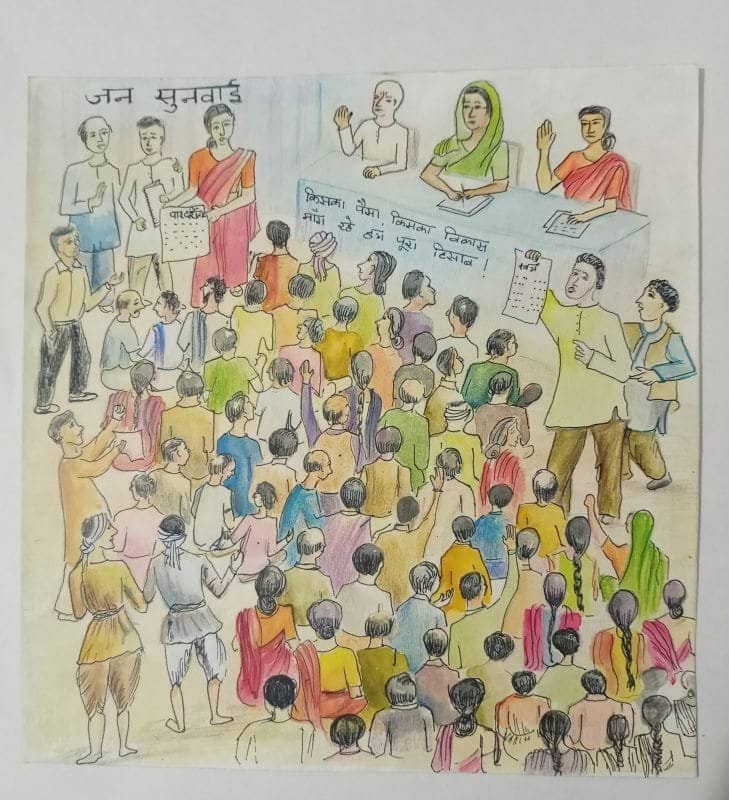
In Rajasthan a strong grassroots movement for right to information had emerged demanding the right to information, led by the MKSS and several other organizations and individual citizens were linked to this. The inspirational role, particularly of MKSS founder members Aruna Roy, Nikhil Dey, and Shankar Singh, must be mentioned here. The most remarkable aspect of RTI use at grassroots in Rajasthan was the exposure of corruption in the use of rural development/relief funds at the village level and the organization of public hearings (jan sunwais) for this purpose. In some villages this led to such a situation that elected representatives admitted corrupt places publicity and even agreed to return the money. This entire exercise of jan sunwais was a very democratic effort in which almost the entire village community became involved at most places.
Some other organizations in Rajasthan followed the good work done by MKSS. One of the most successful ones is the effort of Jagruk Nagrik Manch (helped by Urmul Jyoti Sansthan) in Nokha block of Bikaner district, Rajasthan. JNM claimed to have tackled effectively nearly 400 issues of corruption leading to the return of almost one million Rs. to people who had been victims of corruption. JNM also exposed a major fraud in the Public Distribution System as a result of which the corrupt dealer agreed to return all the ill-gotten money to the village community (whom he had swindled earlier) and also agreed to surrender his dealership.
In Maharashtra earlier very weak legislation was enacted but sometime later – thanks partly to a movement launched by social activist Anna Hazare and his fast which attracted national attention – a highly progressive legislation was passed. Several persons like Sailesh Gandhi and Prakash Kardley made effective use of RTI to expose a wide range of irregularities. A case relating to files of police transfers and recommendations of politicians for these transfers attracted wide attention.
In Bharavan region of Hardoi district, Uttar Pradesh, an effort was started by villagers who started questioning why benefits of development funds were not reaching them. They were helped by activists of Asha Ashram, Lalpur, to use the tool of RTI as panchyat level. Despite several initial difficulties in obtaining information when relevant records of ten panchyat areas were received very high level of fraud was exposed.
In Badwani district of Madhya Pradesh benefits of drought relief work could not reach villagers in great need of this work as work was given to contractors who used big machines in gross violation of government’s directives aimed at maximising benefits to needy people. Adivasi Mukti Sangathan used RTI to get information, which revealed that persons not even present in the village were shown to have been employed. These cases were exposed at a public hearing organized in May 2003.
Earlier Commissioner of Bilaspur Division (Chhattisgarh), Harsh Mander, with the help of other officials and social activists, introduced significant experimental work regarding the Right to Information. These experiments clearly proved the effectiveness of right to information legislation, particularly in important areas like improving the public distribution system and reducing corruption.
In Meghalaya, a small but strong movement demanding RTI emerged, as also in some other parts of the North East region.
In the urban context good results using RTI were obtained by Parivartan (led by Arwind Kejriwal) and later by the Satark Nagrik Sangathan (SNN) organisations in Delhi. Anjali Bhardwaj of SNN made a particularly important contribution. Several other organisations incorporated RTI in their work in slums and resettlement colonies of Delhi so that the message about the new legislation could reach more people. In fact a women’s organization, Jagriti Mahila Samiti, led by Nirmala Sharma, was the first to take RTI’s message to slums and other colonies of Delhi. This writer had some opportunities of working with her, and now that she is no more, she is always remembered by many of us as a completely fearless woman working for various sections of the urban poor and opposing corruption at many levels.
An important part of these mobilizations related to the organization of several public hearings to address corruption and irregularities in open forums, where corruption could be discussed in front of all affected villagers or slum dwellers, and those accused were also invited to present their point of view. Such was the moral strength of some of these initiatives that the accused agreed to return the funds that had been misappropriated. In other hearings, like Janawat in Rajasthan, the exposé was followed by the government ordering a bigger official inquiry, which exposed corruption on a large scale. The Barefoot College organized a different kind of public hearing to declare the transparency of the voluntary organization at all levels, initiating a new, highly welcome trend. Eminent persons were invited to be panellists of these hearings, and those participating included eminent journalists like Kuldip Nayar, Ajit Bhattacharjee, and Prabhash Joshi. Several senior academics extended their cooperation and Shekhar Singh made a particularly important contribution.
Thus, even before the passing of national-level RTI legislation in India, there were many effective examples of using RTI for checking corruption and irregularities, using state-level or panchayat-level laws or directives, and these continued later. level laws or directives and these continued later. These efforts were strengthened when better, stronger RTI law was passed at the national level. Effective use of RTI started spreading quite rapidly in the country. Hence it is sad that recent neglect has led to the weakening of this law. This trend should be checked so that strong RTI remains a strength of India’s democracy. The fact that despite the increasing problems, a very large number of people are still keen to use RTI is an indication of the continuing high relevance of this law and this right, and this can be improved significantly by sorting out several implementation problems.
Disclaimer:The views and opinions expressed in this article are those of the author(s) and do not necessarily reflect the official policy or position of The Rift.
*Right to InformationGovernanceIndian DemocracyInformation CommissionsMazdoor Kisan Shakti SangathnaPublic AccountabilityRTI IndiaSatark Nagrik SangathanSocial ActivismTransparency